
23rd February 2026
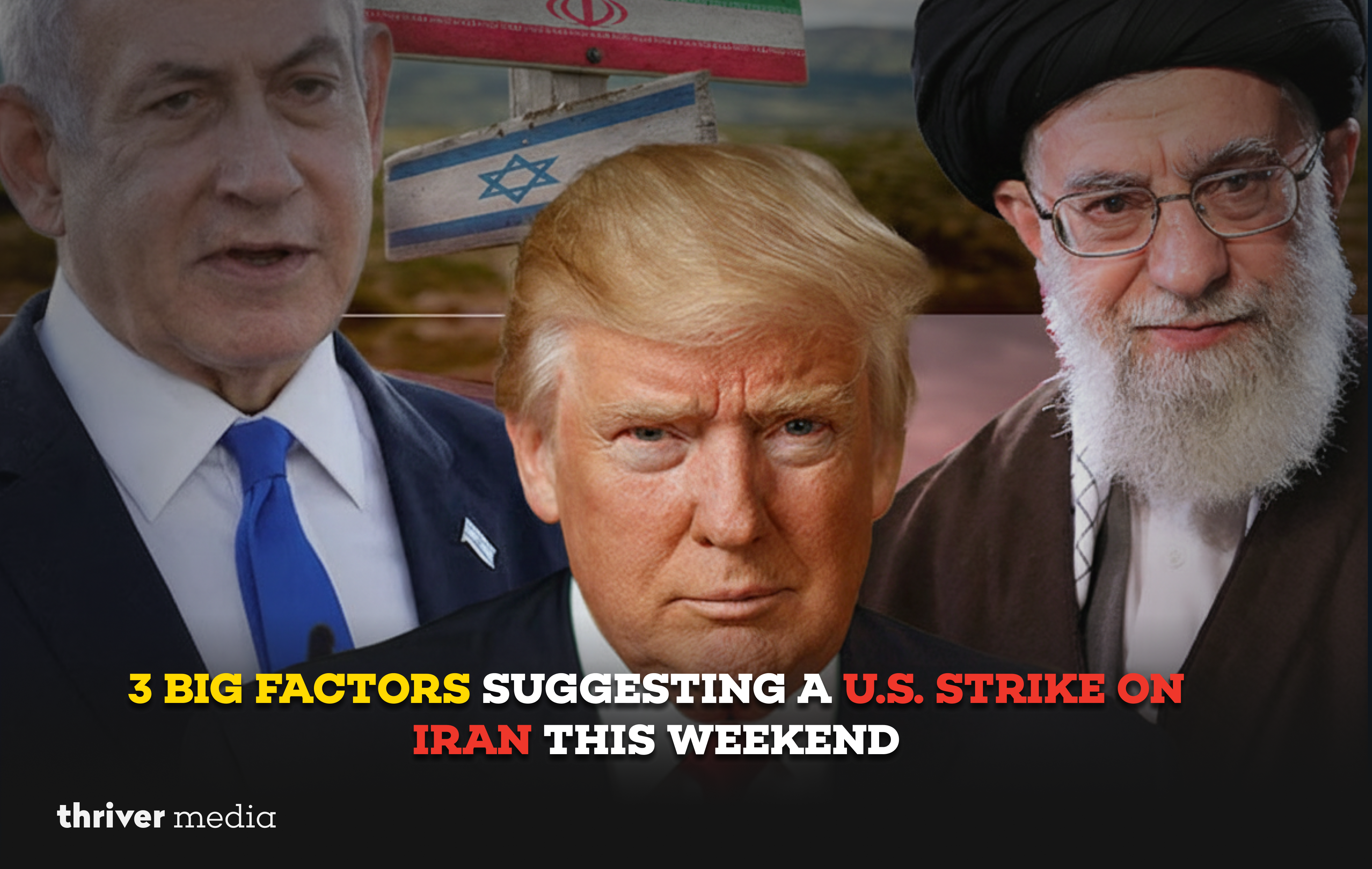
There are moments in global affairs where the fog of war is so thick you can barely see your hand in front of your face. And then there are moments where the fog lifts, the pieces move on the board, and you realize the game has already begun.
We are not talking about a symbolic show of force. We are talking about 40-50% of the U.S. Air Force’s total tactical aviation assets currently positioned within striking distance of Iranian targets . Two carrier strike groups. Over 150 cargo aircraft delivering munitions in the past 48 hours. Troops being moved out of forward positions in Qatar to safer locations.
And yet, the diplomats are still talking. The next round of indirect U.S.-Iran negotiations is scheduled for Thursday, February 26th, in Geneva . But here is the chilling reality: President Trump has given Tehran a “10 to 15 day” ultimatum to make a deal, warning that if they don’t, “it’s going to be unfortunate for them” . That clock is ticking down to zero right as the weekend arrives.
Here are the 3 Big Factors Suggesting a U.S. Strike on Iran Could Happen This Weekend.
Key Points to Remember
- The Force is Unprecedented: The US has moved 40-50% of its global air power to the region, a buildup not seen since the Iraq wars.
- The Clock is Expiring: Trump’s verbal ultimatum aligns perfectly with the timing of the Geneva talks; if Thursday fails, the window for action opens immediately.
- Troops Are Moving Out: The US is repositioning personnel from vulnerable bases in Qatar and elsewhere, a classic sign of preparing for incoming retaliation.
- It Won’t Be “Surgical”: Reports from Axios suggest any strike will be a weeks-long campaign, not a one-off hit like Venezuela.
The “Chekhov’s Gun” on the Persian Gulf
There is a famous literary principle that says if you show a gun in the first act, it must go off by the third. Right now, the United States has placed enough military hardware in the Middle East to arm a small army, and the “first act” of diplomacy is drawing to a close.
The 40% Rule
According to Professor Robert Pape, director of the Chicago Project on Security and Threats, the concentration of American air power currently sitting in the region represents between 40 to 50 percent of the total available US air capabilities worldwide . Let that sink in. Half of America’s offensive air strength is parked within striking distance of Iran.
Historically, the US does not move this many eggs into one basket unless it intends to make an omelet. Pape notes that the last time we saw mobilizations of this scale were just before the Iraq wars in 1991 and 2003 . This isn’t a deterrent patrol; this is a firing squad lining up.
The Carriers Are in Position
The USS Abraham Lincoln is already in the Arabian Sea. The USS Gerald R. Ford, the world’s largest warship, is racing across the Atlantic to join it, accompanied by five destroyers . These are not just floating airfields; they are command-and-control centers designed to manage sustained, multi-axis warfare. When you combine them with the F-35A stealth fighters, F-15E strike eagles, and THAAD anti-missile batteries already deployed to bases in Jordan, Qatar, and Saudi Arabia, you have a recipe for a very bad weekend for anyone standing in the crosshairs.
Defense Becomes Offense
The US has also surged “Patriot” missile batteries and the advanced THAAD system into the region . Why do you need that many interceptors? Because the Pentagon is anticipating that Iran will launch a massive barrage of ballistic missiles at US bases and Israel the second the first American bomb drops. The presence of these defenses suggests the US is ready to absorb a blow and keep swinging.
The Diplomatic Clock Hits Zero
Talks are scheduled for Thursday in Geneva . But reading between the lines of every official statement, optimism is in short supply.
The “Red Lines” Problem
After the last round of talks in Geneva, US Vice President JD Vance admitted that while the process was productive “in some ways,” Tehran was “not yet willing” to engage on some of Trump’s “red lines” . What are those red lines? According to US officials, they include a complete ban on uranium enrichment, the removal of existing enriched material, and limits on Iran’s ballistic missile program.
For Iran, these demands are non-starters. Iranian Foreign Minister Abbas Araghchi has repeatedly stated that any deal must recognize Iran’s right to enrich uranium for peaceful purposes . This is the classic “irresistible force meets immovable object.” If Thursday’s talks end with both sides shaking their heads, there is no further diplomatic runway.
The 10-Day Warning
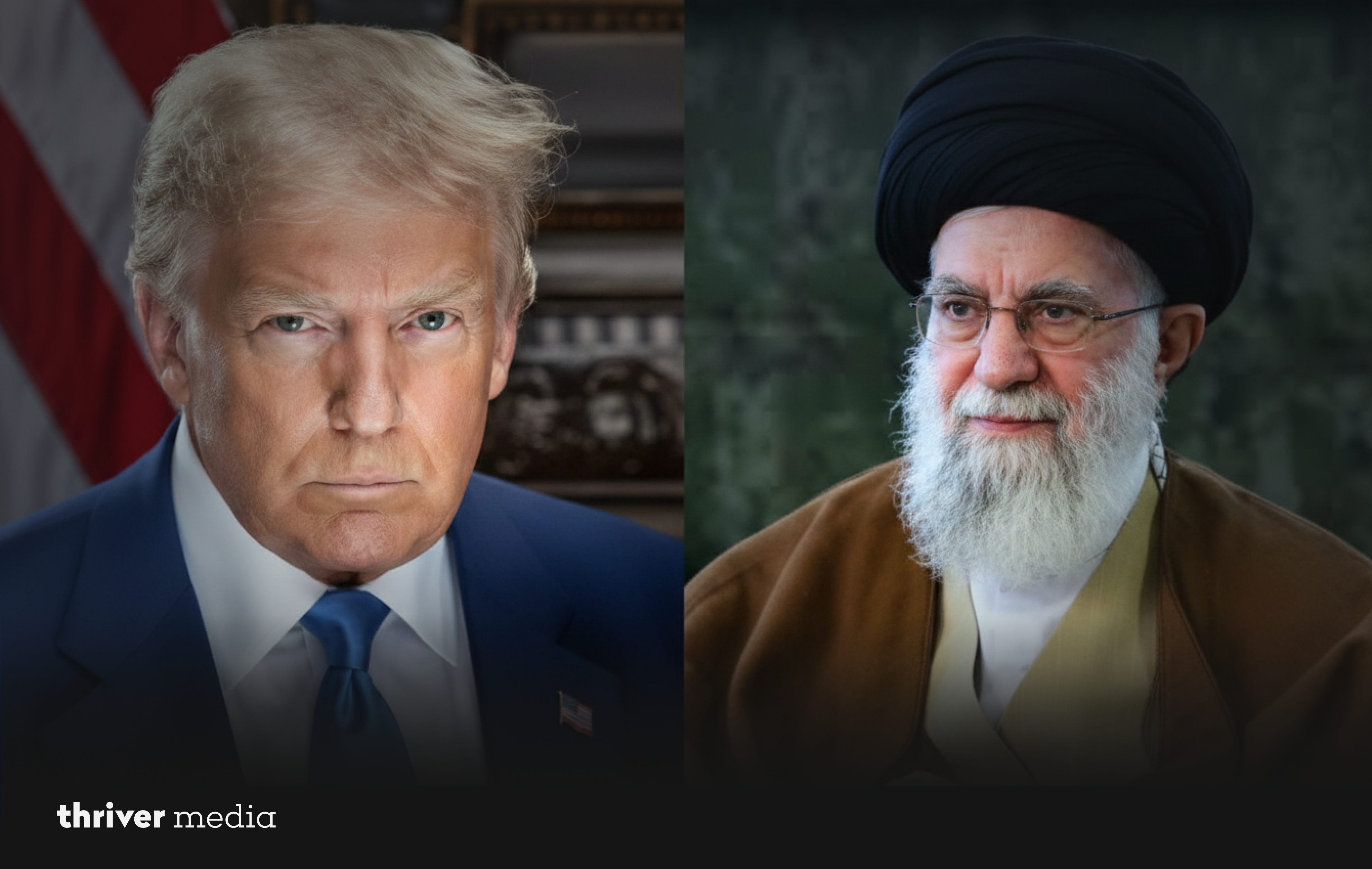
President Trump told reporters on Thursday that we will know if a deal is possible “over the next probably 10 days,” warning that Washington “may have to take it a step further” if negotiations fall short . If you do the math, that 10-day window expires right around this weekend.
Sources close to the administration told Axios that the President is “getting fed up,” and one adviser put the chances of “kinetic action” in the next few weeks at 90% . Senator Lindsey Graham suggested strikes could be weeks away, but other insiders hinted the timeline might be much shorter . When you combine the rhetoric with the logistics, the “short” timeline points directly at the coming days.
The “Empty Chair” Theory: Troop Movements
Perhaps the most telling indicator of imminent action isn’t what is arriving, but what is leaving.
Clearing the Decks
According to reports from The New York Times and confirmed by Pentagon officials, the United States has begun the strategic movement of military personnel out of certain forward bases . Hundreds of troops have been relocated from the Al Udeid Air Base in Qatar, a massive facility that houses US Central Command’s forward headquarters.
Similar repositioning is happening in Bahrain, Kuwait, Iraq, and the UAE . Why move troops out of bases in the days leading up to a potential strike? Because those bases are about to become Iranian target number one, and the US knows it.
The Iranian mission to the UN has already issued a stark warning: in case of any American attack, “all bases, facilities, and assets of the hostile force in the region would constitute legitimate targets” . By thinning out personnel in the most vulnerable spots, the US is minimizing the risk of mass casualties from the inevitable Iranian retaliation. It is a grim but logical step in the choreography of war.
The Israeli Factor
Let’s not forget the elephant in the room: Israel. Israeli security and military agencies have raised their alert levels to the maximum . Prime Minister Netanyahu is reportedly pushing for a strike that is “decisive” and comprehensive, not just a warning shot . The Israeli Defense Forces are preparing for a potential multi-day operation designed to deal a severe blow to Iran’s nuclear and missile programs.
If the US does strike this weekend, they will almost certainly not be alone. The coordination between CENTCOM and the IDF is reportedly closer than ever, meaning the response will be synchronized and devastating.
| Factor | The Indicator | Why It Points to This Weekend |
|---|---|---|
| Military Buildup | 40–50% of U.S. air power positioned in the region; 2 carrier strike groups deployed; 150+ cargo planes mobilized | Historically, this level of force concentration has preceded immediate military strikes rather than long-term positioning. |
| Diplomatic Deadline | Trump’s 10–15 day ultimatum; Geneva talks scheduled for Feb 26 | The “deal or else” timeline appears to expire as the weekend begins, increasing the likelihood of swift action. |
| Troop Repositioning | U.S. personnel relocating from bases in Qatar, Bahrain, and Iraq | Suggests precautionary steps to reduce casualties in anticipation of possible Iranian retaliation. |
| Nature of the Strike | Axios reports indicate a weeks-long campaign rather than a single short strike | Points to preparations for sustained military operations that could begin immediately. |
FQAs
Because the talks are the “last chance.” If Iran walks away or refuses to budge on enrichment, the diplomatic box is checked. Military planners prefer weekends for operations due to perceived lower readiness or to catch adversaries off guard.
Yes. Iran possesses a large inventory of ballistic missiles and drones. The US is moving air defenses like THAAD and Patriot into the region specifically to counter this threat, acknowledging that the risk is real and imminent.
The Bottom Line
We are standing at a precipice. The indicators are all flashing red: the largest military buildup in a generation, a diplomatic ultimatum expiring, and the physical movement of troops out of the blast zone. This is not a drill. Nor is it a media cycle designed to generate clicks. Instead, it’s the machinery of a superpower grinding into its final position. Whether the bombs fall this weekend depends on what happens in a hotel room in Geneva on Thursday.
If the diplomats fail, the generals are ready.
For those of us watching from behind our screens, the next 72 hours will be some of the most tense in recent Middle Eastern history. Keep your WordPress sites updated, keep your traffic informed, and for heaven’s sake, brace for impact.
Conclusion
The evidence is impossible to ignore. Half of America’s combat air power is sitting in the Persian Gulf, troops are being pulled out of the blast zone, and a diplomatic ultimatum is expiring within hours. These are not the moves of a nation bluffing. These are the final, quiet steps before the storm. Whether the bombs fall this weekend depends entirely on what happens in a Geneva hotel room on Thursday. If the diplomats walk away, the generals are ready.
For the rest of us watching from our screens, the next 72 hours will be defined by tension and uncertainty. Stay informed, verify your sources, and prepare for the noise. The world may look very different by Monday.
Official Source Link: CGTN: US-Iran Talks Set for February 26
Disclaimer: The news and information presented on our platform, Thriver Media, are curated from verified and authentic sources, including major news agencies and official channels.
Want more? Subscribe to Thriver Media and never miss a beat.