
9th March 2026
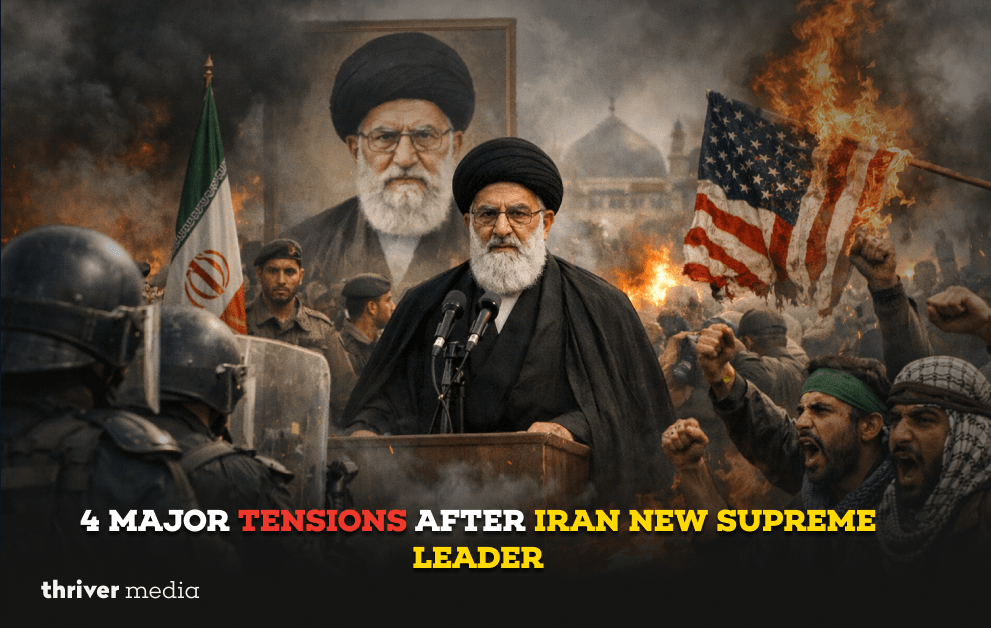
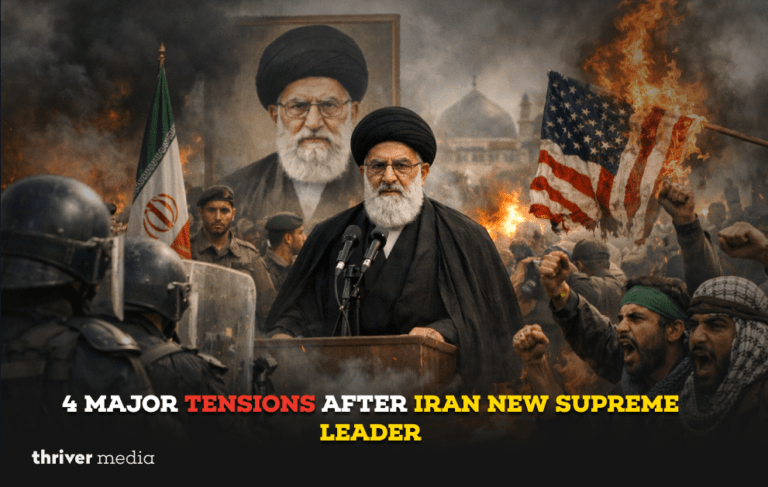
The unthinkable just happened. In the smoldering ruins of a US-Israeli airstrike that killed a generation of Iranian leadership, the clerical regime has done exactly what Washington told them not to do: they crowned the son.
Forget backroom diplomacy. Forget quiet negotiations. On March 9, 2026, Iran’s Assembly of Experts officially named Mojtaba Khamenei the 56-year-old son of the slain ayatollah as the third Supreme Leader of the Islamic Republic. The appointment came just over a week after Ayatollah Ali Khamenei was killed in a US-Israeli strike that also took the lives of Mojtaba’s wife, mother, sister, brother-in-law, and nephews. This isn’t a transition; it’s a blood-soaked succession born from the ashes of war. And it has just poured gasoline on an already blazing Middle East.
The Man Who Would Be King: Mojtaba Khamenei’s Dark Rise
To understand where Iran is going, you have to understand the man now holding the reins.
The Enigmatic Successor
Mojtaba Khamenei has spent his entire life in the shadows. Unlike his father, who was a public figure for decades, Mojtaba has no extensive record of speeches, no political manifestos, almost no interviews. He is a mid-ranking cleric with the title Hojjatoleslam significantly lower than the Ayatollah status traditionally expected of a Supreme Leader . His public appearances have been limited to official ceremonies and religious gatherings, always covered by state media, always controlled .
But behind the curtain, he was the gatekeeper. For years, Western intelligence and Iranian dissidents alleged that Mojtaba functioned as his father’s enforcer a “mini-supreme leader” who controlled access to the aging ayatollah and wielded enormous influence within the Islamic Revolutionary Guard Corps (IRGC). The US Treasury sanctioned him in 2019, accusing him of representing the Supreme Leader in an official capacity despite holding no elected office .
A Hardliner Forged in Fire
Mojtaba studied under the most conservative scholars in Qom, Iran’s center of Shia theological learning. His mentors included Mohammad-Taqi Mesbah-Yazdi, an ultra-conservative ideologue who advocated for strict clerical rule. He reportedly fought in the Iran-Iraq War as a young man, joining volunteer units when his father was president.
But the fire that truly forged him came on February 28, 2026. The US-Israeli strike that killed his father also targeted the family compound. Mojtaba survived, but he lost his wife Zahra Haddad-Adel, his mother, his sister, and other relatives . A regional official close to Tehran told Reuters that Mojtaba now carries a burning desire for revenge: “He’s going to have a lot of revenge to exact” .
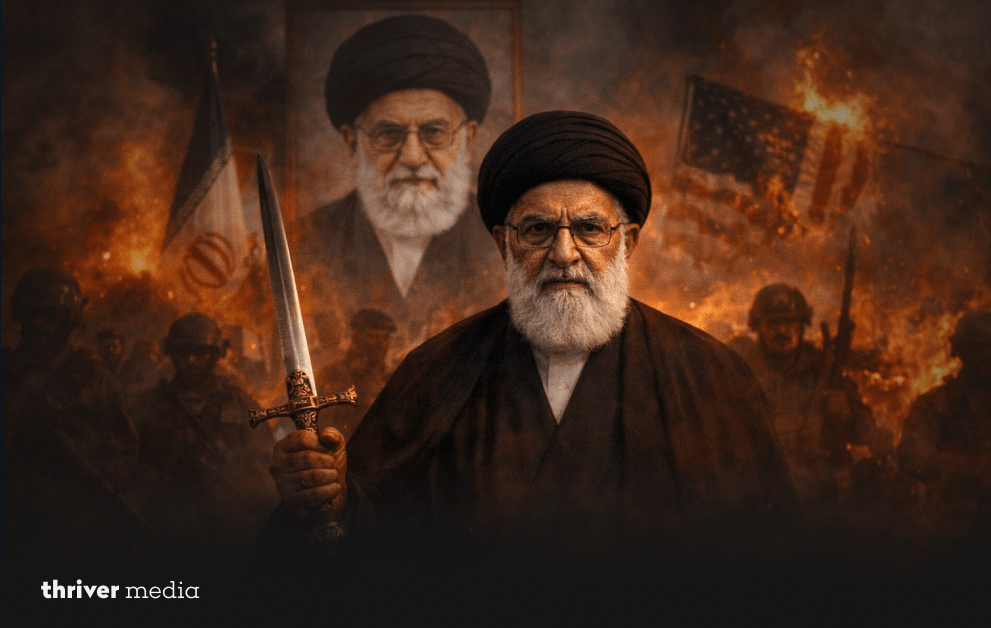
The Four Tensions Now Gripping the World
With Mojtaba in power, the conflict has entered a terrifying new phase. Here are the four major tensions that are reshaping the globe.
Tension 1: The Direct Insult to Washington
President Donald Trump did not mince words. Before the appointment, he declared that “Khamenei’s son is unacceptable to me” and insisted that the US must be involved in selecting Iran’s next leader. Hours before the official announcement, Trump warned that any new Supreme Leader without US approval was “not going to last long”.
Iran’s Assembly of Experts responded by doing exactly what Washington opposed. They chose Mojtaba unanimously. One ayatollah explicitly framed the choice as a service to Iran, saying that “someone opposed by the enemy is more likely to benefit Iran and Islam”. This isn’t just a succession; it’s a declaration of ideological war. The regime has bet everything on defiance, rejecting any path to compromise with the “Great Satan”.
Tension 2: The Iron Fist at Home
Mojtaba inherits a country that was already boiling before the bombs fell. Iran was grappling with a battered economy, soaring inflation, a collapsed currency, and months of the bloodiest domestic unrest since the 1979 revolution. Protesters had been chanting against the regime, and the cracks in the foundation were widening.
Now, under a wartime Supreme Leader with direct ties to the IRGC and a personal score to settle, the crackdown is expected to be merciless. “Mojtaba will have no choice but to show an iron fist,” a regional official told Reuters. “Even if the war ends, there will be severe internal repression”. Alex Vatanka of the Middle East Institute put it bluntly: “Having Mojtaba take over is the same playbook”. Dissidents are already at risk, and the new leader is expected to move swiftly to crush any dissent.
Tension 3: The Assassination Threat Hanging Over Tehran
Israel has made its position terrifyingly clear. The Israeli military warned in Farsi-language posts that it would “pursue every successor and every person who seeks to appoint a successor”. The message is unambiguous: Mojtaba Khamenei is a marked man.
This transforms the conflict into a high-stakes game of whack-a-mole. If Israel follows through on its threat and assassinates the new Supreme Leader, it would trigger an even more catastrophic escalation. But if they don’t, they risk allowing the new leader to consolidate power. The IRGC has already pledged “complete obedience” and vowed to sacrifice their lives for Mojtaba’s commands. Any assassination attempt would be met with overwhelming retaliation.
Tension 4: The Global Economic Tinderbox
The war is no longer contained to battlefields. It’s in your wallet.
On the day of Mojtaba’s appointment, the global oil benchmark topped $100 a barrel for the first time in nearly four years . In the US, gas prices surged 47 cents in a single week. Saudi Arabia’s defense ministry reported intercepting drones and missiles heading toward the kingdom’s massive Shaybah oil field and ballistic missiles targeting Prince Sultan Air Base . Two civilians were killed in Saudi Arabia when a “military projectile” struck their residence an attack Qatar blamed on Iran .
The Strait of Hormuz, through which a massive percentage of the world’s oil passes, is now a war zone. Experts warn that if the strait is closed or severely disrupted, global energy costs could spiral out of control, triggering a worldwide inflationary crisis. Democrats in the US have already seized on the price surge, calling it a direct consequence of what they term “Trump’s reckless war of choice”.
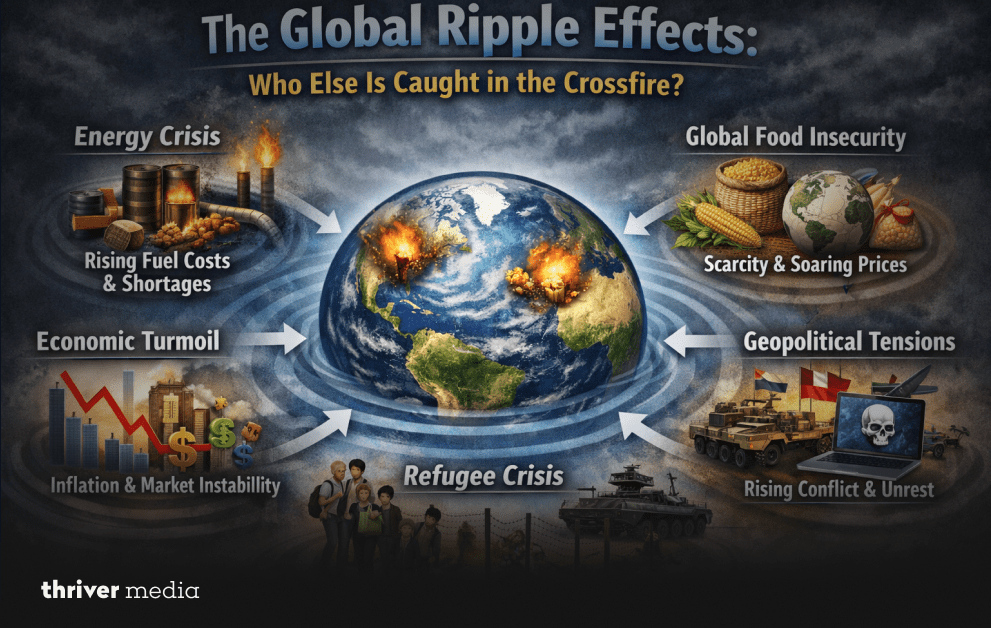
The Global Ripple Effects: Who Else Is Caught in the Crossfire?
The Gulf States Caught in the Middle
Saudi Arabia, the UAE, Bahrain, and Qatar are all being dragged into the conflict whether they like it or not. Iranian missiles and drones have struck Gulf states repeatedly, and the US has ordered diplomats to leave Saudi Arabia as the security situation deteriorates. These nations are trying to defend their skies while desperately avoiding full-scale war on their soil.
The Human Cost
The numbers are staggering. According to Iranian officials, more than 1,200 people including Khamenei and top military officials have been killed since Feb 28, with over 10,000 injured. The Iranian Red Crescent reports 1,332 civilian deaths. The education ministry says 192 students and educators have been killed, with 66 schools damaged or destroyed. Eleven health workers are dead. In the UAE, a missile interception caused debris to kill one person and damage property.
Key Points at a Glance: Iran’s New Era
| Factor | Details |
|---|---|
| New Supreme Leader | Mojtaba Khamenei, 56, son of slain Ayatollah Ali Khamenei. |
| Date of Appointment | March 9, 2026, by unanimous vote of the Assembly of Experts. |
| Personal Losses | Lost wife, mother, sister, brother-in-law, and nephews in Feb 28 strike. |
| Power Base | Deeply connected to the IRGC; sanctioned by US Treasury in 2019. |
| US Response | Trump declared him “unacceptable” and warned he “won’t last long”. |
| Israeli Threat | Israel vows to “pursue every successor”. |
| Oil Prices | Topped $100/barrel for first time in nearly 4 years; US gas prices up 47¢/week. |
| Civilian Casualties | Over 1,332 civilians killed, including 192 students. |
FAQs
Who is Mojtaba Khamenei?
He is the 56-year-old second son of the late Ayatollah Ali Khamenei. A mid-ranking cleric with close ties to the Islamic Revolutionary Guard Corps (IRGC), he has spent decades as a behind-the-scenes power broker, controlling access to his father and influencing state affairs without holding formal office.
Why is his appointment so controversial?
First, because it establishes a hereditary succession in a republic born from overthrowing a monarchy something the clerical establishment has long opposed. Second, because US President Donald Trump explicitly declared him “unacceptable” and demanded a role in selecting Iran’s leader. His appointment is seen as a direct rebuke to Washington.
Is Iran now a monarchy?
What happens next?
Israel has threatened to assassinate him. Iran’s military has pledged to defend him. The war is escalating, with missile strikes continuing on both sides. Oil prices are soaring, and the risk of a wider regional conflagration drawing in Gulf states and potentially triggering a global energy crisis is higher than it has been in decades.
Official Sources for Further Reading: https://www.centcom.mil/
The Bottom Line
The appointment of Mojtaba Khamenei is the most dangerous possible outcome of an already catastrophic situation. It signals that Iran’s hardliners have doubled down, rejecting any off-ramp to peace and choosing confrontation as their only path forward . The new leader is not a diplomat or a pragmatist; he is an enforcer with a murdered family and a Revolutionary Guard at his back. With Israel vowing to kill him, the US demanding his removal, and the global economy teetering on the edge of an energy crisis, the stage is set for a conflict that could reshape the Middle East for generations.
Conclusion
As the sun rose over Tehran on March 9, 2026, Iran woke up to a new leader. His name is Mojtaba Khamenei. His father is dead. His wife is dead. His mother is dead. And he now commands one of the most powerful military forces in the Middle East at the height of a war with the United States and Israel. The next few days will determine whether this ends in a negotiated stalemate or in a firestorm that consumes the entire region. The world is watching, holding its breath, and hoping that someone, somewhere, blinks before it’s too late.
Disclaimer: The news and information presented on our platform, Thriver Media, are curated from verified and authentic sources, including major news agencies and official channels.
Want more? Subscribe to Thriver Media and never miss a beat.