
17th March 2026
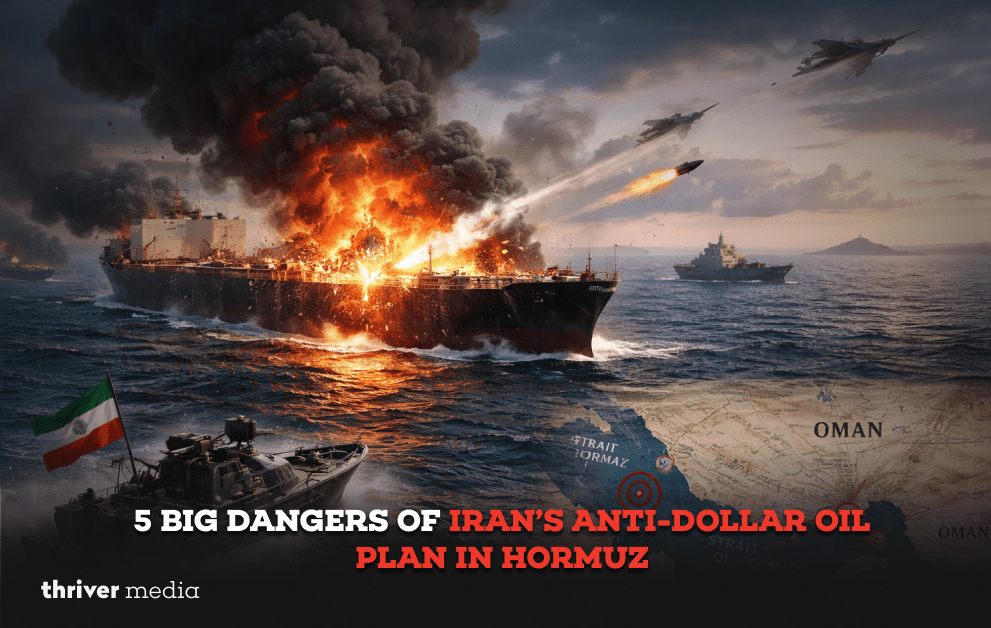
Iran just fired the most dangerous shot of this war and it wasn’t a missile.
It was a financial weapon. A currency condition attached to the world’s most critical oil chokepoint. And if it works, it won’t just change oil prices. It will change the entire architecture of global power that has existed since 1974.
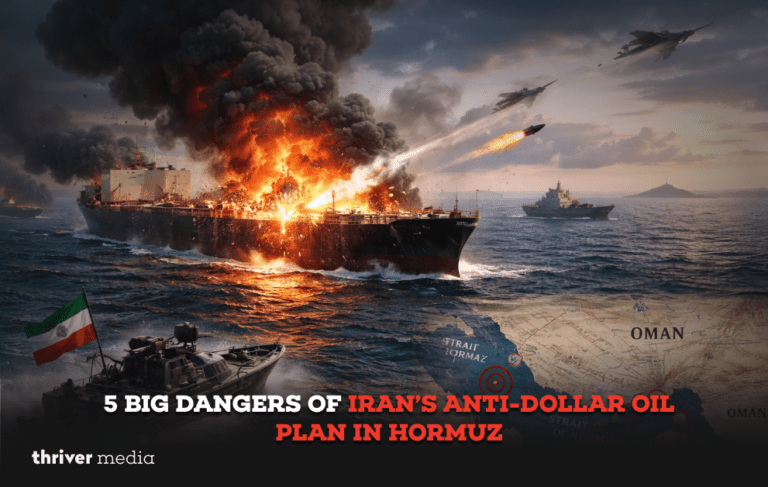
Here’s what just happened: A senior Iranian official told CNN that Tehran is considering allowing a limited number of oil tankers through the Strait of Hormuz but only if the cargo is traded in Chinese yuan, not US dollars. The strait has been effectively closed since March 1, following US-Israeli strikes that killed Iran’s Supreme Leader and escalated the conflict into uncharted territory.
Here are five big dangers hiding inside Iran’s anti-dollar oil plan.
Danger 1: The Petrodollar’s 52-Year Foundation Starts Cracking
What the Petrodollar Actually Does
To understand why this matters, you have to understand what the petrodollar system actually is. It’s not an abstract concept it’s the mechanical foundation of American financial power.
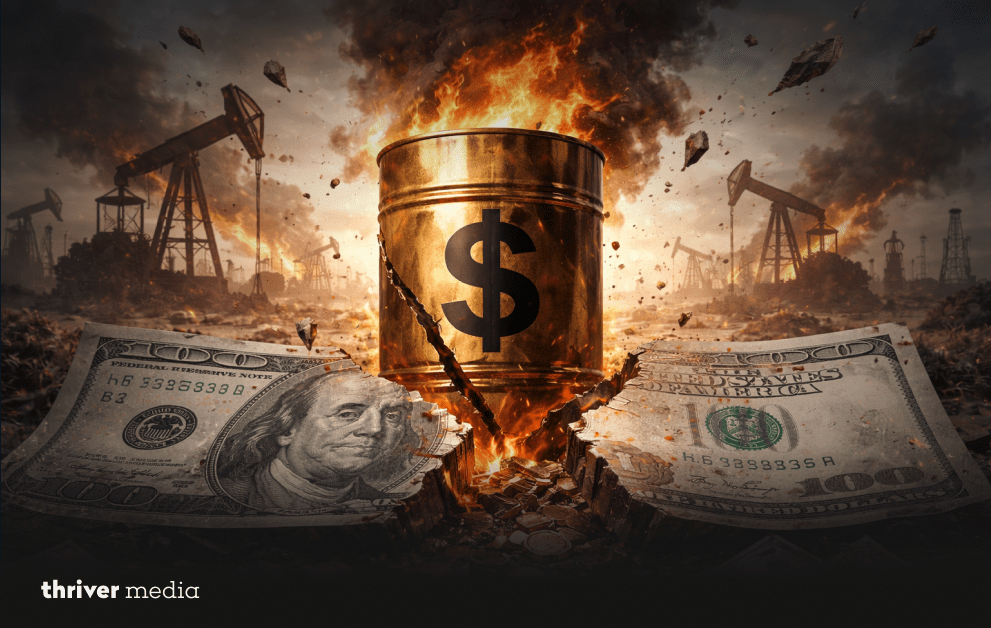
Born in 1974, the petrodollar system emerged from a strategic agreement between the United States and Saudi Arabia: oil would be priced and traded exclusively in US dollars. Because oil is the world’s most traded commodity, every nation that imports energy must first acquire dollars. Every central bank holds dollar reserves for exactly this reason. The dollar’s status as the world’s primary reserve currency isn’t an achievement it’s a mechanical consequence of oil.
The self-reinforcing loop works like this:
- Oil is priced in dollars → nations need dollars to buy oil → they hold dollar reserves → those reserves are reinvested in US markets → America borrows at lower costs → the cycle continues.
For 52 years, this system has survived wars, recessions, and geopolitical shifts. It’s the bedrock of what policymakers call “exorbitant privilege.”
The Hormuz Challenge Changes Everything
Iran’s yuan condition attacks this foundation at its weakest point: the chokepoint. Previous de-dollarization efforts were theoretical academic discussions about gradual shifts. This one comes with a strait, a blockade, and a gun.
What makes this structurally dangerous is the mechanism. Tehran isn’t merely proposing that some bilateral trade occur in yuan. It’s proposing that access to the world’s most critical energy route be conditional on currency denomination.
The practical consequence would be a bifurcated global oil market: yuan-denominated barrels flowing through Hormuz for those willing to pay in China’s currency, dollar-denominated barrels rerouted at massive additional cost for those who aren’t.
A senior Iranian official framed it as part of Tehran’s plan to “manage the flow of oil tankers”. But make no mistake this is financial warfare dressed up as maritime policy.
Danger 2: The Strait Itself Becomes a Weapon
20% of Global Oil Held Hostage
Let’s talk about what’s actually at stake in that narrow stretch of water.
The Strait of Hormuz connects the Persian Gulf to the Indian Ocean. At its narrowest point, it’s just 34 kilometers wide. Yet through this slender corridor flows approximately 18-20 million barrels of oil every day roughly 20% of global consumption and nearly one-fifth of the world’s oil trade.
Saudi Arabia, Iraq, Kuwait, UAE, and Qatar all depend on Hormuz to export their crude. For these nations, there is no alternative route that can absorb the full volume. Pipelines to the Red Sea and Fujairah exist, but their capacity falls far short leaving a deficit of about 12 million barrels per day.
Iran controls the northern coastline. And now it’s explicitly linking passage to currency.
The Selective Passage Reality
Here’s what’s already happening on the water: Since February 28, between 11.7 and 16.5 million barrels of Iranian crude have transited the Strait to China via shadow fleet under IRGC protection while every other nation’s shipping remains locked out. China pays in yuan. China’s tankers move freely. The architecture for a parallel yuan-denominated energy corridor already exists and is already operating.
On March 5, the IRGC announced it would keep the strait closed only to ships from the US, Israel, and their Western allies . On March 13, Turkey’s transport minister confirmed Iran approved passage of a Turkish ship. Two Indian-flagged gas carriers and a Saudi oil tanker with one million barrels for India were also allowed through.
Selective passage is already reality. The yuan condition would simply formalize the criteria.
The Numbers Don’t Lie
A UN warning on March 14 stated that shipping restrictions could have a “massive impact” on humanitarian operations across the region. That’s diplomatic language for “people will suffer.”
Danger 3: The Petroyuan Bridge And What It Carries
China’s Decades-Long Ambition Finds Its Moment
China has been trying to expand the global use of its currency in energy markets for years. In 2018, it launched yuan-denominated crude oil futures on the Shanghai International Energy Exchange. It’s pursued oil purchase agreements in yuan with major producers like Saudi Arabia. Progress has been slow the dollar’s dominance is sticky.
But Iran’s proposal changes the game. As one analyst put it: “China has sought for years to expand the use of yuan in oil transactions, but the dollar remains the world’s primary reserve currency. The current crisis provides a unique point of leverage to mandate such changes”.
The leverage is physical: Chinese tankers move through Hormuz. Everyone else’s don’t. That’s not market competition that’s coercion.
The Gold Connection Nobody’s Talking About
Here’s where it gets really interesting. A major obstacle to yuan adoption has always been convertibility. Not every oil exporter wants to hold large amounts of Chinese currency in their reserves.
Enter gold.
China has spent years building mechanisms that allow yuan to be converted into gold. Since 2016, the Shanghai Gold Exchange International Board has permitted foreign investors to trade gold priced in yuan. This creates a potential chain:
Oil sold to China → payment received in yuan → yuan converted to gold → gold held as reserve asset
Analysts describe this as the “oil-yuan-gold” structure . In this framework, gold acts as a neutral bridge between currency systems. It’s elegant, it’s outside dollar control, and it’s already operational.
If this model scales, the petrodollar doesn’t just face competition it faces a parallel system that simply routes around it.
mBridge: The Invisible Infrastructure
Meanwhile, Iran and several BRICS partners have been quietly accelerating use of the mBridge platform a central bank digital currency settlement system involving China, UAE, Saudi Arabia, and Thailand.
By late 2025, transaction volumes on mBridge surpassed $55 billion, with the Chinese digital yuan (e-CNY) accounting for 95% of operations. The platform allows Iran to settle energy trades instantly without correspondent banks in the United States. Transactions become nearly invisible to Western financial monitoring.

Danger 4: The Sanctions Evasion Economy Explodes
IRGC’s Shadow Fleet Already Operating
Here’s the uncomfortable truth about sanctions: they don’t stop trade. They just drive it underground, where it becomes more profitable and more dangerous.
The Islamic Revolutionary Guard Corps (IRGC) has spent decades perfecting sanctions evasion. During the 2005-2015 sanctions period, instead of paramilitary spending being curtailed, funding for militants in Iraq, Syria, Lebanon, and Yemen actually soared. The techniques developed then are now being deployed at scale.
Iranian tankers move oil by:
- Turning tracking beacons off
- Traveling under other nations’ flags
- Forging documents
- Using front companies worldwide to launder funds
President Hassan Rouhani inadvertently highlighted the scale when he boasted of reducing the annual value of these activities from $22 billion to $12.5 billion an admission that billions in clandestine trade exist.
The Criminalization Risk
Here’s what keeps analysts awake: the same networks that smuggle oil also smuggle weapons, narcotics, and contraband. Hezbollah’s international narcotics trade has been allowed to operate, some argue, to avoid antagonizing Tehran during nuclear negotiations.
If the yuan-denominated Hormuz plan formalizes IRGC control over oil transit, it doesn’t just challenge the dollar it legitimizes and expands criminal networks that have spent decades destabilizing the region.
A senior Western politician summarized the concern: “This isn’t just about maintaining oil exports or self-defense. This is about capitalizing on a dizzying range of illegal activities to bankroll an offensive paramilitary strategy”.
The Cost of Evasion
Sanctions evasion isn’t free. Reports from Iran’s Parliamentary Budget Committee indicate the government received only $13 billion of the $20 billion earned in the first eight months of the 2025 fiscal year. The gap about 20% of revenues was consumed by “costs of evading sanctions,” including:
- Large discounts to independent Chinese refineries ($8-11 per barrel)
- High shipping and insurance costs for shadow fleet operations
- Bribery and facilitation payments
The yuan plan doesn’t eliminate these costs. It simply shifts them into a parallel system where the IRGC controls the tollbooth.
Danger 5: The Market Fragmentation Nightmare
One World, Two Oil Prices
Imagine a world where oil has two prices: one for yuan payers, one for everyone else. Where passage through the world’s most critical waterway depends not on international law, but on which currency your central bank holds.
That’s the fragmentation risk.
The International Energy Agency estimates global oil supply could fall by 8 million barrels per day in March due to Gulf production shut-ins . Gulf countries have been forced to halt production and refining capacity as storage fills up with nowhere to send crude .
The IEA agreed to release a record 400 million barrels from strategic reserves . The US Treasury authorized Russian oil sales through April 11. None of it is cooling markets. Brent was trading up 9% week-on-week as of mid-March .
The Insurance Trap
Here’s a detail that doesn’t make headlines but matters enormously: war-risk insurance through the strait has become “effectively prohibitive for most commercial operators” . Even if Iran opened the strait tomorrow, ship owners face a calculus:
- Can we get insurance?
- Will crews sail into a conflict zone?
- What happens if missiles are still flying?
Reuters reported that the US Navy is declining “near-daily industry requests for Hormuz escorts, citing the attack risk as too high”. Commercial traffic never fully resumed in the Red Sea despite considerable military effort during Houthi attacks. The same dynamic is now playing out in the Gulf.
The Pipeline Math That Doesn’t Work
Saudi Arabia’s East-West pipeline to Yanbu on the Red Sea can carry up to 7 million barrels per day at full capacity . That sounds impressive until you realize Saudi exports through Hormuz averaged far more than that. The pipeline simply cannot absorb the volume.
The UAE’s ADCOP pipeline to Fujairah handles about 1.5 million barrels per day . Exports from Mina Al-Fahal in Oman average around 1 million barrels daily. Add them all together, and you’re still left with a deficit measured in millions of barrels every single day.
The arithmetic of energy desperation is working in Iran’s favor .
The Five Dangers at a Glance
| Danger | What It Is | Why It Matters |
|---|---|---|
| Petrodollar Collapse | Yuan-denominated oil through Hormuz challenges 52-year dollar dominance | Dollar reserve status weakens; US borrowing costs rise |
| Strait Weaponization | Iran controls world’s most critical oil chokepoint | 20% of global oil supply held hostage |
| Petroyuan Bridge | Oil-yuan-gold structure plus mBridge digital settlement | Parallel financial system routes around dollar |
| Sanctions Evasion Economy | IRGC shadow fleet expands; criminal networks profit | Illicit trade legitimized; regional destabilization |
| Market Fragmentation | Two-tier oil pricing; insurance prohibitive; pipelines insufficient | Global energy chaos; inflation spikes |
FAQs
Is Iran actually letting ships through if they pay in yuan?
The proposal is under consideration, according to a senior Iranian official who spoke to CNN. Selective passage is already happening Chinese tankers are moving while Western vessels remain locked out. The yuan condition would formalize what’s already occurring informally.
Could the petrodollar really collapse?
Not overnight, and not completely. The dollar’s status is reinforced by capital market depth, liquidity, and institutional inertia that no single crisis can dissolve. But the Hormuz challenge represents the most operationally specific threat to dollar energy dominance since the system was established. The more likely outcome is a fragmented market with parallel pricing systems.
How much oil actually goes through Hormuz?
Approximately 18-20 million barrels per day roughly 20% of global consumption and nearly one-fifth of world oil trade. About 20% of global LNG also transits the strait.
What does China think about this?
Chinese analysts are cautious. Gong Jiong, an economics professor in Beijing, noted that “from a technical and institutional standpoint, this arrangement is very hard to enforce, particularly in verifying that transactions are truly settled in yuan”. Another analyst warned that countries choosing to pay in yuan “may have to suffer the wrath of the US and Israel”.
The Bottom Line
Iran has turned the world’s most important oil chokepoint into a currency weapon.
For 52 years, the petrodollar system has operated on a simple premise: oil is traded in dollars, so nations hold dollars. That premise is now being tested not in academic journals or diplomatic communiques, but in the narrow waters between Iran and the Arabian Peninsula.
The numbers tell the story:
- 20% of global oil flows through Hormuz
- 90%+ of Iran’s oil exports already go to China, paid in yuan
- $55 billion in mBridge settlements bypass dollar system
- 12 million barrels/day deficit if pipelines replace strait
- 16 vessels attacked since conflict began
The architecture for a parallel system already exists. The shadow fleet already moves. The digital payment rails are already operational. The only question is whether the yuan condition becomes formal policy and whether the world accepts it.
Gibson, a leading shipbroker, summarized the dilemma: “The longer the current crisis keeps flows locked in, the more bearish the outlook becomes. Should the bulk of Gulf barrels remain constrained for an extended period, VLCCs and LRs are naturally the most exposed. It remains highly uncertain whether US security guarantees, insurance cover and military convoys will allow flows to return to pre-28 February levels”.
Conclusion: The New Rules of Engagement
The Strait of Hormuz has always been strategically important. But its role is evolving from physical chokepoint to financial weapon. Iran’s yuan proposal doesn’t just challenge the dollar it creates a template. If this works, what stops other chokepoint nations from demanding similar concessions? The Bab al-Mandab? The Malacca Strait? The Suez Canal?
The petrodollar system survived for five decades because it was useful to both sides. Exporters got a stable currency and access to US markets. Importers got reliable pricing and settled transactions. But usefulness matters less than leverage. And right now, Iran has leverage.
The European Business Magazine put it well: “The financial implications deserve more attention than they have so far received”. Because while markets focus on Brent’s daily fluctuations, the underlying architecture is shifting. And architectural shifts don’t reverse easily.
Iran has fired the most dangerous shot of this war. It wasn’t a missile. It was an idea that the world’s oil doesn’t have to be traded in dollars, and that control of a chokepoint can enforce that reality. The question now is whether the world accepts that idea, or whether this becomes the battle line for a different kind of war one fought with currencies, sanctions, and the quiet mechanics of global finance.
Official Source Link: https://europeanbusinessmagazine.com/
Disclaimer: The news and information presented on our platform, Thriver Media, are curated from verified and authentic sources, including major news agencies and official channels.
Want more? Subscribe to Thriver Media and never miss a beat.