
12th March 2026
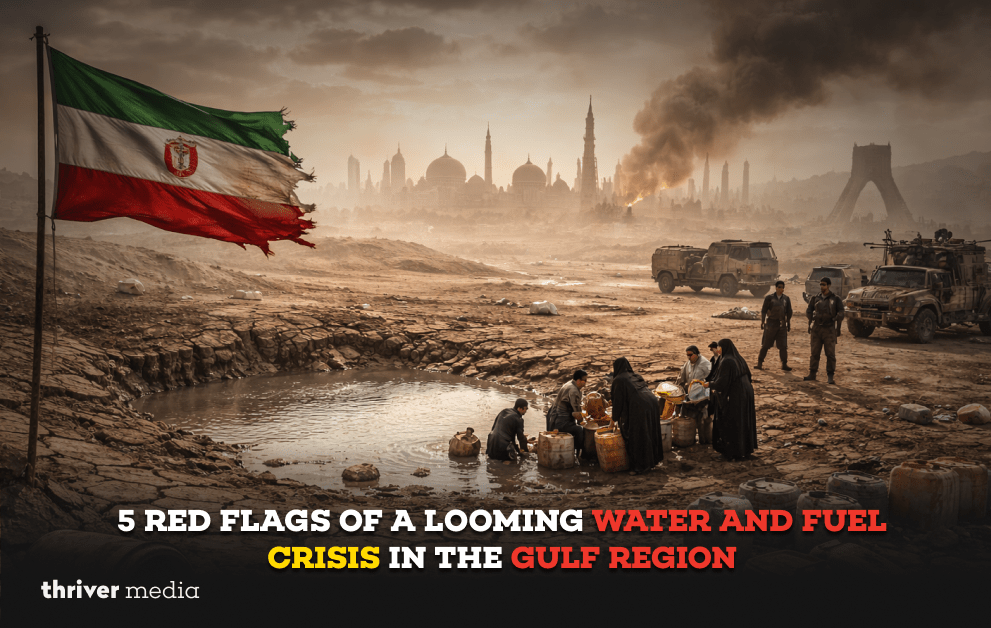
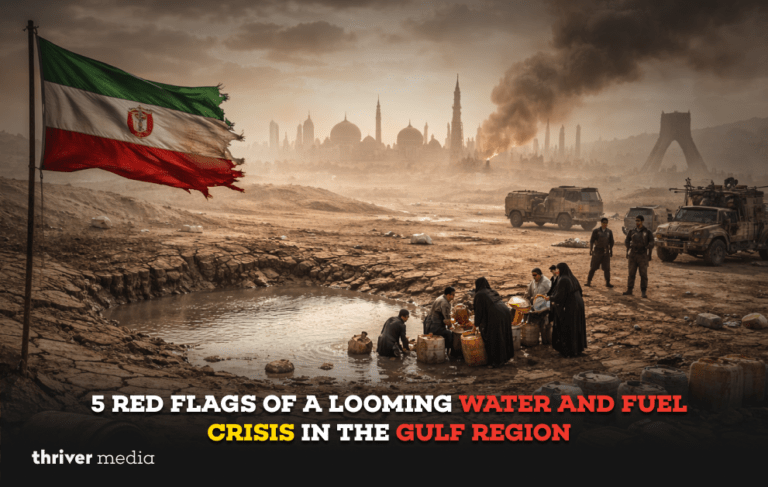
The world is watching oil prices. But the Gulf is watching something far more terrifying: the machines that turn saltwater into survival. And those machines are now in the crosshairs.
For decades, we’ve called them petrostates. Oil-rich, cash-flush, seemingly invincible. But here’s the uncomfortable truth that military analysts, intelligence agencies, and Gulf royals have quietly understood for years: the real vulnerability isn’t black gold beneath the sand it’s drinking water piped from the sea.
The ongoing conflict that began February 28 has already damaged desalination plants in multiple countries, halted the longest stretch of LNG exports since 2008, and trapped over 750 vessels in the Gulf. While politicians debate oil prices, public health officials are now warning that food, water, and air could become contaminated from the fighting.
Here are five red flags that suggest the Gulf is hurtling toward a crisis far bigger than expensive gasoline.
1. The Water Plants Are Sitting Ducks
90% of Drinking Water Comes From 56 Facilities
Let that number sink in. More than 90% of the Gulf’s desalinated water flows from just 56 plants. These aren’t scattered, redundant systems with backups and alternatives. They’re massive, fixed, coastal installations that cannot be hidden, moved, or easily protected.
A 2010 CIA analysis warned that each of these critical plants is “extremely vulnerable to sabotage or military action,” and attacks could trigger national crises in several Gulf states. Prolonged outages could last months if critical equipment were destroyed not because replacement parts are expensive, but because they’re custom-built and must travel through the same conflict zone to arrive.
Kuwait gets approximately 90% of its drinking water from desalination. Oman, 86%. Saudi Arabia, about 70%. These aren’t luxuries or backup systems. They’re the primary water source for millions of people living in one of the driest regions on earth.
The Evacuation Scenario Nobody Talks About
A leaked 2008 U.S. diplomatic cable warned of something chilling: if either the Jubail desalination plant on Saudi Arabia’s Gulf coast or its pipelines or associated power infrastructure were seriously damaged, the capital city of Riyadh “would have to evacuate within a week”.
Think about what that means. A city of 7-8 million people. No natural water sources. Limited groundwater. A single pipeline from the coast. If that pipeline is severed, Riyadh doesn’t slow down it shuts down.
Princeton scholar Bernard Haykel, one of the world’s foremost authorities on the House of Saud, put it bluntly to Bloomberg: “If those plants are damaged, you have no water and you would have to evacuate. That’s an existential crisis for Saudi Arabia”.
Saudi Arabia has invested in pipeline networks and storage reservoirs since that cable leaked. But smaller states like Bahrain, Qatar, and Kuwait have fewer backup supplies. Bahrain home to the U.S. Navy’s Fifth Fleet just had one of its desalination plants damaged by an Iranian drone.
2. The Fuel Stop Button Has Been Hit
Five Days Zero Exports A Record Since 2008
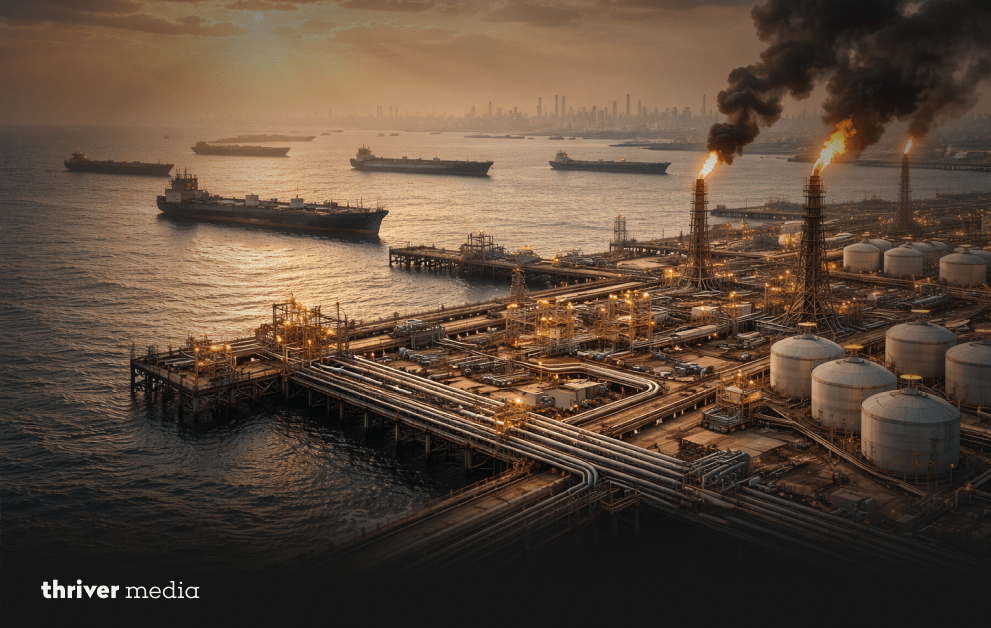
Here’s a number that should terrify global energy markets: five consecutive days with zero LNG exports from Qatar’s Ras Laffan facility. That’s never happened since record-keeping began in 2008.
The cause? Iranian drones struck the facility, and since February 28, no LNG vessels have passed through the Strait of Hormuz. Every day this continues, approximately three cargoes of Qatari LNG enough to power entire cities for weeks vanish from the market.
The combined supply gap from Qatar and a smaller UAE facility now accounts for roughly 20% of global LNG supply . This isn’t a disruption. It’s a gaping wound in the world’s energy artery.
The Domino Effect Nobody Predicted
The ripple effects are already reshaping global trade. At least eight LNG ships originally bound for Europe have turned around and headed to Asia instead. European gas prices have spiked nearly 90%, while oil has jumped 40% since the conflict began.
Saudi Aramco’s CEO Amin Nasser called this the region’s “biggest crisis” for the oil and gas industry, warning of “catastrophic consequences” if Hormuz shipping remains disrupted. He noted that 1.8 billion barrels of oil supply have already been interrupted, and global petroleum inventories are at five-year lows.
Translation: there’s no cushion. No strategic reserve big enough to absorb this. When production stops, prices don’t just rise they rocket.
3. The Chokepoint Has No Alternative
17% of World Oil, No Workarounds
The Strait of Hormuz isn’t just a narrow waterway. It’s the jugular of the global economy. Nearly 17% of the world’s oil passes through it. For LNG, the percentage is even higher.
But here’s what makes this crisis different from previous disruptions: there is no alternative route. When the Red Sea became dangerous, ships went around Africa. When pipelines break, tankers find other ports. But the Gulf is a cul-de-sac. Every oil tanker, every LNG carrier, every container ship serving the Gulf states must exit through Hormuz.
As of March 8, vessel traffic through the Strait had dropped from 91 ships daily to just 4. Over 750 vessels remain trapped inside the Gulf, waiting for safe passage . Even if the Strait reopened tomorrow, analysts warn recovery would take weeks or months ship owners need to see sustained safety before sending crews back in.
The Container Ship Nightmare
It’s not just oil tankers. Global shipping giant Maersk has 10 ships stranded in the Gulf and has paused all operations at Oman’s Salalah port after drone strikes. They’re now redistributing fuel just to keep vessels running essentially playing logistical Tetris with the lifeblood of global trade.
The Japan-flagged ONE Majesty was struck by an unknown projectile off the UAE coast. Container lines have suspended bookings for most cargo to and from UAE, Oman, Qatar, and Saudi Arabia. Critical foodstuffs, medicines, and perishable goods now face uncertain delays.
This isn’t just about energy anymore. It’s about everything that moves through the global supply chain.
4. Iran’s Own Water Crisis Makes Them Dangerous
Tehran Could Be Evacuated And That Changes Everything
Here’s the irony that strategists are quietly whispering about: Iran itself is facing a water catastrophe. After five years of extreme drought, water levels in Tehran’s five reservoirs have plunged to about 10% of capacity. President Masoud Pezeshkian has warned that the capital may need to be evacuated.
A country contemplating evacuating its own capital doesn’t play by normal rules. As one analyst put it: “I don’t dare to wonder what it’s going to be like this summer under sustained fire, with an ongoing economic catastrophe and a serious water crisis”.
When a nation faces existential internal collapse, its external calculus changes. Desperation doesn’t produce restraint it produces unpredictability.
The Asymmetric Warfare Advantage
Iran knows it can’t match U.S. or Israeli firepower. But it doesn’t need to. David Michel of the Center for Strategic and International Studies explains: “It’s an asymmetrical tactic. Iran doesn’t have the same capacity to strike back at the United States and Israel. But it does have this possibility to impose costs on the Gulf countries to push them to intervene or call for a cessation of hostilities”.
Translation: by threatening water, Iran threatens the stability of U.S. allies. And those allies have leverage with Washington that Iran lacks directly.
The Blame Game Has Begun
Both sides have now crossed a dangerous line. Iran’s Foreign Minister Abbas Araghchi claims a U.S. strike damaged an Iranian desalination plant on Qeshm Island, cutting water to 30 villages. Bahrain accuses Iran of damaging its desalination plant. The U.S. denies striking the Iranian facility.
Who hit first matters less than what’s been established: desalination plants are now targets. As one academic noted, “In the Gulf, desalination facilities are not merely infrastructure. They are essential lifelines that supply drinking water to millions. Striking them risks turning a military confrontation into a direct threat to civilian survival”.
5. The Historical Precedent Is Terrifying
What Happened in 1991 Could Happen Again
This isn’t the first time water has been weaponized in the Gulf. During Iraq’s 1990 invasion of Kuwait and the subsequent Gulf War, Iraqi forces sabotaged power stations and desalination facilities as they retreated.
At the same time, Saddam Hussein’s forces deliberately released millions of barrels of crude oil into the Persian Gulf one of the largest oil spills in history. Workers scrambled to deploy protective booms around intake valves, desperately trying to prevent the massive slick from contaminating seawater pipes.
History doesn’t repeat, but it often rhymes. The ingredients today retreating forces, damaged infrastructure, oil spills are all present.
The Norms Are Eroding
International humanitarian law, including Geneva Convention provisions, prohibits targeting civilian infrastructure indispensable to survival including drinking water facilities. But those norms have been eroding across multiple conflicts: Ukraine, Gaza, Iraq.
Once a line is crossed and the world does nothing, it ceases to be a line. It becomes a suggestion.
The Cyber Threat No One Sees
Direct strikes aren’t the only danger. In 2023 and 2024, U.S. officials blamed Iran-aligned groups for hacking into several American water utilities. Cyberattacks can disrupt operations without firing a shot no air defenses, no radar warnings, just screens going dark and pumps stopping.
Many Gulf desalination plants are integrated with power stations as co-generation facilities. Attack the power, and the water stops. Disrupt the control systems, and production halts. Fouling intake systems with oil spills? Same result.
As Ed Cullinane of Global Water Intelligence notes, “None of these assets are any more protected than any of the municipal areas that are currently being hit by ballistic missiles or drones”.
Red Flags at a Glance
FAQ
Could a major Gulf city actually run out of water?
Yes, and planners have warned about this for decades. If the Jubail plant supplying Riyadh were seriously damaged, the capital would have to evacuate within a week. Smaller states like Kuwait and Bahrain have even fewer backups.
Has any desalination plant actually been hit?
Yes. Bahrain’s plant was damaged by an Iranian drone on March 6. Iran claims a U.S. strike damaged its Qeshm Island plant. Kuwait’s Doha West plant and UAE’s Fujairah complex have also reported damage.
How long can the Gulf survive without desalination?
Days, not weeks. Strategic reserves exist, but for smaller states they’d be drawn down quickly. Full recovery from major damage could take months if critical equipment is destroyed.
The Bottom Line
The Gulf region has spent fifty years building a miracle. They turned saltwater into cities, deserts into metropolises, barren coastlines into global trade hubs. That miracle runs on two things: oil money and desalinated water. The oil money buys the water. The water enables the cities. The cities generate the wealth.
Right now, both links are under fire literally. Desalination plants have been damaged in Bahrain, Kuwait, UAE, and Iran. LNG exports have ground to a historic halt. Oil tankers can’t move. Container ships are stranded. And the country with the most to lose from escalation Iran is facing an internal water crisis so severe its own capital may need to be evacuated.
The red flags aren’t hypothetical warnings anymore. They’re damage reports. They’re export suspensions. They’re trapped vessels and evacuated villages. The question isn’t whether the Gulf faces a water and fuel crisis. The question is whether the world understands what happens when saltwater kingdoms run out of the one thing they can’t buy, can’t reroute, and can’t survive without.
Conclusion: Reading the Writing on the Wall
The Gulf’s transformation over the past two decades the ski slopes in Dubai, the golf courses in Doha, the 100-million-tourist target in Saudi Vision 2030 was built on an assumption of unlimited desalinated water. Gulf residents consume over 560 liters of water per person daily, more than three times the global average. Golf courses alone draw up to a million gallons a day.
None of that works without the plants on the coast. For the Gulf states, this is existential. For the global economy, this is systemic. For the millions of people living in cities that exist only because desalination plants keep running, this is personal.
The red flags are waving. The question is whether anyone’s paying attention.
Official Source Link: https://apnews.com/
Disclaimer: The news and information presented on our platform, Thriver Media, are curated from verified and authentic sources, including major news agencies and official channels.
Want more? Subscribe to Thriver Media and never miss a beat.