
13 January 2026
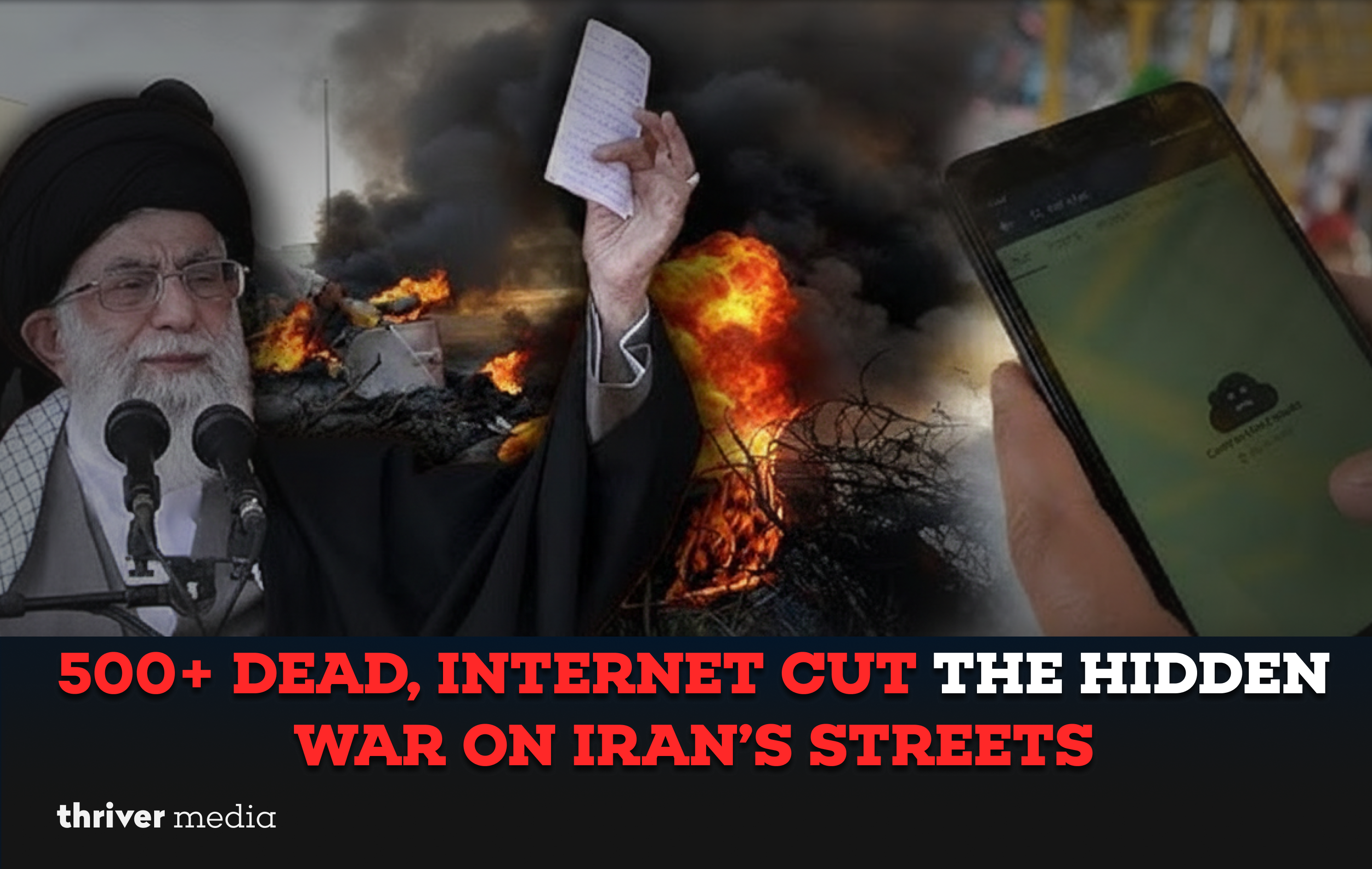
It began with the price of bread and the cry for dignity. But today, Iran’s streets are the stage for a revolution in the dark. What started as economic protests has exploded into a nationwide uprising, reaching over 180 cities. The chants have shifted from grievances to a single, seismic demand: “Marg bar Dictator!” Death to the Dictator a direct call for the end of the Islamic Republic’s rule. In the shadows, a brutal crackdown unfolds: over 500 dead, thousands vanished into prisons, and an entire nation silenced by a digital blackout. This is not just a protest; it’s a hidden war.
The Heart of the Uprising: From Bread to Revolution
The spark is familiar economic despair, corruption, and a young population suffocating under sanctions and mismanagement. But the fire it lit is unprecedented. Crowds, led fiercely by women and youth, are no longer asking for reform. They are chanting for the fall of the regime itself. In whispers and through shattered firewalls, another name circulates: Reza Pahlavi, the exiled former crown prince. For some, he symbolizes a secular, pre-revolutionary past a contested figure, but one who has become a focal point for diaspora hopes and regime fears.
The Cost in Blood and Bytes: A Regime’s Iron Fist
Independent human rights groups like Iran Human Rights and Hengaw paint a harrowing picture:
- The Human Toll: Between 500 to 646 Iranians are estimated to have been killed by security forces since the new wave of unrest began. The dead include at least 44 children. The numbers are not cold statistics; they are students, artists, teenagers who danced in videos now used as memorials.
- The Captured: Over 10,000 arrests. Those detained face torture, forced confessions, and sham trials. Families often don’t know where their children are.
- The Great Blackout: To hide its crimes, the regime has plunged 80 million people into informational darkness. Since January 8th, Iran has endured a near-total internet shutdown one of the most severe in the world.
The Machinery of Suppression: How They Enforce the Silence
This isn’t chaos; it’s a calculated strategy:
- Live Ammunition: Snipers and security forces shoot to kill, targeting protesters in the head and chest.
- Digital Siege: They raid homes to confiscate satellite dishes, the last lifeline to outside news. They aggressively jam Starlink signals, fighting Elon Musk’s low-orbit constellations to keep the digital walls high.
- The Narrative War: While streets run red, state TV airs massive, state-organized pro-government rallies. The regime’s script? Blame “foreign terrorists,” “Zionist agents,” and “American mercenaries” for the violence.
Global Outcry… and Paralysis?
World leaders have spoken:
- Emmanuel Macron of France has condemned the violence.
- Donald Trump tweeted support for the protesters, aligning with his “maximum pressure” legacy.
- Human Rights NGOs globally are pleading for action.
Yet, beyond statements, tangible international response is mired in geopolitical calculus. Eyewitnesses trapped inside, using moments of connectivity, have one desperate request: “Don’t look away. Amplify our voices.”
The Geopolitical Chessboard: Iran’s Regime Points Fingers
In a familiar deflection, Tehran’s propaganda machine aggressively blames Israel and the United States. State media frames the entire uprising as a “hybrid war” orchestrated by the CIA and Mossad to destabilize the country. This serves a dual purpose: justifying extreme domestic repression to a paranoid base, and attempting to discredit the organic, deeply Iranian nature of the protests in the eyes of the Global South. Meanwhile, the regime’s actions on the ground funding proxies, advancing its nuclear program continue unaffected, revealing a leadership focused on survival and regional power, not the welfare of its people.
FAQ: What You Need to Know
While triggered by economic hardship, the core cause is decades of political repression, social control, and a generational demand for fundamental freedoms.
No. The movement is leaderless and domestic. Pahlavi, from exile, has voiced support, but he is a symbol for some, not an operational leader.
To prevent documentation of atrocities, stop protesters from organizing, and control the narrative entirely. Darkness is a weapon.
Maintain relentless diplomatic pressure, sanction specific officials and entities involved in repression, and provide technology to circumvent censorship. Most crucially, keep the story alive.
They are conservative estimates from credible NGOs working at great risk. The true number is likely higher, with many deaths in prisons and remote areas unreported.
Context Table: The Scale of the Crisis in Iran
| Aspect | Details | Source |
| Estimated Death Toll | 500 – 646 reported fatalities, including at least 44 children | Iran Human Rights (IHR) |
| Number of Arrests | Over 10,000 individuals detained nationwide | Human Rights Activists News Agency (HRANA) |
| Cities Affected | Protests and security operations reported in more than 180 cities | Internal Security Reports |
| Internet Shutdown | Near-total national blackout affecting approximately 80 million people; severe throttling and platform restrictions | NetBlocks.org |
| Satellite Dish Raids | Widespread confiscation campaigns across major urban centers | Eyewitness accounts and local reports |
Official Source Links for Verification:
- Iran Human Rights (IHR): https://iranhr.net/
- Hengaw Organization for Human Rights: https://hengaw.net/en
- NetBlocks Internet Shutdown Tracker: https://netblocks.org/
The Bottom Line
This is a battle for Iran’s soul. On one side: a powerful, entrenched regime willing to kill its youth and blindfold a nation to survive. On the other: a fearless generation with nothing left to lose, broadcasting their revolution in fragments whenever the digital wall cracks. The world hears the chants muffled by gunfire and firewalls. The question is no longer if Iran is changing, but who will win the war to define its future.
Conclusion: The Flickering Signal
The story of Iran today is written in banned satellite signals, in encrypted messages, and in the silenced songs of protesters. The regime’s violence and its relentless blame of Israel and the US are two sides of the same coin: a fight for its own survival against the will of its people. The internet may be cut, but the signal of resistance is a flickering, unquenchable flame. To follow this story is to bear witness. It is to reject the darkness they are trying to impose. The streets of Iran are speaking. The least we can do is listen and then, amplify.
Disclaimer: The news and information presented on our platform, Thriver Media, are curated from verified and authentic sources, including major news agencies and official channels.
Want more? Subscribe to Thriver Media and never miss a beat.