
28th February 2026
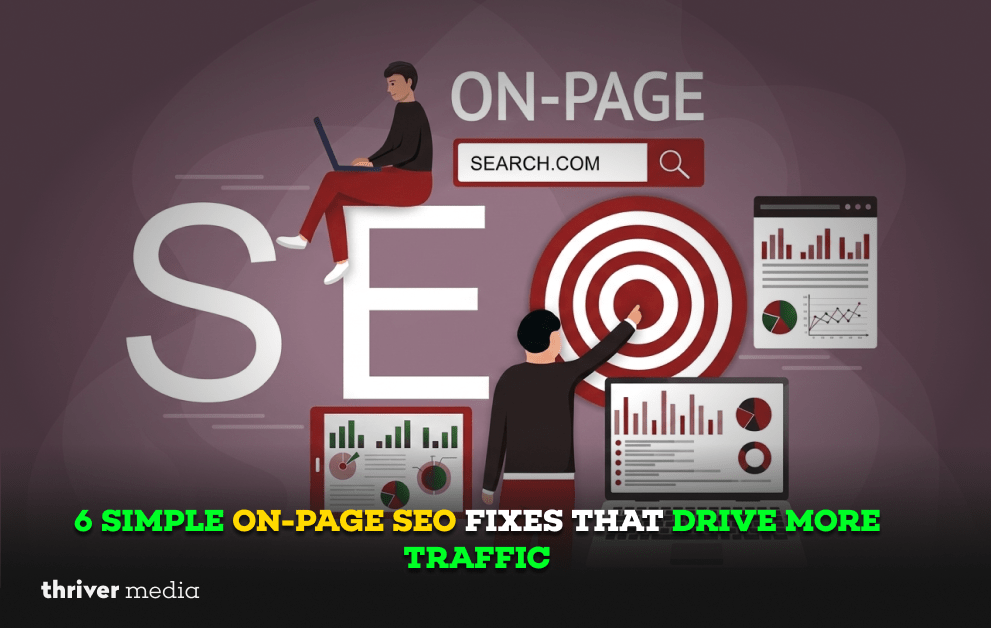
Introduction On-Page SEO
Most websites don’t have a traffic problem. They have an optimization problem.
If you run a website and your organic traffic isn’t growing, the solution might be simpler than you think. You probably don’t need a full redesign, tons of new content, or extra backlinks. Most likely, you need strong on-page SEO.
Algorithm updates and off-site factors like link building can be difficult to control. Rankings shift. Competitors build backlinks. Search engines evolve.
But on-page SEO? That’s fully in your hands.
As Turk (2025) notes, many websites struggle not because of complex algorithm changes, but because of simple on-page mistakes. Broken links, weak title tags, and poor user experience quietly damage rankings (R., 2025).
The good news is that these issues are fixable.
Updating a title tag to include a relevant keyword can strengthen search visibility. Fixing a broken internal link improves crawlability and user experience. These are small changes but they matter.
For example, after fixing all broken links on our blog last quarter, we saw a 15 percent increase in organic traffic within one month.
That’s the power of optimization.
On-page SEO is the practice of improving individual web pages so they rank higher and attract more qualified visitors. Unlike off-site strategies, it doesn’t depend on external factors. It depends on how well you structure and optimize what’s already on your site.
This article is both a practical on-page SEO guide for 2026 and a checklist that anyone can use, whether you’re new to SEO or managing a well-established site. If you’re a beginner, you’ll find the key basics you need, like fixing headers and meta tags. If you already know the basics, you’ll get tips to fine-tune your strategy, such as matching search intent or improving keyword placement. No matter your experience level, you’ll find simple steps here to help you move forward.
To see how easy on-page SEO wins can be, try one quick change: update a page’s title tag with a better keyword and check your clicks in Google Search Console. You could also rewrite the first sentence of a blog post to include your target keyword. Even adding one internal link from a strong page can increase your traffic. These simple changes can boost your confidence and show real results in just a few days.
Why On-Page SEO Still Matters in 2026
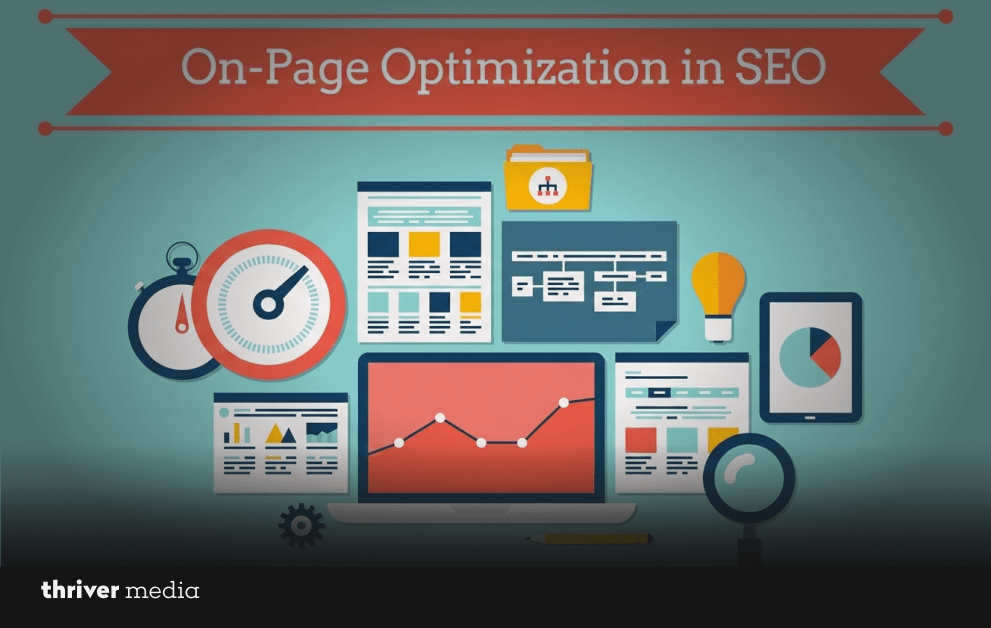
Every year, people say on-page SEO is no longer important. Every year, it proves them wrong.
In 2026, search engines are smarter than ever, but they still rely on fundamental signals from your website. Want to see for yourself that on-page SEO still works? Try this: pick just one underperforming page on your site and update the title tag and meta description using the best practices below. Track your rankings and click-through rate over the next week. The results might surprise you. Here’s why on-page SEO stays important:
- Search engines highlight relevance and user experience. Google’s ranking system rewards pages that clearly communicate what they’re about and deliver value to visitors.
- Technical perfection means nothing without optimized content. You can have the fastest website on the internet, but if your titles, headers, and copy don’t match what people are searching for, you won’t rank.
- Strong on-page SEO builds long-term organic growth. Off-page SEO (backlinks, brand mentions) is important, but it’s established on a foundation of on-page excellence. Without it, no amount of backlinks will help.
6 Simple Fixes: On-Page SEO Steps That Drive More Traffic
1. Optimize Your Title Tags Properly
Your title tag is the first thing people see in search results, and it affects both your ranking and how many people click. Still, many websites overlook simple title tag optimization.
Follow these three principles:
- Include your primary keyword naturally. Don’t force it, but make sure the main keyword your page targets appears in the title.
- Keep it under 60 characters. Titles longer than 60 characters get truncated in search results, making them less clickable.
Your title should be compelling and focused on the visitor’s benefit. It must appeal to the searcher — not just the algorithm.
Use power words that promise clear value. Words like conversion-boosting, traffic-driving, or lead-generating immediately signal what the reader will gain. Avoid vague terms like interesting or helpful. They don’t create urgency or clarity.
You can also strengthen your title by adding words like guide, essential, or proven. These words set expectations. They tell the reader exactly what kind of content they’re about to click.
Titles and meta descriptions do not directly influence rankings. But they strongly impact click-through rate.
And click-through rate matters.
A weak meta description can cost you traffic even if your page ranks in the top three. If your snippet looks generic, users will scroll past it.
Think of your meta description as your page’s advertisement in search results.
It’s your 150-character pitch.
A strong, relevant meta description persuades searchers to choose your link over competitors. It highlights value. It creates clarity. It answers the “What’s in it for me?” question instantly.
While it won’t directly boost rankings, it can significantly increase traffic by improving clicks.
And more clicks mean more opportunity.
Best practices:
- Aim for 150–160 characters. This is the sweet spot before truncation on most devices.
- Include your primary or secondary keyword. Users often scan the snippet for their search terms.
- Focus on click-through rate, not ranking. Write for the human, not the algorithm. Answer a question or create curiosity.
Example: “Master on-page SEO with 7 proven fixes. Our practical guide covers title tags, headers, internal links, and more. Perfect for beginners and intermediate marketers.”
2. Use Proper Header Structure (H1, H2, H3)
Headers do two things: they structure content for search engines and make content scannable for users. A page with proper header hierarchy ranks better and gets read more. For example, before we organized one of our long-form guides using clear H2 and H3 headings, our analytics showed readers only scrolled about 40 percent of the article. After restructuring with descriptive headers for each section, average scroll depth rose to 75 percent, and average time on page jumped by over a minute. This small UX tweak helped readers quickly scan and find the value they wanted, leading to a big boost in dwell time and stronger engagement signals that also contribute to higher search rankings.
Header best practices:
- Use one H1 per page. Your H1 should be your main topic and include your primary keyword.
- Maintain a clear hierarchy. Use H2 for main sections and H3 for subsections. Don’t skip levels.
- Place keywords strategically. Include your target keyword in the H1 and related keywords in H2s and H3s, but only if it feels natural.
3. Improve Keyword Placement (Without Stuffing)
Keyword placement still matters, but keyword density is dead. Instead, focus on placing keywords so your readers immediately feel, “This content is speaking directly to me and my needs.” Sprinkle your target terms where they make sense, and create a setting that lets visitors instantly recognize your page truly understands their search intent. Natural keyword distribution should make your content feel helpful and caring, not robotic or forced.
Quick keyword placement checklist for busy website owners:
- Include your target keyword in the introduction, preferably within the first 100 words.
- Use the keyword in at least one subheading (H2 or H3).
- Naturally include your keyword and synonyms throughout the body content.
- Avoid overusing the exact phrase; always keep readability and user satisfaction in mind.
Purposeful keyword placement:
- Place keywords in the first 100 words. This tells search engines that your page is immediately relevant to the topic.
- Include keywords in subheadings. If you’re writing about “on-page SEO for beginners,” use that phrase (or variations) in at least one or two H2s or H3s.
- Sprinkle throughout naturally. Use the keyword and related synonyms throughout the body copy, but target a natural tone.
4. Optimize Images
Images improve user engagement and can rank in image search results. But only if they’re optimized.
Image optimization checklist:
- Apply descriptive file names. Instead of “image-1.jpg,” use “on-page-seo-checklist.jpg.” This enables search engines to understand the image.
- Write alt text with keywords. Alt text benefits users with visual impairments and search engines. Make it descriptive but natural.
- Compress for speed. Large images slow down your page. Use tools such as TinyPNG or your CMS’s built-in compression to reduce file size.
5. Strengthen Internal Linking
Internal links guide users and search engines through your site. They’re one of the most underrated on-page SEO tactics.
Internal linking strategy:
- Link to related articles. Internal links help visitors navigate your website in a logical, simple way. For example, if you mention “technical SEO,” link to your technical SEO guide so readers can learn more. This holds users’ attention, builds your authority on the topic, and encourages people to check additional content. Instead of using vague phrases like “click here,” use descriptive anchor text such as “learn more about keyword research” or “read our on-page SEO guide.”
- Guide the user journey. Think about how a visitor enters your site and what related content would naturally come next.
6. Improve Content Readability & User Experience
Google measures how users interact with your content. Inconsistent website styles can significantly increase cognitive strain for visitors, thereby negatively affecting how long users remain engaged with page content (Crudu and Team 2025).
Readability improvements:
For example, after shortening our average paragraph length from 5 sentences to 2-3 sentences across recent blog posts, our Flesch Reading Ease score improved from 53 (fairly difficult) to 68 (plain English). As a result, our average time on page increased by 18 percent, and exit rates dropped by 10 percent within one month. These concrete readability gains show that breaking long blocks of text into shorter sections doesn’t just look better, it keeps readers engaged longer and drives more positive user signals.
- Use small paragraphs. Break up long blocks of text. Most online paragraphs should be 2-3 sentences maximum.
- Add bullet marks and lists. They break up visual monotony and help readers scan for information.
- Use clear formatting. Bold key phrases, use adequate spacing, and make headers stand out.
- Add tables where helpful. Comparisons, checklists, and summaries become more scannable in table format.
On-Page SEO Checklist (Quick Reference Table)
| SEO Element | What to Check | Why It Matters |
| Title Tag | Under 60 characters, includes keyword | Improves ranking & CTR |
| Meta Description | Compelling & keyword-rich | Boosts clicks |
| Headers | Structured H1-H3 format | Improves clarity |
| Keyword Placement | Natural distribution | Avoids penalties |
| Internal Links | 3–5 relevant links | Increases session time |
| Image Optimization | Alt text + compression | Improves UX & ranking |
| Readability | Short paragraphs, bullets | Reduces bounce rate |
On-Page SEO for Beginners Where to Start
If you’re new to on-page SEO, the list of optimizations can feel overwhelming. Don’t try to do everything at once. Instead, follow this prioritized roadmap:
- Fix your title tags and meta descriptions. These take 30 minutes and immediately impact CTR.
- Restructure your headers. Ensure each page has one H1 and a clear H2/H3 hierarchy. This takes 1-2 hours per page.
- Add internal links. Link to 3-5 related pages from each article. This takes 15 minutes per page.
- Improve content depth. Add more comprehensive coverage if a competitor ranks higher with similar content.
- Optimize images. Once basics are covered, invest time in image optimization and compression.
The main takeaway is that beginners don’t need dozens of tools. What matters most is knowing what’s important and applying these basics consistently. Start with these seven fixes, get comfortable with them, and then build on your strategy.
On-Page SEO Guide 2026 What’s Changed?
On-page SEO in 2026 isn’t radically different from 2024, but the emphasis has shifted. Here’s what’s changed and what hasn’t:
Are you still focusing on keywords first? In 2026, the big change is that search intent is more important than keyword density. Google now ranks pages higher if they meet what users are looking for, not just if they use the exact keywords. So, your page structure, content focus, and supporting details are just as important as the keywords you use.
User experience signals influence ranking. Page speed, mobile friendliness, and time on page all factor into rankings. This is why readability and well-organized structure (both improvements covered above) are so important.
AI-created content still needs a human touch. If you use AI to write, you should edit it for relevance, accuracy, and optimization. Content straight from AI usually does not rank well unless you improve it with careful editing. To get the most value from AI-generated drafts, follow these essential steps:
- Fact-check all claims and statistics to ensure accuracy.
- Add unique ideas or real-world examples that only you or your business can provide.
- Review the content for clarity, tone, and conformity with your brand’s voice.
- Optimize for keywords, headings, and key SEO elements discussed above.
- Check formatting and structure for readability.
- Eliminate repetition or vague language that AI tools sometimes produce.
By editing your automatically generated content with these steps, you will not only improve rankings but also create higher-quality, original content for your site.
Topical authority beats random blog posts. Websites that comprehensively cover a topic (with strong internal linking and depth) now rank better than sites with shallow, scattered content. This means building content clusters and pillar pages is more important than ever.
Frequently Asked Questions (FAQs)
What is on-page SEO?
On-page SEO refers to optimizing individual web pages to rank higher in search engines by improving content, structure, and HTML elements such as titles, headers, and meta descriptions.
Is on-page SEO enough to rank?
It is the foundation. Without strong on-page SEO, off-page tactics like backlinks and brand mentions won’t perform effectively. But on-page SEO alone typically isn’t enough; you need both.
How often should I update my on-page SEO?
Check and revise your on-page SEO every 3–6 months. As you publish new content and update existing pages, periodically audit your main pages to ensure they still follow best practices.
Is this checklist suitable for beginners?
Yes. These 7 fixes cover the essential fundamentals that beginners need to understand and apply first. Once you master these, you can explore more advanced SEO strategies.
What’s the biggest mistake in on-page SEO?
Keyword stuffing and ignoring user experience. Some webmasters still try to cram keywords into every sentence, which hurts readability and triggers spam filters. Meanwhile, others ignore readability entirely. Balance keyword optimization with user experience.
How Thriver Solves Your On-Page SEO Problems
If you understand on-page SEO but don’t have the time or expertise to implement it across your entire website, that’s exactly what Thriver specializes in.
We position ourselves as:
- Experts in technical audits. We identify on-page SEO gaps before they cost you traffic.
- Content optimization specialists. We don’t just check boxes; we strategically maximize content for both search engines and users.
- Conversion-focused SEO strategists. Better rankings mean nothing without converting clicks into customers.
What we do:
Here’s what this means for our clients in practice:
After we completed a comprehensive on-page SEO audit for a mid-sized e-commerce brand, mapped keywords to every core page, and filled key content deficiencies, the site saw a 40 percent increase in organic traffic within 60 days. By improving structure, headers, and internal links, along with targeted improvements to meta descriptions and title tags, click-through rates for priority products rose by over 25 percent. Enhanced readability and user experience not only improved engagement metrics but also led to a measurable lift in conversions.
These are the kinds of outcomes we deliver when we apply the fundamentals outlined above. If you’re ready to see similar results, let’s talk.
The result? Measurable traffic growth, better rankings, and a more effective website that performs for both users and search engines.
Bottom Line
On-page SEO isn’t complicated. It’s all about consistency and a clear structure.
When you apply these 7 fixes, optimizing your title tags and meta descriptions, using proper header structure, improving keyword placement, improving images, strengthening internal links, and prioritizing readability, you create a strong basis for sustainable organic growth.
Conclusion
Traffic doesn’t increase by chance. It grows when you intentionally optimize every page.
Use this article as your working on-page SEO checklist. Apply these tactics consistently. Treat it as your practical on-page SEO guide 2026. Whether you’re a beginner searching for on-page SEO basics or a marketer scaling a brand, strong on-page SEO remains the difference between being invisible and visible in search results.
Begin with one page. Learn these basics well, then apply them to your entire site. This is the path to steady, longstanding growths.
Disclaimer: The news and information presented on our platform, Thriver Media, are curated from verified and authentic sources, including major news agencies and official channels.
Want more? Subscribe to Thriver Media and never miss a beat.