
24th Febraury 2026
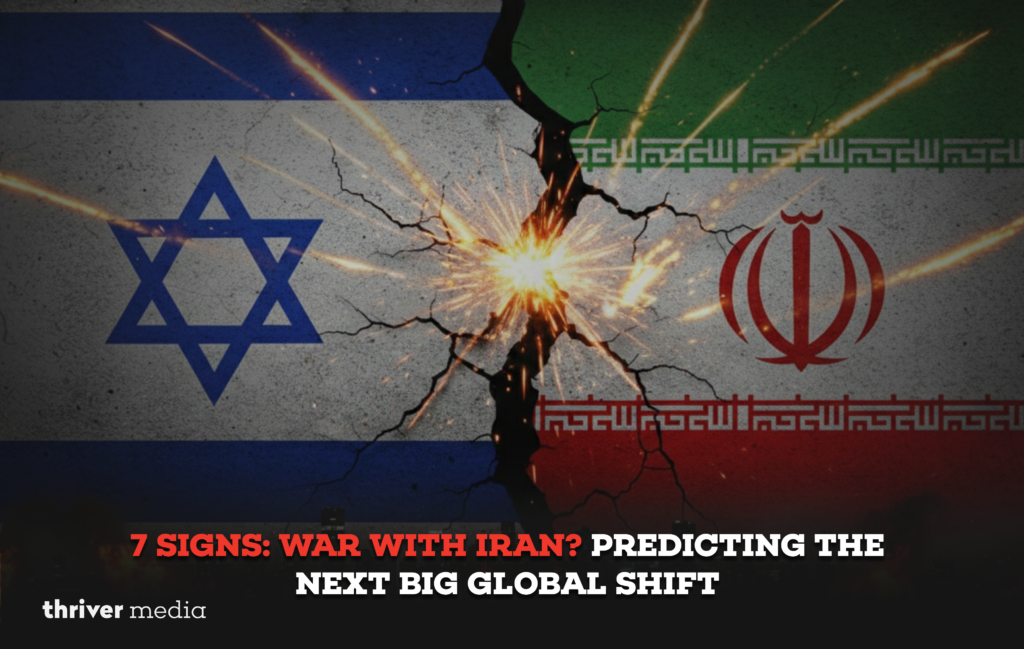
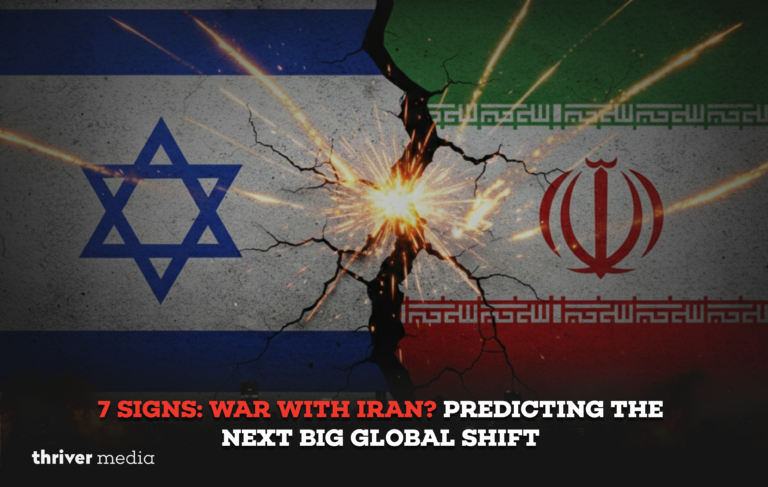
The Middle East is holding its breath. Right now, the United States and Iran are locked in a high-stakes stare-down that feels terrifyingly different from everything that’s come before. Two aircraft carriers are in position. Diplomats are fleeing Beirut. And President Trump just gave Tehran a 10-to-15-day ultimatum to cut a deal or else.
Key Warning Signs: The Iran Conflict Barometer
| Indicator | Current Status | What It Means |
|---|---|---|
| U.S. Naval Presence | 2 aircraft carrier strike groups (USS Ford, USS Lincoln) deployed in the region | Similar buildup was seen before the June 2025 strikes on Iran |
| Diplomatic Timeline | 10–15 day ultimatum given, expiring late February | Failure to reach a deal could trigger severe consequences |
| Embassy Status | Non-essential staff evacuated from Beirut | Standard precaution before potential conflict escalation |
| Iran’s Position | Open to talks but also conducting live-fire drills in the Strait of Hormuz | Shows a dual strategy of diplomacy and military deterrence |
| Israeli Readiness | Security cabinet meetings and strong strategic rhetoric | Indicates Israel sees a possible strategic opportunity |
| Negotiation Status | Peace talks stalled; Iran refuses missile program discussions | Major diplomatic barriers remain |
| Expert Consensus | War risk is rising; potential conflict could exceed 2025 escalation levels | Situation may be more serious than previous confrontations |
Sign 1: The Largest U.S. Military Buildup Since the Iraq Invasion
Two Aircraft Carriers and Counting
When the USS Gerald R. Ford pulled into Souda Bay, Crete, on February 23 for a four-day resupply, it wasn’t just another port call . The world’s largest aircraft carrier is now poised to join the USS Abraham Lincoln, which has already been operating in the Middle East. This marks only the second time since last June’s strikes on Iran that the U.S. has deployed two carrier strike groups to the region.
But here’s what the official statements aren’t highlighting: this isn’t just a naval buildup. U.S. aerial refueling tankers and C-17 Globemaster transport planes have arrived at Israel’s Ben Gurion Airport. Fighter jet numbers have increased significantly at Jordan’s Muwaffaq Salti Air Base. The pieces are being moved into place for something substantial.
What Military Analysts Are Saying
Dana Stroul, research director at the Washington Institute for Near East Policy, put it bluntly: “The U.S. military is ready for a sustained, highly kinetic campaign”. That’s military-speak for: this isn’t about a few airstrikes. This is preparation for extended operations.
Omani political analyst Khalfan al-Touqi went further, warning that if conflict erupts, it “will not resemble the limited 12-day war in June last year. The strikes will not be limited, as some expect, but will be far more dangerous, with dire consequences not just for Iran, but for the entire region”.
Sign 2: The Diplomatic Clock Is Ticking Loudly
Trump’s 10-to-15 Day Ultimatum
President Trump has never been subtle about deadlines. In recent days, he’s made it crystal clear that a nuclear agreement must be reached within a timeframe of 10 to 15 days . His warning? “Really bad things” will happen if that deadline passes without results.
Trump acknowledged in press statements that he’s actively considering the possibility of a limited military strike to force the Iranian leadership back to the negotiating table on new terms . But here’s the catch: the exact timing remains unclear, pending the completion of U.S. troop deployment by mid-March . That means even if talks happen, the military timeline is running on a separate track.
What “Really Bad Things” Might Look Like
The New York Times reported on February 23 that Trump is considering launching a “targeted strike” on Iran to pressure Tehran into accepting his nuclear demands. If Iran continues to hold out, that strike could be followed by a “larger attack” later this year.
This two-phase approach would allow Trump to claim he tried diplomacy first, then responded proportionally a narrative that might play better domestically and internationally. But as any student of Middle East conflicts knows, “limited strikes” have a nasty habit of expanding once the first bombs drop.
Sign 3: Diplomats Are Leaving Always a Red Flag
The Beirut Embassy Evacuation
On February 23, the U.S. government ordered all non-essential staff to leave its embassy in Beirut . About 50 members of U.S. embassy staff were ordered out, with 32 staff members and their families actually flying out of Beirut airport on Monday.
A senior State Department official framed it as routine: “We continuously assess the security environment, and based on our latest review, we determined it prudent to reduce our footprint to essential personnel. The embassy remains operational with core staff in place”.
But here’s the unspoken reality: embassies don’t evacuate personnel unless the threat assessment has shifted dramatically. And given that Hezbollah which is backed by Iran has a history of attacking U.S. facilities in Lebanon (including the 1983 bombing that killed 241 U.S. Marines), this move signals genuine concern about retaliatory strikes .
What About Other Diplomats?
The State Department also began evacuating non-essential personnel and their families from the U.S. embassy in Beirut. Meanwhile, Secretary of State Marco Rubio delayed a planned trip to Israel without announcing a reason. Israeli media reports now suggest the trip has been pushed to next Monday, but the State Department won’t confirm.
When top diplomats start changing schedules and embassies start emptying, the smart money pays attention.
Sign 4: Iran Is Preparing for War While Talking Peace
The Strait of Hormuz Drills
Iranian officials have mastered the art of walking and chewing gum at the same time. Even as Tehran sends negotiators to Geneva, its military is conducting live-fire drills in the Strait of Hormuz.
This isn’t random saber-rattling. The Strait of Hormuz is the world’s most important oil chokepoint, through which about 20% of global petroleum production passes. If Iran decides to disrupt shipping there, oil prices would skyrocket and global markets would convulse.
Iranian Foreign Ministry spokesman Esmaeil Baghaei made the position clear: any U.S. attack, “regardless of its scope and scale, will be considered an act of aggression and met with consequences”. Iran’s ambassador to the U.N., Amir Saeid Iravani, went further, warning that “all bases, facilities and assets of the hostile force in the region would constitute legitimate targets”.
What “Consequences” Actually Means
This time, experts say, Iran’s response wouldn’t be symbolic. After the U.S. killed Qassem Soleimani in 2020, Iran fired missiles at Iraqi bases but gave advance warning, ensuring no American casualties. After last June’s strikes, Iran’s retaliation damaged only a geodesic dome in Qatar.
That restrained approach appears to be over.
“I think now we’re moving towards a world in which the regime is at least publicly signaling that it will be fighting in a much less constrained manner than before,” said Behnam Ben Taleblu of the Foundation for Defense of Democracies.
Ali Vaez of the International Crisis Group agreed: “They’ve come to the conclusion that the only way to stop this cycle of bombing Iran every few months really requires that they draw blood and they inflict significant harm on the U.S. and Israel”.
Sign 5: The Nuclear Contradiction That Makes No Sense
“Obliterated” vs. “Imminent Threat”
Here’s where the logic gets fuzzy. President Trump has repeatedly claimed that last June’s strikes “obliterated” Iran’s nuclear program. He’s said it over and over: in June, July, August, September, October, November, December, and as recently as October 2025, when he declared Iran no longer had a nuclear program at all.
But now the administration is warning that Iran is “probably a week away from having industrial-grade bomb-making material,” according to special envoy Steve Witkoff.
So which is it? Was the program obliterated, or is it weeks from producing bomb fuel? Both can’t be true.
The Real Story
What actually happened? When CNN broke the news last June that early U.S. intelligence assessments didn’t back up Trump’s “obliterated” claims finding the strikes only set the program back by months the administration pushed back hard. But the intelligence community’s March 2025 assessment had concluded Iran was “not building a nuclear weapon”.
The logical inconsistency hasn’t gone unnoticed. When White House press secretary Karoline Leavitt was asked why the U.S. might need to strike Iran again after its program was supposedly destroyed, she responded: “Well, there’s many reasons and arguments that one could make for a strike against Iran”.
That’s not a coherent policy. That’s searching for justification.
Sign 6: Israel Sees a “Historic Opportunity”
Netanyahu’s Calculations
Israeli Prime Minister Benjamin Netanyahu convened the Security Cabinet on February 22 for comprehensive briefings on Iran and multiple fronts. The assessment? A U.S. attack could come in the near future.
But here’s what’s really interesting: Israeli sources have described the current moment as a “historic opportunity” to alter the nature of the regime in Tehran and reduce long-term risks .
That’s not defensive language. That’s offensive ambition.
Israel’s Preference: Stay in the Background
Despite this enthusiasm, Israel reportedly “prefers not to appear at the forefront of events”. The ideal scenario for Jerusalem: the U.S. does the heavy lifting while Israel stays in a supporting role.
But there’s a catch. After Netanyahu met with Trump earlier this month, he reportedly expressed confusion about the president’s stance on Iran. “Is he still with us? I’m worried,” Netanyahu asked an American official, according to Channel 12.
If Israel can’t read Trump’s intentions clearly, that uncertainty itself becomes a risk factor. Misreading American willingness to act could lead to miscalculations on all sides.
Sign 7: Talks Are Going Nowhere Fast
What’s Actually Happening in Geneva
Two rounds of intensive negotiations have already occurred one in Muscat, one in Geneva addressing uranium enrichment and Iran’s ballistic missile system. A third round is scheduled for February 26 in Geneva.
But behind the scenes, things aren’t progressing. Sources report that Iranian Foreign Minister Abbas Araqchi refused to even open an envelope containing American proposals regarding missiles. Omani mediators delivered it, but Iran’s response was absolute rejection.
Iran’s position remains firm: Supreme Leader Ali Khamenei considers enrichment and missile development sovereign rights that are not open to negotiation. Meanwhile, Washington wants those very programs restricted or eliminated.
The “Win-Win” Mirage
Iranian officials talk about wanting a “win-win agreement” that restores the “rights of Iranians” infringed by sanctions. But for Trump, any deal must include significant Iranian concessions and he’s made clear the alternative is military action.
Iran denies reports of a “temporary agreement” and says it’s still drafting positions. Spokesman Esmaeil Baghaei insists Tehran has “no interest in prolonging the process” because Iranians are suffering under sanctions. But actions speak louder than words, and the fundamental gaps remain vast.
FAQs
No. Despite all the warning signs, many analysts believe the massive U.S. military buildup is designed to extract maximum concessions at the negotiating table, not guaranteed conflict . The most probable scenario, according to some experts, is continued threats and possibly limited retaliation rather than full-scale war.
If military action occurs, it likely wouldn’t come until after U.S. troop deployment is complete by mid-March. Trump’s 10-to-15 day deadline expires in late February, but the military timeline appears slightly longer.
Experts believe Iran would retaliate much more forcefully than in the past potentially targeting U.S. bases in Qatar, Kuwait, and Bahrain; disrupting shipping in the Strait of Hormuz; and using its extensive missile and drone arsenal.
Israel sees a “historic opportunity” to weaken or change the Iranian regime. However, it prefers the U.S. to take the lead while Israel remains in the background.
The Bottom Line
Here’s what you need to understand about this moment:
The gap between diplomatic rhetoric and military reality is closing fast. Two aircraft carriers don’t deploy to the region for show. Embassies don’t evacuate staff as a negotiating tactic. “Historic opportunity” language from Israel isn’t casual conversation.
But here’s the paradox: all this military pressure might actually be designed to make diplomacy work. Trump has repeatedly said he prefers a deal to war . The massive buildup gives him leverage he wouldn’t otherwise have. If Iran makes meaningful concessions perhaps on enrichment levels or international oversight a strike could be averted.
Conclusion
The problem is that both sides have painted themselves into corners. Trump’s 10-to-15 day ultimatum creates expectations he may struggle to walk back. Khamenei’s insistence on enrichment as a sovereign right leaves little room for compromise. And once you move two carrier groups into position, backing down without a visible win looks like weakness.
The most dangerous moment may be the one we’re already in. Not because war is inevitable it’s not. But because miscalculation becomes increasingly likely when everyone is armed, posturing, and convinced the other side will blink first.
The February 26 Geneva talks will tell us a lot. If Iran shows genuine flexibility perhaps on the 60% enrichment levels that worry Washington a path forward exists. If not, and if Trump’s deadline passes without a deal, the world may finally learn what “really bad things” means in practice.
One thing is certain: the Middle East is holding its breath. And so should we.
Official Sources:
- U.S. Department of State (referenced in BBC reporting )
- U.S. Central Command (referenced in CGTN reporting )
- Iranian Foreign Ministry (referenced in Anadolu Ajansı reporting )
Disclaimer: The news and information presented on our platform, Thriver Media, are curated from verified and authentic sources, including major news agencies and official channels.
Want more? Subscribe to Thriver Media and never miss a beat.