
24th February 2026
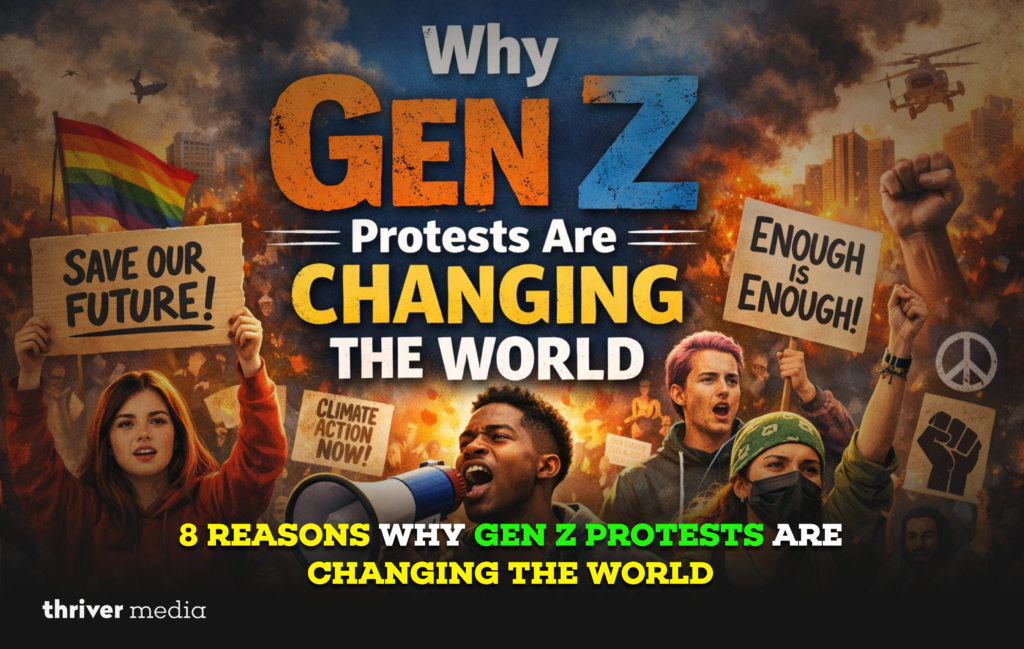
8 Ways Gen Z Is Rewriting the Rules of Protest
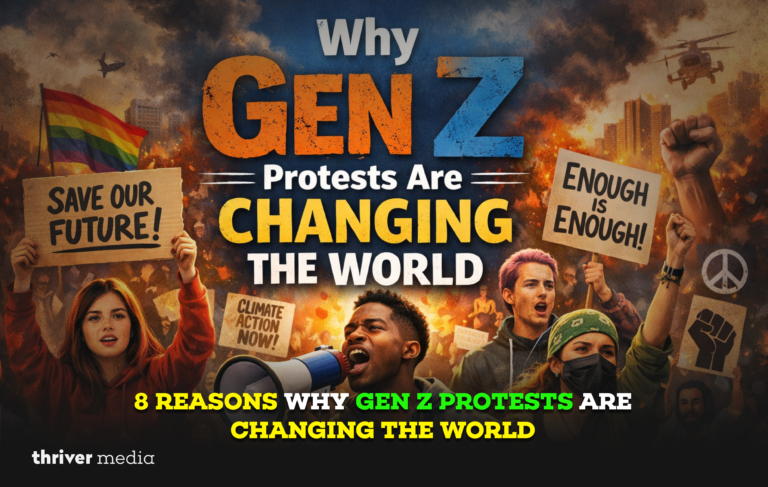
In 2025, youth-led movements overthrew governments in Nepal and Madagascar, forced prime ministers to resign in Bulgaria, and shut down luxury development projects favored by the ultra-wealthy. The Carnegie Protest Tracker recorded 53 demonstrations with over 10,000 participants across 33 economies last year, marking the highest total since tracking began in 2010. As a result, this indicates a significant rise in large-scale global protests compared to previous years. Therefore, analysts suggest that youth activism and digital coordination may be driving this upward trend in public demonstrations.
| Tactic | What It Looks Like | Why It Works |
|---|---|---|
| Leaderless Structure | Anonymous organizers using platforms like Discord with no single spokesperson | Makes it harder for authorities to target or stop the movement leadership |
| Platform Agility | Coordinating protests across TikTok, Discord, WhatsApp, Telegram, and Zello | Ensures movement continues even if one platform is restricted |
| AI-Powered Analysis | AI tools breaking down complex laws and policies into simple explanations | Makes political information accessible to more people quickly |
| Viral Narrative Control | Using drone footage, protest videos, and emotional storytelling | Shapes global public opinion faster than traditional media |
| Crypto & Crowdfunding | Donations through GoFundMe, crypto wallets, and digital funding | Allows funding without relying on traditional financial systems |
| Symbolic Unity | Shared symbols like flags or coordinated clothing | Creates strong visual identity and group solidarity |
| Real-Time Safety Tools | Panic buttons, live location sharing, and voice apps | Helps protect protesters during emergencies or crackdowns |
| Policy-Focused Demands | Specific demands like improved public services instead of broad slogans | Makes movements harder to dismiss and easier to negotiate with |
However, what is different about this wave of protests is that Gen Z is not necessarily interested in taking political control. Instead, their protests are centered around shaping systems, public opinion, and policy through digital and social media platforms.As such, this is a shift from the traditional goals of protests to a decentralized form of activism.
Reason #1: They’ve Perfected the Leaderless Revolution
The Discord Generation
Despite their efforts to crush protests in September 2025, Nepali security forces faced an impossible problem: there was no one to arrest. The movement known as “Gen Z 977” (Nepal’s country code is 977) organized tens of thousands of protesters through Discord servers, with no named leaders, no official spokespeople, and no hierarchical structure that could be decapitated .
This wasn’t an accident. Gen Z learned from the Arab Spring’s failures.The arrest of prominent activists like Wael Ghonim in Egypt often led to movements losing direction and momentum, highlighting the vulnerability of centralized protest structures. Today’s protesters have built systems where authority is distributed, decisions are made through straw polls on encrypted apps, and no single person can be tortured into revealing everyone else .
How It Actually Works
In Morocco, the group “GenZ 212” emerged in mid-September 2025 on Discord a platform better known for gaming than activism . Within weeks, its server attracted more than 150,000 members. Group leaders remained completely anonymous, yet they organized Morocco’s largest youth demonstrations in years over healthcare failures and inequality .
When Moroccan authorities demanded to negotiate, they couldn’t find anyone to negotiate with. The movement had no leaders to co-opt, no figureheads to grant concessions to, no recognizable faces to put on television. It was a revolution without a head and therefore impossible to behead.
Reason #2: They Turn Social Media Into a Weapon of Mass Instruction
Beyond Hashtag Activism
The Arab Spring was called the “Facebook Revolution,” but Gen Z has taken digital organizing to another level entirely. Back then, social media helped coordinate gatherings and share footage. Today, it’s where the movement actually lives.
In Kenya, when the finance bill entered public debate in June 2024, grassroots volunteers organized “retweet chains” on X and in WhatsApp groups that propelled protest hashtags like #RejectFinanceBill2024 and #OccupyParliament onto nationwide trending lists . Analysis of 25 million protest-related posts found that only 2.8 percent were original tweets the rest were retweets, revealing how a small pool of messages was multiplied at scale by supporters acting in perfect sync .
The AI Revolution in Protest
But here’s where it gets truly sophisticated. Kenyan developers deployed a “Finance Bill GPT” on Telegram and X that parsed clause-by-clause questions like “How will the VAT hike affect fuel prices?” The lead developer explained: “Reading 300 pages is a lot of work I’ve updated the Finance Bill GPT with the report by the Departmental Committee on Finance and National Planning; it gives answers to your queries plus any recommendations by the said committee” .
This turned complex legislative text into clear, actionable insights overnight. Another tool called “Corrupt Politicians GPT” let users enter an official’s name and instantly access compiled records of corruption allegations, from court filings to auditor reports . Protesters weren’t just chanting slogans they were armed with data.
Speaking Everyone’s Language
Kenyan volunteers also broke down the finance bill clause by clause into TikTok explainers in different local languages . With 68 recognized languages in Kenya, many less-common dialects are typically overlooked in information campaigns. Not this time. Separate sign-language interpretation videos were produced by volunteer interpreters and disseminated via WhatsApp and Telegram groups, reaching low-literacy and rural audiences .
When mobile data became unreliable during crackdowns, protesters adopted Zello a digital walkie-talkie app using low-bandwidth audio enabling real-time voice updates on tear-gas deployments and safe corridors . Information kept flowing even under constrained connectivity.
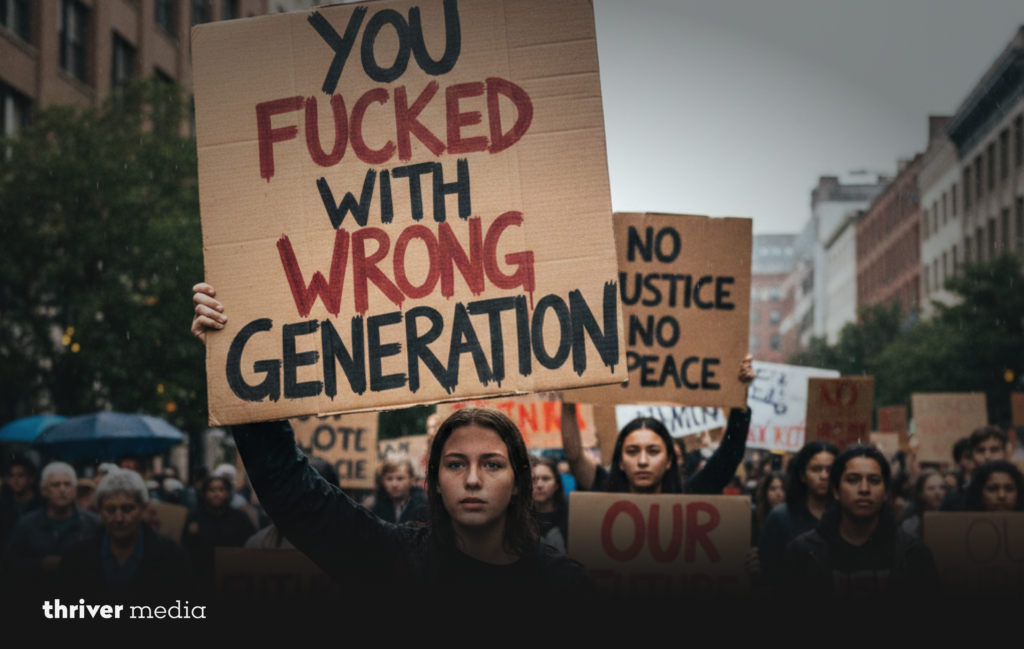
Reason #3: They’ve Overthrown Actual Governments
Nepal: The Blueprint
In September 2025, Nepali Prime Minister KP Sharma Oli thought he could silence dissent with a social media ban . Instead, he triggered an explosion. Years of bottled-up frustration at corruption, nepotism, and a lack of decent jobs poured into the streets.
Twenty-three-year-old student Amrita Ban joined thousands of protesters. She’d watched children of politically connected parents live luxurious lives while her siblings headed abroad for work out of desperation . The social media ban “served as a trigger,” she said. “They are trying to silence our voice. They don’t want to hear it. So this is it: the street is the way” .
What Came Next
Here’s the part that shocked everyone. After the bloodshed, the army invited protest leaders for talks on who should lead an interim government. They held a straw poll on Discord, choosing Sushila Karki, a tough 73-year-old former Supreme Court justice . Though the process had no legal authority, the president appointed her anyway. She was soon sworn in as Nepal’s first female leader, working with protest leaders to ensure their concerns were heard. Elections are scheduled for March 5, 2026 .
Madagascar: The Domino Falls
In October 2025, Madagascar’s President Andry Rajoelina suffered the same fate. Weeks of protests over chronic poverty, water shortages, and power outages exacerbated by a youth population where roughly two-thirds live on less than $3 a day culminated in his overthrow .
Twenty-two-year-old delivery rider Miora Rasoanirina spoke for many: “Working hard is no longer enough to live decently. My mother worked in a textile company, with a modest but steady salary, but I don’t have stability. Everything depends on the number of orders I get, and on weather conditions” .
Bulgaria and Beyond
Bulgaria’s Prime Minister Rosen Zhelyazkov resigned on December 11 after protests triggered by a government plan exposed youth resentment about corruption in an EU member state . In Peru, Gen Z demonstrators helped spur the ouster of then-President Dina Boluarte in October amid rising crime rates .
Reason #4: They Make Policy Personal
From “Regime Change” to “Fix the System”
This might be the most important difference between Gen Z protests and everything that came before. The Arab Spring’s goals were revolutionary protesters sought the complete dismantling of authoritarian regimes . Their slogans called for systemic transformation: equitable constitutions, free elections, an end to political repression.
Gen Z-led movements are different. They’re pragmatic, reformist, and policy-oriented . Their anger is less ideological and more rooted in institutional failure.
In Morocco, protesters didn’t chant “Down with the King.” They chanted “We want hospitals, not just stadiums” . They were responding to the deaths of eight pregnant women waiting for cesarean sections in a public hospital in Agadir—an incident that symbolized healthcare system failures . Their demands were specific, measurable, and hard to dismiss as anti-government radicalism.
The Numbers Game
In Kenya, protesters coordinated “week of horror” campaigns where Members of Parliament received thousands of identical SMS and WhatsApp messages urging them to oppose specific provisions in the finance bill. Some MPs’ phone batteries drained in under 15 minutes from the volume.
“Because meaningful projects should unite rather than divide, and out of respect for the people of Serbia and the City of Belgrade, we are withdrawing our application and stepping aside at this time,” an Affinity Partners spokesperson said . That’s not regime change. That’s policy victory.
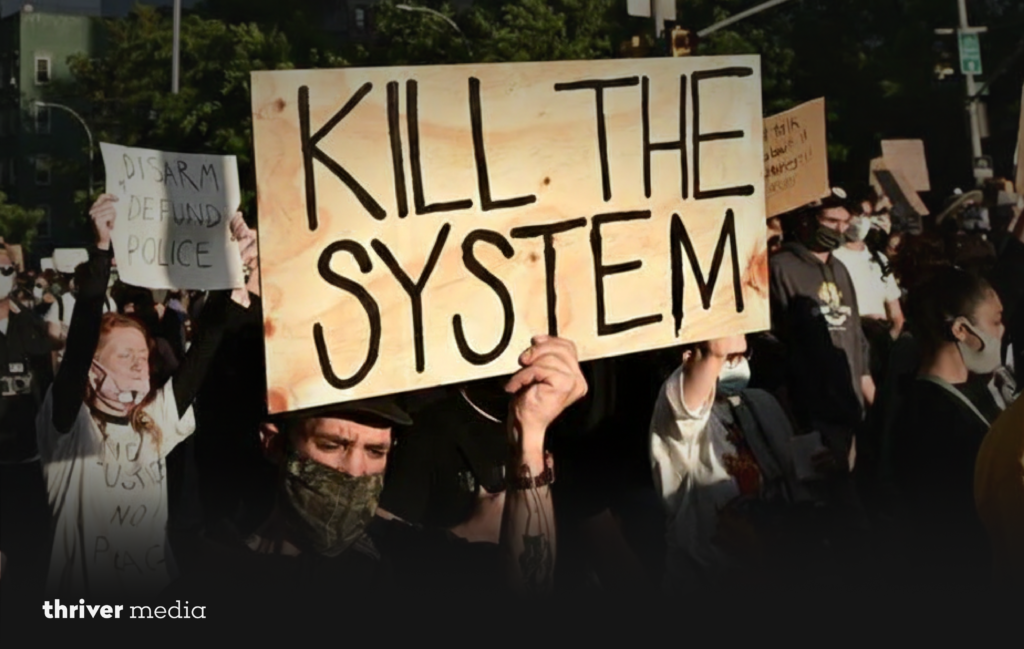
Reason #5: They’ve Mastered Symbolic Warfare
The One Piece Flag
Walk through any Gen Z protest from Kathmandu to Jakarta, and you’ll spot an unlikely symbol: the Jolly Roger pirate flag from the Japanese manga series One Piece .
In the story, the pirate flag represents freedom and defiance against an oppressive world government. For Gen Z protesters, it’s become exactly the same thing a visual shorthand for their fight against corrupt authorities. Twenty-year-old Mexican student Alexander Alvarado carried a poster of Master Chief from the Halo video game franchise at a Mexico City protest . “That inspired me to come, to defy what I think is not OK with this country,” he said .
Why Symbols Matter
These cultural references aren’t random. They create instant solidarity among people who’ve never met, who speak different languages, who live thousands of miles apart. When a Nepali protester sees a Moroccan protester carrying the same One Piece flag, they recognize each other as part of something larger.
Gen Z understands that visual identity matters as much as political demands. In Morocco, protest leaders urged supporters to wear black in solidarity with victims of healthcare failures . In Kenya, coordinated graphics and color schemes made protests instantly recognizable . This isn’t superficial it’s how you build a movement without centralized leadership.
Drone-Shot Narratives
Gen Z also controls the visual narrative in ways previous movements couldn’t. In Morocco, videos contrasting luxury stadiums built for the 2030 World Cup with underfunded hospitals drew millions of views, forcing international media to cover the protests . In Nepal, drone shots of unarmed protesters facing riot police went viral globally, framing the movement as a moral confrontation between youth and corruption.
Reason #6: They’ve Built Parallel Financial Systems
Bypassing Traditional Funding
Protest movements have always needed money. In the past, that meant reliance on political parties, wealthy donors, or foreign NGOs all of which came with strings attached.
Gen Z has found alternatives. Crowdfunding platforms, crypto donations, and online mutual aid groups sustain protests that would once have withered for lack of resources . Sri Lankan protesters relied on global donations via GoFundMe campaigns to keep demonstrations alive .
The Dark Side
Of course, decentralized funding has risks. It’s harder to track where money comes from and whether foreign adversaries might be exploiting movements for their own purposes. Some governments have used these concerns to justify crackdowns .
But for a generation that came of age during the cryptocurrency boom, digital finance feels natural. They understand that money is just another form of information and information wants to be free.
Reason #7: They Export Tactics Across Borders Instantly
The Nepal Effect
When Nepali protesters toppled their government, the news didn’t just travel it inspired. In December 2025, a shirtless protest by Indian Youth Congress workers at an international technology summit in New Delhi prompted Delhi Police to allege a “larger conspiracy that has taken inspiration from the Gen Z protests in Nepal” .
Whether or not that specific protest was directly connected, the police’s concern reveals something important: governments now fear the “Nepal model” spreading. They know that tactics which worked in Kathmandu will be studied, adapted, and deployed elsewhere.
The Discord Diaspora
What makes this possible is the digital infrastructure Gen Z has built. Protesters share strategies through the same platforms they use to organize. When Moroccan activists developed techniques for evading surveillance, Kenyan protesters learned about them within days. When Serbian students figured out how to block luxury development projects, Indonesian activists took notes .
Common Cause Across Borders
The grievances driving these movements are remarkably consistent across continents. Soaring rents and inflation. Underemployment in an AI-disrupted job market. Widening income gaps. Pervasive corruption that benefits elites while ordinary people struggle .
When 17-year-old Peruvian protester Angelina Chávez says, “I’ve seen what happened in Nepal and other parts of Europe and many people see it as an example to follow” , she’s describing something unprecedented: a generation that sees its struggle as global, not local. Their enemies may be national governments, but their solidarity is international.
Reason #8: They’re Winning the Narrative War
The Attention Economy Advantage
Every protest movement in history has faced the same problem: how to make the world pay attention. Gen Z has solved this through sheer fluency in the attention economy.
In Morocco, Gen Z 212 chose viral videos over traditional press releases to spread their message. Kenyan protesters used custom GPT tools to simplify complex legislation and reach wider audiences. In Serbia, activists made a Trump Tower project politically toxic through public pressure and digital campaigning. These examples show how modern protests are evolving beyond traditional political lobbying.
The Accountability Revolution
But winning the narrative war isn’t just about getting attention. It’s about forcing accountability. When Serbian students made Jared Kushner’s investment partners realize their Trump Tower project would face endless protests and negative publicity, they withdrew . That’s narrative power translating into material results.
When Nepali protesters broadcast drone footage of security forces beating unarmed demonstrators, global pressure mounted on the government . When Moroccan activists showed the contrast between World Cup stadiums and failing hospitals, international media picked up the story .
The Limits of Virality
This power has limits, of course. The same algorithms that boost visibility also shorten attention spans. Movements that thrive on virality risk fading once the next global crisis trends . The Arab Spring’s challenge was censorship; Gen Z’s challenge is sustaining engagement in an economy that rewards novelty over persistence.
Yet even with these limits, Gen Z has achieved something remarkable: they’ve made it impossible for governments to hide. When security forces crack down, the world sees. When corruption is exposed, it can’t be quietly buried. The generation that grew up with cameras in their pockets has turned those cameras on power and power has nowhere to run.
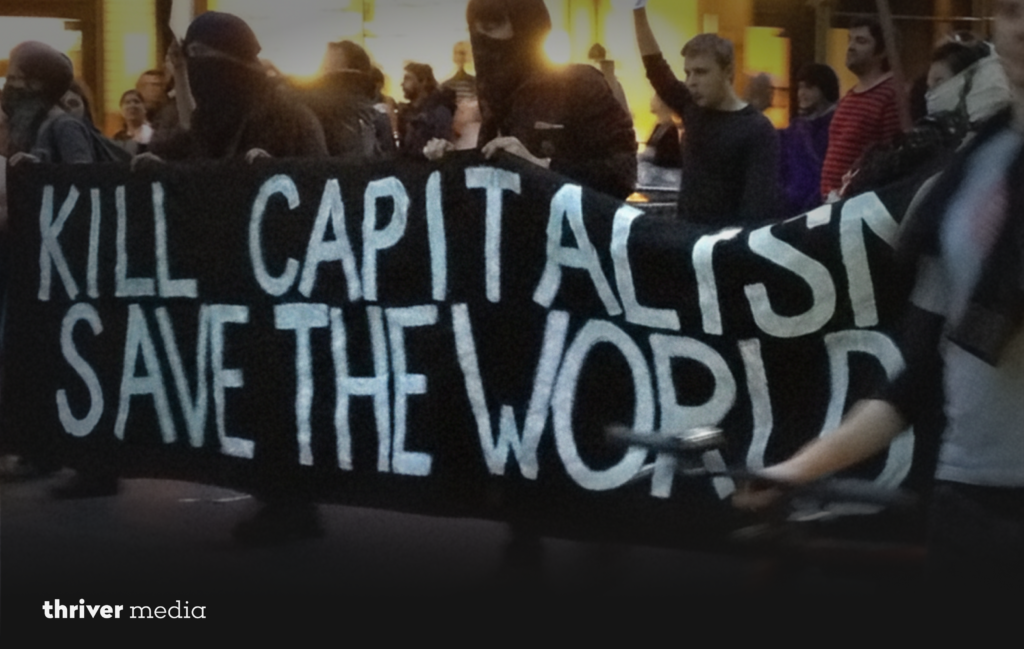
FAQs
es. In 2025, youth-led movements forced the resignations of leaders in Nepal, Madagascar, and Bulgaria. Nepal’s prime minister stepped down in September, Madagascar’s president fled in October, and Bulgaria’s prime minister resigned in December.
The Arab Spring sought revolutionary regime change; Gen Z movements are more pragmatic and policy-focused. Arab Spring protests relied on emerging leaders and physical squares; Gen Z uses decentralized, anonymous organization on Discord, TikTok, and encrypted apps. The Arab Spring was about overthrowing systems; Gen Z is about making systems accountable.
Protesters use AI tools like custom GPTs to analyze legislation, create explainer content, and surface corruption records. Kenyan activists deployed a “Finance Bill GPT” that answered questions about complex tax proposals in plain language.
Bloomberg Economics identifies Ethiopia, the Central African Republic, Angola, Guatemala, the Republic of Congo, and Malaysia as having the fastest-rising unrest risk . The U.S., Indonesia, and Israel also show elevated risk
Most organizers urge peaceful demonstrations, but clashes with security forces have occurred. In Nepal, at least 74 people died, while in Madagascar, UN reports confirmed at least 22 fatalities. These tragic events highlight the rising human cost of recent conflicts and unrest. In Kenya, over 50 died during 2024 protests . The violence typically comes from government crackdowns, not protesters’ tactics.
The Bottom Line
The old model of protest assumed that change came from the top overthrow the dictator, install new leadership, fix the system. Gen Z has flipped that assumption. They have built decentralized, anonymous movements that are difficult for authorities or powerful institutions to co-opt. New tools now help turn complex legislation into simple, accessible information for the public. Financial independence has also grown through systems that do not rely on traditional donors. Rather than directly seeking political power, these movements often succeed by making existing power structures harder to operate.
Conclusion
This approach has limits, of course. Movements that can topple governments often struggle to build functional alternatives. The anonymity that protects protesters also makes long-term organization difficult. Virality that spreads tactics globally also shortens attention spans dangerously.
But here’s the thing: Gen Z isn’t waiting for permission to fix the world. They’re not asking for seats at tables designed by previous generations. They’re building their own tables, in their own spaces, on their own terms. And whether governments like it or not, they’re forcing the world to pay attention.
As Nepali student Amrita Ban put it: “They are trying to silence our voice. They don’t want to hear it. So this is it: the street is the way”. The street is digital now. It’s global. And it’s just getting started.
Official Sources:
- Bloomberg Economics Analysis of Global Unrest Risk
- Carnegie Endowment for International Peace Protest Tracker
- International Labour Organization Youth Employment Data
- United Nations Human Rights Office Reports on Protest-Related Deaths
Disclaimer: The news and information presented on our platform, Thriver Media, are curated from verified and authentic sources, including major news agencies and official channels.
Want more? Subscribe to Thriver Media and never miss a beat.