
17th December 2025
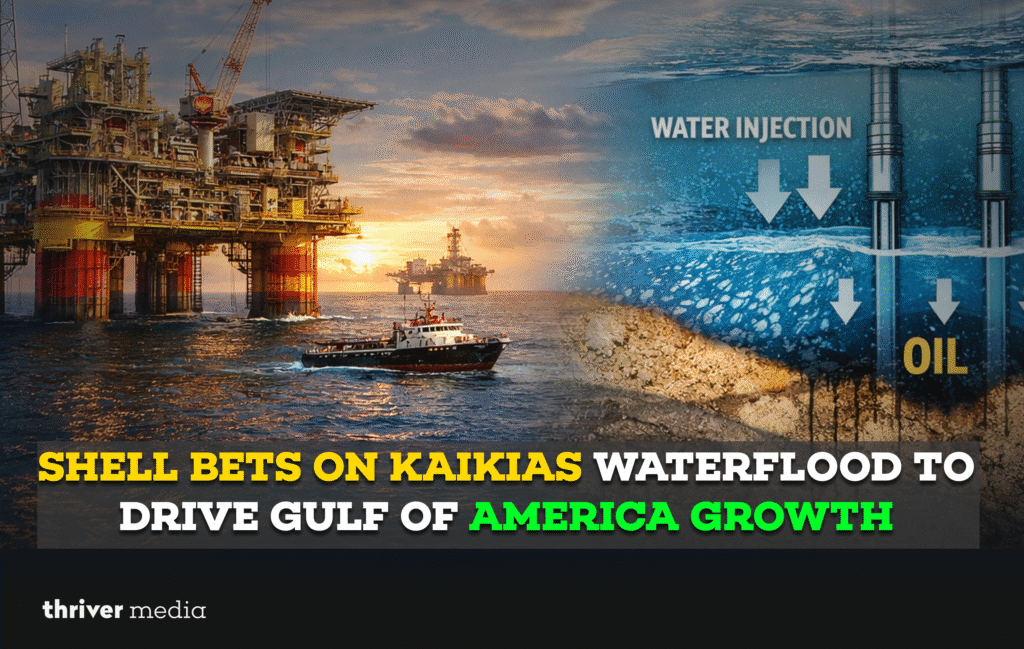
While much of the energy world talks about wind and solar, at the same time, an important story is quietly unfolding deep in the Gulf of Mexico. Shell, a seasoned player in offshore drilling, is doubling down on one of its most successful fields: Kaikias. Their new move? A major investment in a “waterflood” project. It may sound like simple plumbing, but this technical decision represents a strategic bet that can unlock millions of additional barrels and strengthen the Gulf’s role as a vital energy hub for years to come.
What’s Happening at the Kaikias Field
Think of the Kaikias field like a sponge full of oil. When production first started, the natural pressure in the reservoir easily pushed the oil to the well. But as more oil is recovered, that pressure drops. The “waterflood” project is essentially a method to recharge the system.
Here’s the simple genius of it: Shell will inject treated seawater back into the reservoir. This does two critical things:
- Restores Pressure: It acts like a supportive cushion, pushing the remaining oil towards the production wells.
- Sweeps Oil: The water helps “sweep” or displace oil that was trapped in the rock, moving it to where it can be recovered.
For a field already known for its low-breakeven costs, this is about extending its life and boosting its ultimate recovery. It’s a capital-efficient way to get more from an existing, well-understood asset.
| Feature | Detail |
| Location | Gulf of Mexico, Mars-Ursa Basin |
| Discovery | 2014 |
| Production Start | 2018 (Phase 1) |
| Key Strength | Ultra-low breakeven cost (around $30 per barrel) |
| Current Move | Phase 2: Waterflood development |
| Why It Matters | Extends field life, boosts recovery, and highlights the long-term value of Gulf of Mexico investments |
FAQs: The Kaikias Waterflood, Unpacked
Not exactly. It’s about producing more from the same well. No major new discovery is needed. It’s an enhancement project that applies smart technology to a known resource, which is often more efficient and has a lower environmental footprint per barrel than building from scratch.
Shell’s strategy is often described as a “dual engine” approach. Profitable oil and gas projects like Kaikias provide the necessary cash flow and financial stability to fund the massive investments required for their growing renewable energy and low-carbon businesses. The Gulf of Mexico is a core part of that financial engine.
It’s a strong vote of confidence. This investment supports high-skilled jobs (offshore and onshore), continues demand for U.S. service vessels and technology, and contributes to domestic energy security. It shows that with innovation, the Gulf remains a competitive and critical basin.
The announcement came directly from Shell’s official media newsroom. You can read their detailed release here: Shell launches waterflood project at Kaikias in the Gulf of Mexico.
The Bottom Line
Shell isn’t just pumping oil; it’s applying long-term reservoir management. The Kaikias waterflood is a textbook example of using proven, sophisticated engineering to maximize the value of an existing asset. In an era of capital discipline, it’s a smarter, leaner path to growth than risky, expensive new wildcat drilling.
Conclusion
The story of Kaikias is a reminder that energy transition is complex. While the future is undoubtedly low-carbon, the present still requires reliable, affordable energy. Projects like this show how major companies are navigating that path—using technical ingenuity in mature basins to produce needed resources efficiently, which in turn fuels the investments for the energy mix of tomorrow.
For the Gulf of Mexico, it signals that its era is far from over. With clever projects like this, it’s poised to remain a cornerstone of U.S. energy for the foreseeable future.
What do you think about the role of such technical projects in the energy transition? Share your thoughts in the comments below.
Disclaimer: The news and information presented on our platform, Thriver Media, are curated from verified and authentic sources, including major news agencies and official channels.
Want more? Subscribe to Thriver Media and never miss a beat.