
23rd December 2025
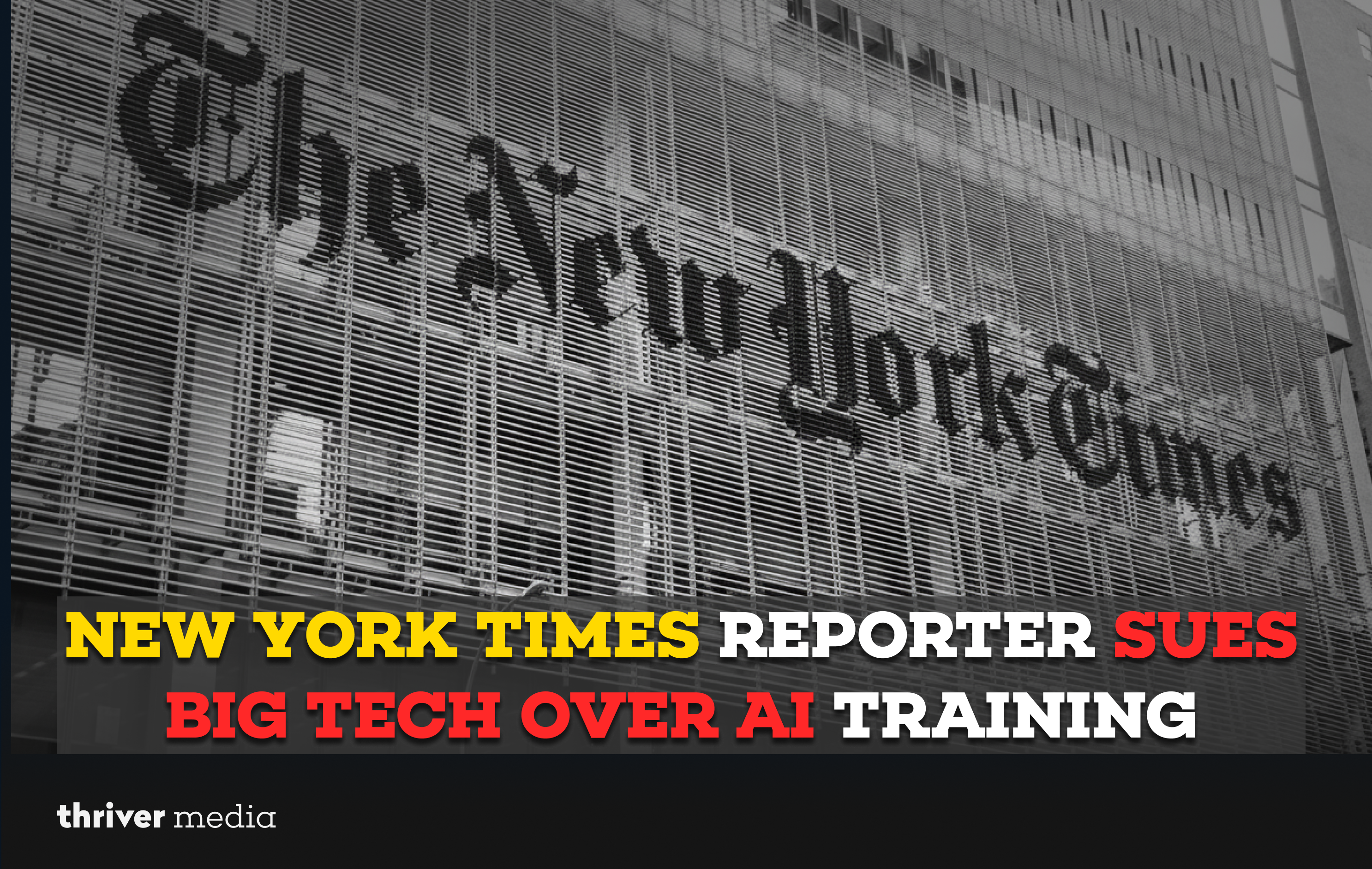
You write a story. It’s your work, your craft, your livelihood. Then, one day, you realize that the very words you strung together have been swallowed whole by a machine, used to build a system that might one day make your job obsolete. That’s no longer a dystopian fantasy it’s the heart of a groundbreaking lawsuit.
The Gist: A prominent New York Times reporter, Nicolas Niarchos, alongside bestselling author Nicholas Basbanes, has filed a class-action lawsuit against some of the biggest names in tech: Meta (Facebook), Microsoft, Bloomberg, and the AI startup EleutherAI.
Their claim is simple yet monumental: These companies used their copyrighted writing and the work of countless other authors to train their artificial intelligence models without permission, without credit, and without payment.
Why This Case is Different
This isn’t the first lawsuit against AI training practices, but it packs a specific punch. Niarchos isn’t just any writer; he’s an investigative reporter for The Times. The suit details how his deeply-researched, long-form journalism on conflict minerals and international finance was scraped from the web and fed into datasets like “The Pile” a massive, 825 GB collection of text used to train AI models like BloombergGPT and Meta’s LLaMA.
The human element here is key. This is about a reporter who risks his life to report from conflict zones, and an author who dedicates years to a single book. They argue their work isn’t just “data”; it’s intellectual property, the product of a career, used to create commercial productsthat directly compete with the ecosystem that supports such journalism and authorship.
The Tech Giants’ Defense (And The Core Dispute)
The tech companies, broadly speaking, often rely on two arguments:
- Fair Use: They claim that scraping publicly available web data to train AI is “transformative” and falls under the fair use doctrine of copyright law similar to how a search engine indexes the web.
- Publicly Available Data: They argue that if it’s on the open internet, it’s fair game for training.
The plaintiffs and many creators call this a gross distortion. They see it as mass-scale, systematic copying for a commercial purpose that, in the case of journalism, can produce outputs that directly compete with the original sources. Can an AI model trained on The New York Times’ archive effectively summarize the news? Where does that leave the paper’s subscription model?
Quick Context: The Key Players & Datasets
| Entity | Their Role in the Lawsuit | Alleged Use of Copyrighted Work |
| Meta Platforms, Inc. | Developer of the LLaMA family of AI models. | Allegedly trained LLaMA models using “The Pile” dataset, which reportedly included thousands of pirated books and articles. |
| Microsoft Corporation | Strategic partner of OpenAI; integrates AI across multiple products. | Allegedly benefited from and supported AI training practices now under legal scrutiny. |
| Bloomberg LP | Creator of the finance-focused AI model, BloombergGPT. | Allegedly trained its model on “The Pile,” which contained copyrighted journalism and books. |
| EleutherAI | Non-profit AI research organization. | Created and publicly distributed “The Pile,” the dataset central to the lawsuit. |
| The Plaintiffs | Nicolas Niarchos (NYT reporter) & Nicholas Basbanes (author). | Claim their copyrighted works were included in “The Pile” and used without permission or licensing. |
FAQ: What This Means For You
Absolutely. This case could set a major precedent for how all creative work is treated in the AI age. A ruling for the plaintiffs could force tech companies to seek licenses (and pay for) copyrighted material, creating a potential revenue stream for creators.
Tech companies argue yes. Creators argue that true innovation shouldn’t be built on the uncompensated labor of others. The outcome will seek a balance between protecting rights and fostering innovation.
That’s the multi-billion dollar question this case will help answer. The current “scrape now, ask later” approach is squarely on trial.
While technical barriers are tricky, clearly asserting your copyright and using terms of service that prohibit AI scraping are steps some are taking. The real protection may come from the legal framework this case helps shape.
The Bottom Line
This is more than a legal dispute; it’s a defining clash over value, ownership, and the future of creativity in the digital age. It pits the human endeavor of storytelling and investigation against the algorithmic hunger of next-generation machines.
Conclusion:
The lawsuit filed by Nicolas Niarchos and Nicholas Basbanes is a critical flashpoint. It challenges us to decide: as we build intelligent systems, do we honor the human creators whose work forms the foundation of that intelligence, or do we treat their life’s work as merely another free resource to be consumed? The answer will reshape industries for decades to come.
Official Source & Further Reading:
For the full legal complaint and detailed allegations, you can access the official lawsuit filing via the Public Access to Court Electronic Records (PACER) system under Case No. 1:24-cv-04013, or read reputablesummaries from legal publications like Law.com or Reuters.
Disclaimer: The news and information presented on our platform, Thriver Media, are curated from verified and authentic sources, including major news agencies and official channels.
Want more? Subscribe to Thriver Media and never miss a beat.