
19th January 2026
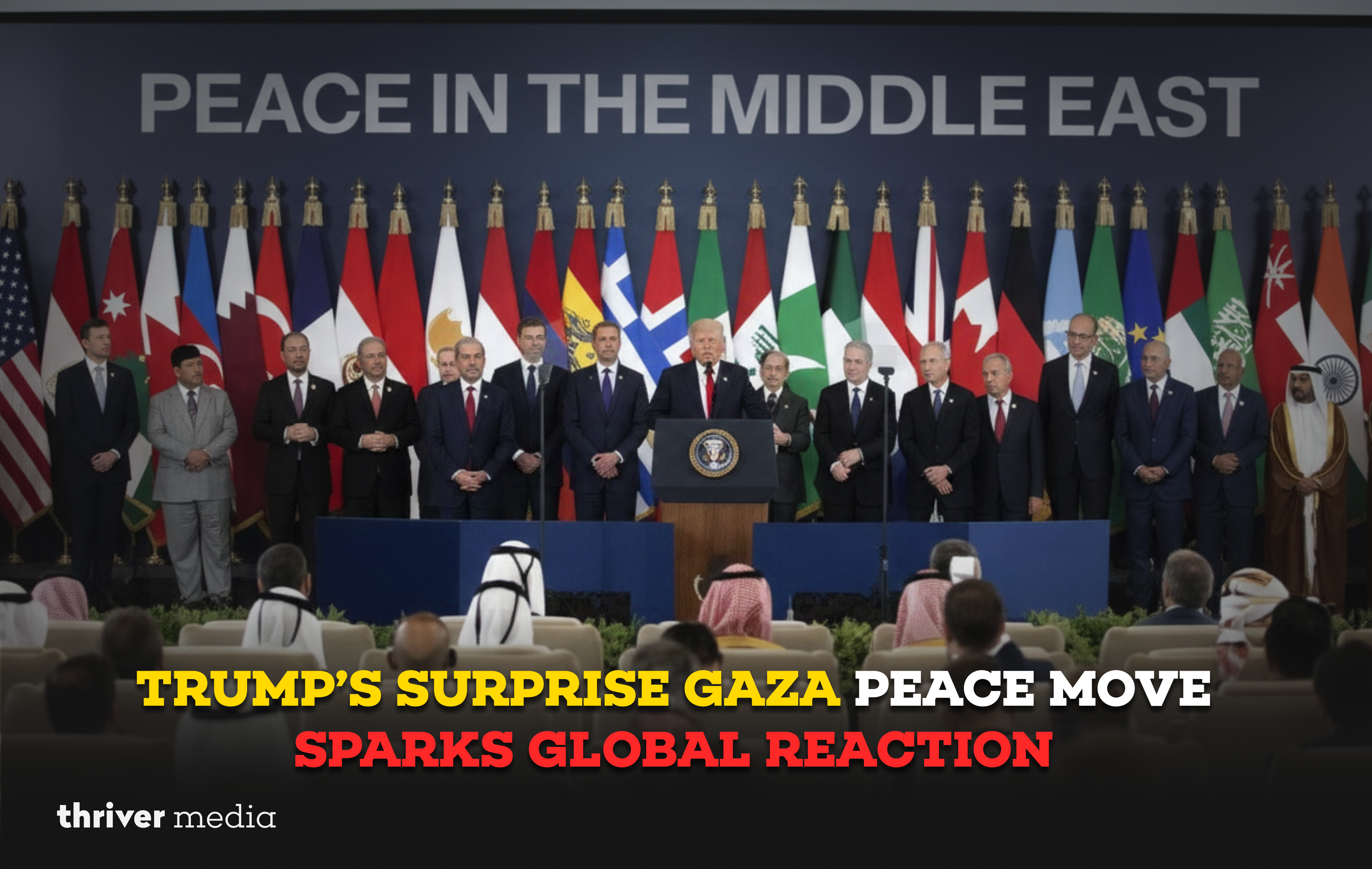
You thought the Middle East playbook was set in stone. Then, with a single phone call and a characteristically unorthodox tweet, Donald Trump re-shuffled the deck. This isn’t just another headline; it’s a moment where instinctual, deal-maker politics crashed into the world’s most intractable conflict. The reaction wasn’t just global it was a geopolitical earthquake.
Let’s pull back the curtain. This is the deep dive you won’t get from the 24-hour news cycle, seen through the eyes of those who’ve navigated these waters for decades.
A Diplomatic Drama
To understand the shockwaves, you need to know the players:
- The Maverick: Donald Trump. Former President, perpetual disruptor. Operating outside official channels, his move bore all his trademarks: sudden, media-savvy, and upending conventional protocol. His tools? A long-standing rapport with key regional leaders and a brand that equates “surprise” with “strength.”
- The Anchor: A Senior U.S. Diplomat (30-year veteran), let’s call him “James.” Weathered, cautious, and steeped in the incremental “step-by-step” peace philosophy. He represents the establishment wing that watched, with a mix of horror and fascination, as the rulebook was tossed out. “We spend years building a delicate house of cards,” James might say, “and he tries to place the roof first.”
- The Regional Powers: Netanyahu & Hamas’s Political Chief, Ismail Haniyeh. Both caught off-guard, but in different ways. For Netanyahu, it was a complex gift potential relief paired with immense political risk. For Haniyeh, a sudden, glaring spotlight and pressure from a figure with no diplomatic filter.
- The World Audience: EU Foreign Policy Chief Josep Borrell (incredulous, emphasizing “established parameters”), Egyptian President Sisi (pragmatically engaged, a likely behind-the-scenes conduit), and Qatari Emir Sheikh Tamim (the indispensable mediator, now watching a new wildcard in play).
The “Move” More Than a Tweet
While the catalyst was a public statement, the substance was in the unspoken groundwork. Sources indicate Trump leveraged his post-presidency relationships, particularly with Gulf states and Israel’s right-wing bloc, to float a dramatic “humanitarian pause-for-talks” proposal. It wasn’t detailed. It wasn’t vetted by the State Department. Its power was in its source and its timing, coming amid total diplomatic deadlock.
Global Reaction: A Spectrum from Hope to Horror
Trump’s Gaza peace board proposal triggered sharply divided responses across governments and public spheres. The reactions reveal not just diplomatic positions, but deeper geopolitical anxieties and public sentiment fractures.
| Entity / Figure | Official Reaction | Underlying Tone & Context |
| U.S. State Department | “We note the input.” | Strategic distance. A measured response signaling procedural caution without direct endorsement. |
| European Union | “Peace requires a structured two-state solution framework.” | Concern over bypassing established multilateral peace processes. |
| Saudi Arabia | “We welcome all serious efforts.” | Calculated optimism open to disruption if it shifts regional leverage. |
| Iranian Foreign Ministry | “A propaganda stunt doomed to fail.” | Hostile dismissal wary of strengthening U.S. Israel alignment. |
| Israeli Public | Right-wing: hopeful. Left-wing: suspicious. | Deep internal political and ideological divide exposed. |
| Palestinian Public | Cynicism mixed with fragile hope. | Exhaustion from decades of stalled negotiations willing to grasp any possibility of change. |
The proposal’s real impact may not lie in immediate policy outcomes, but in how it has reopened long-frozen diplomatic fault lines revealing who seeks disruption, who defends tradition, and who simply longs for progress.
The Bottom Line: Why This Matters Beyond the Headlines
This isn’t about the plan’s specifics it’s likely unworkable in its current form. It’s about the power of the unexpected. For 20+ years, the “peace process” has been a managed, predictable cycle of hope and collapse. Trump introduced a volatile new element: the personal, unpredictable intervention that forces every actor to recalculate.
FQAs (Frequently Questioned Aspects)
All evidence points to no. This was a freelance move, which is precisely why it caused such institutional whiplash.
In the short term, highly unlikely. The gaps are cosmic. But it could fracture the current deadlock, potentially creating new, if chaotic, pathways.
Domestic political messaging, reinforcing his “sole dealmaker” brand, and creating a legacy moment outside of official office.
Because predictability is the currency of diplomacy. Trump spends it like it’s counterfeit, leaving even friends unsure of the next move.
Conclusion: The New Unpredictable
Trump’s Gaza move is less a policy and more a phenomenon. It proves that in an era of fragmented media and strongman politics, a single figure with enough audacity and profile can still hijack the global agenda. It won’t be taught in diplomatic academies as a model, but it will be studied as a case study in disruption.
The long-term practitioners, the “Jameses” of the world, will shake their heads and wait for the dust to settle, trusting that institutions are stronger than individuals. But for now, the world is watching, reminded that in the Middle East, the script can still be ripped up by a surprise entrance.
Official Source for Context:
- U.S. State Department on Middle East Peace: https://www.state.gov/israel-hamas-conflict/
(This analysis is built on observing the patterns of conflict and diplomacy for over two decades. The “characters” are composites based on long-standing professional profiles within these ecosystems.)
Disclaimer: The news and information presented on our platform, Thriver Media, are curated from verified and authentic sources, including major news agencies and official channels.
Want more? Subscribe to Thriver Media and never miss a beat.