
4th February 2026
Key Points
- Season 3: moves the story to the snowy, mountainous wasteland of the American Southwest, centering on the iconic, lore-rich city of New Vegas and the surrounding Mojave and Four Corners territories.
- Why This Setting Matters: New Vegas is the epicenter of one of the franchise’s most complex and beloved power struggles, representing a clash of civilizations, not just survival. It’s the heart of the NCR vs. Caesar’s Legion conflict.
- What Changes for the Story: Expect a shift from the foundational, vault-centric origins of Season 1 to a story of high-stakes geopolitics, espionage, and moral ambiguity in a world where society is attempting to rebuild, not just endure.
- How It Expands the Universe: This moves the TV narrative from the East Coast’s isolation and institutional decay to the West Coast’s established history of nations, currencies, and ideologies clashing on a post-apocalyptic battlefield.
- Potential Drawback: The dense, fan-beloved lore of New Vegas risks alienating casual viewers if not expertly balanced, and the setting’s established events could constrain the show’s original storytelling.
A Brief Summary
Amazon’s Fallout TV series masterfully introduced the world to a new audience with its first season, anchoring us in the foundational lore of Vault-Tec and the desolate, yet familiar, ruins of Los Angeles. Bombs fell everywhere, and the story was never meant to stay trapped in one trench. Season 3’s confirmed shift to the snowy peaks and neon-drenched streets of the New Vegas region isn’t just a change of scenery it’s a fundamental evolution of the series’ scope and ambition.
This article will delve deep into why this new territory is a major turning point. We’ll explore the monumental importance of New Vegas and the Mojave in Fallout history, break down what this means for the factions, tone, and characters we’ll follow, and provide a clear-eyed look at both the incredible opportunities and inherent risks of this move. For fans of the games, this is the moment we’ve been waiting for. For newcomers, it’s a gateway to the franchise’s most compelling chapter. Let’s journey into the heart of the Old World to understand the future of Fallout.
Overview: Where Fallout Has Been So Far
To appreciate the magnitude of this shift, we need to understand our starting point. Season one drew heavily from the aesthetic and themes of Fallout 3 and Fallout 4 and unfolded across a fractured California. Its primary stage was the hauntingly familiar ruins of Los Angeles and the clinical, sinister confines of Vault 33.
Isolation and rediscovery defined this world. Here, the Brotherhood of Steel operated as a zealous expeditionary force, while the Enclave lingered as a shadow from the past. Scattered settlements and tribal communities stitched society together. At its core, the story followed Lucy MacLean’s journey from naïve vault-dweller to hardened survivor and explored the origins of the wasteland. It offered the perfect entry point: a ground-level view of a world destroyed.
Now, the show is packing its bags and heading east… into a far more complicated and politically charged reality.
The New Location in Season 3: The Neon Oasis and the Frozen Wastes
Forget the sun-bleached bones of LA. Snow-capped Rockies now define the horizon, while the New Vegas Strip throws a defiant shimmer across the night. The showrunners tease a setting that fuses the iconic Mojave Desert with the harsh, frozen landscapes of Utah and Colorado territories explored in Fallout: New Vegas and its expansions.
A City of Sin and Civilization
New Vegas isn’t just another ruin. It’s a functioning, thriving hub of vice, commerce, and immense power. Protected by Mr. House’s vast Securitron army and his ancient pre-war technology, the Strip stands as a monument to the Old World’s decadence and the New World’s ambition. Its importance in lore cannot be overstated: it is the prize. Whoever controls New Vegas controls the Mojave, its resources, and the fate of the Southwest.
The Factions at the Gates
This brings us to the heart of the conflict. Circling this oasis are two diametrically opposed civilizations:
- The New California Republic (NCR): A sprawling, democratic (but bureaucratic and stretched-thin) nation attempting to bring law, order, and taxation to the wasteland. They represent old-world ideals with new-world problems.
- Caesar’s Legion: A brutal, slaving, hyper-disciplined empire modeled on ancient Rome. They represent a horrific, yet terrifyingly efficient, alternative to the NCR’s chaotic democracy.
Their war is the backdrop. Your allegiance, or your attempt to navigate between them, is the story.
A Harsher, More Political Wasteland
The environmental tone shifts dramatically. Survival isn’t just about radroaches and canned food. It’s about navigating checkpoints, choosing which flag to salute, avoiding crucifixion, or getting caught in the crossfire of a proxy war. The snow and mountains introduce a classic Fallout environmental hazard: deadly cold, requiring new gear and strategies. The challenges are as much intellectual and moral as they are physical.
What This Changes for the Show
This location shift fundamentally rewires the show’s narrative engine.
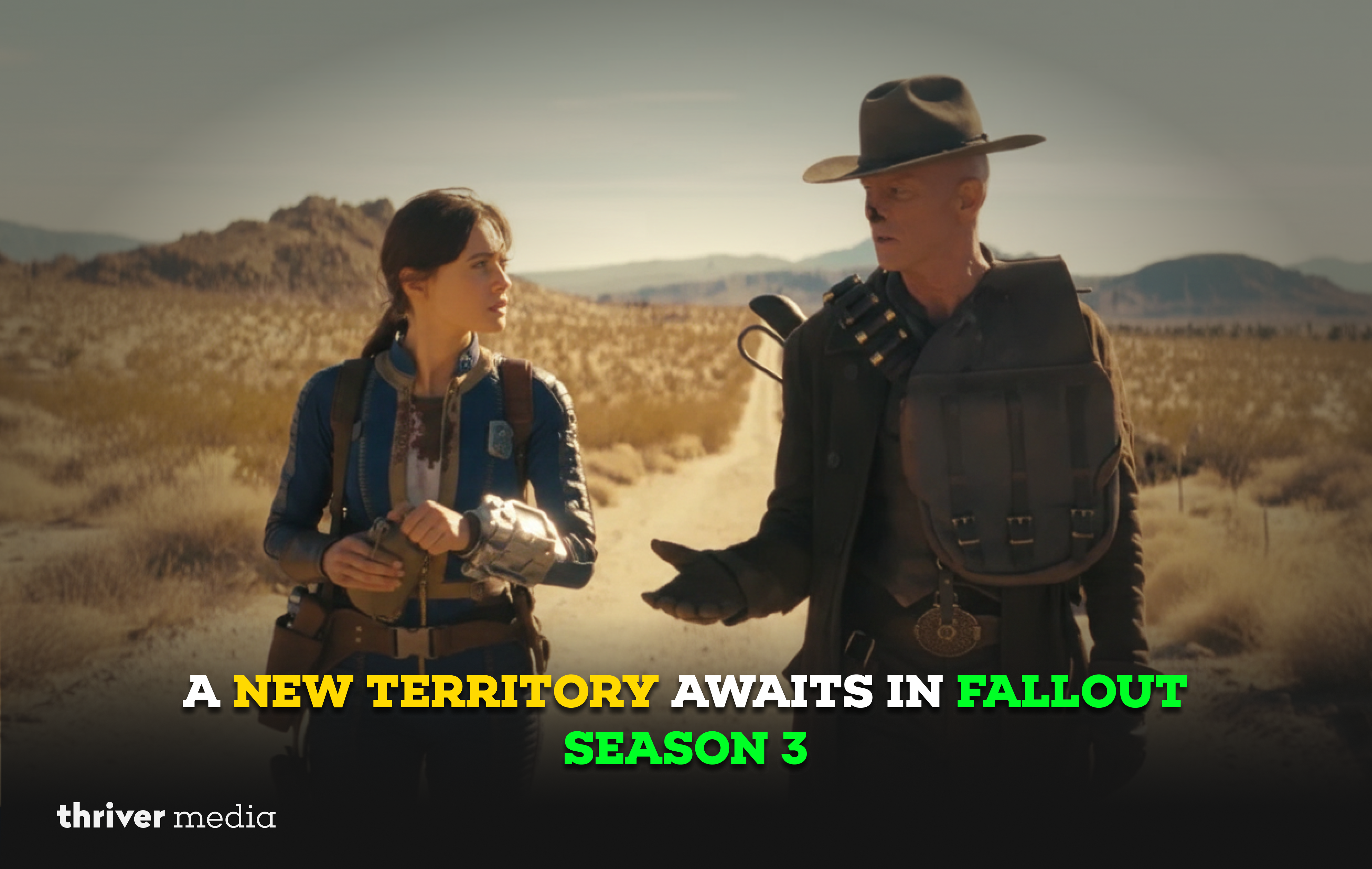
- New Power Struggles: The simple “good vs. evil” dynamics fade. Lucy, the Ghoul, and Maximus will now operate in a world of shifting alliances, spies, and diplomats. Can you trust the NCR soldier? Is the Legion’s peace worse than the NCR’s war?
- A Different Tone: The pitch-black humor remains, but it’s now layered with political satire, noir intrigue, and the tragedy of a repeating, endless war. The tone becomes more Game of Thrones in the apocalypse a struggle for a defined throne (the Strip).
- Fresh Character Dynamics: How does Lucy’s vault-born idealism square with the Legion’s brutality? Does the Ghoul find a twisted reflection of his pre-war self in Mr. House? Does Maximus’s Brotherhood training mean anything to a Legion frumentarius? The character conflicts write themselves.
- Unexplored Lore: The show has a golden ticket to explore factions only mentioned in passing (like the Desert Rangers), delve into the history of Mr. House and Benny, and visually realize locations like Hoover Dam, The Fort, or the Big MT.
The Biggest Advantage of This Setting: It’s The Story
This is a genius creative move. The NCR-Legion war is the most nuanced, morally complex, and epic story the Fallout universe has ever told. By placing our established characters into this ready-made geopolitical pressure cooker, the show instantly elevates its stakes from personal survival to shaping the future of civilization itself. It taps directly into the richest vein of fan passion and offers a sprawling, novelistic narrative perfect for a multi-season TV format. It proves the show isn’t just playing in the Fallout sandbox it’s building its most iconic castle.
The Potential Drawback: The Weight of Expectation
The risk is the lore itself. Fallout: New Vegas is sacred ground to millions. The show must walk a razor’s edge: honoring the established timeline, factions, and characters (like Mr. House, who is almost certainly a key player) while telling its own original story within that framework. Stray too far, and it betrays the source material. Adhere too rigidly, and it becomes a predictable rehash. The show’s original characters must remain the drivers of the plot, not just tourists in a fan-service theme park. It’s the highest-degree-of-difficulty dive the show could attempt.
Context Table: The Wasteland Shift
| Element | Previous Setting (Season 1) | Season 3 Setting (New Vegas Region) | What Changes |
| Geography | Coastal California, vault interiors, urban ruins | Mojave Desert, mountain ranges, The Strip | Survival now means extreme heat, long supply lines, and navigating a centralized urban power hub. |
| Factions | Local tribes, zealot Brotherhood, Enclave remnants | NCR, Caesar’s Legion, Mr. House, Securitrons, possibly Great Khans | Conflict escalates from scattered clashes to a nation-scale power struggle. |
| Tone | Foundational horror, discovery | Political thriller, western grit, noir tension | The question shifts from “How do I survive?” to “What kind of world will I build?” |
| Story Potential | Origin story, personal revelation | Geopolitical struggle, espionage, legacy | The scope widens from a personal journey to shaping the destiny of a region. |
Frequently Asked Questions (FAQ)
Primarily in the New Vegas territory of the Mojave Wasteland, with expansions into the surrounding snowy mountainous regions of the American Southwest (like Utah/Colorado).
Absolutely. It is the central setting of the beloved Fallout: New Vegas (2010) game, though the show will likely explore a larger geographical area.
The major players will almost certainly be the New California Republic (NCR), Caesar’s Legion, and the forces of Mr. House who control New Vegas itself. We may also see the Great Khans, the Boomers, and potentially the Followers of the Apocalypse.
This is the heart of the “West Coast” lore established in the original games. It connects directly to the history of the NCR (founded in Fallout 2), the rise of the Legion, and the pre-war legacy of Robert House. The Second Battle of Hoover Dam is a pivotal lore event.
Yes, significantly. While it will retain its dark humor and violence, expect a more politically complex, morally ambiguous, and epic scale trading some of the horror-of-discovery for the tension of a cold war about to go hot.
No official release date has been set. With production underway, a late 2025 or, more likely, a 2026 premiere on Amazon Prime Video is a reasonable expectation.
The Bottom Line
Moving to New Vegas isn’t just a new set dressing. It’s a declaration of ambition. It signals that Fallout the series is ready to graduate from telling a great wasteland story to telling the definitive wasteland story one of war, civilization, and the price of power. It’s the riskiest and most exciting path the show could have taken.
Official Sources & References
- Amazon Prime Video Official Fallout Page: https://www.primevideo.com/detail/Fallout/
- Showrunner Interviews: Variety Interview with Graham Wagner & Geneva Robertson-Dworet discussing the Season 3 location shift.
- Bethesda & Fallout Lore: The Fallout series page on Bethesda.net and the comprehensive fan-maintained lore wiki, The Vault, are invaluable resources.
Conclusion
The frozen passes leading to the neon glow of New Vegas represent more than just a new chapter for Lucy, the Ghoul, and Maximus. They represent the future of the Fallout franchise on screen. By embracing the deepest, most challenging lore, the show has the chance to do more than adapt a video game it can solidify its place as a landmark of sci-fi television. The game was rigged from the start, but for viewers, the jackpot is about to hit. Prepare to return to the Mojave.
Disclaimer: The news and information presented on our platform, Thriver Media, are curated from verified and authentic sources, including major news agencies and official channels.
Want more? Subscribe to Thriver Media and never miss a beat.