
6th February 2026
Introduction
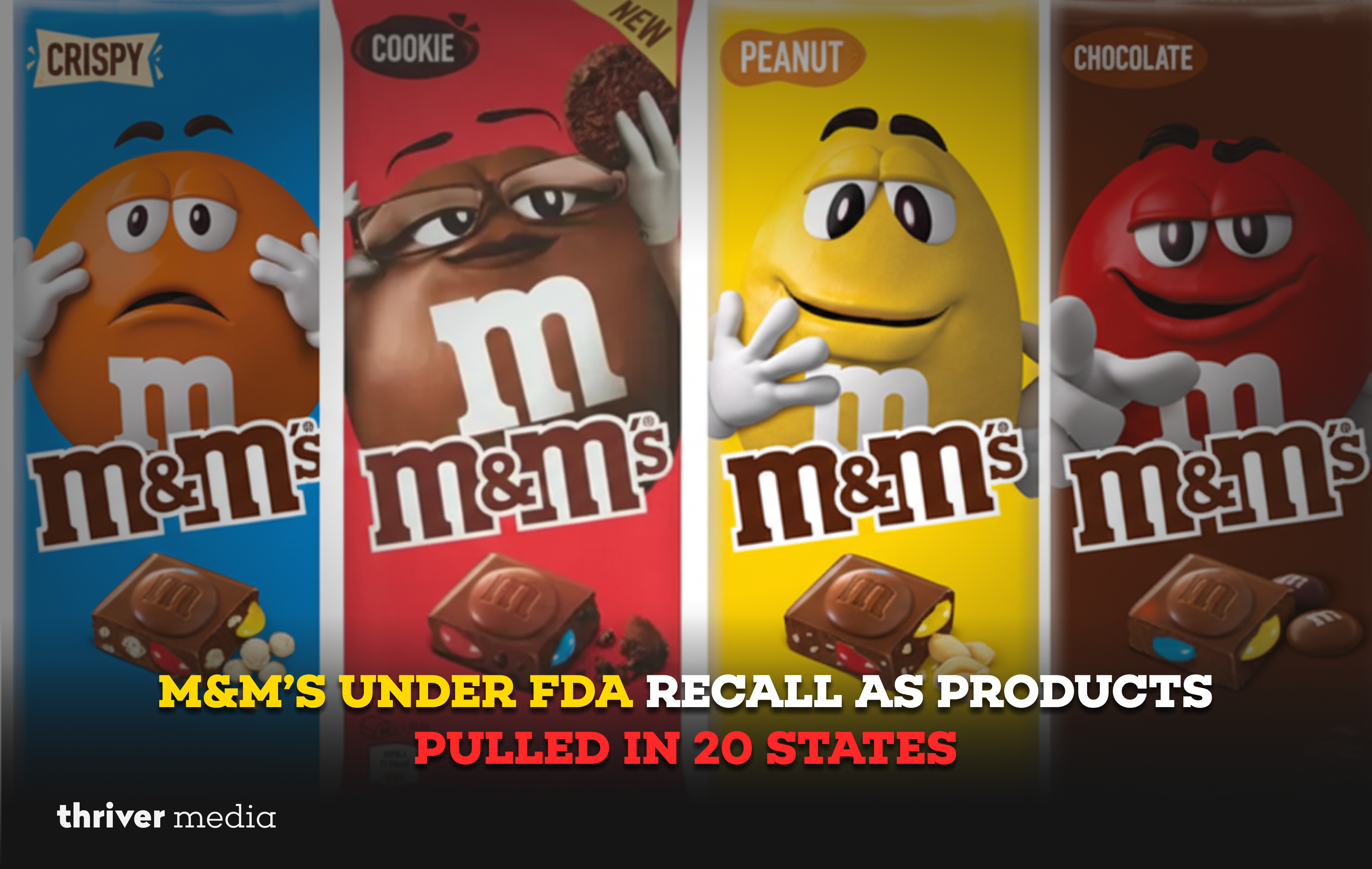
A recent FDA recall of select M&M’s products across 20 U.S. states has sent ripples through the consumer packaged goods industry. While food safety is the immediate and critical concern, this event is fundamentally a significant regulatory and business challenge. For business leaders, investors, and retailers, recalls are not merely operational hiccups; they are high-stakes tests of supply chain resilience, brand trust, and financial risk management. How a corporation like Mars, Inc. navigates this process offers a clear lens into its crisis competency and long-term strategic health, turning a product withdrawal into a critical business case study.
What Triggered the FDA Recall?
The U.S. Food and Drug Administration (FDA) initiates recalls when a product violates its safety laws. Recalls are typically classified as Class I (highest risk, involving a reasonable probability of serious health consequences), Class II (may cause temporary or medically reversible health problems), or Class III (unlikely to cause adverse health consequences).
The regulatory body outlined the technical details of the M&M’s recall in its official announcement. Inspectors, test results, or verified consumer reports triggered these actions not speculation. The FDA identified a specific, measurable risk and ordered the removal of affected products across a wide geographic area. Companies must carry out the recall under an FDA-reviewed strategy, which requires public notification, product removal, and effectiveness checks.
Business & Financial Impact Analysis
For a global powerhouse like Mars, the immediate costs of a recall are just the starting point. The financial impact unfolds in distinct layers:
- Direct Operational Costs: This includes the logistics of retrieving products from complex, multi-tiered distribution channels from major grocery chains down to individual convenience stores. The company must manage the loss of inventory, potential destruction of affected goods, and the administrative burden of managing the recall process with regulators and partners.
- Retail & Distributor Disruption: Retailers face their own costs: removing stock from shelves, managing returns, and losing sales on a high-velocity SKU. This can strain relationships and lead to temporary shelf space loss to competitor brands, creating a secondary commercial challenge.
- Brand Reputation & Consumer Confidence: This is the most significant variable. In the social media age, news of a recall spread instantly. The brand’s response its speed, transparency, and clarity directly influence consumer trust. A poorly managed communication strategy can lead to a decline in sales velocity that far outlasts the recall period.
- Stock & Investor Sentiment: While Mars is a privately held company, the event still signals risk to investors and partners. For public companies, recalls often trigger short-term stock price volatility as analysts assess the potential impact on quarterly earnings and long-term brand equity.
History offers clear lessons. Companies that responded to past recalls with decisive action, full transparency, and a visible commitment to fixing root causes (like Johnson & Johnson during the Tylenol crisis) ultimately strengthened their brand. Those perceived as slow or obfuscating suffered longer-term reputational and financial damage.
Supply Chain & Retail Implications
A national recall is a stress test for modern supply chains. The “forward flow” of efficient distribution must be thrown into reverse.
- Warehousing & Logistics: Distribution centers must isolate and track recalled inventory, creating logistical bottlenecks and consuming space and labor normally dedicated to revenue-generating activities.
- Shelf Availability & Compliance: Grocery chains and convenience stores must ensure 100% compliance, often under tight FDA deadlines. This requires clear communication to thousands of store-level employees. E-commerce platforms face the unique challenge of halting sales and notifying customers who may have already purchased the product.
- Retailer-Vendor Dynamics: The event recalibrates the retailer-manufacturer relationship. Retailers expect swift support and compensation, while manufacturers rely on retailers for accurate execution. The process demands seamless data integration to trace products from manufacturing batch to point of sale.
Key Recall Details at a Glance
| Category | Details |
| Product Name | M&M’s (select batches; specific products listed in FDA notice) |
| Reason for Recall | FDA-defined safety concern (e.g., potential contamination or undeclared allergen) |
| Affected States | 20 U.S. states |
| Recall Authority | U.S. Food and Drug Administration (FDA) |
| Business Risk Level | Short-term operational disruption with mid-term reputational risk |
Key Takeaways for Stakeholders
- For Businesses & Investors: Recalls are a core business risk. The focus should be on the company’s crisis response playbook, investment in quality control, and the transparency of its communication. Speed and compliance are non-negotiable.
- For Retailers & Distributors: Immediate action is required to protect consumers and limit liability. Follow the official recall instructions precisely, maintain clear records, and communicate effectively with the supplying manufacturer.
- For Consumers: Check the official FDA recall notice for specific product details, including batch codes, “best by” dates, and states of distribution. Do not consume affected products and follow the recommended disposal or return instructions.
- The Central Principle: In today’s market, transparency is the ultimate brand protector. A clear, factual, and consumer-focused response is the most effective strategy for preserving long-term brand equity.
Frequently Asked Questions (FAQs)
The FDA initiates recalls when a product is found to be in violation of its safety regulations. The specific reason for this action is detailed in the official recall notice and could involve concerns like potential contamination or an undeclared allergen.
No. Recalls are typically limited to specific products, manufacturing batches, and “best by” dates produced within a certain timeframe. The FDA notice will list the exact products and codes involved.
The impact includes direct costs (logistics, lost inventory), indirect costs (lost sales, marketing to rebuild trust), and potential long-term brand damage affecting future sales. The total cost often far exceeds the value of the recalled product itself.
Retailers must immediately remove all affected batches from sale, isolate the inventory, follow the manufacturer’s and FDA’s instructions for returns or disposal, and clearly communicate the issue to store staff and, if necessary, customers.
It can, but it doesn’t have to. The long-term impact is determined by the company’s response. A recall handled with urgency, honesty, and a clear commitment to safety can ultimately reinforce consumer trust in the brand’s integrity.
Consumers should refer to the official FDA recall announcement, which will list specific identifying codes, usually found on the packaging. You can find all current alerts on the FDA’s Recalls, Market Withdrawals, & Safety Alerts page.
The Bottom Line
This recall is a stark reminder that in the business of manufacturing and selling consumer goods at a global scale, robust quality control and a prepared crisis response are not optional they are critical components of financial stability and brand stewardship.
Sources & Further Reading:
- U.S. Food and Drug Administration. (2024). Recalls, Market Withdrawals, & Safety Alerts. https://www.fda.gov/safety/recalls-market-withdrawals-safety-alerts
- (For deeper business analysis on managing brand crises, consider external resources from institutions like Harvard Business Review on topics such as “Crisis Management and Communications.”)
Conclusion
Product recalls, while disruptive, are an inherent part of operating in the complex, large-scale food and consumer goods industry. They represent a point where regulatory compliance, operational agility, and ethical brand management intersect. For savvy business leaders and investors, the true metric of a company’s strength is not the absence of a crisis, but the quality and professionalism of its response. By viewing such events through a strategic, rather than purely operational, lens, we gain critical insights into a company’s resilience and long-term viability.
Disclaimer: The news and information presented on our platform, Thriver Media, are curated from verified and authentic sources, including major news agencies and official channels.
Want more? Subscribe to Thriver Media and never miss a beat.