
13th February 2026
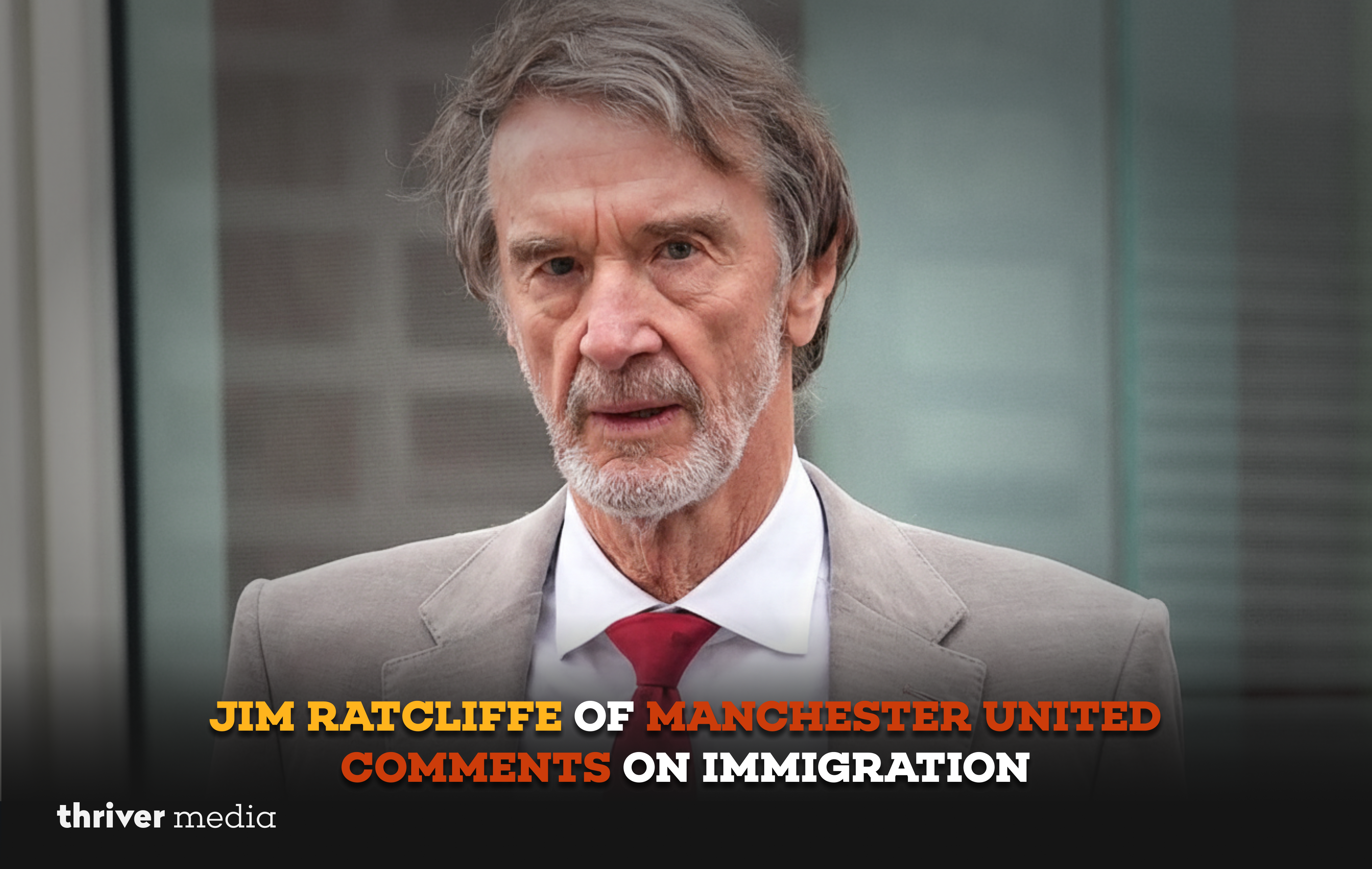
Why a business leader’s remarks on nationality and recruitment sparked a national conversation.
In late January 2025, Sir Jim Ratcliffe, the British billionaire and co-owner of Manchester United, found himself at the center of a media storm. During a series of interviews regarding the performance and strategy of the football club, Ratcliffe made comments regarding immigration policy and the recruitment of foreign talent.
While the primary focus of the interviews was Manchester United’s disappointing league standing and new sporting director appointments, Ratcliffe’s remarks regarding the UK’s ability to “import” players quickly diverted public attention. The comments, which touched on the intersection of sports, labor, and border policy, generated significant discussion among fans, political commentators, and legal experts.
This article provides a neutral overview of what was said, how the public reacted, and the broader implications of the conversation.
Key Points: What Did Sir Jim Ratcliffe Say?
The context of the comments arose during a discussion about Manchester United’s recruitment strategy. Ratcliffe was critical of the club’s previous transfer dealings, arguing that the organization had overpaid for underperforming talent. In this context, he pivoted to a comparison regarding the ease of acquiring talent in the UK versus mainland Europe.
The main statements included:
- UK Immigration Barriers: Ratcliffe suggested that post-Brexit immigration rules made it more difficult for British clubs to sign young European players compared to their competitors in Spain, Italy, or Germany.
- Bureaucracy: He noted that “admin” and points-based visa systems create friction that French and Italian clubs do not face.
- Local Development: He emphasized that while Manchester United should focus on developing local talent from Manchester, the reality of global football necessitates being able to “import the best” when gaps exist.
Ratcliffe did not propose specific legislative changes but expressed a general frustration that the UK’s current regulatory environment was a “handicap” in the global market.
The Case for Open Discussion: Supporting Arguments
While Ratcliffe’s phrasing drew criticism, several analysts and business groups defended his right and rationale for raising the issue. Supporters of his viewpoint generally fell into two camps: those focused on sporting competitiveness and those focused on economic policy.
Sporting Competitiveness
Since Brexit, the English Premier League (EPL) has operated under a points-based transfer system for foreign players. Clubs are restricted from signing overseas players under the age of 18, a rule that does not apply to EU-based clubs. Proponents of Ratcliffe’s view argue that this creates an uneven playing field, limiting the long-term development pipelines of British clubs.
Economic Pragmatism
Some business commentators argued that Ratcliffe was simply stating a logistical reality. They suggested that criticizing an employer for wanting access to a global talent pool ignores the economic fundamentals of high-performance industries. From this perspective, the comments were viewed not as xenophobic, but as a practical critique of post-Brexit labor policy.
Honest Dialogue
A segment of the public appreciated the “unfiltered” nature of the remarks. Football fans often express frustration with sanitized, corporate language from club executives. Some welcomed a club owner speaking candidly about the operational challenges he perceives, rather than hiding behind generic platitudes.
Drawbacks and Criticisms: Public and Media Backlash
Despite the arguments for open dialogue, the comments were met with significant backlash. Critics took issue with the terminology used as well as the underlying assumptions regarding British labor.
Terminology and Framing
The primary flashpoint was Ratcliffe’s use of the word “import.” Detractors argued that referring to human beings specifically young athletes moving to build a life in a new country as “imports” dehumanized foreign workers. This lexical choice was viewed by many as treating footballers as commodities rather than individuals.
Selective Nationalism
Critics also pointed out the perceived hypocrisy in the statement. Opponents noted that Ratcliffe, a vocal supporter of Brexit, is now complaining about the outcomes of the immigration policy he previously endorsed. Many argued that he cannot support a restrictive border system and simultaneously demand exceptions for his billion-pound business.
Undermining Youth Development
Some youth coaches and football analysts disputed the factual basis of the claim. They argued that Manchester United’s struggles are not due to immigration laws, but rather due to mismanagement of the academy structure and a failure to trust young English players. From this perspective, blaming immigration rules is a red herring that distracts from internal mismanagement.
Tone Deafness
Given the ongoing cost-of-living crisis in the UK and public sector strikes regarding pay, many felt that a billionaire complaining about “admin” for purchasing foreign footballers demonstrated a disconnect from the daily reality of ordinary citizens.
Summary Table
| Category | Details |
| Who | Jim Ratcliffe, co-owner of Manchester United and chairman of INEOS |
| What | Said UK immigration rules make it harder to bring in foreign footballers, putting Premier League clubs at a disadvantage compared to European rivals |
| Context | Remarks made during interviews discussing Manchester United’s transfer strategy and on-field performance |
| Positive Reaction | Some fans and business leaders welcomed the direct assessment of post-Brexit labour and transfer challenges |
| Negative Reaction | Criticism over the use of the word “imports,” accusations of hypocrisy linked to Brexit support, and claims the comments misdiagnosed the club’s deeper issues |
| Impact | Renewed debate on ethics in sports recruitment and the balance between developing local talent and acquiring global players |
Frequently Asked Questions (FAQs)
No, Jim Ratcliffe has not launched any political or lobbying effort and spoke in the context of a football-related interview.
UK clubs cannot sign under-18 foreign players, though critics note the rule applies equally to all English teams.
Manchester United has not released an official statement endorsing or distancing itself from the remarks.
The Premier League has not publicly commented and continues to follow government immigration and GBE regulations.
He did not issue a formal apology but later clarified his criticism was aimed at the system rather than players.
The Bottom Line
Sir Jim Ratcliffe’s comments regarding immigration highlight the tension between globalized business interests and national border policy. While his specific concern relates to the niche industry of elite professional football, the conversation reflects a broader societal debate regarding who is allowed to work in the UK and under what conditions.
On one hand, the remarks have opened a necessary conversation regarding whether the UK’s post-Brexit immigration system is agile enough to support high-growth, high-value industries.
On the other hand, the delivery and timing of the message have damaged Ratcliffe’s public standing, reinforcing perceptions that the super-wealthy view border policy as a convenience to be bypassed rather than a social contract to be respected.
The substance of the debate whether British clubs are falling behind due to protectionist labor laws remains unresolved. However, the reaction to the debate demonstrates that the language used by public figures regarding migration remains highly sensitive, regardless of the industry.
Conclusion: Why This Discussion Matters
At first glance, a billionaire discussing the difficulty of purchasing footballers may seem trivial against the backdrop of humanitarian migration crises or NHS staffing shortages. However, the Ratcliffe controversy matters because it exposes a fundamental inconsistency in the public discourse surrounding immigration.
Immigration policy is often discussed in binary terms: open borders versus closed borders, skilled versus unskilled, desirable versus undesirable. Ratcliffe’s comments and the backlash to them illustrate the messiness of reality. Industries that benefit from global talent pools rarely advocate for restrictive measures, even if they support them in principle.
For the general reader, this story serves as a reminder that immigration is not a single-issue topic. It impacts healthcare, agriculture, technology, and even entertainment. Whether one agrees with Ratcliffe or finds his remarks objectionable, the discussion highlights the need for nuanced policy conversations that move beyond slogans.
As Manchester United continues its season, the football-related aspects of this story will likely fade. But the question Ratcliffe inadvertently raised How do we balance national labor protection with industrial competitiveness? will remain relevant for years to come.
Disclaimer: The news and information presented on our platform, Thriver Media, are curated from verified and authentic sources, including major news agencies and official channels.
Want more? Subscribe to Thriver Media and never miss a beat.