
25th February 2026
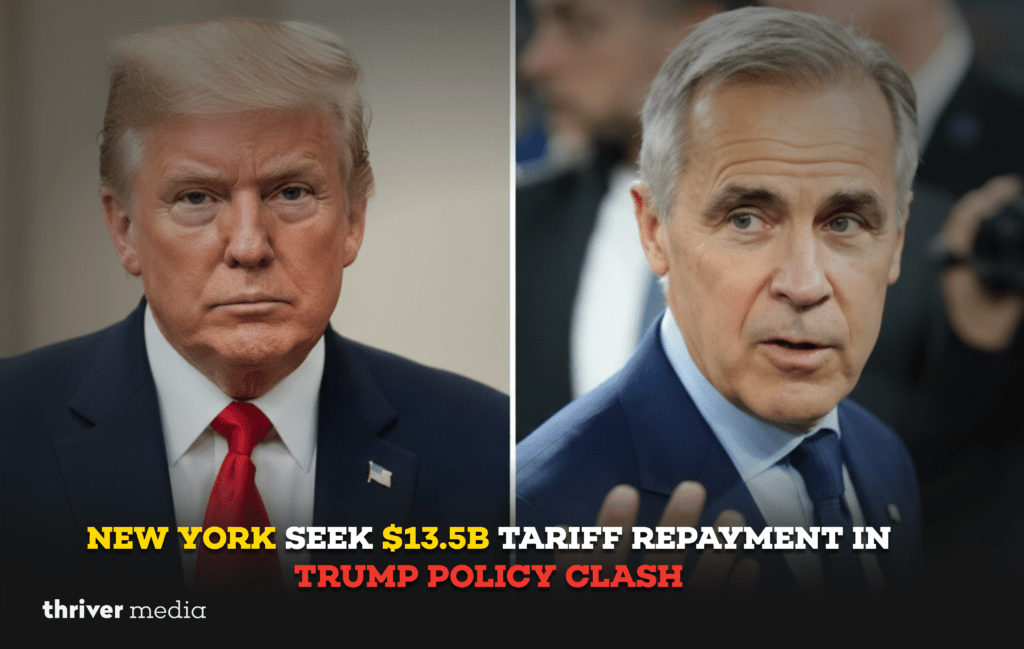
The math is simple but staggering: $13.5 billion dollars. Taken from New Yorkers’ pockets. Declared illegal by the Supreme Court. And now, a political earthquake is rumbling from Albany to the White House over who gets that money back.
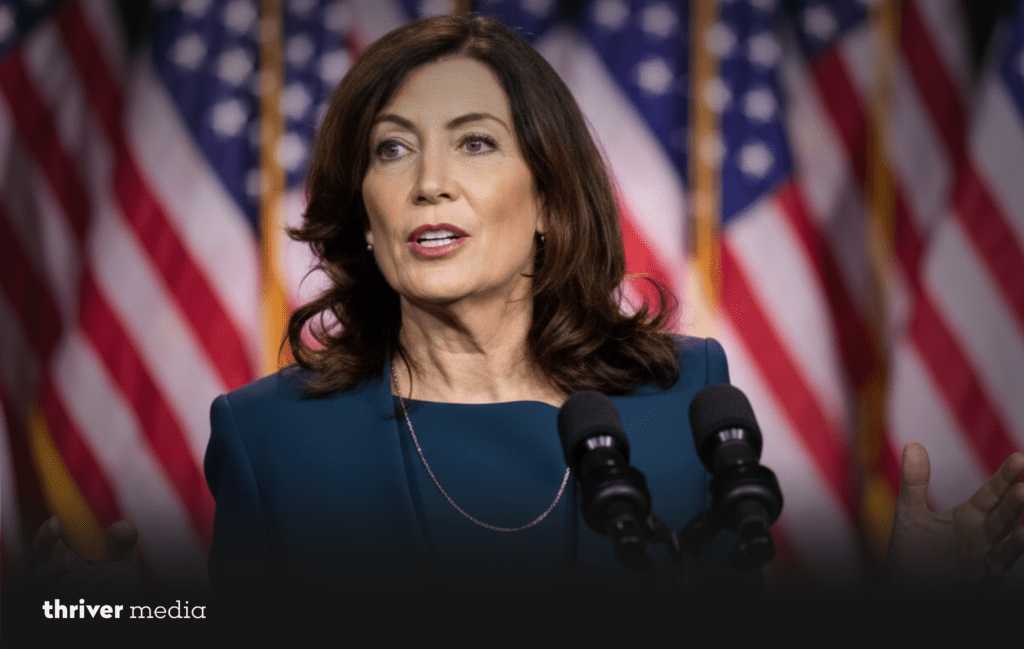
Governor Kathy Hochul didn’t mince words when she stood before cameras on Tuesday. “These senseless and illegal tariffs were just a tax on New York consumers, small businesses and farmers,” she said, her voice carrying the weight of 20 million constituents. “That’s why I’m demanding a full refund”.
But here’s where it gets complicated: the checks aren’t in the mail. The White House isn’t volunteering. And the $175 billion question how do you return money that’s already been spent, already been baked into budgets, already passed along to consumers who never even knew they were paying it? is about to trigger a legal war that could last years.
The Legal Earthquake: How the Supreme Court Upended Trump’s Trade War
Last Friday, the United States Supreme Court dropped a bomb on the Trump administration’s trade agenda. In a decisive 6-3 ruling, the nation’s highest court declared that President Trump’s sweeping tariffs imposed under the International Emergency Economic Powers Act (IEEPA) were flatly illegal.
Attorney General Letitia James Wins Big
Here’s something you don’t see every day: New York Attorney General Letitia James beating the federal government at the Supreme Court. But that’s exactly what happened.
James led a coalition of 12 states Arizona, Colorado, Connecticut, Delaware, Illinois, Maine, Minnesota, Nevada, New Mexico, Oregon, and Vermont joining New York in suing the Trump administration back in April 2025. Their argument was straightforward: the president cannot use a 1977 emergency powers law to impose massive new taxes on the American people. That power belongs to Congress.
“The Supreme Court has agreed that this administration has no authority to impose massive new taxes on a whim,” James declared after the victory. “This is a critical victory for the rule of law and our economy”.
Why IEEPA Failed the Legality Test
The International Emergency Economic Powers Act was never designed for trade wars. Passed in 1977, it allows presidents to block transactions and freeze assets during national emergencies think sanctions on foreign adversaries, not 10-25% taxes on nearly every country on earth.
The Court’s majority agreed. Writing for the 6-3 majority, the justices held that Trump’s “Liberation Day” tariffs imposed shortly after he returned to the White House last year went far beyond what IEEPA authorizes. The law simply doesn’t give presidents the power to tax imports.
Two of Trump’s own appointees joined the majority. That stung.
The $133 Billion Question Left Unanswered
Here’s the kicker: the Supreme Court ruled the tariffs illegal but said almost nothing about refunds.
By mid-December, U.S. Customs and Border Protection had already collected approximately $133 billion in IEEPA tariffs. That money sits in government coffers. And now, everyone wants it back.
Justice Brett Kavanaugh, dissenting, called out his colleagues for dodging the issue: “The Court says nothing today about whether, and if so how, the Government should go about returning the billions of dollars that it has collected from importers”.
Justice Amy Coney Barrett, who sided with the majority, had used the word “mess” during oral arguments to describe what refunds might look like. Kavanaugh borrowed that word in his dissent, warning that “the refund process is likely to be a ‘mess'”.
New York’s $13.5 Billion Demand: Who Actually Pays?
When Governor Hochul demands $13.5 billion in refunds, she’s not just talking about checks to the state treasury. She’s talking about real money that real New Yorkers already paid.
What $1,751 Per Household Actually Means
According to estimates from the Yale Budget Lab, the average New York household faced approximately $1,751 in added costs from these tariffs over the past year . That’s not a line item on a receipt labeled “tariff surcharge.” It’s baked into everything the price of lumber for that deck you built, the cost of steel in your car repair, the extra dollars on every imported item at the grocery store.
Multiply that by millions of households, and you get $13.5 billion.
Farmers Hit Hardest by the Trade War Fallout
New York farmers are telling a particularly brutal story. Some report their business expenses have jumped by as much as $20,000 annually due to higher equipment and supply costs. Meanwhile, milk exports from the state have dropped by 7 percent as trading partners retaliated with their own tariffs.
The numbers tell the tale: over 80 percent of agrochemical imports and 70 percent of farm machinery imports come from countries facing tariffs of 10 percent or more. When you tax the tools farmers need to work, you tax the food on every table.
Small Businesses Caught in the Crossfire
For small businesses operating on thin margins, the tariffs weren’t abstract policy they were existential threats. An importer bringing in goods from affected countries faced duties that could wipe out profit margins entirely. Those costs either got passed to customers or ate the business alive.
Hochul made clear her demand includes these businesses: “These senseless and illegal tariffs were just a tax on New York consumers, small businesses and farmers” .
FedEx Fires the First Shot: Corporate America Joins the Fight
While states make political demands, corporations are making legal ones. And FedEx just became the first major company to file suit since the Supreme Court ruling.
The Logistics Giant’s $1 Billion Warning
On Monday, February 23, FedEx filed an 11-page lawsuit in the U.S. Court of International Trade in New York . The complaint names U.S. Customs and Border Protection, its commissioner Rodney Scott, and the United States government as defendants.
“Plaintiffs seek for themselves a full refund from Defendants of all IEEPA duties Plaintiffs have paid to the United States,” FedEx’s lawyers wrote.
The filing doesn’t specify an amount, but here’s context: back in September, FedEx warned it expected a $1 billion earnings hit from U.S. trade policies during the fiscal year. While not all of that was IEEPA duties, the scale gives you an idea.
Why Hundreds of Companies Lined Up Early
FedEx isn’t alone. Hundreds of companies including Costco, Revlon, and Bumble Bee Foods filed refund-related lawsuits even before the Supreme Court ruled . They were essentially staking their place in line, betting the tariffs would fall and wanting to be first when refunds started flowing.
The strategy was smart. Now that the ruling has come down, those cases remain pending before the Court of International Trade in New York, where FedEx has also filed.
The Customs Agency’s Dilemma
Here’s the problem for U.S. Customs and Border Protection: they’ve never dealt with anything like this. The agency does have processes for refunding duties when importers can show errors, but those systems were designed for individual cases, not mass refunds potentially totaling over $100 billion.
Trade lawyer Dave Townsend, a partner with Dorsey & Whitney, suggests CBP might try to build on existing systems. But he acknowledges the scale is unprecedented.
Alexis Early, a trade lawyer at Bryan Cave Leighton Paisner, puts it bluntly: “Just because the process is difficult to administer doesn’t mean the government has the right to hold on to fees that were collected unlawfully”.
The White House Fires Back: “Pathetic But Unsurprising”
The Trump administration isn’t going quietly. In fact, they’re going loudly.
Kush Desai’s Scathing Response
White House spokesman Kush Desai didn’t hold back when asked about the governors’ refund demands.
“President Trump used tariffs to actually deliver where Democrats could only talk, so naturally Democrats are resorting to gathering more meaningless popcorn headlines pathetic but unsurprising,” Desai said in a statement.
The message is clear: the administration sees these demands as political theater, not serious policy proposals.
Trump’s Supreme Court Fury
President Trump himself has been lashing out since the ruling. On Friday, he told reporters that his administration would not voluntarily return funds: “It will be litigated for the next two years”.
By Monday, he was on social media, writing that he had a “complete lack of respect” for the Supreme Court and that “they should be ashamed of themselves”.
In a remarkable post, Trump wrote: “The supreme court (will be using lower case letters for a while based on a complete lack of respect!) of the United States accidentally and unwittingly gave me, as President of the United States, far more powers and strength than I had prior to their ridiculous, dumb, and very internationally divisive ruling”.
The Section 122 End Run
Here’s the twist: even as the courts struck down his IEEPA tariffs, Trump announced a new 15% global tariff under Section 122 of the Trade Act of 1974.
That provision allows tariffs to remain in place for up to 150 days without congressional approval a temporary measure rather than a permanent program. Trump has repeatedly signaled he doesn’t plan to seek additional action from Congress .
It’s an end run around the Supreme Court, but a limited one. The 150-day clock is already ticking.
Other Governors Join the Fight: 2028 Politics Heats Up
Governor Hochul isn’t alone in this fight. She’s joined by two other Democratic governors with national ambitions.
JB Pritzker’s $8.7 Billion Demand
Illinois Governor JB Pritzker, a Democrat and frequent Trump antagonist, is demanding refunds on behalf of his state’s 5.11 million households. In a letter addressed to Trump, Pritzker said the tariffs cost each Illinois household roughly $1,700 totaling $8.7 billion.
Pritzker warned that failure to pay would elicit “further action”.
Gavin Newsom Joins the Chorus
California Governor Gavin Newsom also called on Trump to issue refunds following the Supreme Court ruling. With California’s massive economy, the dollar figures there would dwarf even New York’s demand.
The 2028 Presidential Shadow Campaign
Here’s what everyone in politics notices: Hochul, Pritzker, and Newsom are all considered potential contenders for the 2028 presidential election. Their tariff refund demands aren’t just about policy they’re about positioning.
Each governor is staking out ground as a defender of working families against an administration they portray as indifferent to economic pain. Whether voters remember in 2028 remains to be seen.
The $175 Billion Refund Nightmare: How This Actually Works
Let’s get practical. How do you actually refund $133-175 billion in illegal tariffs?
Penn Wharton’s Stunning Estimate
Reuters reported last week that Penn Wharton Budget Model economists estimate more than $175 billion in U.S. tariff collections are subject to potential refunds. That’s the scale we’re talking about enough to fund entire government agencies for years.
Treasury Secretary’s Courtroom Pass
Treasury Secretary Scott Bessent has made the administration’s position clear: the issue of tariff refunds will be addressed by the lower courts. Translation: don’t expect a voluntary check-writing program from the White House.
Why Consumers Won’t See a Dime (Probably)
Here’s the hard truth for ordinary Americans: you probably aren’t getting a refund check.
Trade lawyer Joyce Adetutu, a partner at Vinson & Elkins, explains why. The higher prices consumers paid would be extremely difficult to attribute to specific tariffs. Even if a legal path existed for consumers to seek refunds, the cost and complexity would be prohibitive.
“Should they pursue refunds anyway?” Adetutu asks. “In America, we have the ability to file a lawsuit for anything we want.” But she wouldn’t advise wasting money on legal fees.
The real beneficiaries will be companies that paid duties directly importers who can document exactly what they paid and when.
The 12-18 Month Timeline
TD Securities estimates that any refunds actually issued will take 12 to 18 months to roll out. That assumes the process goes smoothly, which trade lawyers doubt.
Ryan Majerus, a partner at King & Spalding and a former U.S. trade official, suggests the government might try to streamline by setting up a special website where importers can claim refund. But Adetutu warns that “the government is well-positioned to make this as difficult as possible for importers. I can see a world where they push as much responsibility as possible onto the importer” potentially forcing them to go to court individually.
The Precedent That Offers Hope
There is some historical precedent. In the 1990s, courts struck down as unconstitutional a harbor maintenance fee on exports and set up a system for exporters to apply for refunds.
But that system handled nothing like the volume or dollar amounts at stake now. This is unprecedented territory.

FAQs
What exactly did the Supreme Court rule?
The Court ruled 6-3 that President Trump’s sweeping tariffs imposed under the International Emergency Economic Powers Act (IEEPA) are unconstitutional. The president lacks authority under that law to impose such tariffs without congressional approval.
How much money is at stake?
Approximately $133 billion had been collected through mid-December, with Penn Wharton economists estimating over $175 billion in total collections subject to potential refunds.
Will individual consumers get refund checks?
Probably not. While consumers paid higher prices due to tariffs, tracing those costs directly to specific tariff payments would be extremely difficult. Refunds are more likely to go to companies that paid duties directly.
What happens to the tariffs now?
Trump announced new 15% global tariffs under Section 122 of the Trade Act of 1974, which allows tariffs for up to 150 days without congressional approval. That clock is already running.
Bottom Line: What This Fight Really Means
The $13.5 billion tariff refund battle isn’t really about $13.5 billion. It’s about three much larger things.
First, it’s about constitutional limits on presidential power. The Supreme Court sent a clear message: even a president cannot unilaterally impose massive taxes on the American people. That power belongs to Congress, and emergency powers laws have limits.
Second, it’s about who bears the cost of trade wars. The tariffs didn’t hurt China primarily they hurt American businesses and families who paid higher prices for everyday goods. Farmers saw exports drop and costs rise. Small businesses saw margins evaporate. The pain was real and widespread.
Third, it’s about whether illegally collected taxes get returned. The principle seems straightforward: if the government took your money unlawfully, you should get it back. But the mechanics are anything but straightforward. Customs systems weren’t designed for mass refunds. Courts weren’t designed for hundreds of billions in claims. And the political will to write those checks simply doesn’t exist in the current White House.
The coming months will see lawsuits, legislative maneuvering, and intense political positioning. Governors Hochul, Pritzker, and Newsom will hammer the issue relentlessly partly because they believe it’s right, partly because it positions them for 2028. The White House will fight every dollar, partly because budgets matter, partly because admitting error isn’t this administration’s style.
Meanwhile, companies like FedEx will press their cases in court, hoping to recover millions. Farmers will watch their bottom lines. And ordinary families will probably never see a dime, even though they paid the bill.
That’s the uncomfortable truth at the heart of this fight: the people who ultimately paid these illegal taxes are the least likely to get refunded. The money came out of their pockets in small increments fifty cents here, a dollar there baked into prices so thoroughly that most never even noticed. By the time courts sort out who gets what, that money will be long gone, replaced by new tariffs under new legal authorities, and the whole cycle may start again.
Official Source Links
- New York State Attorney General Press Release – Supreme Court victory announcement
- U.S. Supreme Court Opinion – Search for IEEPA tariffs case (February 2026)
- U.S. Customs and Border Protection – Duty refund information
- FedEx Lawsuit Filing – Court of International Trade docket search
- Yale Budget Lab – Tariff cost estimates for New York households
Conclusion: The Long Road to Repayment
The Supreme Court has spoken. The tariffs were illegal. The money was unlawfully taken. But between that clear legal conclusion and actual refunds landing in anyone’s account lies a labyrinth of litigation, administrative chaos, and political warfare.
President Trump predicts two years of litigation. Trade lawyers warn of five. Some companies may wait years to recover what they paid, while others may never see a dime. The customs agency, the Court of International Trade, and various lower courts will spend countless hours sorting through claims, establishing procedures, and determining who gets what.
Through it all, one question lingers: if the government takes your money unlawfully, shouldn’t giving it back be the easy part? In theory, yes. In practice, welcome to American trade law, where nothing is simple and billions of dollars hang in the balance.
For New York’s 20 million residents, for FedEx and Costco and thousands of small businesses, for farmers watching export markets shrink, the wait is just beginning. The Supreme Court ruled. But the fight over who gets paid, when, and how much that fight is only getting started.
Disclaimer: The news and information presented on our platform, Thriver Media, are curated from verified and authentic sources, including major news agencies and official channels.
Want more? Subscribe to Thriver Media and never miss a beat.