

Published: March 10, 2025
Asian stocks surge, Brent crude crashes 10%, and global investors navigate the most volatile geopolitical market event of 2025

Executive Summary
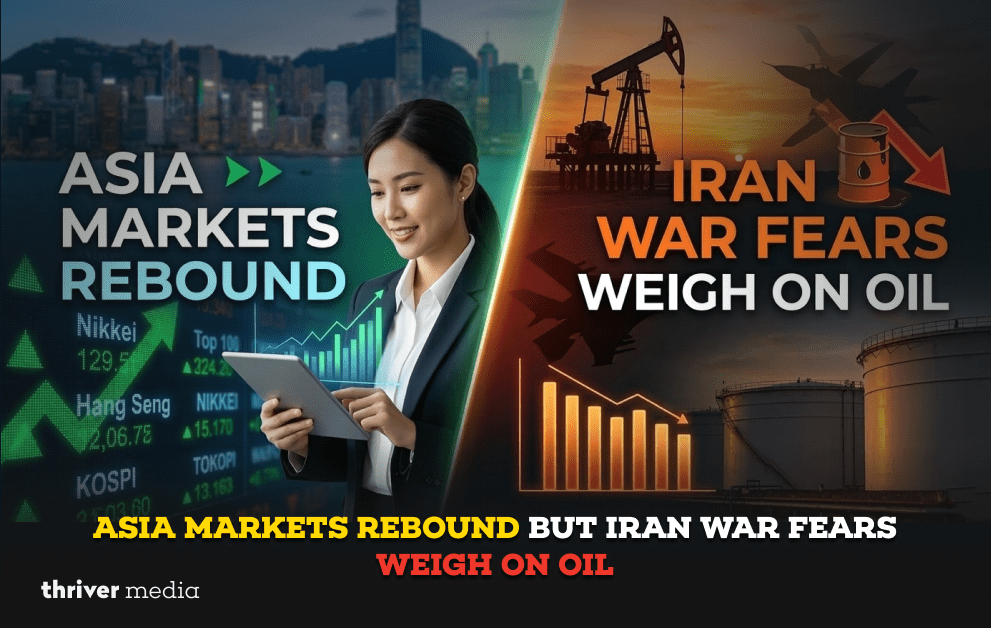
Asian equity markets staged a dramatic rebound on Tuesday, March 10, 2025, after U.S. President Donald Trump declared the Middle East war could be ‘over soon’ sending shockwaves through oil markets and lifting investor sentiment across the Asia-Pacific region. Brent crude plummeted nearly 10%, falling below $90 per barrel, while South Korea’s KOSPI surged an extraordinary 6.4%, prompting rare trading curb activations. Yet beneath the optimism, geopolitical risk remains: Iran’s military has vowed to escalate, and Trump simultaneously threatened to retaliate ’20 times harder’ if the Strait of Hormuz is disrupted.
This is the full breakdown of what happened, why it matters, and what investors must watch next.
Key Asia Market Snapshot March 10, 2025
Here is a comprehensive at-a-glance table of all major market movements driven by the Iran-Trump developments:
| Market / Asset | Movement | Level / Price | Driver |
| MSCI Asia-Pacific ex-Japan | ▲ +2.6% | Partial recovery | Trump peace optimism |
| Japan Nikkei 225 | ▲ +3.6% | Strong rebound | Risk-on sentiment |
| South Korea KOSPI | ▲ +6.4% | Trading curb triggered | Surge past 5% futures |
| Brent Crude Oil | ▼ −10% | Below $90/barrel | War-end signals |
| US 10-Yr Treasury Yield | ▼ −2.3 bps | 4.109% | Inflation fears ease |
| US Dollar Index (DXY) | ▼ −0.1% | 98.79 | Risk appetite recovery |
| Gold | ▼ −0.1% | $5,133.55/oz | Stable safe-haven demand |
| Bitcoin (BTC) | ▲ +0.2% | $69,127.60 | Directionless crypto market |
What Happened: The Full Story
Trump’s Remarks Ignite a Relief Rally
In a post on Truth Social, President Donald Trump declared that the Middle East conflict was ‘very complete’ a statement that blindsided markets still reeling from Monday’s spike in oil prices and equity selloff. The remarks triggered an immediate pivot in global risk sentiment, with investors interpreting Trump’s words as a signal that a ceasefire or diplomatic resolution may be imminent.
Tony Sycamore, market analyst at IG in Sydney, offered a measured take: while Trump’s rhetoric has toned down from demanding ‘full surrender,’ reconciling the idea of the conflict being truly over remains difficult given the realities on the ground in Iran.
Oil’s Dramatic Collapse Below $90
Perhaps the most explosive single-session move of 2025 in commodities: Brent crude futures dropped as much as 10%, crashing from near $119 per barrel to below $90. The selloff reflected a rapid unwinding of the ‘war premium’ baked into oil prices since the conflict escalated.
The collapse in oil prices has immediate real-world implications:
- Lower fuel costs for airlines, shipping companies, and consumers
- Reduced inflationary pressure in the near term
- Relief for central banks in Europe considering further policy tightening
- A potential lifeline for rate-cut bets that had been pushed further into 2025
Asia’s Equity Surge KOSPI Triggers Trading Curb
South Korea’s KOSPI emerged as the standout performer, soaring 6.4% in a session that saw the Korea Exchange activate a sidecar trading curb a mechanism that halts programme trading for five minutes after futures rise more than 5%. This reflects the scale of buying pressure unleashed by Trump’s comments.
Japan’s Nikkei 225 was not far behind, climbing 3.6% as investor confidence returned following Monday’s sharp selloff. The broader MSCI Asia-Pacific ex-Japan index gained 2.6%, partially recovering recent conflict-driven losses.
The Other Side: Iran War Defiance & Hormuz Risk

Hardliners Rally Behind New Supreme Leader
While Trump signaled optimism in Washington, events in Tehran told a very different story. Hardliners in Iran rallied behind the newly installed Supreme Leader Mojtaba Khamenei in a pointed show of defiance an unmistakable signal that Iran does not consider the conflict resolved.
Iran’s military compounded this by issuing a stark warning: it would step up missile strikes, a direct counter-narrative to Trump’s ‘mission complete’ framing.
The Strait of Hormuz: The World’s Most Dangerous Chokepoint
Trump did not leave his optimism unguarded. In a follow-up Truth Social post, he issued a direct warning: if Iran takes any action to stop the flow of oil through the Strait of Hormuz, the United States would retaliate ’20 times harder.’
The Strait of Hormuz context matters enormously for energy markets:
- Approximately 20% of the world’s oil supply passes through the Strait of Hormuz daily
- Any closure or disruption would send Brent crude prices sharply higher potentially back above $100/barrel within hours
- Global supply chains, airlines, and manufacturing would face severe cost pressure
- Central banks would face a renewed inflation dilemma, potentially forcing rate hikes
The market’s relief rally, while real, is thus sitting on fragile foundations. One Iranian missile strike targeting shipping lanes could reverse Tuesday’s gains instantly.
Bonds, Dollar, Gold & Crypto: The Full Picture

Treasury Yields Retreat Fed Rate Cut Pushed to July
U.S. Treasury bonds recovered from Monday’s oil-spike-driven inflation scare. The 10-year Treasury yield fell 2.3 basis points to 4.109%, reflecting reduced near-term inflation expectations as oil prices collapsed. However, traders have adjusted their Federal Reserve expectations: the first rate cut is now not anticipated until July 2025, according to CME Group’s FedWatch tool.
ING analysts struck a cautious tone in a client note, observing that nominal yields may see a short-term reversal trade but that a dramatic structural bond rally is not expected clear inflation impulses still need to be overcome, and the economy, while strained, is not in recession.
The US Dollar Retraces Weekly Gains
The US Dollar Index (DXY) retraced all gains accumulated over the past week, slipping 0.1% to 98.79. A falling dollar typically indicates increasing risk appetite investors moving out of safe-haven USD holdings and back into riskier assets such as equities and commodities.
Gold Holds Steady at $5,133 Crypto Directionless
Gold remained relatively stable, edging down just 0.1% to $5,133.55 per ounce reflecting balanced forces: reduced geopolitical panic on one side, versus ongoing macro uncertainty on the other. The precious metal has held within its established trading channel for the past week, suggesting investors are not yet ready to abandon safe-haven positioning entirely.
Cryptocurrency markets remained largely directionless, continuing the same range-bound trading visible since February. Bitcoin edged up 0.2% to $69,127.60, while Ethereum fell 0.4% to $2,018.69 suggesting digital assets are not being treated as a meaningful hedge or risk-on asset in this geopolitical environment.
What Smart Investors Are Watching Next

The current environment demands attention to several critical variables that will determine whether Tuesday’s rally is sustainable or a classic dead-cat bounce:
- Iran’s military activity: Any escalation near the Strait of Hormuz would immediately reverse oil and equity markets
- Trump’s follow-up diplomacy: Whether Washington engages in formal ceasefire negotiations or maintains military pressure
- Federal Reserve communication: With rate cuts pushed to July, any fresh inflation data could further shift expectations
- Oil supply fundamentals: Reports that Washington may soften Russian energy sanctions add another variable to crude pricing
- Technical levels in equity markets: The KOSPI trading curb suggests momentum is powerful but vulnerable to rapid reversals
- Retail investor positioning: Signs of increased risk-taking by retail investors were noted Monday a potential contrarian signal
Frequently Asked Questions (FAQs)
Below are the most commonly searched questions about the Asia markets rebound and the Iran oil price impact, answered concisely for quick reference:
Why did Asian markets rally on March 10, 2025?
President Trump declared the Middle East conflict was ‘very complete,’ sparking investor optimism that calmed market panic.
How much did oil prices fall?
Brent crude plunged up to 10%, falling from near $119 to below $90 per barrel in a single session.
What caused the KOSPI trading halt?
South Korea’s KOSPI surged 6.4%, triggering a sidecar curb that halted programme trading for 5 minutes after futures rose more than 5%.
Is the Iran conflict over?
No. Iran’s military warned of stepped-up missile strikes. Markets remain on edge despite Trump’s optimistic remarks.
When will the Fed cut rates next?
Traders have pushed out rate-cut expectations to July 2025, per CME Group’s FedWatch tool, after the oil-price spike raised inflation fears.
What does the Strait of Hormuz risk mean for oil?
The Strait of Hormuz is the world’s most critical oil chokepoint. Any closure could spike energy prices globally and destabilize supply chains.
Bottom Line
Tuesday’s Asia market rally is real but it is built on sand. Trump’s optimistic rhetoric provided a short-term lifeline for battered equity markets and triggered one of the sharpest single-session oil price declines in recent memory. KOSPI’s 6.4% surge and Nikkei’s 3.6% gain are genuine reflections of reduced near-term panic. However, Iran’s defiance escalating missile strikes, a new hardline Supreme Leader, and credible Hormuz threats means the geopolitical risk premium has not been eliminated. It has merely been temporarily suppressed.
For oil, the critical question is whether Brent crude below $90 reflects a genuine peace dividend or a premature market repricing. For equities, the risk is that another Iran provocation especially near the Strait of Hormuz could reverse Tuesday’s gains within a single session.
Investors should treat this rally as an opportunity to reassess positioning rather than as a signal to add aggressive risk. The volatility is not over.
Conclusion: A Fragile Calm in a Volatile World
The events of March 10, 2025, encapsulate the challenge facing global markets in a world where geopolitical risk can move oil prices by 10% in a single session and push equity markets into circuit-breaker territory. President Trump’s comments provided an essential pressure valve a moment of relief that allowed investors to exhale after Monday’s panic. But the structural risks remain firmly in place.
The Strait of Hormuz remains the world’s most consequential oil chokepoint. Iran’s hardliners remain in power and are actively escalating. And the Federal Reserve’s rate-cut timeline has been pushed further out, meaning the interest rate environment will remain restrictive for longer.
In short: Asian markets have bounced. Oil has crashed. But the war is not over and neither is the market volatility. Stay informed, stay diversified, and watch the Strait of Hormuz as the single most important variable for global energy and equity markets in the weeks ahead.
Disclaimer: The news and information presented on our platform, Thriver Media, are curated from verified and authentic sources, including major news agencies and official channels.
Want more? Subscribe to Thriver Media and never miss a beat.