

21st April 2026
The Beast Incarnate Hangs Up His Boots at WrestleMania 42. A Complete Career Retrospective.

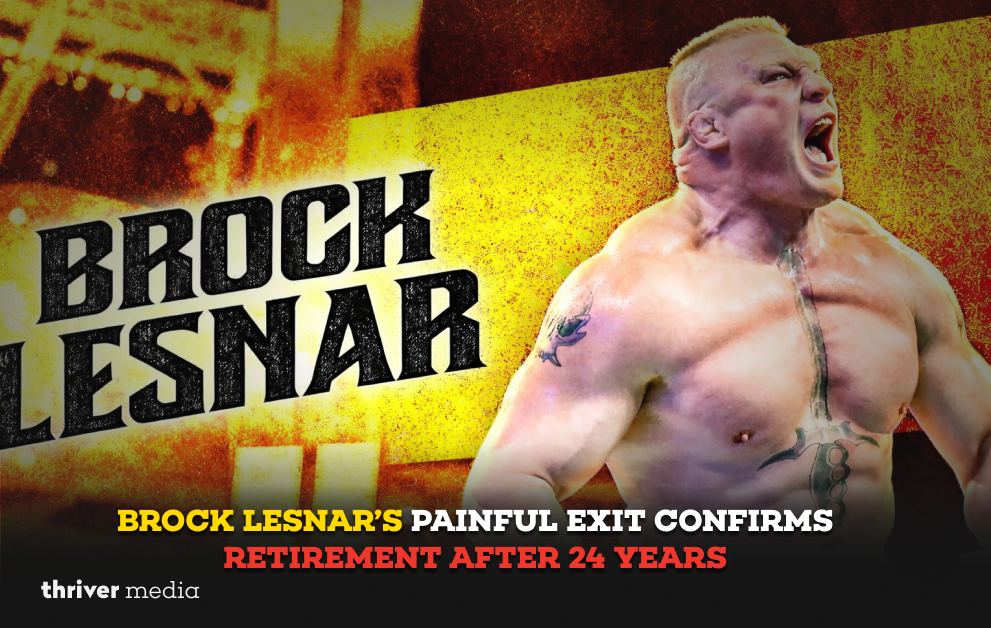
The Night 60,000 People Said Goodbye to the Beast
Some moments in wrestling don’t need commentary. The music fades. The crowd holds its breath. And you just know.
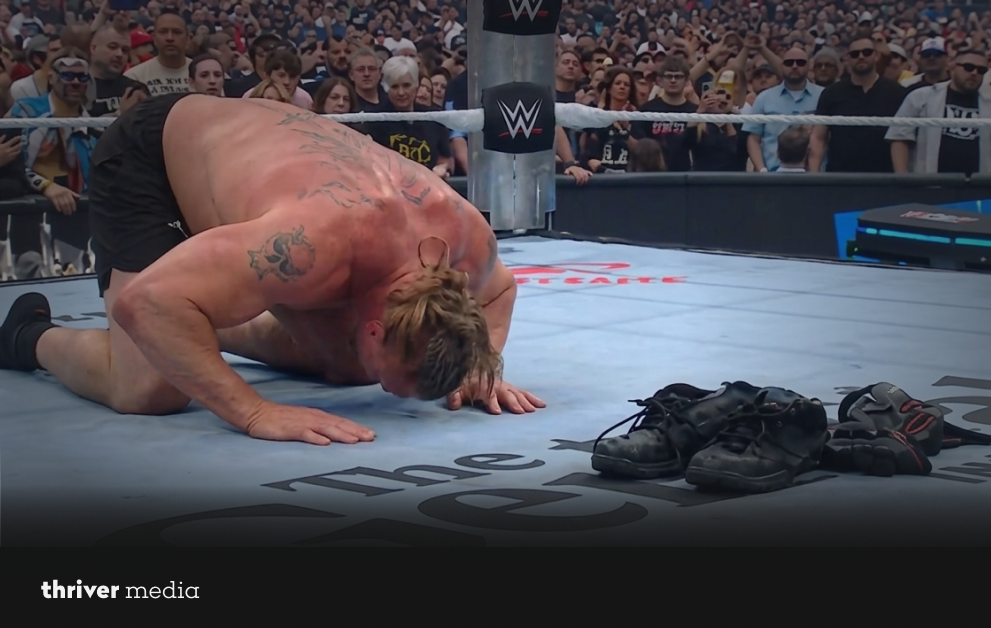
That’s exactly what happened on Night 2 of WrestleMania 42 at Allegiant Stadium in Las Vegas. Brock Lesnar the most terrifying, most legitimate, and most dominant force professional wrestling has seen in decades sat in the middle of the ring after losing to Oba Femi. He didn’t throw a fit. He didn’t storm off. He pulled off his gloves. Then his boots. He placed them neatly in the center of the canvas.
And 60,000 fans understood.
The arena erupted with “Thank you, Brock!” chants. Tears ran down Lesnar’s face a man who never cried on television. Paul Heyman climbed into the ring, and the two men who spent over 20 years building one of wrestling’s most iconic partnerships embraced without a word. Then Lesnar walked up the ramp, stopped to shake hands with fans at ringside, and disappeared behind the curtain.
No speech. No announcement. Just boots in a ring and a man walking away on his own terms.
If you’re searching for answers about the Brock Lesnar retirement, this is the full story from a dairy farm in South Dakota to the grandest stage of them all. Every title. Every era. Every moment that made the Beast Incarnate a once-in-a-generation athlete.
Where It All Began: Webster, South Dakota
Brock Edward Lesnar was born on July 12, 1977, in Webster, South Dakota. Not exactly a breeding ground for world champions. He grew up on his family’s dairy farm with his parents, Richard and Stephanie Lesnar, two older brothers Troy and Chad and a younger sister, Brandi. Life on that farm meant 4 a.m. wake-ups, hauling feed, and building the kind of physical toughness that no gym can replicate.
His father Richard ran the ranch and instilled the values of relentless work and quiet discipline. Lesnar would later credit his upbringing as the foundation for everything he achieved. When Richard passed away on April 7, 2019, from complications after heart surgery, Lesnar dedicated his next WWE title victory to his father’s memory.
Wrestling came naturally. By high school, Lesnar was a three-time Minnesota state wrestling champion and earned the 1996 Gatorade National High School Wrestling Player of the Year award. The kid from a 2,000-person town was already the best in the country.
College Wrestling: Building the Foundation (1996–2000)
After high school, Lesnar attended Bismarck State College in North Dakota, where he won the 1998 NJCAA Heavyweight Championship and earned two NJCAA All-American honors. He was dominant at the junior college level but he wasn’t satisfied.
He transferred to the University of Minnesota, one of the most storied collegiate wrestling programs in the country. Under the bright lights of Big Ten competition, Lesnar thrived. He became a two-time Big Ten Conference Champion and a two-time NCAA All-American. In 2000, he captured the NCAA Division I Heavyweight Championship with a record of 106 wins and just 5 losses across his college career.
That 106–5 record still gets talked about today. It’s the kind of stat that makes you do a double take. For context, most elite college wrestlers are thrilled with an 80% win rate. Lesnar finished above 95%. At the heavyweight division. Against the best amateurs in the country.
At Minnesota, he also met a teammate named Shelton Benjamin and a man who would change the trajectory of his life forever: Paul Heyman.
The WWE Debut: The Next Big Thing Arrives (2000–2002)

In 2000, right after winning the NCAA title, Lesnar signed a developmental contract with the World Wrestling Federation (later renamed WWE). He was sent to Ohio Valley Wrestling in Louisville, Kentucky, where he trained under Jim Cornette and was paired with Shelton Benjamin as the Minnesota Stretching Crew. The duo won the OVW Southern Tag Team Championship three times.
But everyone backstage knew Lesnar was destined for bigger things. He was 6’3”, nearly 300 pounds, could do a standing shooting star press, and moved like a man half his size. When Paul Heyman saw him for the first time, he reportedly told people this was the biggest money talent he’d ever seen.
On March 18, 2002, Brock Lesnar made his main roster debut on Monday Night Raw. He walked out, destroyed a ring full of wrestlers, and the wrestling world collectively said: who the hell is this guy?
The answer would become clear very quickly.
The Ruthless Aggression Era: Domination at 25 (2002–2004)
Lesnar’s rise was the fastest the industry had ever seen. Within months of his debut, he won the 2002 King of the Ring tournament, tearing through opponents like they were made of paper. Then came the moment that put him on the map forever.
At SummerSlam 2002, Brock Lesnar defeated The Rock to win the WWE Championship. He was 25 years old the youngest WWE Champion in history at that time. Think about that. In an industry where most performers spend a decade paying dues before touching a world title, Lesnar did it in five months.
What followed was a reign of dominance that defined the Ruthless Aggression Era. He won the 2003 Royal Rumble. He headlined WrestleMania XIX against Kurt Angle in a match that included one of the most insane moments in WrestleMania history Lesnar attempting a shooting star press from the top rope, nearly breaking his neck on a botched landing, and still finishing the match to win. That’s not toughness. That’s something beyond toughness.
His feuds with Angle, Big Show, The Undertaker, and Eddie Guerrero were the backbone of SmackDown during this period. Lesnar was the franchise. And then, in a move that stunned everyone he walked away.
After WrestleMania XX in March 2004, Lesnar left WWE. He was 26 years old. He told reporters he’d had three great years but was unhappy and wanted to pursue professional football. The industry was in shock.
The NFL Experiment (2004–2005)
Most people thought it was a publicity stunt. It wasn’t.
Lesnar hadn’t played football since high school, but he genuinely believed he could make an NFL roster. He tried out for the Minnesota Vikings in 2004 and was impressive enough to earn a preseason roster spot. But the transition from wrestling to professional football at 27, with no college football experience, proved too steep. He was one of the final cuts from the Vikings roster.
Here’s the thing though the fact that he even got that far tells you everything about his athletic ability. NFL scouts don’t hand out roster spots as favors. Lesnar earned his chance through pure physicality and raw talent. It just wasn’t enough against athletes who’d been playing the sport their entire lives.
After the NFL chapter closed, Lesnar spent time in New Japan Pro-Wrestling, where he won the IWGP Heavyweight Championship in 2005. He also competed in the Inoki Genome Federation. But the next chapter of his career would prove to be even more extraordinary than anything that came before it.
The UFC Chapter: Conquering Mixed Martial Arts (2007–2011)
When Brock Lesnar announced he was entering MMA, the combat sports world split into two camps. Half said he was a legitimate threat. The other half said he was a pro wrestler who’d get exposed the moment he faced a real fighter.
He debuted in 2007, lost his first fight to Frank Mir via submission, and the critics pounced. They said it was over before it started. Then Lesnar went on to win his next three fights in devastating fashion.
In just his fourth professional MMA fight fourth he defeated the legendary Randy Couture via TKO to win the UFC Heavyweight Championship in November 2008. Most fighters spend years working their way up the ranks. Lesnar did it in months.
At UFC 100 in July 2009, he destroyed Frank Mir in a rematch, winning by second-round TKO in the biggest pay-per-view in UFC history at that time. He later defended his title against Shane Carwin at UFC 116, coming back from the brink of defeat to win by submission. That fight might have been the most impressive performance of his MMA career Carwin nearly knocked him out in the first round, and Lesnar came back and choked him out in the second.
Health problems changed everything. Lesnar was diagnosed with diverticulitis, a serious intestinal condition that required surgery and nearly ended his life. He lost the title to Cain Velasquez in 2010 and then lost to Alistair Overeem in 2011 before retiring from MMA.
But the numbers speak for themselves. Brock Lesnar became the UFC Heavyweight Champion in just his fourth fight. He headlined some of the biggest pay-per-views in UFC history. And he became the only person in history to hold the primary heavyweight championships of the WWE, UFC, NCAA, NJPW, and IGF.
Nobody else has done that. Nobody else is likely to.
The Return to WWE: Ending the Streak (2012–2020)
On April 2, 2012, the night after WrestleMania 28, Brock Lesnar walked back into WWE on Monday Night Raw and attacked John Cena. The crowd lost its mind. The Beast was back.
But the moment that redefined his entire legacy and arguably the biggest moment in WrestleMania history came two years later.
At WrestleMania XXX on April 6, 2014, Brock Lesnar defeated The Undertaker. That’s not just a sentence. That’s an earthquake. The Undertaker had been undefeated at WrestleMania for 21 consecutive years. The Streak was considered the most sacred record in professional wrestling. Nobody was supposed to break it. Ever.
Lesnar broke it. The arena went dead silent. Fans cried. The commentators couldn’t speak. It remains the single most shocking result in the history of WrestleMania, and Lesnar was the only man on the roster trusted to be the one to do it.
What followed was complete annihilation. At SummerSlam 2014, Lesnar decimated John Cena in one of the most lopsided championship matches ever broadcast 16 German suplexes, relentless punishment, total domination. His 504-day Universal Championship reign became the seventh-longest world title reign in WWE history. He defeated Randy Orton, Goldberg, Roman Reigns, Braun Strowman, and every top name placed in front of him.
His schedule was part-time and that became a lightning rod for criticism. But the results were undeniable. Every time Lesnar showed up, ratings spiked. Every time his music hit, arenas erupted. He proved that in an era of weekly television, scarcity could be more powerful than overexposure.
The Final Run: 2021–2026
Lesnar’s third and final WWE run began in 2021, and it felt different from the start. He showed a side of his personality fans had never seen smiling, joking, wearing a cowboy hat. The “Cowboy Brock” era became one of the most surprisingly entertaining character shifts in WWE history.
He won the WWE Championship at Elimination Chamber in 2022 and the Royal Rumble that same year. His feud with Roman Reigns headlined WrestleMania 38 in a title unification match and culminated in a Last Man Standing match at SummerSlam 2022. The Lesnar–Reigns rivalry became one of the defining feuds of the modern era.
After a period away from the company, Lesnar returned in early 2026. He entered the Royal Rumble at number 22, eliminating multiple competitors before being tossed out. On Raw in February, he issued an open challenge for WrestleMania 42 and Oba Femi answered.
Lesnar himself signaled this would be brief. He told people he was “the old guy now” and had come back “for a short time.” Those words turned out to be more prophetic than anyone realized.
WrestleMania 42: The Last Match (April 19, 2026)
Night 2 of WrestleMania 42 opened with Oba Femi versus Brock Lesnar at Allegiant Stadium in Las Vegas. The match told its story fast.
Lesnar started with his usual aggression early suplexes, driving Femi into the ring post. But Femi absorbed the punishment and fired back with uppercuts that visibly staggered Lesnar. The power dynamic shifted. Within minutes, Femi connected with a thunderous chokeslam followed by his devastating Fall From Grace powerbomb. He pinned Lesnar clean. The match lasted under five minutes.
The loss was decisive. But it wasn’t a burial it was a gift. Lesnar gave Femi the kind of clean, dominant victory at WrestleMania that launches careers. It was the same kind of moment veterans once gave Lesnar himself. The torch was passed.
After the bell, Lesnar sat up slowly. He removed his gloves. He removed his boots. He placed them in the center of the ring. He kissed the mat. He climbed the ropes and waved to the crowd. Then Paul Heyman entered the ring, and the two men embraced both in tears.
The “Thank you, Brock!” chants echoed through the stadium as Lesnar walked up the ramp, stopping to shake hands with fans. Commentary went silent. No words were needed. The visual said everything.
After the event, WWE Chief Content Officer Triple H addressed the media. He stopped short of confirming Lesnar’s retirement officially but acknowledged it certainly looked that way. He noted Lesnar isn’t the type of person who lingers for long conversations and suggested the Beast had made his decision the moment he walked into the wall that was Oba Femi.
Paul Heyman: The Man Behind the Monster
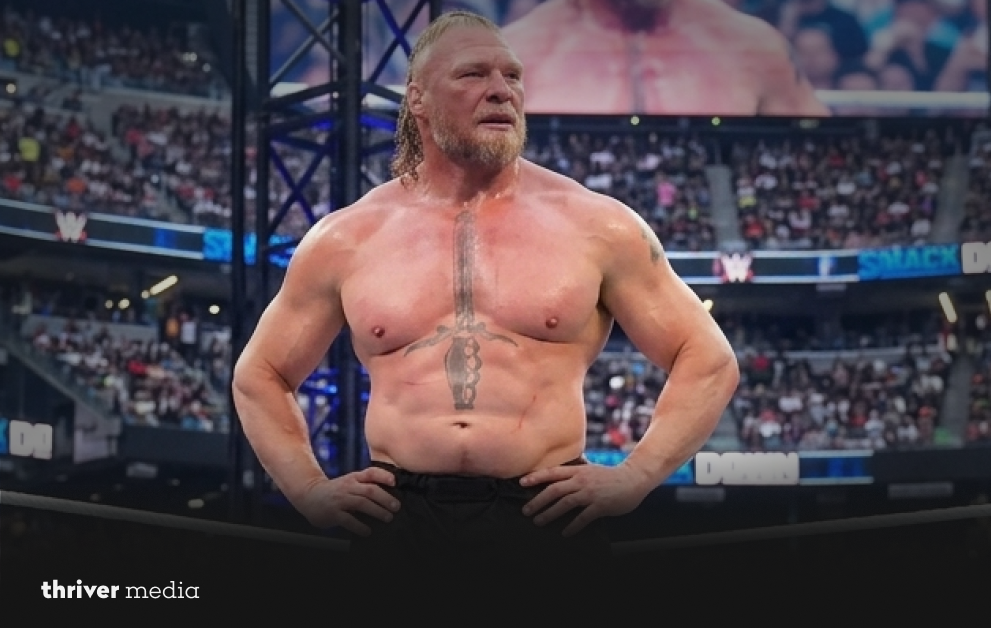
You can’t tell the Brock Lesnar story without Paul Heyman. They met in OVW in 2000, and Heyman immediately recognized something special. Their partnership became one of the most iconic manager-wrestler relationships in wrestling history.
Heyman’s contributions went far beyond promos. He was Lesnar’s strategist, his creative voice, and his friend. The dramatic pauses, the booming introductions, the way Heyman could make you believe Lesnar was the most dangerous man alive that was real artistry.
Watching them embrace in the ring after the Oba Femi loss was the most human moment of Lesnar’s entire career. It stripped away the character, the storylines, and the kayfabe to reveal two men who’d been through everything together and were saying goodbye.
Championships and Career Achievements
Lesnar’s resume reads like fiction. Here’s what he accomplished across multiple combat disciplines:
- WWE Championships: 7-time WWE Champion, 3-time WWE Universal Champion (10 world titles total in WWE)
- UFC: UFC Heavyweight Champion (2008–2010)
- NCAA: Division I Heavyweight Champion (2000), two-time All-American
- NJPW: IWGP Heavyweight Champion
- IGF: IGF Heavyweight Champion
- Royal Rumble: 2-time winner (2003, 2022)
- King of the Ring: 2002 winner
- Money in the Bank: 2019 winner
- Historic: Ended The Undertaker’s 21-match WrestleMania undefeated streak at WrestleMania XXX (2014)
- Record: Youngest WWE Champion in history at the time (age 25). 504-day Universal Championship reign, 7th longest in WWE history.
He is the only person in history to hold the primary heavyweight championship of the WWE, UFC, NCAA, NJPW, and IGF. That record may never be broken.
How Fans Reacted: Respect That Transcended Storylines
Brock Lesnar was never a conventional fan favorite. He was booked as a monster. He showed up when he wanted. He didn’t do media tours or charity events. He didn’t have a catchphrase the crowd could chant along to.
But at WrestleMania 42, none of that history mattered. Fans stood and chanted because they understood what they were witnessing the end of something they’d never see again.
Social media exploded within minutes. Fellow wrestlers, MMA fighters, journalists, and fans posted tributes. Former opponent Kurt Angle tweeted his love and respect. MMA journalist Ariel Helwani noted the emotional significance of the moment. The universal sentiment was clear: whether you loved him, hated him, or just feared him Brock Lesnar was irreplaceable.
His retirement also came in the context of a broader changing of the guard. John Cena retired in December 2025. AJ Styles called it quits a month later and was inducted into the WWE Hall of Fame the night before WrestleMania 42. An entire generation of legends is walking away, and Lesnar’s exit might be the most dramatic of them all.
Behind Closed Doors: Lesnar’s Family and Private Life
For all the chaos he created inside the ring, Lesnar built a quiet, grounded life outside of it.
He married Rena Greek better known as Sable, a former WWE star in her own right in 2006. After their marriage, Sable stepped away from the spotlight entirely to focus on family. The couple lives on a farm in Saskatchewan, Canada, far from the noise of the wrestling world.
Lesnar is the father of four children. His twins, Mya Lynn and Luke, were born in 2002 from a previous relationship with Nicole McClain. Mya has become a standout athlete in her own right she’s a two-time NCAA champion in the shot put, winning the indoor title in 2024 and the outdoor title in 2025. The Lesnar competitive gene clearly runs in the family. Luke is a three-time Minnesota wrestling state champion. With Sable, Lesnar has two younger sons: Turk and Duke, both involved in youth hockey.
Lesnar once said his favorite place was on his tractor, not on a red carpet. He doesn’t have public social media accounts. He doesn’t do talk shows. That deliberate privacy was always part of what made him compelling—in a world of constant self-promotion, Lesnar let his performances do the talking.
Brock Lesnar Retirement: Context Overview
| Section | Key Details |
| Early Life | Born July 12, 1977, Webster, South Dakota. Raised on dairy farm. Three-time state wrestling champion. |
| College Career | 106–5 record. 2000 NCAA Division I Heavyweight Champion. Two-time All-American at University of Minnesota. |
| WWE Debut | Signed 2000, debuted March 18, 2002 on Raw. Won WWE Championship at age 25 at SummerSlam 2002. |
| First WWE Run | 2002–2004. King of the Ring, Royal Rumble winner, 3x WWE Champion. Headlined WrestleMania XIX. |
| NFL Attempt | 2004–2005. Tried out for Minnesota Vikings. Made preseason roster. Released as final cut. |
| UFC Career | 2007–2011. UFC Heavyweight Champion (2008). Defended vs Mir and Carwin. Retired after loss to Overeem. |
| Second WWE Run | 2012–2020. Ended Undertaker’s streak. 504-day Universal title reign. Defeated Cena, Goldberg, Reigns. |
| Final Run | 2021–2026. Cowboy Brock era. Royal Rumble 2022 winner. Reigns rivalry. Open challenge at WrestleMania 42. |
| Final Match | April 19, 2026. Lost to Oba Femi via Fall From Grace in under 5 minutes at WrestleMania 42. |
| Retirement Signal | Removed gloves and boots in ring. Kissed mat. Embraced Paul Heyman. “Thank you Brock” chants. |
| Family | Wife: Sable (Rena Greek). Children: Mya, Luke, Turk, Duke. Lives on farm in Saskatchewan, Canada. |
| Legacy | Only person to hold WWE, UFC, NCAA, NJPW, and IGF heavyweight titles. 10 world championships in WWE. |
Frequently Asked Questions About Brock Lesnar’s Retirement
Did Brock Lesnar officially retire from WWE?
Not officially, but his WrestleMania 42 actions strongly signaled retirement.
Why did Brock Lesnar remove his gloves and boots in the ring?
It’s a traditional symbol of stepping away from competition for good.
What made Brock Lesnar so dominant in wrestling and MMA?
Elite wrestling skill combined with rare size, speed, and real combat credibility.
What was Brock Lesnar’s biggest career achievement?
Ending The Undertaker’s WrestleMania streak and winning the UFC title early.
Will Brock Lesnar return to WWE?
Possible, but unlikely given his age and long career.
How many world championships did Brock Lesnar win?
He became a 13-time world champion across WWE, UFC, and other promotions.
Who defeated Brock Lesnar in his final match?
Oba Femi defeated him clean at WrestleMania 42.
The Bottom Line
Brock Lesnar doesn’t need a retirement announcement to validate his legacy. Ten world titles in WWE. A UFC heavyweight championship. An NCAA national title. The only man to end The Undertaker’s WrestleMania streak.
The only person in history to hold the primary heavyweight championship of the WWE, UFC, NCAA, NJPW, and IGF. Those records exist whether he walks away or not. Retirement doesn’t define Brock Lesnar. It simply removes any remaining doubt that we were watching one of the greatest athletes combat sports has ever produced.
Conclusion: The Beast Rests
Whether WrestleMania 42 was his last match or not, the conversation is already settled. Brock Lesnar changed professional wrestling. He changed MMA. He changed what it means to cross over between the two. And he did all of it while being exactly who he wanted to be uncompromising, unapologetic, and undeniable.
For 24 years, from a developmental ring in Louisville to the bright lights of Las Vegas, Lesnar fought on his terms, won on his terms, and walked away on his terms. No scripts. No rehearsed goodbye. Just a pair of boots in a ring and 60,000 people who understood what they were watching.
The gloves are off. The boots are in the ring. The Beast is at rest.
And professional wrestling will never be the same.
Disclaimer: The news and information presented on our platform, Thriver Media, are curated from verified and authentic sources, including major news agencies and official channels.
Want more? Subscribe to Thriver Media and never miss a beat.