
24th February 2026
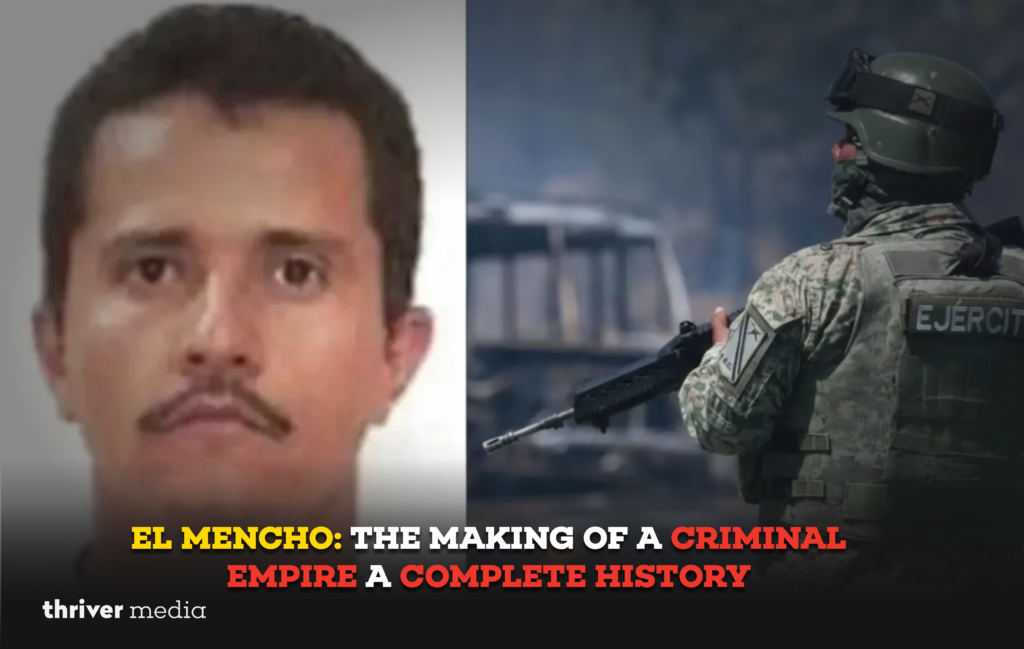
Basic Profile
| Field | Details |
| Full Name | Nemesio Rubén Oseguera Cervantes |
| Alias | El Mencho |
| Born | July 17, 1966 Aguililla, Michoacán, Mexico |
| Role | Founder and Leader of the Jalisco New Generation Cartel (CJNG) |
| Status | Fugitive (as of latest public records) |
| U.S. Charges | Drug trafficking, firearms violations, operating a continuing criminal enterprise |
| Height | 1.73 m (5’8″) |
| Known Associates | Rosalinda González Valencia (ex-wife), Antonio Oseguera Cervantes (brother) |
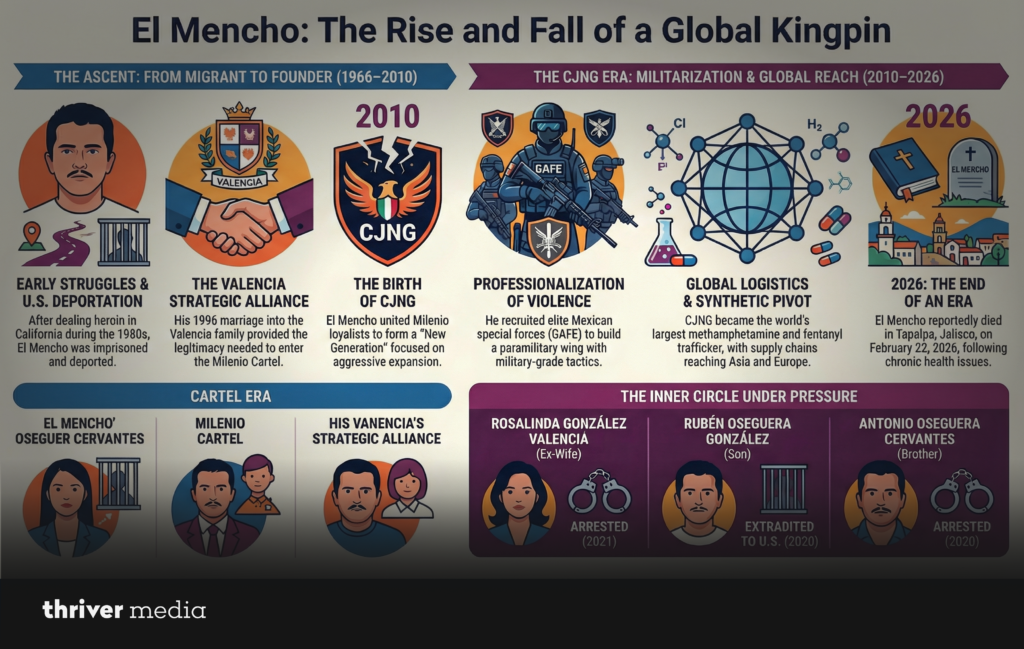
Infographic about this Blog
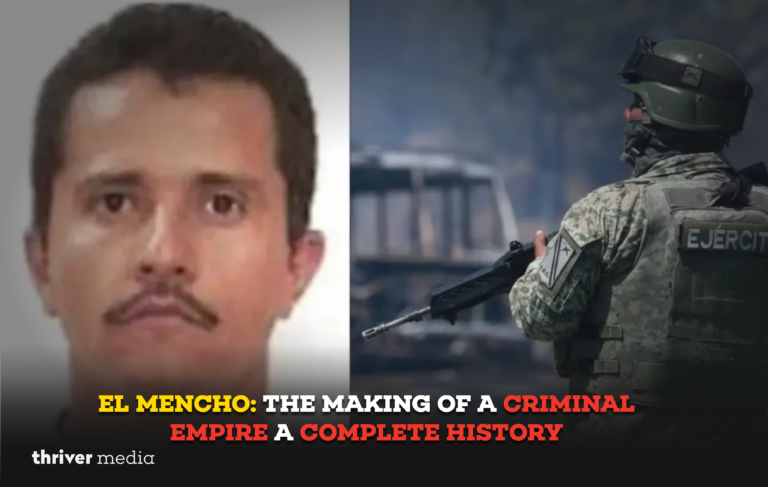
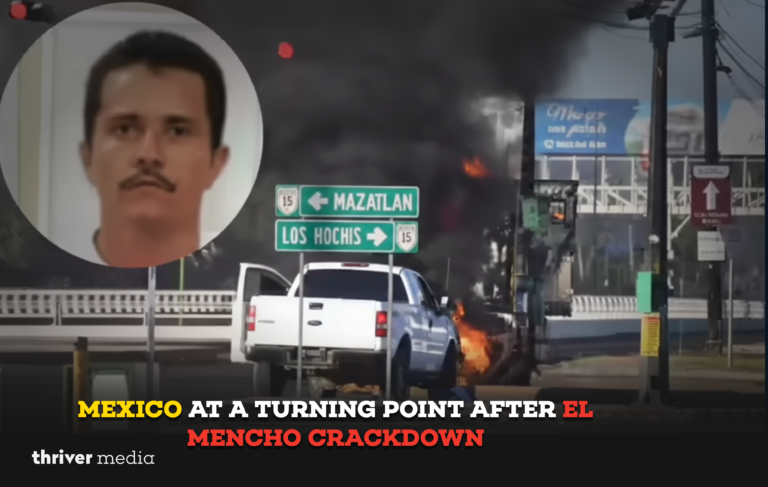
Born in 1966 in Michoacán, El Mencho rose from early arrests to found CJNG in 2010. He built it into one of the world’s most powerful and violent drug cartels. His reported death in 2026 marked a major turning point in Mexico’s cartel history.
Part I: Early Life Poverty, Migration & Deportation (1966-1990s)
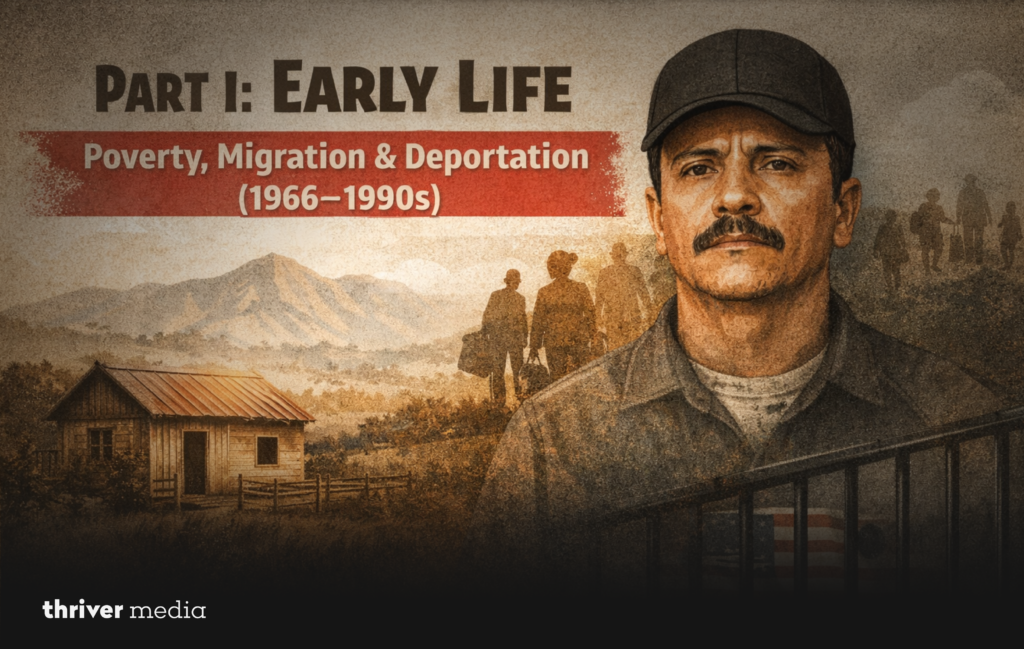
Nemesio Oseguera Cervantes was born into a poor farming family in the rural municipality of Aguililla, Michoacán a region known as the Tierra Caliente (Hot Land). The landscape was dominated by coffee plantations and cattle ranches, but opportunities were scarce. Like countless young men from his generation, El Mencho grew up understanding that survival meant leaving home.
The American Dream Detour
In the 1980s, a wave of Mexican migration brought thousands to the United States in search of work. El Mencho joined that wave, crossing the border illegally and settling in the San Francisco Bay Area, specifically in the city of San Francisco and later in the surrounding suburbs.
In California, he found work in the service industry washing dishes, working odd jobs but the money wasn’t enough. He soon became involved in street-level drug sales, dealing heroin and other narcotics in a region that was already grappling with the crack epidemic. His English improved, and he learned the rhythms of American life, but he also learned the rhythms of the American underworld.
The First Arrests
Law enforcement records show that Oseguera was arrested multiple times during his time in California. His most significant conviction came when he sold heroin to undercover officers, leading to prison time. After serving his sentence, he was processed for deportation.
In the late 1990s, Nemesio Oseguera Cervantes was returned to Mexico. On paper, he was just another deported migrant with a criminal record. But in reality, he was returning with something invaluable: a deep understanding of the U.S. drug market, connections to American buyers, and a hardened perspective shaped by the streets of both countries.
Part II: Rise Through the Ranks The Milenio Years (1990s-2009)
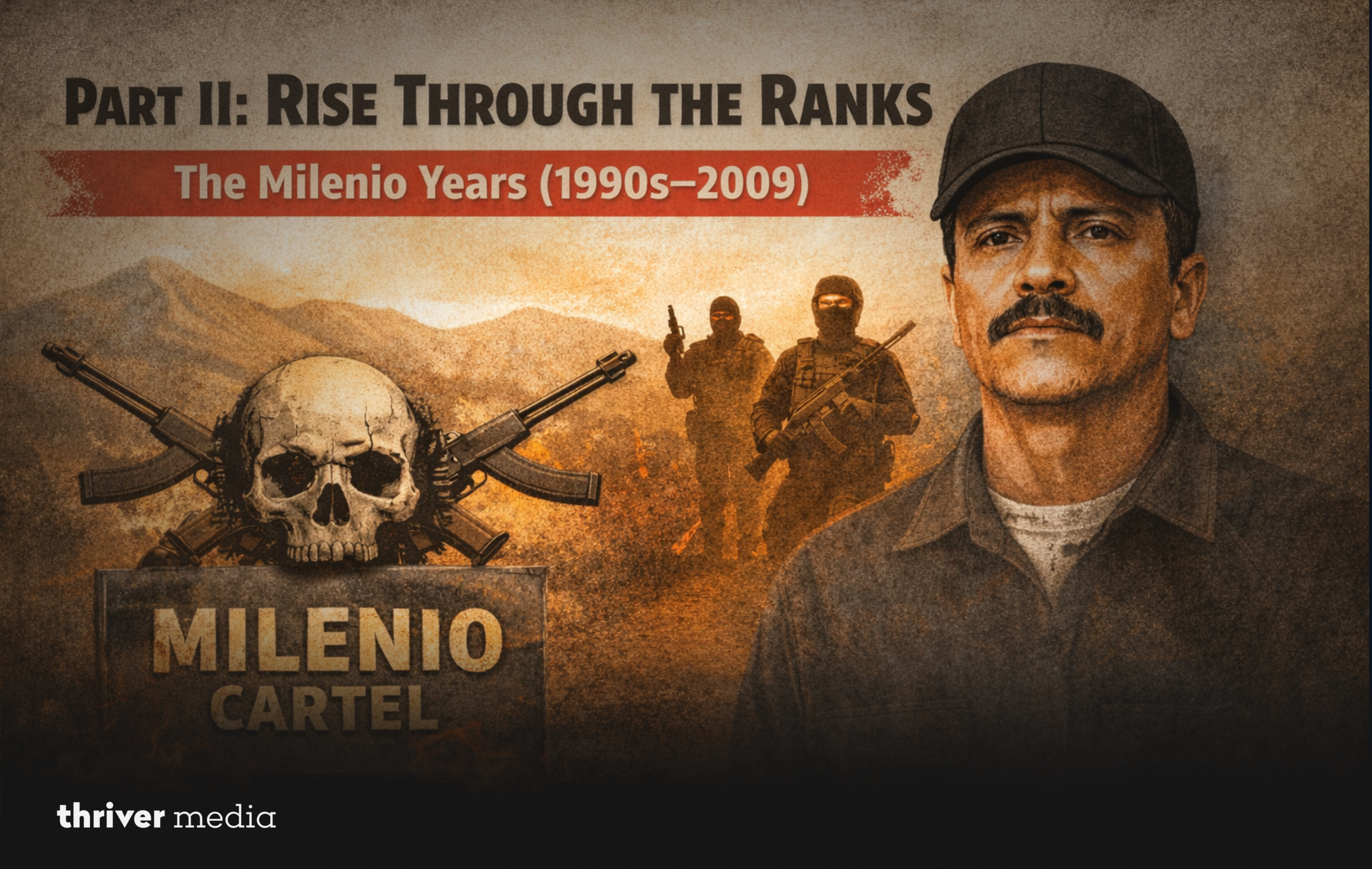
Back in Mexico, El Mencho didn’t start from scratch. He understood that in the drug trade, family and geography matter as much as ambition.
The Valencia Alliance
In 1996, he married Rosalinda González Valencia, a union that would prove strategically vital. The Valencia family were established players in the Mexican drug trade, operating primarily in Jalisco and Michoacán as part of what would become known as the Milenio Cartel.
This marriage gave El Mencho legitimacy and access. He started as an enforcer a gunman but his intelligence and ruthlessness quickly elevated him. He worked under the Milenio leadership, learning the logistics of moving cocaine from South America, methamphetamine from local labs, and heroin from the mountains.
The Fracturing of the Old Guard
The late 2000s brought seismic shifts to Mexico’s criminal landscape. President Felipe Calderón launched a military offensive against the cartels, triggering fragmentation and bloody turf wars. The Milenio Cartel, weakened by arrests and internal strife, began to crumble.
When Milenio leader Óscar Nava Valencia was arrested in 2009, the organization shattered. Rival factions like La Resistencia emerged, but El Mencho refused to align with them. Instead, he saw an opportunity.
Part III: The Birth of CJNG (2010-2014)
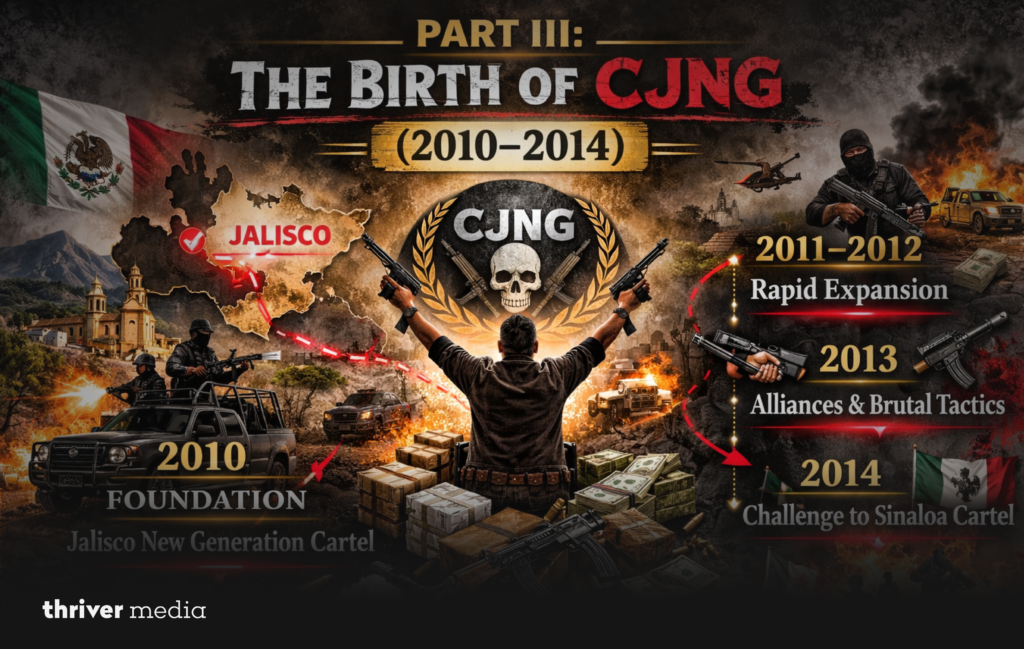
What happened next was unprecedented.
A New Generation
Around 2010, El Mencho united his loyalists from the Milenio Cartel with members of his wife’s family network the González Valencias and formed a new organization. They called themselves the Jalisco New Generation Cartel (CJNG).
The name was deliberate. It positioned them as a fresh alternative to the brutal, aging cartels that had dominated for decades. Their first public act was theatrical: they dumped bodies in public spaces with messages accusing the Zetas of kidnapping and extortion. They presented themselves as vigilantes, though the line between vigilante and predator was immediately blurred.
Early Expansion
Under El Mencho’s leadership, CJNG expanded with shocking speed. They secured key territory in Jalisco, including the vital port of Manzanillo one of Mexico’s busiest Pacific ports and a crucial entry point for precursor chemicals from Asia.
By 2012, they had established a presence in:
- Jalisco (their home base)
- Michoacán (El Mencho’s birthplace)
- Colima (port access)
- Nayarit (tourist corridors)
- Guanajuato (fuel theft and refining)
Part IV: Leadership Style The Architecture of Power
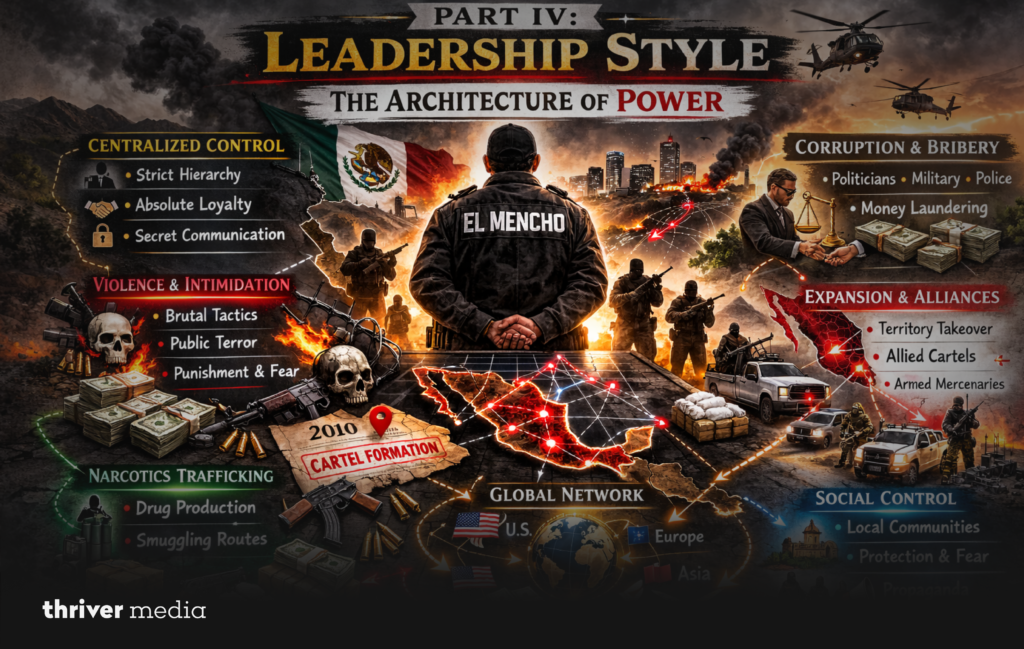
What made El Mencho different from previous capos?
1. The Professionalization of Violence
El Mencho recruited heavily from the Mexican military’s special forces, particularly the Grupo Aeromóvil de Fuerzas Especiales (GAFE). These elite soldiers brought tactical training, discipline, and knowledge of military counter-insurgency tactics. CJNG’s armed wing became a paramilitary force capable of confronting Mexican security forces head-on.
2. Decentralized Structure
Unlike the hierarchical, top-down models of older cartels, CJNG operated through semi-autonomous cells. Each cell had its own leadership, its own territory, and its own operational freedom as long as they paid tribute to El Mencho and followed his strategic direction. This made the cartel nearly impossible to decapitate.
3. Corruption as Strategy
El Mencho famously relied on plata o plomo silver or lead. Bribes were preferred over bullets because they were cheaper and created less attention. CJNG infiltrated local police forces, municipal governments, and even federal agencies. In some regions, the cartel essentially ran the local government.
4. Diversification of Product
CJNG under El Mencho wasn’t just a cocaine cartel. They became the world’s largest producers of methamphetamine, operating massive superlabs in Jalisco. They moved into heroin production in the “Golden Triangle” and, most devastatingly, became primary traffickers of fentanyl a synthetic opioid 50 times more potent than heroin.
Part V: Confronting the Mexican State (2015-2020)
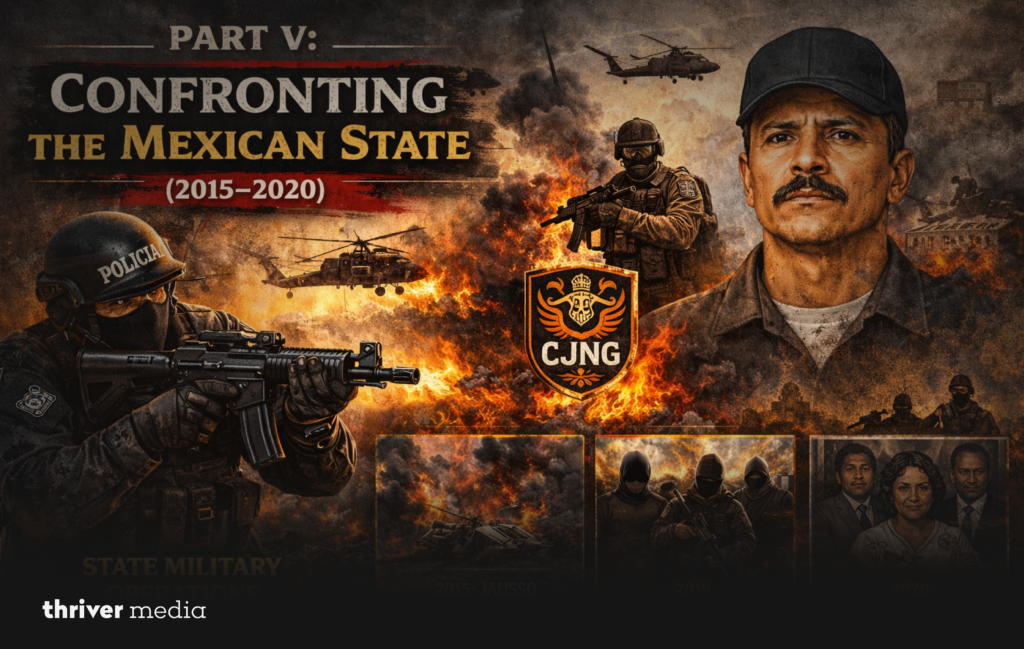
El Mencho’s boldest move was his willingness to challenge the Mexican government directly.
The 2015 Helicopter Attack
On May 1, 2015, a Mexican military operation attempted to capture El Mencho in Jalisco. The mission failed, but the retaliation was swift. CJNG gunmen used rocket-propelled grenades to shoot down a Mexican Army helicopter, killing eight soldiers and one federal policewoman. It was the first time a cartel had successfully downed a military aircraft. The message was clear: no one was safe.
The Harfuch Assassination Attempt
In June 2020, CJNG nearly succeeded in assassinating Omar García Harfuch, the Secretary of Public Security of Mexico City. Harfuch was ambacked in an upscale neighborhood by dozens of cartel gunmen armed with high-powered rifles. He survived with three bullet wounds, but two of his bodyguards and a civilian were killed. The attack was a direct assault on the heart of Mexico’s security establishment.
Territorial Wars
Under El Mencho, CJNG fought simultaneous wars against:
- The Sinaloa Cartel (for control of border routes)
- The Viagras and Knights Templar (for control of Michoacán)
- The Zetas and Gulf Cartel (for control of Veracruz and the Gulf coast)
- The Santa Rosa de Lima Cartel (for control of Guanajuato’s fuel theft industry)
These wars turned entire regions into battlefields. In 2019-2020, Guanajuato became the deadliest state in Mexico, with cartel violence claiming thousands of lives.
Part VI: International Reach A Global Empire
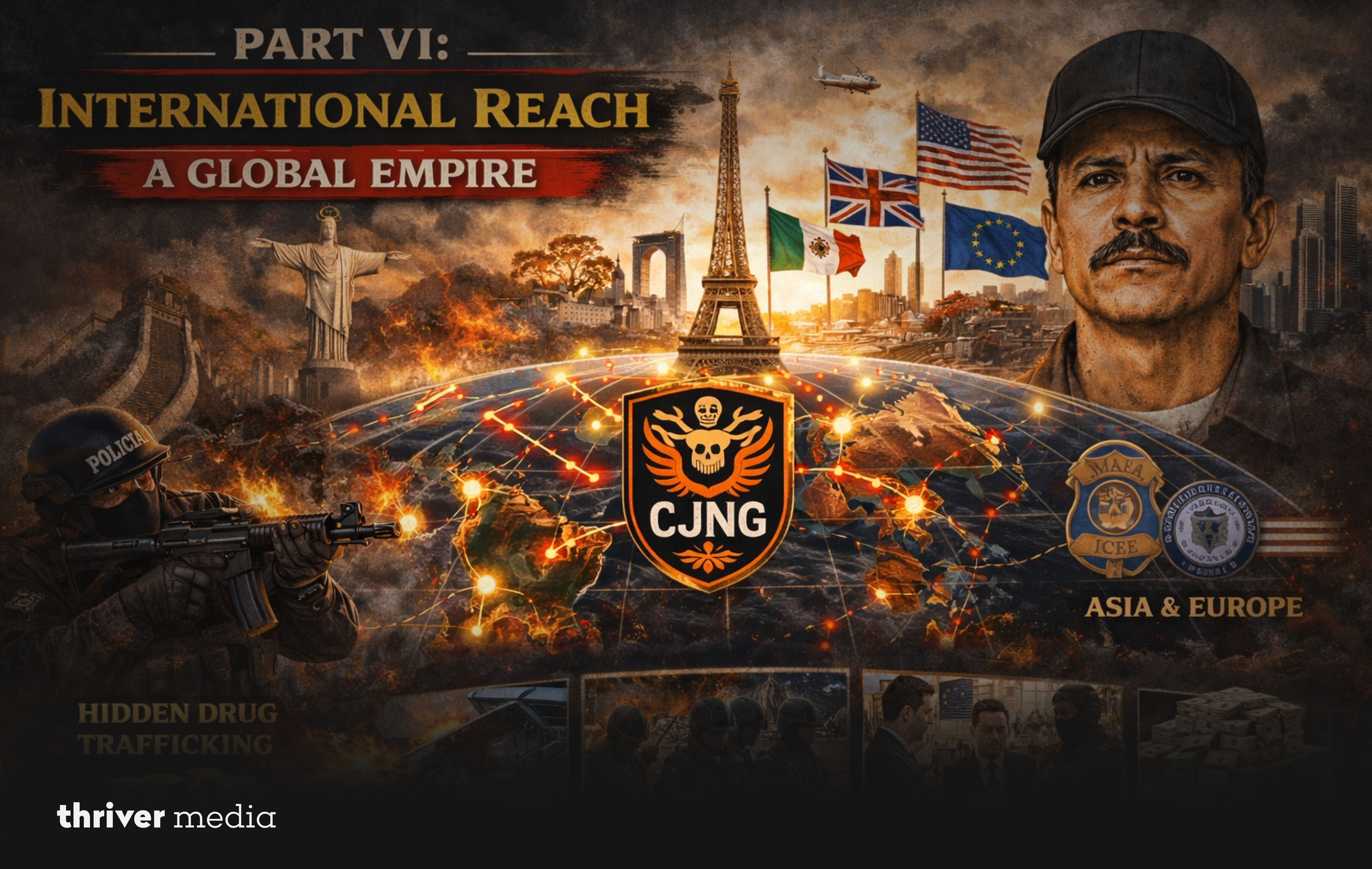
El Mencho transformed CJNG from a regional player into a global trafficking network.
The United States
The DEA estimates that CJNG is responsible for a significant percentage of the fentanyl and methamphetamine entering the United States. They maintain distribution cells in:
- Los Angeles
- Chicago
- Atlanta
- New York
- Dallas
- Phoenix
Asia and Europe
CJNG developed supply chains reaching into China and India for precursor chemicals used in fentanyl and meth production. They established partnerships with European organized crime groups, moving cocaine through Spanish and Dutch ports. Australian authorities have reported CJNG meth shipments arriving via Pacific routes.
The Logistics Machine
The cartel’s success relied on:
- Container ships moving chemicals from Asia to Manzanillo
- clandestine labs in Jalisco and Michoacán
- Overland routes through the US-Mexico border
- Underground tunnels and drones for border smuggling
- Money laundering through real estate, cryptocurrency, and shell companies
Part VII: Family Ties The Inner Circle
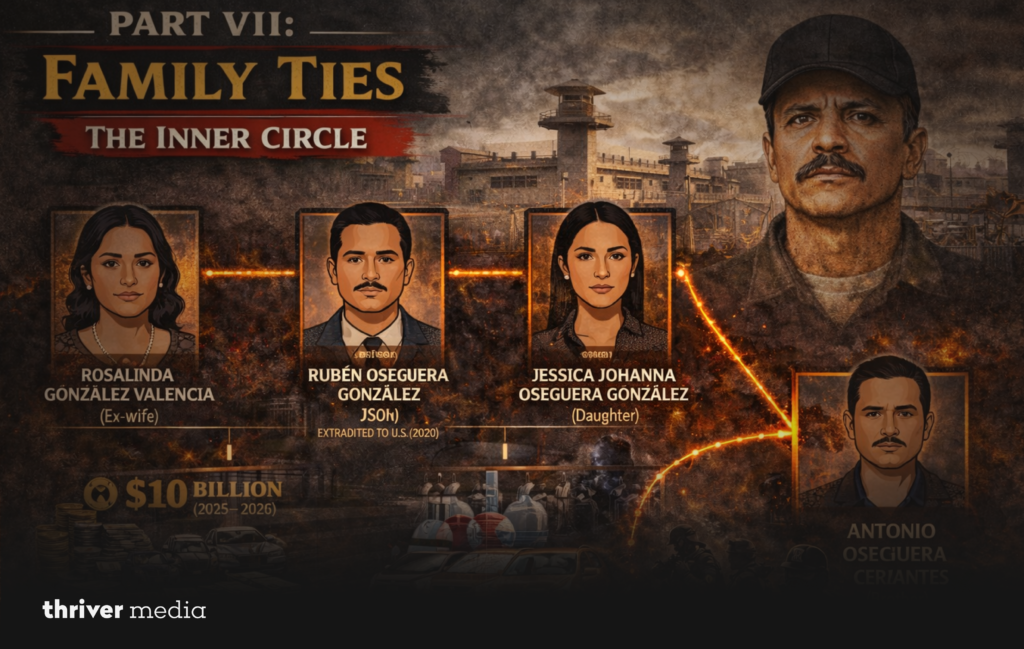
El Mencho’s personal life was deeply entangled with his criminal enterprise.
| Family Member | Relationship | Status |
| Rosalinda González Valencia | Ex-wife (married 1996–2018) | Arrested (2021) |
| Rubén Oseguera González (El Menchito) | Son | Arrested (2015), extradited to U.S. (2020) |
| Jessica Johanna Oseguera González | Daughter | Arrested (2020), later released |
| Laisha Michelle Oseguera González | Daughter | Public figure |
| Antonio Oseguera Cervantes | Brother | Arrested (2020) |
The Valencia Connection
The González Valencia family his ex-wife’s relatives formed the core of CJNG’s financial operations. Known as “Los Cuinis,” they were responsible for laundering billions of dollars through a network of businesses, including pharmacies, real estate, and entertainment venues. Many members of the family have been arrested, but the network remains active.
Part VIII: The Manhunt A $10 Million Target
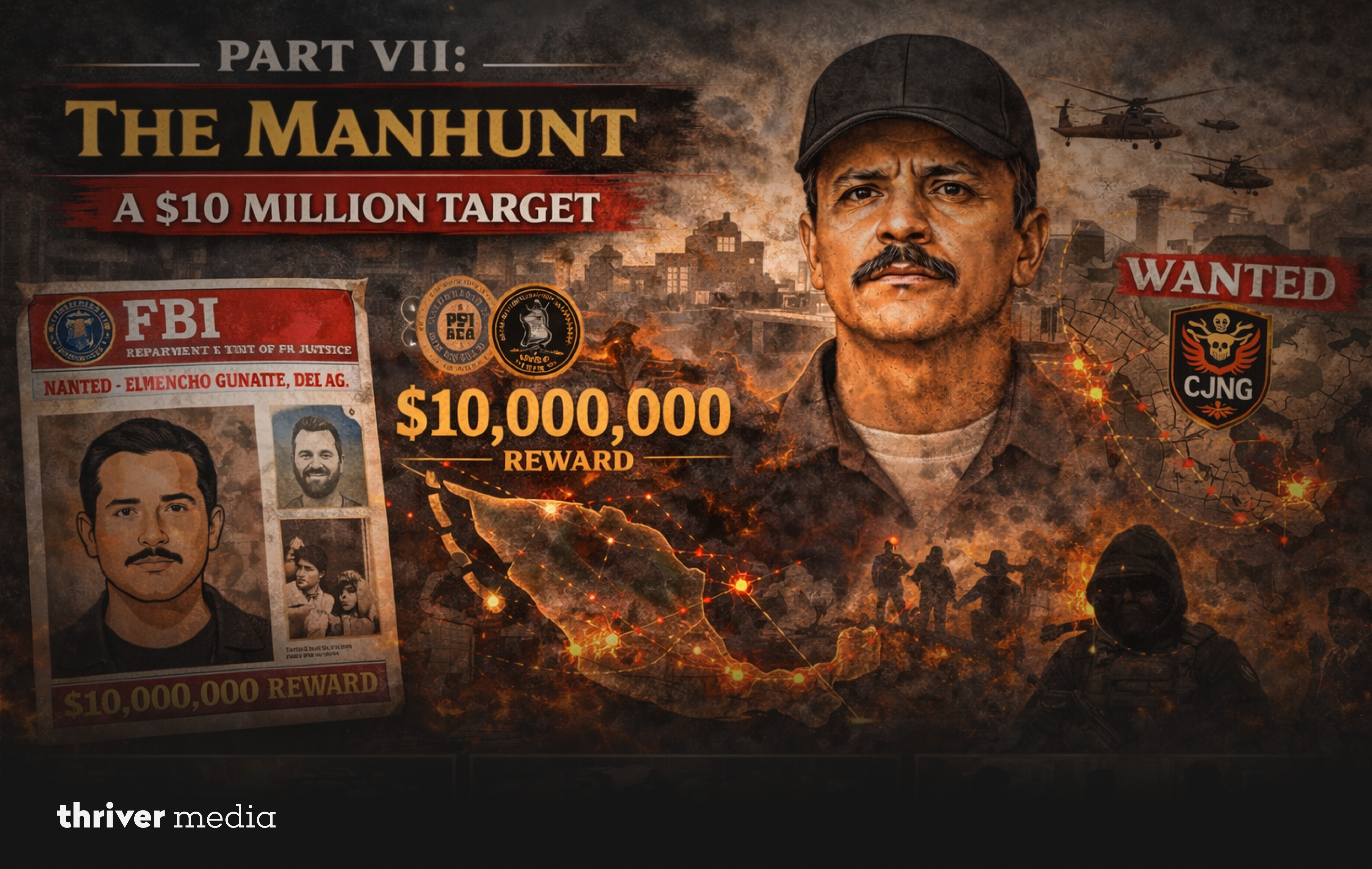
By the mid-2010s, El Mencho had become the most wanted man in Mexico.
U.S. Charges and Reward
The U.S. Department of Justice indicted El Mencho on multiple charges:
- Drug trafficking conspiracy
- Firearms violations
- Operating a continuing criminal enterprise
The U.S. State Department offered a reward of up to $10 million for information leading to his capture matching the reward for Joaquín “El Chapo” Guzmán and placing him among the world’s most wanted fugitives.
Mexican Operations
Mexican authorities launched multiple operations to capture him, focusing on his known territories in Jalisco and Michoacán. Each time, he slipped away. His security apparatus included:
- Layers of lookouts (halcones) in every town
- Encrypted communications
- Constant movement between safe houses
- Loyalty enforced through fear and family bonds
The Immunity Problem
Despite the pressure, El Mencho remained free. Analysts pointed to several factors:
- Deep corruption within local and state governments
- The rugged terrain of western Mexico
- The loyalty of his inner circle
- The sheer scale of his organization, which could absorb losses
Part IX: Health Rumors and Survival (2020-2026)
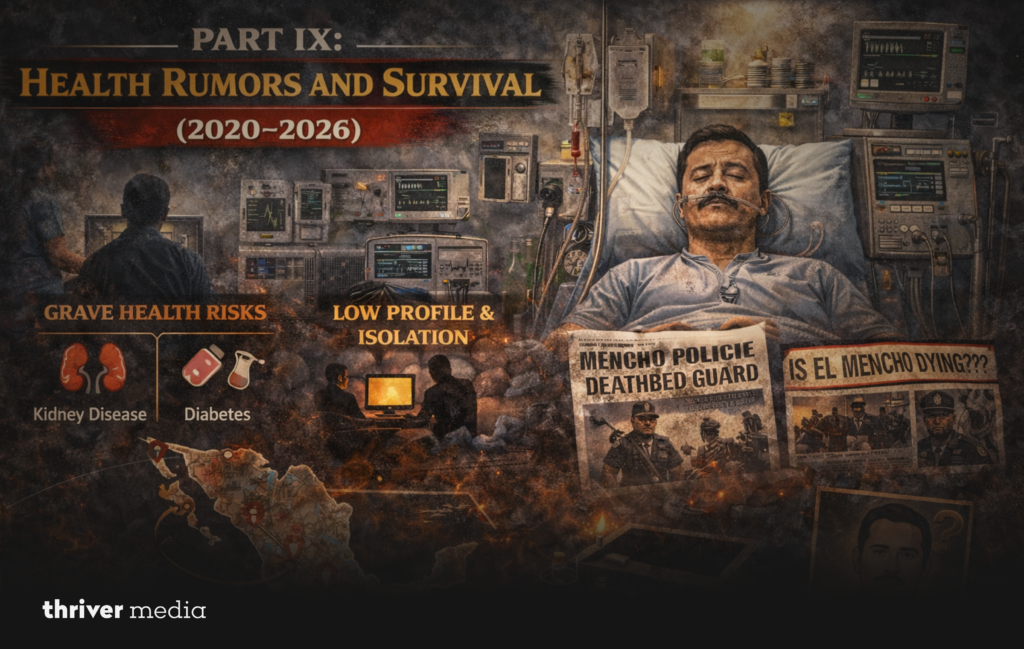
As the years passed, rumors about El Mencho’s health circulated constantly.
Kidney Problems
Multiple reports suggested that El Mencho suffered from severe kidney disease, possibly requiring dialysis. Some analysts speculated that this vulnerability might lead to his capture either through medical complications or betrayal by those who feared a dying leader would attract unwanted attention.
The Ghost
Despite these rumors, El Mencho remained an elusive figure. No confirmed photographs emerged after the early 2010s. His voice was heard in recorded messages, but his face became a ghost. Mexican and U.S. intelligence agencies continued to hunt him, but he adapted, moving constantly and relying on a shrinking circle of trusted aides.
Family Arrests
The government strategy shifted to targeting his support network. The arrests of his son (El Menchito), his ex-wife, his brother, and numerous in-laws were intended to isolate him and pressure him into making mistakes. But El Mencho, ever the survivor, seemed to anticipate this. His operational control remained intact.
Part X: Why El Mencho Matters The Legacy
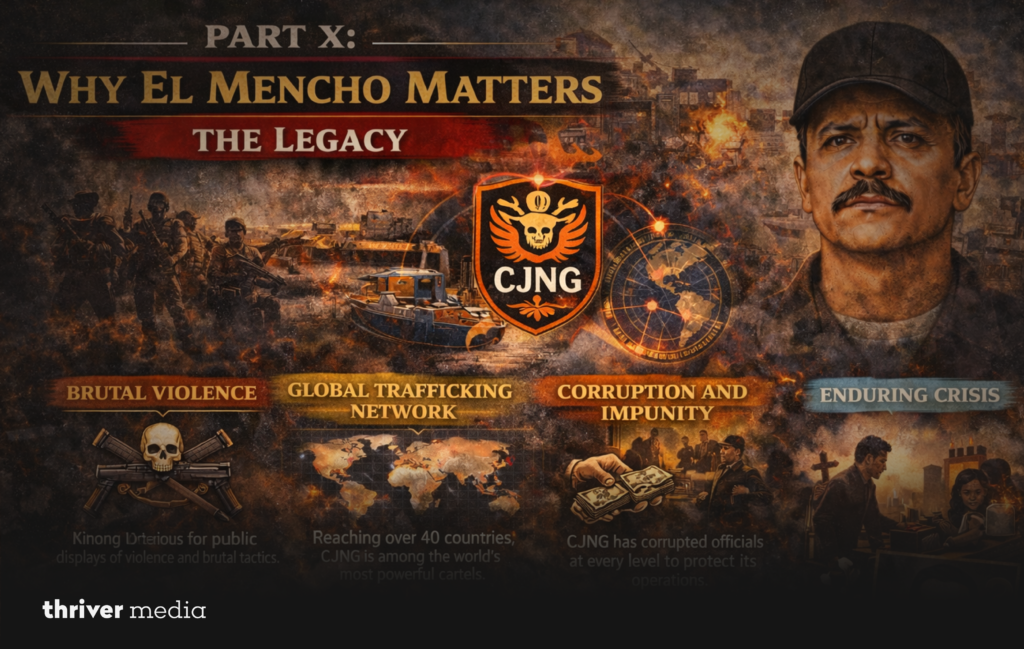
Regardless of his ultimate fate, El Mencho has already left an indelible mark on Mexico and the global drug trade.
1. The Fentanyl Crisis
El Mencho’s cartel accelerated the fentanyl epidemic that has killed hundreds of thousands in the United States and Canada. By prioritizing synthetic drugs over traditional plant-based narcotics, CJNG created a cheaper, more potent, and more addictive product that transformed the drug market forever.
2. The Militarization of Cartels
Under his leadership, CJNG demonstrated that cartels could match or exceed the firepower of the Mexican military. The 2015 helicopter attack was a watershed moment proof that the state no longer held a monopoly on advanced weaponry.
3. The Fragmentation of Mexico
El Mencho’s wars destabilized entire regions. Guanajuato, once an industrial heartland, became a graveyard. Michoacán, his homeland, remained a perpetual battleground. Jalisco, the economic powerhouse, became the base of an organization that threatened the entire nation.
4. The Globalization of Crime
CJNG under El Mencho showed that Mexican cartels could operate as truly global enterprises, with supply chains reaching Asia and Europe and distribution networks spanning continents.
Part XI: The Final Chapter Death in Tapalpa (February 22, 2026)
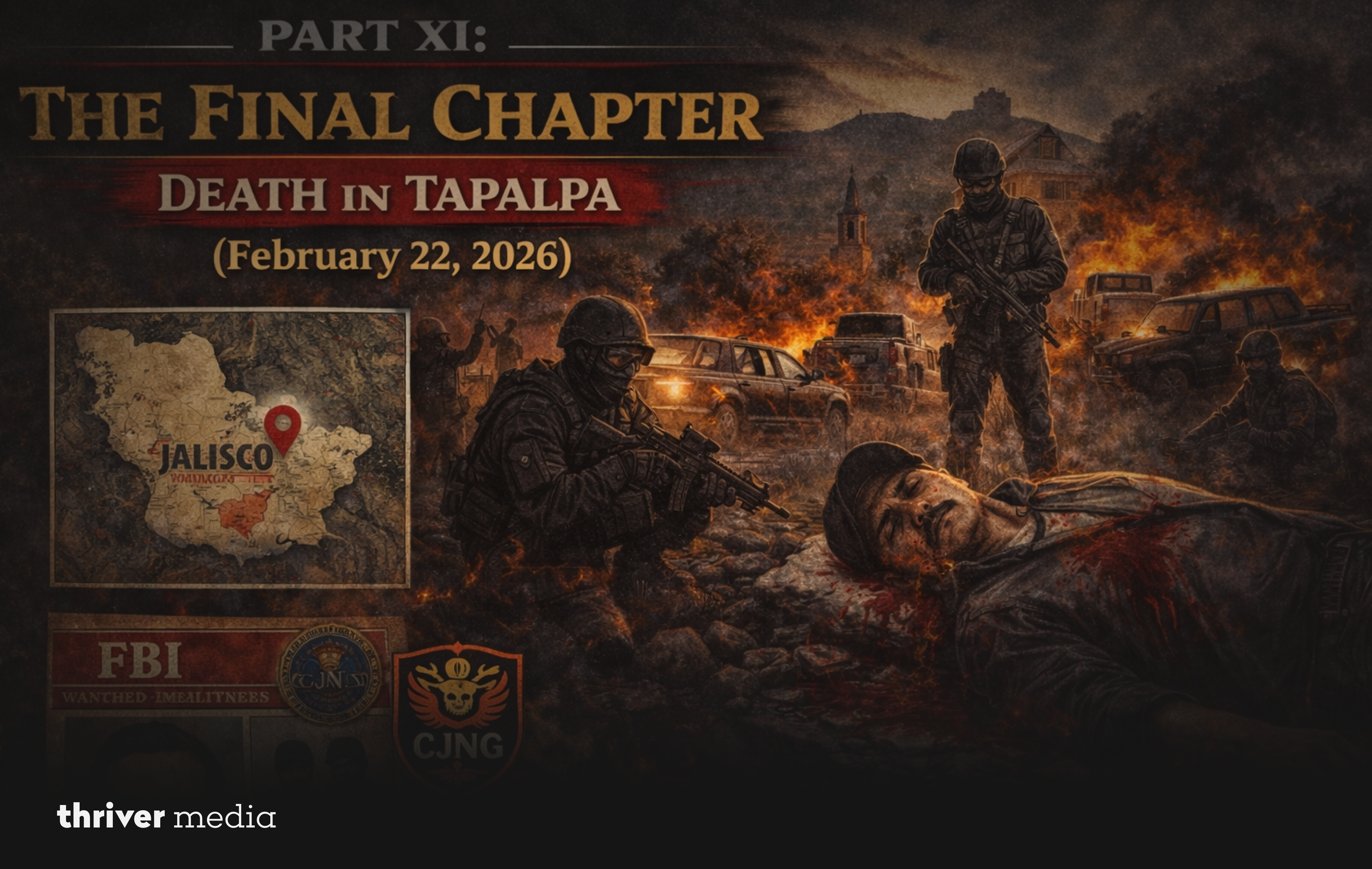
On February 22, 2026, at the age of 59, Nemesio Rubén Oseguera Cervantes died in the town of Tapalpa, Jalisco a picturesque pueblo mágico nestled in the mountains not far from his areas of operation.
The Circumstances
Details surrounding his death remain murky. Initial reports suggested he had been suffering from severe health complications likely related to the kidney disease rumored for years. Some accounts indicated he had been receiving medical treatment in clandestine conditions, avoiding hospitals for fear of capture.
What is known:
- He died in Tapalpa, a location approximately 100 kilometers from Guadalajara
- The death was confirmed by sources close to Mexican security forces
- No official autopsy or public confirmation was immediately released
- His body was not displayed or turned over to authorities
Part XII: El Mencho’s Place in History
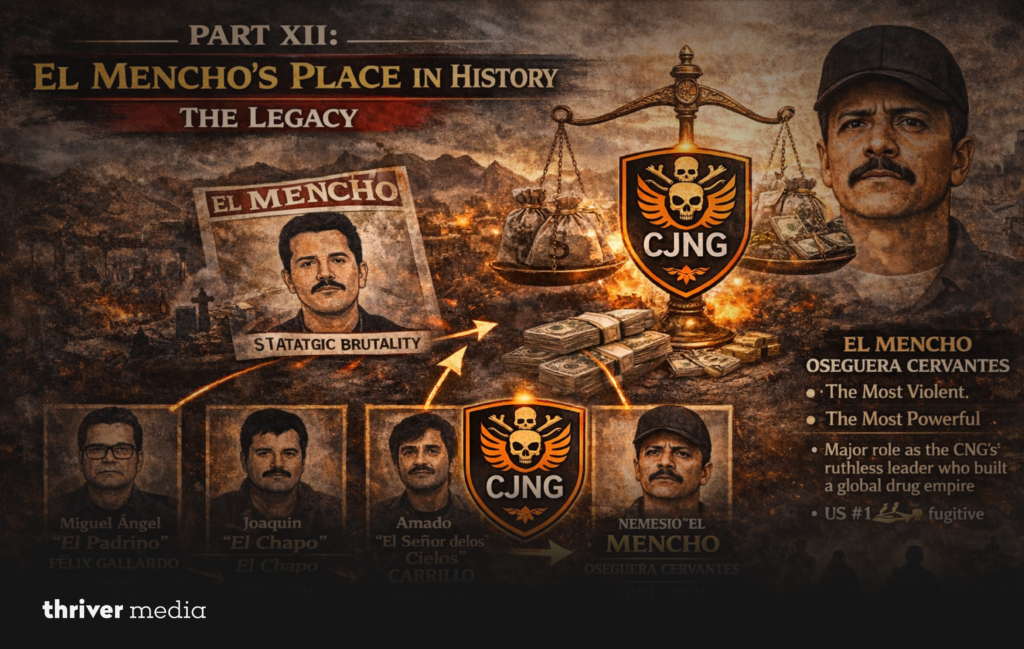
El Mencho was not the first great capo, and he will not be the last. But he represented something new.
He began as a migrant who returned home carrying experience from the United States and turned that knowledge into the foundation of a global criminal empire. Over time, a former low-level dealer managed to outmaneuver the Mexican state for nearly two decades. At the same time, his deep reliance on family became both a source of strength and, ultimately, a critical vulnerability. And he was a strategist who understood that in the modern drug trade, violence is not just a tool it’s a brand.
His legacy is written in the fentanyl that floods American streets, the mass graves scattered across Mexican countryside, and the terrified silence of towns under cartel control. It is also written in the resilience of an organization that may outlive him, and in the continuing tragedy of Mexico’s drug war.
Whether dead or alive, Nemesio Oseguera Cervantes El Mencho will remain a defining figure in the dark history of 21st-century organized crime.
Timeline: Key Events in El Mencho’s Life
| Year | Event |
| 1966 | Born in Aguililla, Michoacán |
| 1980s | Migrates to California; begins low-level drug dealing |
| 1990s | Arrested in the U.S., serves prison time, deported to Mexico |
| 1996 | Marries Rosalinda González Valencia; connects to the Milenio Cartel network |
| 2009 | Milenio Cartel fractures; begins forming CJNG |
| 2010 | Official formation of the Jalisco New Generation Cartel (CJNG) |
| 2015 | CJNG shoots down a military helicopter; becomes Mexico’s most wanted |
| 2018 | Divorce from Rosalinda González Valencia |
| 2020 | CJNG linked to assassination attempt on Mexico City police chief |
| 2021 | Rosalinda González Valencia arrested |
| 2026 | Reported death in Tapalpa, Jalisco (February 22) |
The Unanswered Questions
Natural causes or intervention?
While health problems seem the most likely explanation, the secrecy surrounding his final days leaves room for speculation.
Why Tapalpa?
The choice of location a small tourist town suggests he was seeking medical privacy or attempting to move through less monitored territory.
The government’s role?
Mexican authorities have not claimed responsibility, but intelligence agencies may have been tracking his health for months or years.
The Aftermath
His death, if confirmed, creates a massive power vacuum. CJNG, the organization he built, now faces an uncertain future. Potential scenarios include:
- Succession by a trusted lieutenant (possibly from his inner circle)
- Fragmentation into competing factions
- Absorption by rivals like the Sinaloa Cartel
- Escalated violence as factions fight for control
Disclaimer: The news and information presented on our platform, Thriver Media, are curated from verified and authentic sources, including major news agencies and official channels.
Want more? Subscribe to Thriver Media and never miss a beat.