
25th February 2026
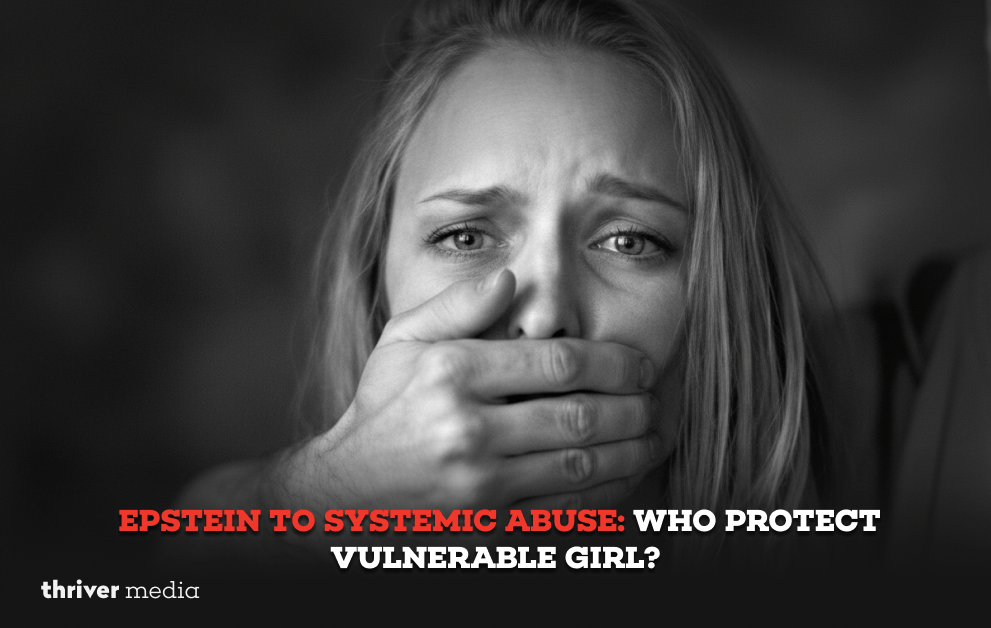
The outrage was deafening. For weeks, social media burned with fury as the Epstein Files dropped millions of pages documenting decades of depravity, names of the powerful finally exposed, victims’ testimonies laid bare for the world to see. We demanded accountability. We demanded justice. We demanded that someone pay.
But here’s the question that gnaws at the edges of our collective anger: Where was this outrage before the files dropped?
Because while Jeffrey Epstein operated his trafficking enterprise with impunity from the 1990s until his death in 2019, vulnerable girls were being bought and sold every single day not just by one wealthy predator in Manhattan and Palm Beach, but by systems that span the globe. And most of us weren’t outraged then. Most of us weren’t paying attention at all.
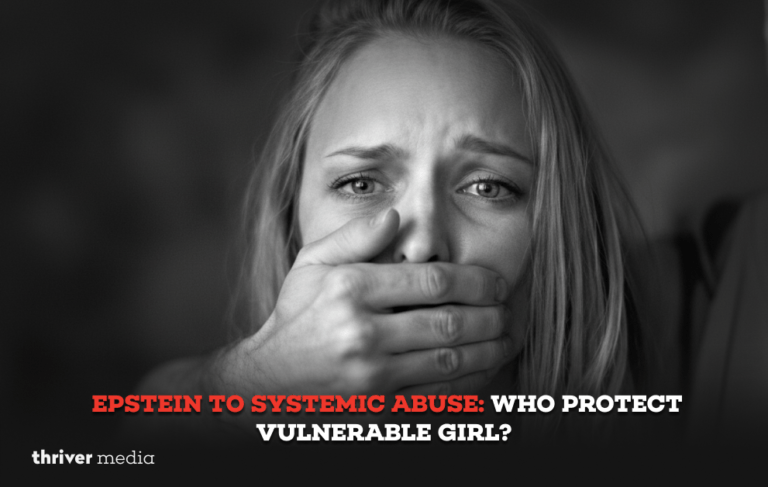
The uncomfortable truth is this: Epstein didn’t invent the commodification of girls. He just perfected it for the ultra-wealthy. The same dynamics that delivered teenagers to his island poverty, trauma, systemic neglect, and the stunning failure of institutions meant to protect deliver girls into exploitation in every city, every country, every day.
So if we’re outraged by Epstein, we must be outraged by everything that made him possible. Starting now.
The 1996 Warning Nobody Heeded: Maria Farmer’s Story
Before there was an Epstein Files Transparency Act, before there were headlines about secret islands and powerful men, there was Maria Farmer. And she told the FBI everything.
A Young Artist Trapped in Epstein’s Web
In 1996, Maria Farmer was a 27-year-old artist working for Jeffrey Epstein and Ghislaine Maxwell at their Manhattan mansion. She quickly realized something was terribly wrong. Epstein and Maxwell were systematically grooming and abusing young girls many of them minors, many of them in vulnerable circumstance.
Farmer herself was assaulted by Epstein. But when she tried to escape, the couple trapped her in their Ohio estate, holding her against her will. She managed to contact her sister, who contacted the FBI.
The FBI’s Response: Silence
Here’s where the story becomes infuriating. Farmer filed an official complaint with the FBI in 1996. She provided detailed information about Epstein’s crimes, including the sexual abuse of minors and the production of child sexual abuse material .
For nearly a decade, while Epstein continued trafficking girls, the bureau sat on Farmer’s warning. It wasn’t until 2005 nine years later that Palm Beach police finally opened an investigation that led to Epstein’s first indictment.
Congress Demands Answers
In December 2025, after the Epstein Files Transparency Act forced the release of documents proving Farmer’s warning, Rep. Robert Garcia, Ranking Member of the House Committee on Oversight and Government Reform, demanded the Department of Justice Inspector General investigate.
“The American public should be outraged that the FBI had information about the horrific crimes Jeffrey Epstein was committing in the 1990s, and yet failed to protect women and children for decades,” Garcia said. “We are fighting to end the Epstein cover up for survivors like Maria Farmer, who was failed by her own government over and over”.
But here’s the haunting question: How many Maria Farmers are out there right now? How many girls are telling someone in authority about their abuse, only to be ignored because the abuser has money, connections, or simply because the system is too broken to respond?
The Commodification of Girls: It’s Not Just One Island
Epstein’s island has become shorthand for elite depravity. But the mechanism that delivered girls to that island operates everywhere, every day.
Poverty as the Pipeline
Virginia Giuffre’s memoir, Nobody’s Girl, lays bare the brutal reality: childhood sexual abuse, poverty, coercion, and deceit formed the “toxic cocktail” that placed her and countless other teenagers in Epstein’s clutches .
This pattern isn’t unique to Epstein’s victims. Across the globe, vulnerable girls are targeted precisely because they’re vulnerable. The promise of training, a career, a life quickly turning into paid rape is a common entry route into sexual exploitation.
In Europe alone, more than 10,000 victims of trafficking for sexual exploitation were officially identified in 2022. The real number is likely much higher. Women and girls make up two out of three victims, and many are migrants facing multiple layers of vulnerability.
The Failure to Identify Victims
Here’s a devastating fact: in many countries, there are no clear procedures to identify trafficking victims. Frontline professionals police, healthcare workers, teachers often lack the training to recognize the signs.
A girl showing up at an emergency room with injuries, accompanied by an older “boyfriend” who won’t leave her side? That might be trafficking. A teenager suddenly wearing expensive clothes her family can’t afford? That might be grooming. A student withdrawing from school, becoming secretive about her phone use? That might be online exploitation.
The Online Grooming Epidemic
Gloria was just shy of her 15th birthday her quinceañera when she tried to take her own life during a school trip in Latin America. Quick intervention saved her. Then the truth emerged.
For over a year, she had been manipulated online by someone she met on TikTok, who she believed was a local boy. He gained her trust. She sent intimate images. Then he began threatening her, demanding more. Releasing the images would be his “gift” for her birthday, he said .
Gloria’s mother contacted police, who reached out to the International Centre for Missing & Exploited Children (ICMEC). Through an international network of researchers and law enforcement called the HEROES project, they determined the predator lived in Spain. Within two days, police found his house and arrested him.
The Cover-Up Continues: Who’s Hiding What?
If you thought the Epstein Files release meant full transparency, think again.
The Half-Released Files
Under the Epstein Files Transparency Act, signed into law in November 2025, the Department of Justice was required to release all records related to Epstein and his network. But according to Senate Minority Leader Chuck Schumer, “maybe half of all the available Epstein files have been released,” and many documents are overly redacted.
Senator Jack Reed (D-RI) is blunt: “The Trump Administration’s lack of disclosure is completely insufficient. The American people deserve the truth and the Trump Administration must comply with the law”.
The Accusation Against Trump
Here’s where it gets even more explosive. In February 2026, Rep. Robert Garcia revealed that the Justice Department appears to be “illegally” withholding FBI interviews related to a sexual assault allegation against President Trump.
According to Garcia, a survivor came forward in 2019 while Trump was in his first term accusing him of sexually assaulting her when she was a minor decades ago. The FBI interviewed her. Those records, more than 50 pages of interviews and notes, have not been released .
The Victims Retraumatized
Meanwhile, the release process itself has caused harm. Clinical psychologist Carol Landau, who has treated many teenage rape victims, is appalled: “The Department of Justice, which has been ever so careful to protect President Trump, retraumatized these women” by failing to fully protect victims’ identifying details and images.
The International Response: Crimes Against Humanity?
The United Nations is watching. And what they’re seeing may rise to the level of the most serious international crimes.
UN Experts Speak Out
On February 16, 2026, independent human rights experts at the United Nations Office at Geneva issued a stunning statement: the patterns revealed in the Epstein Files “may reasonably meet the legal threshold of crimes against humanity”.
Under international criminal law, crimes against humanity occur when acts such as rape, sexual slavery, enforced prostitution, trafficking, persecution, torture, or murder are committed as part of a widespread or systematic attack directed against a civilian population.
The experts described the reported conduct as potentially constituting “sexual slavery, reproductive violence, enforced disappearance, torture, inhuman and degrading treatment, and femicide”.
The Call for Accountability
The UN experts are clear: “No one is too wealthy or too powerful to be above the law.” They demand independent, thorough, and impartial investigations, as well as inquiries to determine how such crimes could have taken place for so long .
They also note the broader context: “These crimes were committed against a backdrop of supremacist beliefs, racism, corruption, extreme misogyny, and the commodification and dehumanisation of women and girls from different parts of the world”.
“Moving On” Is Not Acceptable
Perhaps most powerfully, the experts reject any suggestion that it’s time to move on. “It represents a failure of responsibility towards victims,” they state. “It is imperative that governments act decisively to hold perpetrators accountable”.
The Robert F. Kennedy Human Rights Foundation Switzerland echoes this sentiment: “If human rights are only defended when it is convenient or safe, then they are not rights at all. They become branding. They become comfort. They become an illusion”.
What Protection Actually Looks Like
Outrage is necessary but insufficient. Protection requires action.
The Beau Biden Foundation’s Call
Following the Epstein Files release, the Beau Biden Foundation for the Protection of Children urged leaders, institutions, and communities to resist calls to “move on” and instead strengthen efforts to prevent abuse.
“Child sexual abuse is preventable,” said CEO Patricia Dailey Lewis. “Prevention begins long before a crime is reported. It starts with adults understanding grooming behaviors, organizations having clear policies and the will to enforce them, and communities knowing that reporting abuse requires reasonable suspicion, not proof”.
AI Tools That Actually Help
The HEROES project, an EU-funded initiative uniting researchers, NGOs, and law enforcement from 17 countries, has developed powerful tools to combat child sexual abuse and trafficking.
One standout is AGAPP, an AI-based mobile app that detects grooming and harmful content in messaging apps like WhatsApp and Telegram. It alerts the child’s guardian and blocks the material, helping protect the child and enabling police reports.
Community Hubs That Support Survivors
The SIS-Hubs project, funded by the EU, focuses on the social integration of women and girls who are trafficking victims or at risk. At its core are community hubs providing access to healthcare, education, legal support, and social services.
The project also trains women mentors “SIS-ter groups” to guide, support, and raise awareness among their peers on issues like gender-based violence and trafficking. And it creates practical recommendations for decision-makers on how to keep these safe spaces sustainable.

FAQs
What did Maria Farmer report to the FBI in 1996?
Farmer reported that Jeffrey Epstein and Ghislaine Maxwell were sexually abusing minors and producing child sexual abuse material. The FBI failed to act on her warning for nearly a decade.
How much of the Epstein Files has been released?
According to Senate Democrats, perhaps only half. Many documents remain heavily redacted, and some including FBI interviews about an allegation against Trump appear to be entirely withheld.
Are there tools to protect children online?
Yes. AI-powered apps like AGAPP can detect grooming in messaging apps and alert guardians. Parental controls, open communication, and education about online risks remain essential.
Why isn’t the Justice Department releasing all files?
The DOJ cites redaction needs and legal exemptions. Critics accuse them of protecting powerful individuals, including President Trump, from exposure and accountability.
Bottom Line: Outrage Is Not Enough
Jeffrey Epstein is dead. Ghislaine Maxwell is in prison. But the system that enabled them remains very much alive.
That system is built on a simple equation: some girls have a price tag, and some men can afford it. It operates through poverty that makes children desperate, through institutions that look away, through law enforcement that protects the powerful, through online platforms that enable groomers, and through a culture that still, in 2026, struggles to believe girls when they speak.
What real protection requires:
- Full transparency all files, unredacted, with victims protected
- Independent investigations with real power to prosecute the wealthy
- Accountability for enablers not just direct perpetrators
- Training for every professional who works with children
- AI tools deployed to detect grooming before abuse happens
- Community hubs that support survivors long-term
- A culture that values girls’ safety over powerful men’s reputations
What outrage without action means:
- Perpetrators remain protected
- Victims remain silenced
- The next Epstein is already operating
- We get to feel righteous without being responsible
The Robert F. Kennedy Human Rights Foundation put it best: “If human rights are only defended when it is convenient or safe, then they are not rights at all. They become branding. They become comfort. They become an illusion”.
Official Source Links
- U.S. House Committee on Oversight – Rep. Robert Garcia Statement
- U.S. Senate – Senator Jack Reed Press Release
- United Nations Office at Geneva – UN Experts Statement
- Robert F. Kennedy Human Rights Foundation Switzerland
- European Commission – HEROES Project
- Beau Biden Foundation for the Protection of Children
Conclusion: Who Protects Vulnerable Girls?
The answer, right now, is: not enough of us. Not consistently. Not effectively. Not with the urgency that millions of girls deserve.
The Epstein Files have given us a gift not the gift of scandal or schadenfreude, but the gift of clarity. We can no longer pretend we don’t know how the powerful exploit the vulnerable. We can no longer claim ignorance about how systems fail. We can no longer look away and assume someone else will handle it.
Virginia Giuffre, Maria Farmer, Gloria, and countless named and unnamed survivors have told us what happened. Now we have to decide what happens next. Because here’s the truth that won’t let go: every system that puts a price tag on a girl is complicit in the next Epstein’s crimes. Every institution that looks away is an accomplice. Every one of us who stays silent is part of the problem.
The outrage is justified. But it’s only the beginning. That’s the world Epstein’s victims deserved. That’s the world every girl still deserves. And it’s the world we have to build, starting now.
Disclaimer: The news and information presented on our platform, Thriver Media, are curated from verified and authentic sources, including major news agencies and official channels.
Want more? Subscribe to Thriver Media and never miss a beat.