

23rd April 2026

The $10,000 Mistake Most Beginners Make
Let me paint you a quick picture. You just launched a business. You have a great product, a solid website, and you are ready to get customers. So, you open your laptop, grab your credit card, and throw $1,000 at Google Ads. Then, you throw another $1,000 at Facebook Ads. You figure, “More ads = more sales, right?”
Two weeks later, you have spent $2,000. You got a few clicks, maybe one or two sales, but mostly just confusion. You aren’t sure which ad actually worked.
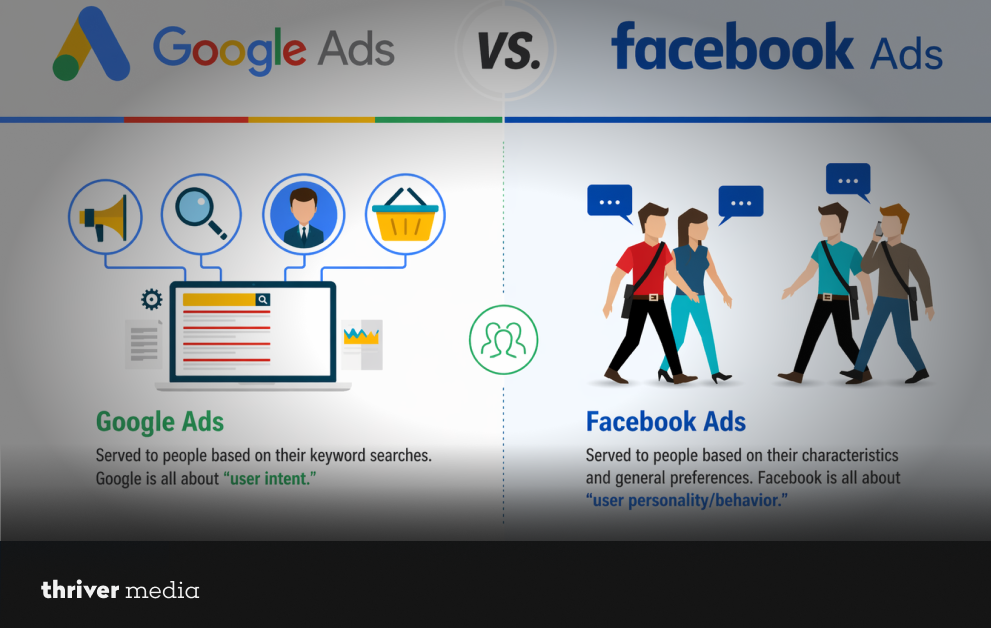
This is the most common mistake I see: Treating Google and Facebook like they are the same thing. They are not. They are completely different animals. One is a search engine where people look for you. The other is a social network where you interrupt people scrolling for fun.
If you don’t know the difference, you will burn cash fast. But if you learn the difference, you unlock real growth.
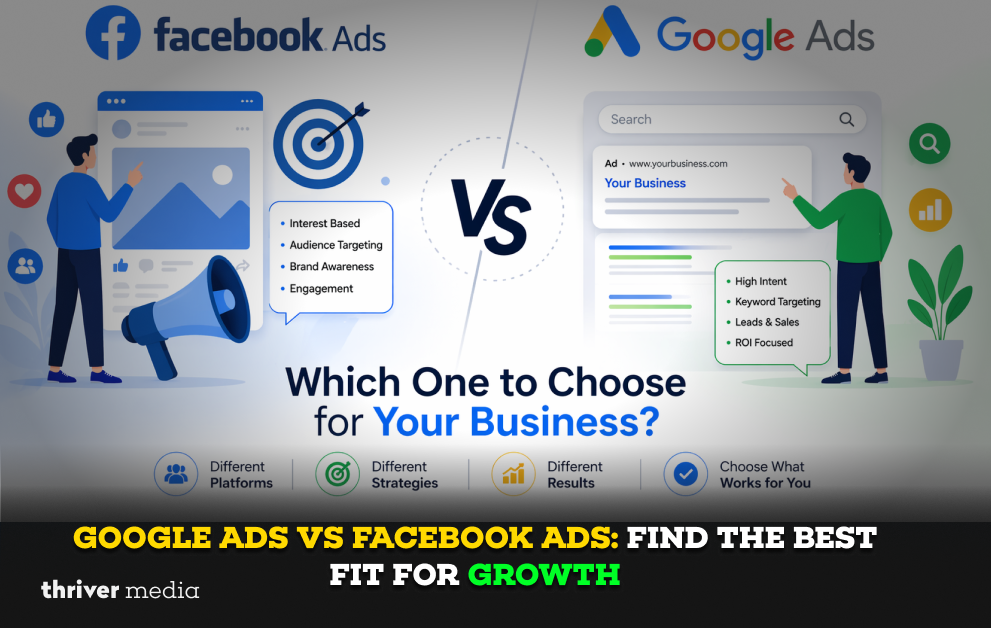
Today, we are breaking down the ultimate Google Ads vs Facebook Ads battle. By the end of this, you will know exactly where to put your money.
What Are Google Ads? (The “Hunting” Tool)
Think of Google Ads like a fishing net cast into a river where fish are already hungry.
When someone types “buy running shoes near me” or “best plumber for leaky faucet” into Google, they have a problem, and they want to solve it right now.
Google Ads puts your business right at the top of that search result.
It works on keywords. You bid on specific words people are typing. If you sell cupcakes, you bid on “cupcakes delivery” or “birthday cake shop.” When someone searches for that phrase, your ad pops up.
Key features of Google Ads:
- High Intent: People are actively looking to buy, learn, or sign up.
- Speed: You can turn on a campaign and see traffic within hours.
- Variety: Search ads (text), Shopping ads (product images), and Display ads (banners on other websites).
What Are Facebook Ads? (The “Fishing” Tool)
Now, imagine Facebook Ads like a fishing net cast into a quiet lake where fish are just relaxing. They aren’t hungry yet. They are looking at memes, watching videos, or checking what their friends ate for dinner.
Facebook Ads interrupt that relaxation.
You don’t wait for them to search. You target them based on who they are. You tell Facebook: “Show my ad to women between 25-40 who like yoga, live in Texas, and are engaged to be married.”
Facebook uses its massive database of personal information to find your exact “tribe.”
Key features of Facebook Ads:
- Low Intent, High Discovery: People rarely go to Facebook to buy something. But they often discover things they want.
- Visual Heavy: Great for photos, videos, and carousels.
- Retargeting Power: If someone visits your website but doesn’t buy, Facebook can follow them around the internet with reminders.
Google Ads vs Facebook Ads: The Quick Comparison Table
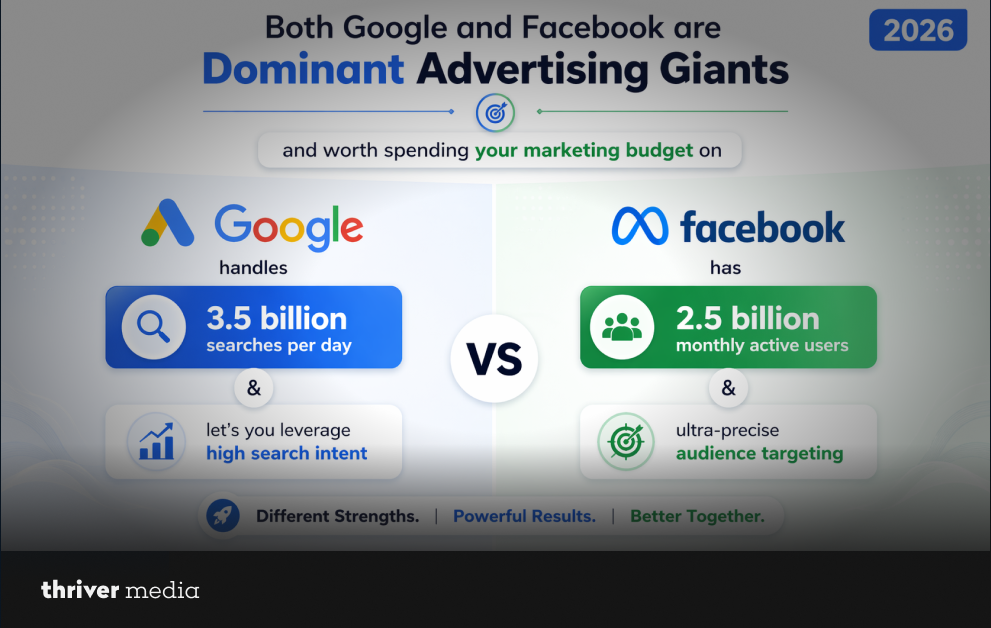
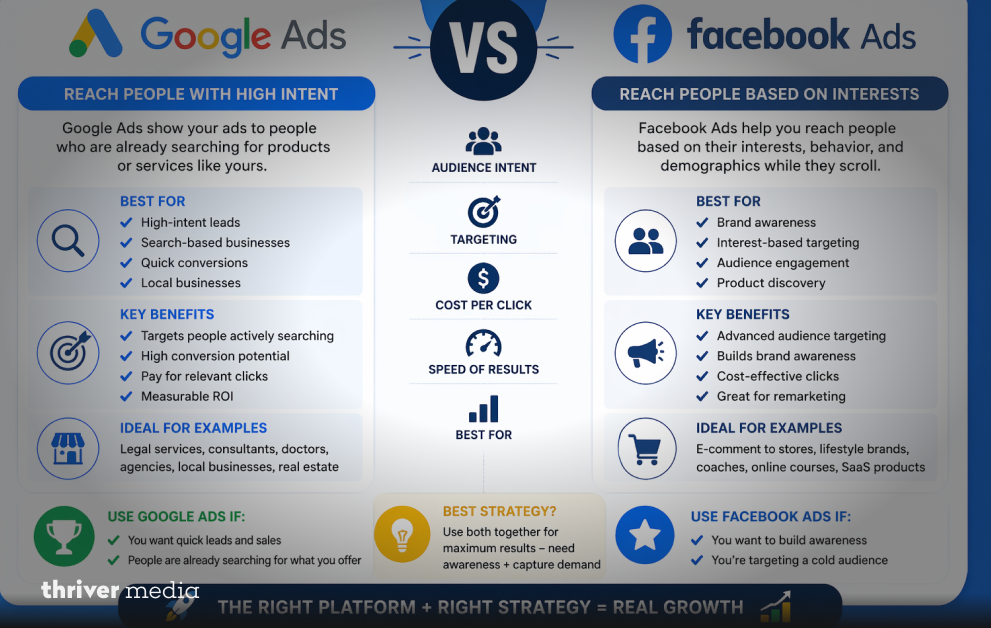
Here is the cheat sheet. Keep this handy when you build your paid ads strategy.
| Feature | Google Ads | Facebook Ads |
| User Intent | High (They are searching to buy/learn) | Low (They are browsing to be entertained) |
| Targeting Type | Keywords (What you search) | Demographics/Interests (Who you are) |
| Cost (CPC) | Often higher (because intent is hot) | Often lower (because intent is cold) |
| Best For | Products people need right now | Products people dream about |
| Ad Format | Text-based (mostly) | Image/Video-based |
| Results Speed | Fast (Immediate traffic) | Slower (Needs testing to work) |
When to Use Google Ads (The “Buying Now” Phase)
If you sell something urgent, boring, or practical, Google is your best friend.
Example: You own an emergency locksmith service. Someone just locked their keys in the car at 11 PM. Are they scrolling Facebook? No. They are typing “locksmith near me open now” into Google.
If you aren’t on Google, they will call your competitor.
Best use cases for Google Ads:
- E-commerce with clear search intent: “Nike Air Max size 10,” “MacBook Pro charger.”
- Local services: “Dentist open Saturday,” “HVAC repair.”
- B2B solutions: “CRM software for real estate agents.”
Google Ads is the best platform for lead generation when the lead is actively looking for a solution.
When to Use Facebook Ads (The “Creating Desire” Phase)
If you sell something visual, emotional, or new, Facebook is the winner.
Example: You sell a weird little gadget a portable blender for smoothies on the go. Nobody is searching for “portable blender for hiking” because they don’t know it exists yet. But on Facebook, you can show a 15-second video of a hiker blending a strawberry smoothie on a mountain top. Suddenly, they want it.
Best use cases for Facebook Ads:
- Apparel & fashion: People buy clothes because they look good, not because they searched for a specific SKU.
- Home decor & furniture: Visual inspiration drives the sale.
- Courses & coaching: You need to build trust and tell a story before someone buys a high-ticket coaching program.
The “Smart Strategy” No One Talks About
Here is the secret most gurus won’t tell you. You don’t have to pick a winner in the Google Ads vs Facebook Ads debate. The smartest businesses use both.
Think of the customer journey like a date:
Facebook is the “First Date.” It introduces you. It shows off your personality and looks. It gets the customer interested.
Google is the “Marriage Proposal.” Once the customer knows your name, they go to Google to check you out. They type “YourBrandName reviews” or “YourBrandName discount code.”
How to use them together (The Power Move):
Use Facebook Ads to introduce your product to cold audiences (people who have never heard of you).
Use Google Ads to capture the people who saw your Facebook ad, didn’t buy, but later searched for your brand name.
This is called “Remarketing.” When you run both platforms, you never miss a sale.
Common Mistakes to Avoid in Digital Marketing Ads Comparison
When looking at this digital marketing ads comparison, here is where people slip up:
Mistake #1: Sending Facebook traffic to your homepage.
Wrong: “Click here to visit our store.”
Right: Send them to a specific article, video, or product page. Facebook users are browsing. Give them a story, not a catalog.
Mistake #2: Using the wrong keywords on Google.
Wrong: Bidding on broad words like “shoes” (costs a fortune, low conversion).
Right: Bidding on “buy waterproof hiking boots size 9” (cheaper, high conversion).
Mistake #3: Giving up after three days.
Facebook takes about 2–3 days just to “learn” who to show your ad to. Google takes about a week to optimize your bids. Be patient.
How a Digital Marketing Agency Like Thriver Helps You Scale
Let’s be honest. Managing both Google and Facebook Ads is exhausting. You have to write copy, design images, manage bids, track pixels, and analyze data. It is a full-time job.
This is where a partner like Thriver changes the game. We don’t just “run ads.” We build growth systems.
Here is what the Thriver approach looks like:
- Audit & Clarity: We look at your business and decide: Is this a “Google problem” or a “Facebook problem”? (Often, it is both).
- The Testing Phase: We put small budgets on both platforms to find the winning combination. We let the data tell us where your customers live.
- Scaling Systems: Once we find a winning ad, we pour gas on the fire. We scale budgets safely without crashing your ROI.
We focus on results, not jargon. If you are tired of guessing where your ad money goes, Thriver builds the roadmap to get you there.
FAQs
Which is better Google or Facebook ads for a new business?
Facebook is usually better for brand awareness, but Google is better for capturing immediate demand if people already search for your product.
Which platform is cheaper per click?
Facebook Ads generally have a lower Cost Per Click (CPC), but Google often has a higher conversion rate because the intent is stronger.
Can I run both platforms on a small budget ($500/month)?
Yes, but focus on ONE platform first. Master one, then add the second. Splitting $500 between both usually fails.
Which platform is best for B2B lead generation?
*LinkedIn is expensive, but Google Ads (for problem-solving keywords) usually beats Facebook for serious B2B leads.*
How long does it take to see results?
Google Ads can show traffic in 24 hours. Facebook Ads usually needs 3–7 days for the algorithm to optimize.
The Bottom Line
Stop trying to force a square peg into a round hole.
Use Google Ads if people are already searching for what you sell. (Plumbers, lawyers, e-commerce with specific products).
Use Facebook Ads if you need to create desire or sell a visual product. (Fashion, art, gadgets, courses).
The winner of Google Ads vs Facebook Ads is the one that matches your customer’s mood. Are they hunting (Google) or scrolling (Facebook)?
Conclusion
Don’t let the fear of picking the wrong platform freeze you. The only real mistake is doing nothing or copying what a big brand does.
Start small. Test one platform. Look at the data (not your feelings). If you see sales, double down. If you don’t, switch platforms.
Remember: Facebook finds the dreamers. Google catches the buyers. Smart marketers use both to build a business that grows even while you sleep.
Ready to stop guessing and start growing? Look at your current ad account today. Ask yourself: “Are my customers hunting or scrolling?” Answer that, and you will know exactly where to put your next dollar.
Contact Thriver today and let’s start building rankings that last.
Want more? Subscribe to Thriver Media and never miss a beat.