
6th March 2026
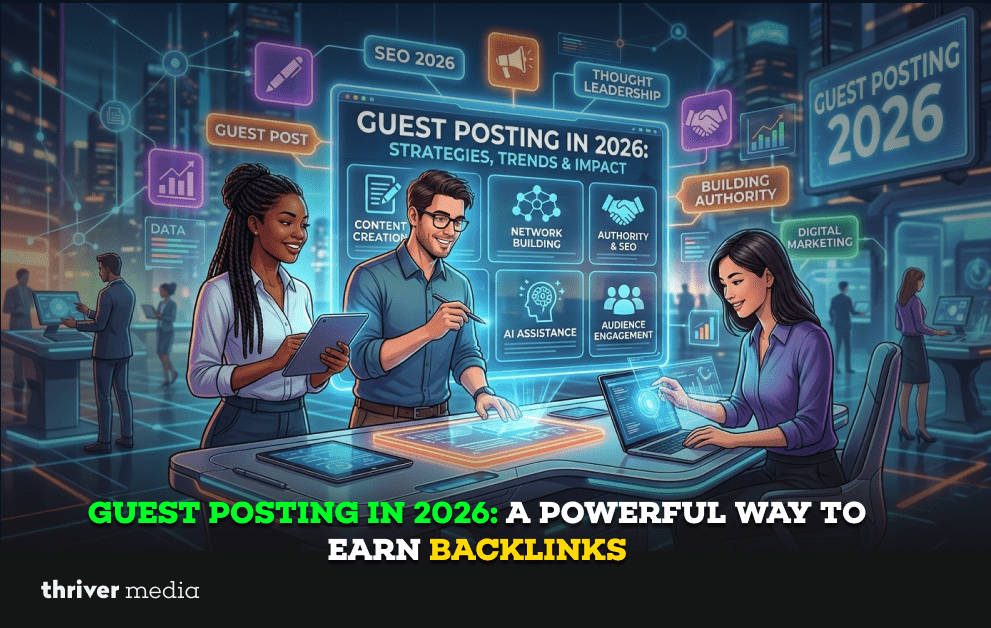
Introduction: Why Guest Posting Still Dominates Link Building in 2026
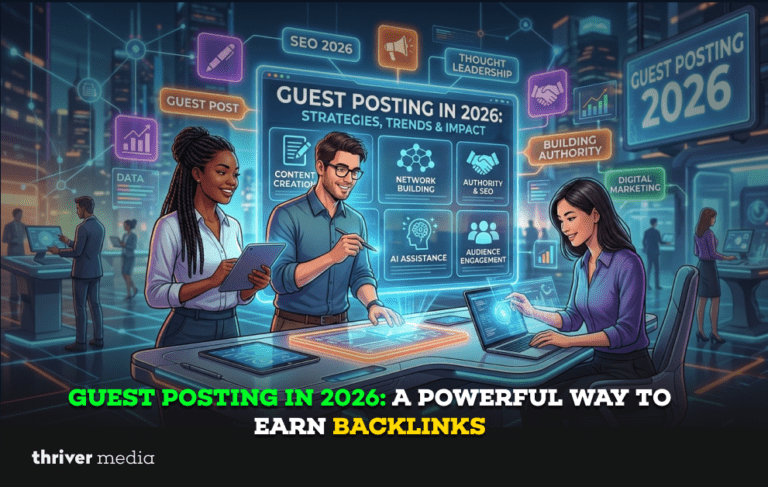
Every year, someone claims that guest posting is finished. Yet every year the data tells a different story. In 2026, publishing content on reputable industry sites remains one of the most reliable and respected ways to earn high-quality backlinks, the kind that actually influence Google’s ranking signals.
The environment has evolved. Search algorithms are smarter, editorial standards are stricter, and the era of thin articles published on low-quality websites is long gone. But when marketers approach contributor publishing strategically, it still delivers serious value. Strong placements can increase domain authority, drive referral traffic, strengthen brand credibility, and support long-term organic growth.
This guide explains how the strategy works today and why it remains effective. You’ll learn what modern outreach looks like, how to secure placements on relevant publications, what mistakes to avoid, and how to build a repeatable system that earns authoritative backlinks over time.
Key Insight
According to multiple industry studies, links from editorial guest posts on relevant, authoritative sites remain among the highest-quality signals in Google’s ranking system. A single well-placed guest post on a DA 60+ site can outperform dozens of directory links or press release submissions.
What Is Guest Posting? A Clear Educational Definition
Guest posting, also called guest blogging, is the practice of writing and publishing an original article on another Publishing an article on another website often referred to as guest blogging is the practice of contributing original content to an external publication in exchange for a byline, author bio, and usually one or more backlinks pointing to your own site. The host platform receives valuable content for its audience, while the contributor gains exposure to a new readership and an editorial backlink from a relevant, authoritative domain.
The Core Value Exchange
- For the Contributor: A backlink from a trusted website, stronger brand visibility, referral traffic, and greater authority within a specific niche.
- For the Host Website: High-quality content that provides value to readers without requiring significant internal editorial resources.
- For the Reader: Fresh perspectives, expert insights, and diverse viewpoints on topics they already follow.
Editorial Contributions vs Paid Link Placement
It’s important to separate legitimate editorial contributions from paid link schemes. Authentic contributions go through an editorial process where the host website reviews the pitch, approves the topic, and publishes the article because it genuinely benefits its audience.
Paid link placements are different. In those cases, websites accept payment simply to insert backlinks. This practice violates Google’s Webmaster Guidelines and carries a significant penalty risk. Modern spam detection systems are highly effective at identifying unnatural link patterns.
When done properly through real editorial collaboration and valuable content contributor publishing remains a fully compliant and respected SEO strategy.
Educational Note
Google’s John Mueller has repeatedly confirmed that editorial links earned through genuine guest posting where the content provides real value and the link is relevant are among the most natural and algorithmically valued link types. The keyword is editorial: the host site chooses to publish your content on its merits.
Why Guest Posting Works for SEO: The Technical Explanation
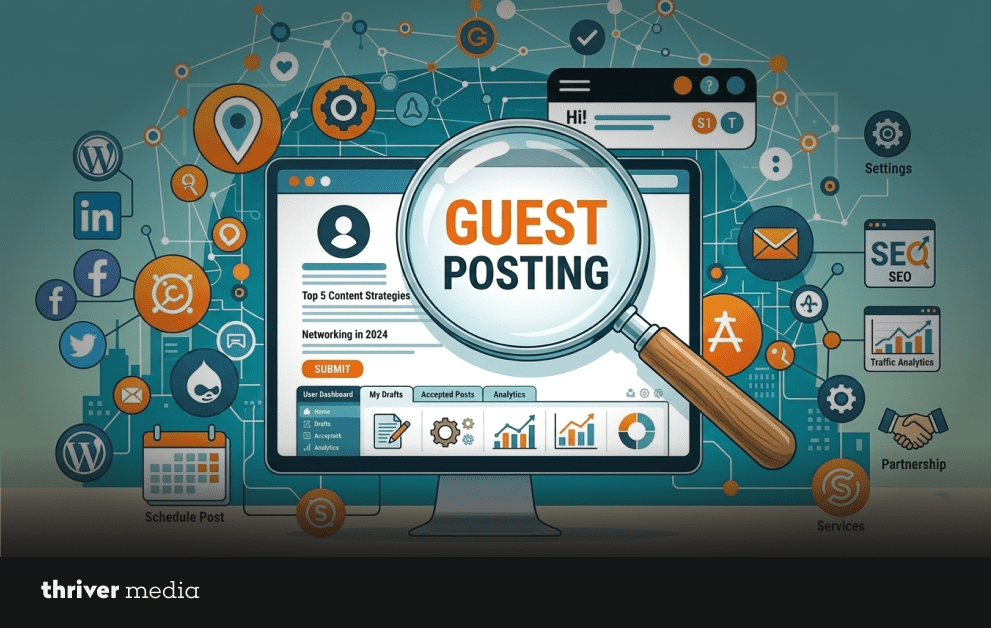
Understanding why this strategy works requires looking at how Google evaluates links. Google’s PageRank system, in its modern form, treats external links as editorial endorsements. When a high-authority, topically relevant website links to your page, it passes a portion of its authority to you, a signal Google interprets as an endorsement of your content’s quality and relevance.
The Five SEO Benefits of Strategic Contributor Articles
1. Domain Authority Growth
Every high-quality backlink strengthens your site’s overall authority. As your backlink profile improves, your ability to rank across multiple keywords increases, not just the ones connected to a specific article placement.
2. Stronger Topical Relevance Signals
Links from websites within your niche reinforce topical authority. Search engines increasingly evaluate websites as subject-matter experts, and niche-relevant editorial links help accelerate that recognition.
3. Referral Traffic
Articles published on high-traffic websites can generate direct referral visitors,s real readers who click through because they found the content valuable. This audience often converts at higher rates than cold search traffic.
4. Brand Authority and E-E-A-T
Google’s E-E-A-T framework (Experience, Expertise, Authoritativeness, Trustworthiness) rewards authors and brands that consistently appear in respected publications. A strong portfolio of external contributions helps build measurable credibility signals.
5. Anchor Text Diversity
Editorial placements allow marketers to build a natural anchor profile using branded anchors, partial-match phrases, and contextual links. This diversity looks far more organic to search engines than repetitive keyword anchors.
Contributor Publishing vs Other Link Building Strategies
| Editorial Contributions | Very High | High | Permanent | High | ★★★★★ | Medium |
| Directory Links | Low | Low | Permanent | Low | ★★☆☆☆ | Medium |
| Link Exchanges | Medium | Medium | Variable | Medium | ★★★☆☆ | Medium |
| Broken Link Building | High | High | Permanent | High | ★★★★☆ | Medium |
| Press Releases | Low | Low | Variable | Low | ★★☆☆☆ | Medium |
| Sponsored Links | Medium | Low | Paid | Medium | ★★☆☆☆ | Medium |
| HARO / Media Quotes | High | Very High | Permanent | High | ★★★★☆ | Medium |
The comparison highlights why contributor publishing continues to perform so well in modern SEO. It combines strong authority signals, topical relevance, and long-term link stability, all factors that influence search rankings.
Among alternative strategies, HARO (Help A Reporter Out) outreach offers similarly strong authority links. However, it requires media pitching skills and provides far less control over anchor text, linking pages, and publication timing.
How to Find High-Quality Guest Posting Opportunities in 2026
Finding the right websites to target is the foundation of an effective outreach strategy. Publishing content on low-quality, irrelevant, or spam-heavy sites does little for SEO and can even create risk. In 2026, one strong editorial placement can outperform dozens of weak ones.
Six Proven Methods for Finding Opportunities
1. Google Search Operators
Advanced search queries help identify websites actively accepting external contributions. Try searches like:
- [your niche] “Write for us.”
- [your niche] “guest post guidelines.”
- [topic] “Submit an article.”
- [topic] “contributor”
These queries surface publications with structured contributor programs.
2. Competitor Backlink Analysis
Tools such as Ahrefs, Semrush, and Moz let you review competitors’ backlink profiles. Filter for links coming from content pages and identify which sites publish articles from external authors. Those sites become strong outreach targets.
3. Author Bio Research
Look at industry experts who regularly publish articles online. If their author bio appears across multiple publications, those platforms likely accept contributions from outside writers. This approach often reveals high-quality sites that don’t publicly advertise submission guidelines.
4. Industry Communities and Newsletters
Professional Slack groups, LinkedIn communities, and niche newsletters frequently share contributor opportunities. Editors sometimes announce open pitches in these spaces before listing them publicly.
5. Content Publishing Platforms
Platforms such as Medium publications, Substack newsletters, and industry trade blogs often seek expert contributors. While some links may be nofollow, the brand exposure and referral traffic can still be valuable.
6. Relationship-Based Outreach
The strongest placements often come through real relationships. Engage with editors on social platforms, comment thoughtfully on their articles, and share their content before pitching ideas. Warm introductions typically convert far better than cold outreach.
How to Evaluate a Publishing Opportunity
| Domain Authority | DA 40+ | DA 30–39 | Below 30 |
| Domain Rating | DR 45+ | DR 30–44 | Under 30 |
| Organic Traffic | 10,000+/month | 1,000–9,999 | Under 1,000 |
| Niche Relevance | Exact match | Closely related | Broad / unrelated |
| Editorial Standards | Strict review | Basic review | Publishes anything |
| Link Type | DoFollow | Mixed | NoFollow only |
| Spam Score | 0–2% | 3–7% | 8%+ |
| Content Freshness | Weekly updates | Monthly updates | Rarely updated |
This evaluation framework provides a clear and repeatable method for assessing publishing opportunities before investing time in outreach or content creation. In most cases, five strong placements on authoritative sites will outperform fifty articles on weak domains.
Pro Tip
Before pitching any publication, check its spam score and organic traffic trend using tools like Moz, Ahrefs, or Semrush. A site with declining search traffic may have been penalized previously, and links from penalized domains provide little value or can even pass negative signals.
Writing a Guest Post Pitch That Gets Accepted: Complete Framework
The outreach pitch is where most contributor campaigns fail. Editors at established publications receive dozens of generic templates every week. To stand out, you need to show that you’ve read their site, understand their audience, and have something genuinely valuable to contribute before any article is written.
The Anatomy of a High-Converting Pitch
Subject Line
Keep it specific, benefit-driven, and personalized. Avoid vague phrases like “Guest Post Request.”
Example:
“3 Topic Ideas for [Site Name] Inspired by Your Article on [Topic]”
Opening Line
Reference something specific about their publication, a recent article, a recurring column, or a gap you noticed in their content. This signals that your outreach is intentional, not automated.
Credibility Paragraph
Include a short paragraph explaining why you’re qualified to write on the topic. Link to previously published articles, contributor work, or strong content from your own website.
Topic Proposals
Offer two or three well-researched topic ideas. Each should include a working title and a short explanation of what the article will cover and why it benefits their readers.
Closing
End with a professional, low-pressure close that makes it easy for the editor to respond. If you don’t hear back, send one polite follow-up after 5–7 business days.
Outreach Performance Benchmarks
| Cold Email Outreach | 5–10% | 2–5% | 1–3% | Low | Medium |
| Personalized Pitch | 20–35% | 10–20% | 5–10% | High | Medium |
| LinkedIn Outreach | 15–25% | 8–15% | 3–8% | Medium | Medium |
| Existing Relationship | 50–70% | 30–50% | 15–30% | Very High | Medium |
| Content Collaboration Ask | 25–40% | 15–25% | 8–15% | High | Medium |
| Follow-up (Second Touch) | +10–15% | +5–10% | +3–5% | Medium | Medium |
These benchmarks reflect typical outreach conversion rates across different contact methods. The key insight is simple: personalization dramatically improves results.
A carefully crafted pitch sent to 50 well-researched publications will almost always outperform a generic template blasted to 500 websites. It also leads to placements on stronger, more reputable sites, which ultimately delivers far greater SEO value.
How to Write a Guest Post That Editors Accept and Readers Share
An article that genuinely helps a publication’s audience becomes your best introduction for future collaborations. When your first contribution performs well, with strong engagement, social shares, and longer reading time, editors are much more likely to invite you back. That creates a reliable channel for earning consistent editorial backlinks from trusted websites.
Content Quality Standards for 2026
Word Count
Aim for 1,500–2,500 words for most niche blog articles. Data-driven or pillar content can justify 3,000–5,000 words. Thin content under 800 words rarely performs well with editors or search engines.
Original Research or Data
Articles that reference original data, case studies, or firsthand experience tend to attract more backlinks from readers and other publications, increasing the long-term SEO value of a single placement.
Structured Formatting
Use H2 and H3 headings, bullet lists, numbered steps, and short paragraphs. Clear formatting improves readability, lowers bounce rate, and increases time-on-page—metrics editors notice.
E-E-A-T Signals
Write from real experience whenever possible. Include specific examples, numbers, and observations. Generic advice without proof rarely passes editorial review on reputable sites.
Natural Link Placement
Links pointing back to your own website should appear where they genuinely help the reader, not be forced into the introduction or final paragraph. Experienced editors quickly remove links that feel promotional.
Anchor Text Best Practices
The anchor text, the clickable words used in a hyperlink, is one of the most important elements in link building. Over-optimized anchors, especially repeated exact-match keywords, can trigger Google’s Penguin spam detection system and create an unnatural backlink profile.
A balanced anchor distribution typically looks like this:
Branded Anchors (40–50%)
Use your brand name naturally.
Example: “According to Your Brand, the conversion rate…”
Natural Phrase Anchors (25–35%)
Use descriptive phrases that fit naturally within the sentence.
Example: “This detailed guide to email marketing strategy.”
Partial-Match Anchors (15–20%)
Include your keyword within a longer phrase.
Example: “effective SEO techniques for small businesses.”
Exact-Match Anchors (Under 5%)
Using your exact target keyword repeatedly, like “buy running shoes,” can signal manipulation. Use exact matches sparingly.
The Complete 2026 Guest Posting Quality Checklist
Use the checklist below as your standard quality control process for every guest posting campaign. Running each placement through this framework ensures you invest time only in opportunities that deliver genuine SEO value.
| Checklist Item | Stage | Done? |
| Site DA/DR meets minimum threshold | Pre-Outreach | ✓ |
| Niche relevance confirmed | Pre-Outreach | ✓ |
| Organic traffic verified via Ahrefs/SEMrush | Pre-Outreach | ✓ |
| Spam score below 5% | Pre-Outreach | ✓ |
| Pitch is personalized to editor | Outreach | ✓ |
| Topic ideas match site content gaps | Outreach | ✓ |
| Writing guidelines reviewed | Content | ✓ |
| Word count meets site minimum | Content | ✓ |
| Primary keyword in H1 and intro | Content | ✓ |
| Anchor text is natural and varied | Links | ✓ |
| Target page has SEO value | Links | ✓ |
| No over-optimized exact-match anchors | Links | ✓ |
| Bio includes brand mention | Publication | ✓ |
| Link confirmed as DoFollow | Publication | ✓ |
| Post indexed within 2 weeks | Post-Live | ✓ |
| Referral traffic tracked in GA4 | Post-Live | ✓ |
Implementation Tip
Save this checklist as a template in your project management tool (Notion, Asana, Trello). Create a card for each target site and tick off items as you progress through the pipeline. A well-managed guest posting campaign tracking 20–30 active prospects simultaneously can generate 8–12 published posts per month.
Common Guest Posting Mistakes to Avoid in 2026
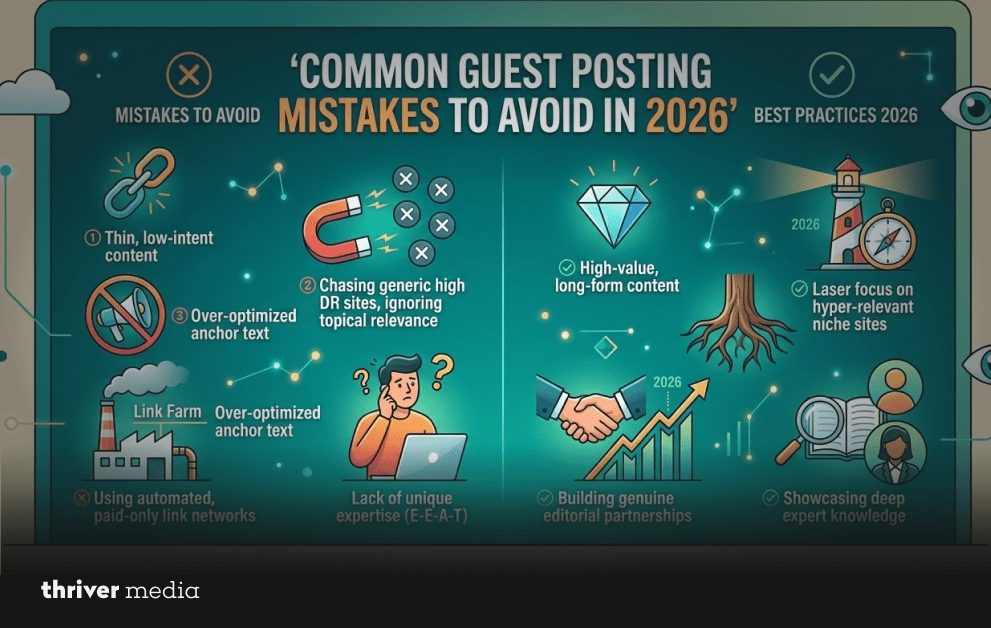
Google’s guidance on guest posting has become increasingly specific over time. The following mistakes not only waste your time, but they can also generate toxic backlinks that actively harm your domain’s search performance.
- Targeting Irrelevant Sites: A backlink from a fashion blog to a B2B software company provides minimal SEO value. Topical relevance is increasingly weighted in Google’s link evaluation.
- Accepting NoFollow-Only Policies: While nofollow links have some brand value, they pass no PageRank. If a site’s policy is to use nofollow on all external links, the SEO ROI is minimal.
- Keyword-Stuffed Anchor Text: Using exact-match target keywords as anchors across multiple guest posts is one of the clearest signals of manipulative link building. Vary your anchors deliberately.
- Publishing on Guest Post Farms: Sites that publish dozens of guest posts daily with no editorial standards are guest post farms. Links from these sites are devalued or ignored by Google and flagged in manual spam reviews.
- Neglecting Post-Publication Tracking: Publishing without monitoring indexation, referral traffic, and ranking impact means you cannot measure ROI or identify your highest-performing placements.
- Over-Concentration on One Domain: Earning five guest posts from the same domain does not give you five times the SEO value. Diversify across different domains to build a natural-looking link profile.
Frequently Asked Questions (FAQs)
Is guest posting still effective for SEO in 2026?
Yes publishing on authoritative, relevant sites still earns strong backlinks and improves rankings when quality is prioritized.
How many backlinks are needed to see ranking improvements?
Most sites see movement within 60–90 days after earning around 5–10 high-quality backlinks.
Should I accept guest posts on my own site?
Yes, if you maintain strict editorial standards and avoid publishing low-quality or spammy content.
How do I remove a bad backlink from a guest article?
Use Google Search Console’s Disavow Tool to ask Google to ignore the link.
How long does a guest post backlink take to affect SEO?
Usually indexed in 1–4 weeks, with ranking impact visible within 2–4 months.
What’s the ideal number of guest posts per month?
For most businesses, 4–8 quality placements per month is a solid and sustainable pace.
Can this strategy hurt SEO if done incorrectly?
Yes publishing on spammy sites or using manipulative anchor text can create harmful backlinks.
Bottom Line
Guest posting in 2026 is not a relic of early SEO; it is a mature, refined, and highly effective link-building discipline that rewards professionals who approach it with the seriousness it deserves. The tactics have evolved, the standards have risen, and the shortcuts have been closed. What remains is a channel built on genuine value exchange: you contribute expertise and high-quality content, and you earn editorial backlinks from sites whose audiences and authority Google has spent years learning to trust.
The professionals earning the best results from guest posting in 2026 share three characteristics: they are selective about the sites they target, they invest in genuinely high-quality content, and they treat outreach as relationship-building rather than transactional email blasting. Those three habits, applied consistently over 6–12 months, produce a backlink profile that is difficult for competitors to replicate and deeply valued by Google’s ranking algorithm.
Core Takeaway
One guest post on a DA 60+ site in your exact niche, with a natural anchor text link to a well-optimized target page, is worth more to your SEO than 100 directory listings. Invest your time accordingly.
Conclusion: Building a Sustainable Guest Posting System
The most successful guest posting programs are not built on one-off placements; they are built on repeatable systems. A documented outreach workflow, a curated target site list that is refreshed quarterly, content templates adapted for different publication styles, and a tracking dashboard that monitors indexation, rankings, and referral traffic turn guest posting from a sporadic tactic into a genuine competitive advantage.
Start with five target sites in your niche that meet the ideal-tier criteria outlined in this guide. Research each one thoroughly, build genuine familiarity with their content, craft a personalized pitch for each, and write articles that genuinely serve their readers. Measure the results after 90 days. Then scale what works.
The SEO benefits of guest posting compound over time. Links earned this quarter contribute to the domain authority that makes future content rank faster and higher. Brand mentions build E-E-A-T signals that improve trust scores across your entire domain. Relationships with editors open doors to collaborations, quote opportunities, and content partnerships that extend well beyond a single backlink.
In a digital landscape increasingly shaped by AI-generated content, authentic editorial guest posts written by real experts and published on editorially standards-driven sites stand out more than ever. Google’s algorithms are built to find and reward exactly that kind of content. In 2026, guest posting done right is not just a link-building tactic. It is a brand-building strategy.
Contact Thriver today and let’s start building rankings that last.
Want more? Subscribe to Thriver Media and never miss a beat.