


18th December 2025

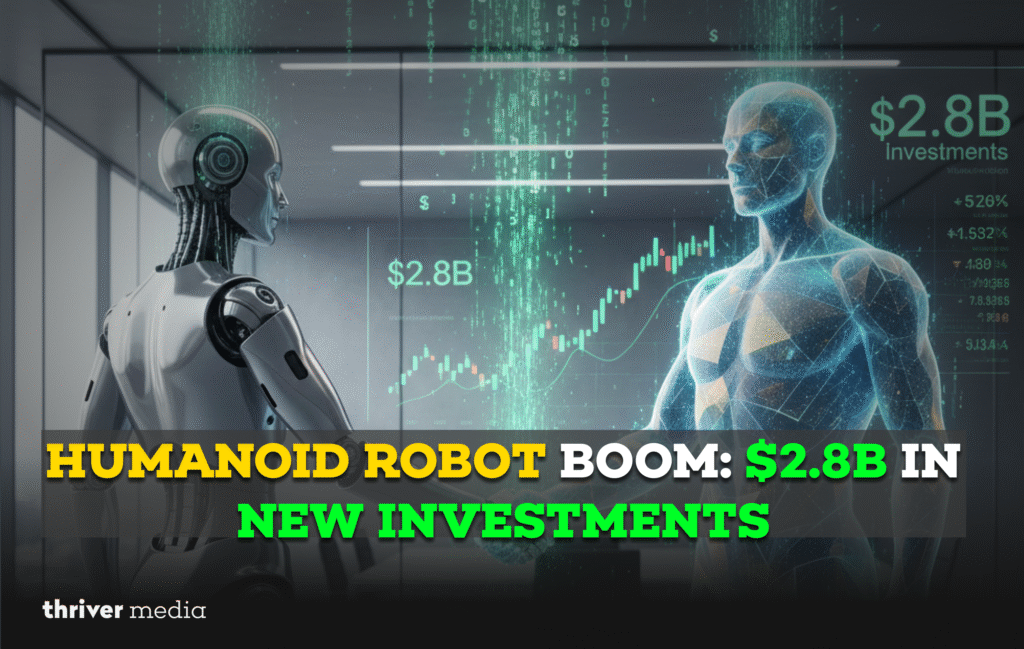
Let’s cut through the noise: humanoid robots aren’t science fiction anymore. They represent a multi-billion-dollar bet on the future of work, and investors are speaking loudly with their money. In a stunning surge of confidence, venture capitalists and tech giants have poured over $2.8 billion into humanoid robot startups in just the last year.
This isn’t just funding; it’s a seismic shift. We’re witnessing a full-scale industrial arms race to build the first generation of versatile, human-shaped machines that can work alongside us, from factory floors to our front doors.
Why the sudden boom? It’s not about creating replacements for people. It’s about solving a critical problem: there simply aren’t enough humans to fill millions of physically demanding, repetitive, or dangerous jobs. From manufacturing and logistics to elder care and disaster response, industries are screaming for a solution. Investors are betting that humanoids, built to navigate our world built for humans, are that answer.
Who’s Cashing the Checks and What Are They Building?
The investment wave isn’t funding one company; it’s backing an entire ecosystem with different approaches to the same goal.
- Figure AI: The headline-grabber. With backing from tech titans like OpenAI, Microsoft, and Jeff Bezos, they’ve raised a staggering sum to get their Figure 01 robot into BMW’s manufacturing plants. Their focus? Autonomous real-world work, starting now.
- 1X Technologies: Backed by OpenAI and famous for their safe, friendly-looking robots like EVE and NEO, they’re focusing on androids designed for commercial and domestic assistance. Think logistics and, eventually, home help.
- Sanctuary AI: Their approach is all about the mind. Their Phoenix robot runs on a unique AI system called Carbon, which gives it common sense and lets it learn tasks through demonstrations, like an apprentice.
- Tesla: While not a startup, Tesla’s Optimus project is a massive driver of public and investor attention. Elon Musk’s vision of a low-cost, mass-produced robot has forced the entire industry to think bigger and faster.
This table breaks down the current landscape:
| Company | Key Backers | Robot Name | Primary Focus | The Big Bet |
| Figure AI | OpenAI, Microsoft, Jeff Bezos, Intel | Figure 01 | Automotive manufacturing | Humanoids can solve labor shortages first in structured industrial environments. |
| 1X Technologies | OpenAI, Tiger Global | EVE, NEO | Logistics & security | Androids can be safe, useful coworkers and assistants in commercial spaces. |
| Sanctuary AI | Bell, Verizon Ventures | Phoenix | General-purpose AI | True artificial general intelligence (AGI) is the key to versatile robots. |
| Tesla | Internal | Optimus | Mass production | Car manufacturing tech can be used to build affordable humanoids at scale. |
Why Now? The Perfect Storm of Readiness
This investment boom isn’t random. It’s the culmination of several technologies finally reaching maturity:
- AI & Machine Learning Maturity: Robots can now see, understand, and interact with unstructured environments thanks to advancements in computer vision and large language models (LLMs). They can process “grab that tool” as a command.
- Actuator & Sensor Cost Plummets: The motors and sensors that allow for dexterous movement and perception have gotten exponentially better and cheaper.
- Proven Precedents: Success in robotics (like Boston Dynamics’ agility) and autonomous vehicles has shown that hard problems in mobility and perception can be solved.
- The Labor Equation: Demographics are destiny. Aging populations and declining birth rates in major economies are creating an intractable labor gap that businesses are desperate to fill.
FAQs: Your Questions on the Humanoid Rush, Answered
The current focus is on “dirty, dull, and dangerous” jobs that are going unfilled think warehouse palletizing, factory component sorting, or inspecting hazardous sites. The goal is collaboration and filling gaps, not direct replacement in complex roles.
You already can. Figure 01 is doing trial runs in a BMW factory right now. Expect to see them in controlled industrial and logistics settings within 1-2 years. Widespread home use is still a decade or more away.
Dexterity and common-sense reasoning. While walking is largely solved, the fine motor skills of a human hand handling a soft object, using any tool and the intuitive understanding of a messy world remain immense challenges.
Early commercial models are priced for businesses, likely in the tens to low hundreds of thousands of dollars. Tesla’s goal of a sub-$20,000 robot is a long-term moonshot that, if achieved, would change everything.
Follow the source. The International Federation of Robotics (IFR) provides annual reports on service robot trends, including humanoids. You can find their analysis here: IFR Service Robots Report.
The Bottom Line: This is a Infrastructure Play
Smart investors aren’t just betting on a cool robot. They’re betting on the future operating system of physical work. The company whose software (the robot’s AI “brain”) and hardware platform becomes the standard could be as influential as Windows or iOS was for PCs and phones. The $2.8B is seed money for building the foundation of that new economy.
Conclusion: Not If, But When and Who
The question is no longer “Will humanoid robots happen?” The money has decisively answered yes. The questions now are: Who will build the first truly useful generation? Which approach will win? And how will we integrate them into society?
This investment boom is the starting pistol. The race to build a mechanical workforce is on, and the finish line is a transformed global economy. The next five years will be a spectacle of engineering, AI breakthroughs, and real-world testing. Buckle up; the future is walking toward us.
For authoritative data and trends on the robotics market, visit the International Federation of Robotics: IFR.org
Disclaimer: The news and information presented on our platform, Thriver Media, are curated from verified and authentic sources, including major news agencies and official channels.
Want more? Subscribe to Thriver Media and never miss a beat.