
3rd March 2026
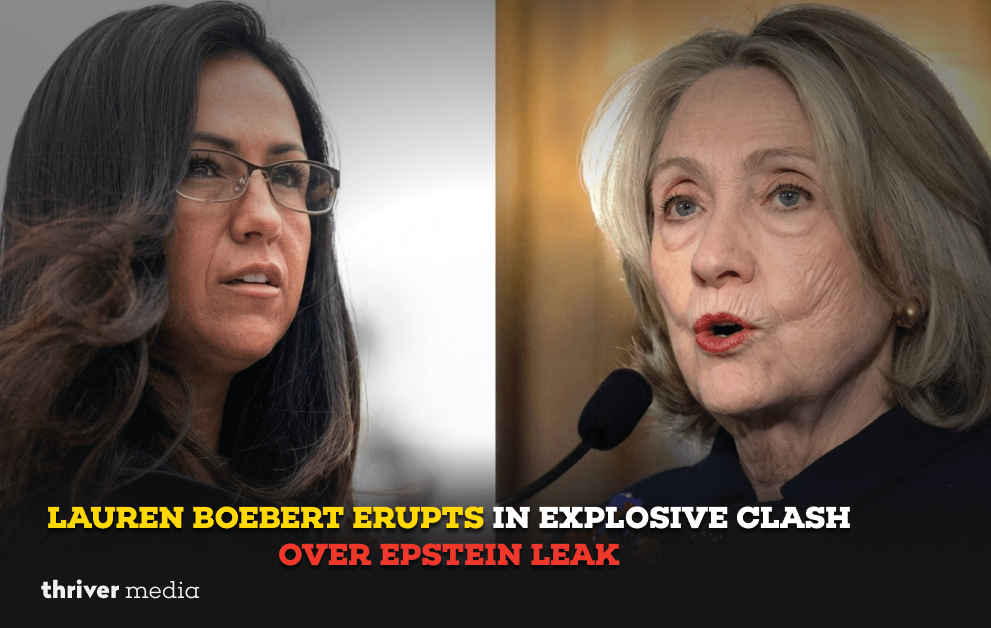
Lauren Boebert Deposition Erupts After Photo Leak Sparks Fury
The tension in the room was already palpable, but when Hillary Clinton’s lawyers intervened with a sudden, sharp objection, the deposition nearly collapsed. According to sources inside the House Oversight Committee room, the former Secretary of State threatened to walk out immediately. The trigger? A photo supposedly taken in that very room had just been posted to social media, and she was furious. The accusation landed squarely on Congresswoman Lauren Boebert’s shoulders.
What Happened Inside the Deposition
The explosive confrontation occurred during a high-stakes, closed-door deposition with Hillary Clinton as part of an ongoing investigation by the House Oversight Committee. The session was meant to be a confidential examination of Clinton’s tenure and various controversies, shielded from the public eye to allow for candid discussion.
However, the room’s secrecy was breached in real time. Conservative influencer Benny Johnson posted a photo on X (formerly Twitter) that appeared to be taken from inside the deposition. The image showed documents and the room setup, breaking the strict rules prohibiting photography or electronic communication during the proceedings.
Sources say the committee quickly traced the leak. The finger of blame pointed at Rep. Lauren Boebert. When confronted, Boebert reportedly acknowledged that she had shared the image, arguing it was not a sensitive document but rather a visual of the proceedings.
Clinton’s reaction was immediate and severe. Her legal team protested that the breach compromised the integrity of the deposition, arguing that if one side could not adhere to the ground rules, she would not continue. The deposition was briefly paused as committee leaders worked to de-escalate the situation and convince Clinton to stay.
Escalation With Nancy Mace
If the photo leak set the room on fire, Rep. Nancy Mace’s (R-SC) questioning poured gasoline on it. Once the deposition resumed, Mace engaged Clinton in a heated exchange regarding her tenure as Secretary of State, specifically focusing on the 2012 Benghazi attack.
According to those present, Mace’s questioning was relentless, pressing Clinton on security failures. The most charged moment came when Mace invoked the “3,000 lives” remark, a reference to Clinton’s previous testimony about the loss of American lives. Aides described the tone as aggressive and personal, shifting the atmosphere from a legal inquiry to a political battlefield. Clinton, known for her composure in such settings, reportedly matched Mace’s intensity, leading to a back-and-forth that underscored the committee’s deep partisan rancour.
Bill Clinton’s Deposition Statement

While Hillary Clinton faced the brunt of the questioning, the shadow of her husband, former President Bill Clinton, loomed large. In a pre-recorded deposition or prior statement entered into the record (depending on the specific structure of the inquiry), Bill Clinton addressed the elephant in the room: Jeffrey Epstein.
In a clear and forceful denial, Bill Clinton stated categorically, “She had nothing to do with Jeffrey Epstein. Nothing.”
The statement was a preemptive strike against any line of questioning that might attempt to tie Hillary Clinton to the disgraced financier. This connection has been a persistent feature of online conspiracy theories but has never been substantiated by evidence.
Political Context
To understand the explosion, one must understand the rules of engagement. Closed-door depositions are sensitive by design. They are meant to be a space where members can ask tough questions without the pressure of cameras, and witnesses can answer without the filter of a media spin room. Leaking any material, even an innocuous photo, is considered a serious breach of protocol that erodes trust.
This incident, however, is not just about protocol; it is about political optics.
- Media Amplification: The leak allowed conservatives to frame the deposition as a “gotcha” moment in real-time, while Clinton’s threat to walk out allowed Democrats to paint Republicans as unruly and incapable of conducting a serious investigation.
- The Epstein Shadow: The mere mention of Jeffrey Epstein remains a political third rail. Any figure associated with him, even tangentially by conspiracy, faces intense scrutiny. For Boebert and Mace, linking Clinton to that world, however tenuously, is a powerful tool to energise their base.
- Partisan Divide: This clash is a microcosm of the current Oversight Committee, which has become the central stage for performative political warfare in Washington.
Analysis Section

Was this a breach of protocol or political theatre?
It was both. Leaking the photo was a clear violation of the rules, suggesting either a disregard for procedure or a calculated move to control the narrative. Given Boebert’s brand as an anti-establishment firebrand, it is likely a mix of both. For her, the rules of the “swamp” are secondary to the currency of online engagement.
How does this affect public perception?
For Clinton’s supporters, this reinforces the image of her as a seasoned professional besieged by a chaotic Republican party. For Boebert’s supporters, it validates her role as an unflinching truth-teller willing to break decorum to expose “the enemy.” The nuance of the deposition’s content will be lost; the image of the clash will define the memory.
Impact on Boebert and Clinton
For Boebert, the leak cements her brand but may alienate her from senior committee members who value institutional process. For Clinton, while the Epstein denial was firm, the fact that she is still testifying about scandals from a decade ago keeps her in a defensive posture, preventing the party from fully looking toward the future.
FAQs
What exactly did Lauren Boebert leak?
She reportedly took a photo of the room setup during Hillary Clinton’s closed-door deposition and sent it to conservative commentator Benny Johnson, who posted it on social media.
Why did Hillary Clinton threaten to leave?
Clinton and her legal team argued that the leak violated the confidentiality agreement of the deposition. She threatened to walk out because she felt the process had been compromised and the rules were not being enforced equally.
Did the deposition connect Hillary Clinton to Jeffrey Epstein?
No. While Bill Clinton’s statement was entered to deny any connection, the deposition primarily focused on other topics, such as Benghazi. The Epstein angle is a political backdrop rather than a central finding of this specific hearing.
What was the “3,000 lives” remark?
Rep. Nancy Mace referenced a previous testimony where Clinton discussed the loss of American lives, using it as a rhetorical weapon to question Clinton’s accountability for the Benghazi attack.
Will there be consequences for Boebert leaking the photo?
It is possible. Leaking from a closed-door session could result in censure or removal from the committee, though given the partisan makeup of Congress, serious punishment is unlikely.
Bottom Line
Tuesday’s clash was a perfect storm of political performance: a conservative provocateur breaking the rules to feed the content machine, a seasoned veteran of scandals refusing to tolerate the breach, and the ghost of Jeffrey Epstein haunting the proceedings. It was less a search for truth and more a preview of the 2024 campaign ads.
Conclusion
As the House Oversight Committee continues its investigations, this incident sets a dangerous precedent. If closed-door sessions cannot guarantee confidentiality, cooperation from witnesses will dwindle, and the legislative body’s ability to conduct serious oversight will be further degraded. For now, the image of a leaked photo and a threatened walkout will overshadow whatever substantive information was sought that day, proving once again that in modern Washington, the process is often the story.
Disclaimer: The news and information presented on our platform, Thriver Media, are curated from verified and authentic sources, including major news agencies and official channels.
Want more? Subscribe to Thriver Media and never miss a beat.