

1st December 2025
Introduction T.I
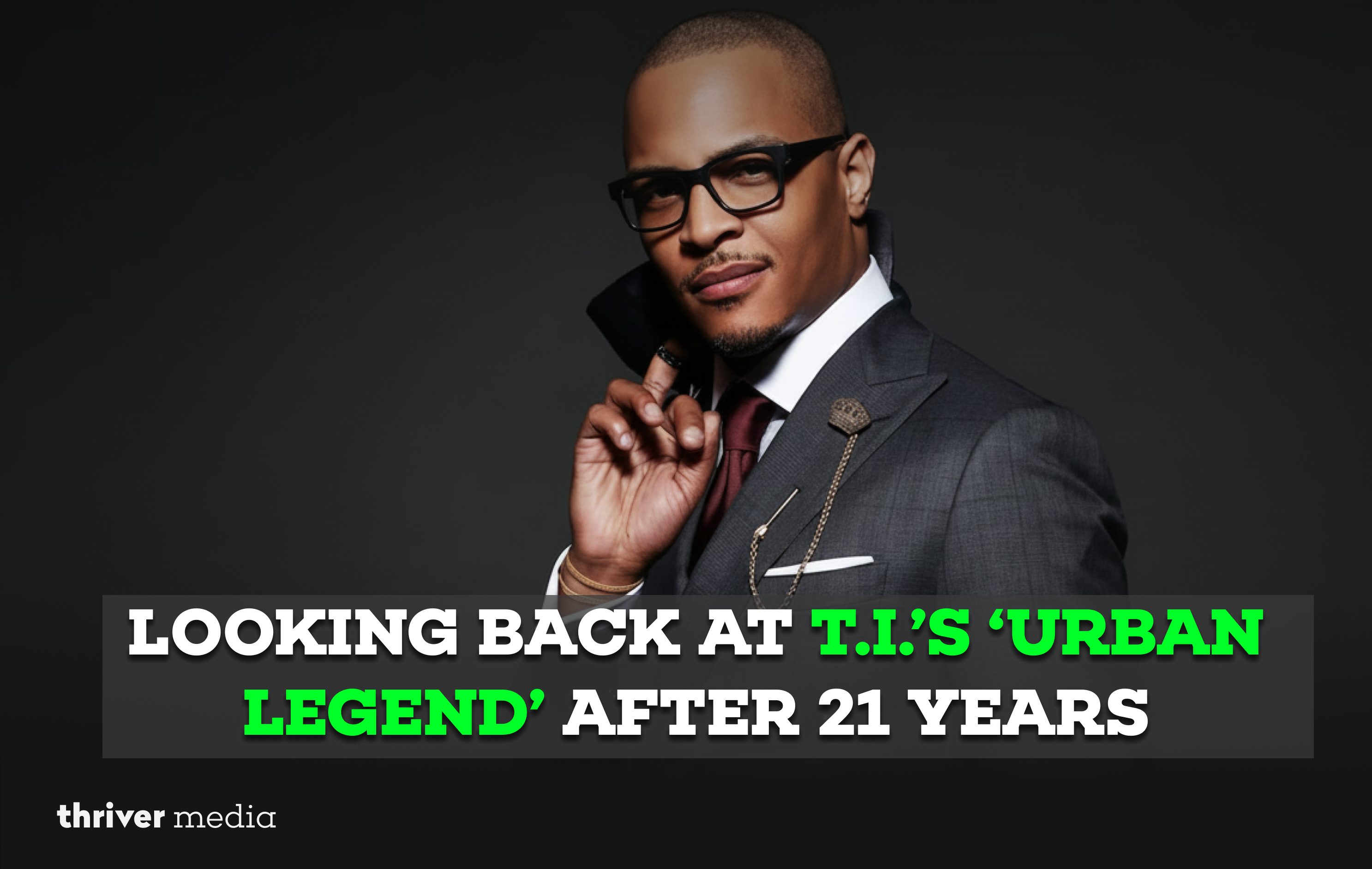
On December 7, 2004, Clifford “T.I.” Harris Jr. released his third studio album, Urban Legend a project that would cement his status as a Southern hip-hop titan and reshape the genre’s landscape. Two decades later, the album’s influence still echoes through trap music and beyond. This retrospective explores why Urban Legend remains a pivotal moment in hip-hop history.
The Context: Southern Hip-Hop’s Rise
By 2004, Southern hip-hop was no longer just a regional movement it was dominating airwaves. T.I. emerged in a competitive field alongside artists like Lil Wayne, Ludacris, and Young Jeezy. Following his breakthrough album Trap Muzik (2003), expectations were high. Urban Legend wasn’t just an album; it was a declaration of supremacy from the self-proclaimed “King of the South.”
Standout Tracks T.I That Defined an Era
“U Don’t Know Me”:
The cinematic production by DJ Toomp became an anthem of defiant confidence, showcasing T.I.’s commanding flow and establishing a blueprint for trap bravado.
“Bring Em Out”:
With its Swizz Beatz-produced beat and Jay-Z vocal sample, this track became a stadium-filler, blending Southern sound with East Coast sensibilities.
“ASAP”:
A gritty street narrative that reinforced T.I.’s authenticity and connection to Atlanta’s trap realities.
“Motivation”:
Revealed T.I.’s introspective side, balancing the album’s harder edges with vulnerability.
Production: The Trap Sound Matures
Urban Legend’s sonic landscape bridged traditional Southern hip-hop with evolving trap aesthetics. Producers like DJ Toomp, Lil Jon, and David Banner created layered, menacing beats that felt both street-raw and commercially polished. The album perfected the formula of orchestral samples, booming 808s, and sharp snares that would define trap production for years.
Lyrical Themes: Confidence, Conflict, and Contradiction
T.I. navigated multiple personas throughout the album:
- The King asserting dominance (“T.I. vs. T.I.P.”)
- The Street Narrator detailing Atlanta’s realities (“Why You Mad at Me”)
- The Vulnerable Artist (“My Life”)
This duality created a compelling portrait of an artist at a career crossroads, balancing commercial ambitions with street credibility.
Commercial Impact and Legacy
Urban Legend debuted at #7 on the Billboard 200, eventually going platinum and solidifying T.I.’s mainstream status.
Urban Legend at a Glance: Key Data
| Aspect | Details |
| Release Date | December 7, 2004 |
| Label | Atlantic, Grand Hustle |
| Billboard 200 Debut | #7 |
| Certification | Platinum (1M+ copies) |
| Key Producers | DJ Toomp, Lil Jon, Swizz Beatz, David Banner, The Neptunes |
| Notable Features | Lil Jon, B.G., Lil Wayne, Nelly, Pharrell |
| Signature Singles | “Bring Em Out”, “U Don’t Know Me”, “ASAP” |
| Grammy Nominations | 1 (Best Rap Song for “Bring Em Out”) |
| Legacy Ranking | Often ranked among top Southern Hip-Hop albums of the 2000s |
The Album in Today’s Context
Twenty-one years later, Urban Legend feels both nostalgic and remarkably current. The trap sound it helped standardize now dominates global hip-hop. Tracks from the album regularly resurface on TikTok, introducing T.I.’s classic cuts to new generations. The album’s themes of ambition, struggle, and self-reinvention remain timeless.
Frequently Asked Questions (FAQs) About T.I.’s ‘Urban Legend’
Urban Legend was released on December 7, 2004, under Atlantic Records and T.I.’s own Grand Hustle imprint.
It’s widely seen as the album that cemented T.I.’s title as the “King of the South” and played a pivotal role in bringing the Atlanta trap sound from the streets to the mainstream, influencing the direction of hip-hop for the next two decades.
The most iconic singles are “Bring Em Out” (produced by Swizz Beatz), “U Don’t Know Me” (produced by DJ Toomp), and “ASAP.” These tracks received massive radio and video play and remain fan favorites.
While the album itself didn’t win a major award, the single “Bring Em Out” was nominated for Best Rap Song at the 2006 Grammy Awards. Its true “award” is its enduring influence and platinum certification.
It was a major success. Urban Legend debuted at #7 on the Billboard 200 chart and has since been certified Platinum by the RIAA for selling over one million copies in the United States.
Conclusion: The Enduring Legend
Two decades on, Urban Legend stands as more than a successful album; it is a cultural artifact that captures a critical transition in hip-hop. The data tells a clear story platinum sale, chart success, industry recognition but the true legacy lives in the sounds that followed.
The album succeeded in its ambitious mission: it crowned a king. T.I. didn’t just claim the Southern throne with words; he backed it up with an impeccably crafted project that balanced street authenticity with mainstream ambition. Urban Legend provided the crucial bridge between the raw, localized trap narratives of the early 2000s and the genre’s impending global domination.
Today, when we hear the pervasive 808s, cinematic strings, and confident, melodic flows in modern trap, we are hearing the echoes of this album’s blueprint. It solidified a formula the blend of autobiography, bravado, and vulnerability over bombastic production that would become the template for Atlanta’s next generation of superstars.
Ultimately, Urban Legend endures because it perfectly encapsulated a moment while simultaneously building the foundation for the future. It is the sound of an artist seizing his destiny and a region solidifying its permanent place at the center of hip-hop. For that reason, it remains not just an urban legend, but a verified classic.
Disclaimer: The news and information presented on our platform, Thriver Media, are curated from verified and authentic sources, including major news agencies and official channels.
Want more? Subscribe to Thriver Media and never miss a beat.