
28th January 2026
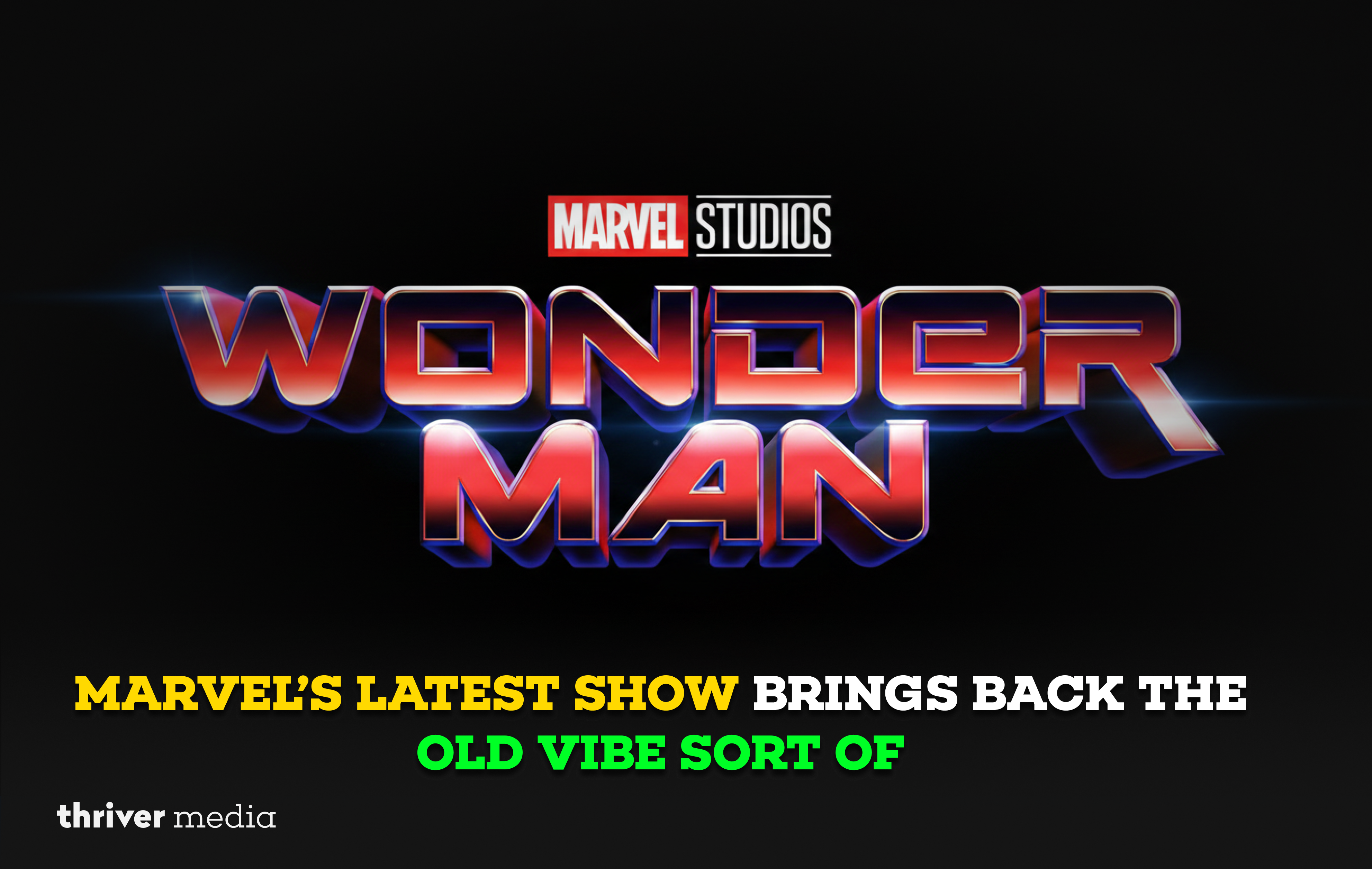
There’s a familiar energy humming through Marvel’s newest streaming series. It’s a feeling many of us haven’t felt in a while a light-hearted, character-forward rhythm where the fate of the multiverse isn’t hanging in the balance every five minutes. The latest entry, let’s call it Marvel Legacy for now (you know the one), clearly wants to be a homecoming. It winks at the past, leans into practical sets, and lets its heroes breathe. And for stretches at a time, it genuinely works. But like a slightly misaligned Infinity Stone, something’s just a little off. The old vibe is back… but it’s wearing new, slightly unfamiliar clothes.
Quick Take: The Good, The Nostalgic, & The “Hmm”
- What It Gets Right: Tight, episodic storytelling, a focus on team chemistry, and action sequences with physical weight and clever choreography.
- What Feels Nostalgic: The pre-Endgame balance of stakes personal conflicts matter as much as world-ending ones. The humor feels earned, not a constant quip barrage.
- What Still Feels Off: A third-act stumble into familiar CGI sludge, a few supporting characters that feel like Disney+ checkboxes, and a villain problem that’s hard to shake.
- Who Will Love It Most: Fans who crave the Phase 1 & 2 vibes, viewers burnt out on multiversal stakes, and anyone who just wants to spend fun time with charismatic heroes.
What This Blog Is About
We’re diving deep into this new show to figure out what exactly makes it feel like a throwback. We’ll break down the technical magic the cinematography, sound, and editing that sells the classic tone and the streaming-era choices that undercut it. We’ll talk about where it soars, where it stumbles, and why this experiment matters for Marvel’s future, especially in light of the fascinating, grounded approach we’re seeing in productions like the upcoming Wonder Man series. Consider this your spoiler-free dissection.
Show Overview: Back to Basics
Marvel Legacy follows a grounded (by cosmic Marvel standards) team dealing with a threat that’s disruptive, not apocalyptic. Set primarily on Earth and refreshingly disconnected from the current Kang/Multiverse arc, it feels like a breather. It’s a character study wrapped in a sci-fi mystery, released weekly on Disney+ in an apparent nod to building community theorizing, a practice that had started to fade with the full-season binge drops. This focus on a smaller, character-centric world feels part of a broader Marvel shift, mirroring the real-world, industry-focused approach we’ve glimpsed from the set photos and reports for Wonder Man.
The Old Marvel Vibe What’s Actually Back
- Story Pacing: Remember when shows had subplots that lasted more than an episode? Legacy does. It employs a “case-of-the-week” framework that steadily builds a larger arc, giving room for characters to interact outside of crisis mode. It’s a rhythm that feels primed for a show like Wonder Man, which promises to explore the life of a working actor/superhero in Hollywood a premise built on character moments, not cataclysms.
- Character Chemistry: This is the show’s superpower. The cast clicks with that easy, familial banter that made the original Avengers tower scenes so beloved. You believe these people have history. This bodes well for Yahya Abdul-Mateen II’s Simon Williams, whose dynamic with Ben Kingsley’s Trevor Slattery in Wonder Man could be a masterclass in odd-couple chemistry.
- Humor Balance: The jokes land because they feel human awkward, situational, and character-driven not like a Joss Whedon algorithm spat them out. The silence after a joke matters, too. The meta-humor and industry satire promised by Wonder Man will need this same precise balance to work.
- Action Rhythm: Fights have geography, consequence, and fatigue. They’re built on skill and ingenuity rather than purely on who has the stronger energy beam. It feels tactile. One can hope this philosophy extends to Wonder Man, where his ionic energy powers could be visualized with a classic, practical-effect sensibility.
- World-Building Tone: The world feels lived-in and coherent, not like a green-screen backdrop waiting for the next VFX plate. There’s a sense of place. This is crucial, and it’s where Wonder Man has a secret weapon: reportedly shot extensively on practical locations around Los Angeles, it has the potential to ground the MCU in a real, tangible world like never before.
The Tech & Production Strengths (The Nerd Stuff)
This is where the show makes its strongest case for a return to form.
- Cinematography & Color Grading: Goodbye, flat, overlit Disney+ look. Hello, dynamic lighting, dramatic shadows, and a distinct color palette. Scenes have mood. Interior sets are lit with practical sources, making spaces feel real. The color grade leans into richer tones and contrast, ditching the hazy, desaturated look that has plagued some recent entries. This tactile cinematography is exactly what’s needed to sell the Hollywood satire and real-world feel of Wonder Man.
- VFX Quality & Integration: The show uses VFX as a tool, not a crutch. When CGI creatures appear, they’re well-rendered and weighty. But more importantly, the show champions practical effects real explosions, real sets, real stunt work which gives everything a tangible heft that pure CGI cannot replicate. This aligns perfectly with the behind-the-scenes ethos of Wonder Man, which is said to be utilizing classic Hollywood techniques and in-camera effects to tell its story.
- Sound Design: From the unique sonic signature of a new tech gadget to the dampened thud of a punch in a confined space, the audio is meticulously crafted. It’s immersive without being overwhelming.
- Editing Style: The editing has patience. It holds on reaction shots, lets conversations play out in wider two-shots, and builds tension through sequencing rather than rapid-fire cuts. A character-driven show like Wonder Man will live or die by this kind of patient, performance-focused editing.
- Streaming Optimization: The 45-50 minute episode length feels purposeful. While designed for weekly drops, the pacing (a strong hook, a mid-act development, a cliffhanger) makes it incredibly bingeable a testament to old-school TV structure meeting new-school viewing habits.
Soundtrack & Audio Mood
The score is a standout, avoiding the generic “heroic brass and strings” in favor of a more thematic approach think synthesizers and specific melodic motifs for characters. The use of silence is powerful, creating space for emotional beats to land. One can imagine Wonder Man taking this further, blending a traditional heroic theme with the stylings of classic Hollywood scores or even the slick production of the LA music scene.
The Major Drawbacks
For all its strides, the show can’t fully escape Marvel’s modern trappings.
The plot, while engaging, relies on a MacGuffin that feels a bit tired. The villain, despite a strong performance, suffers from a murky motivation and a finale that, yes, devolves into a skybeam-adjacent CGI spectacle that clashes with the grounded tone of the earlier episodes.
Some supporting characters feel underwritten, existing mostly to deliver exposition or represent a demographic. It’s a subtle but noticeable checkbox mentality. Finally, the very last scene hints at a tie-in to a larger, more convoluted saga, which momentarily undermines the self-contained story we just enjoyed. This is the tightrope Wonder Man must walk: staying true to its unique, satirical voice without being forced into servicing a larger, unrelated arc.
Audience Reaction & Buzz
The fan reception has been largely positive, with a palpable sense of relief on social media. The buzzwords are “refreshing,” “fun,” and “like older Marvel.” Criticisms mirror the drawbacks above, with particular focus on the villain and finale. The buzz around Wonder Man carries a similar hopeful curiosity interest in its unique tone, its cast, and its potential to be something truly different within the MCU.
Quick Summary Verdict
Some shows invite long discussion. Others can be understood at a glance. This one sits comfortably in between strong in the areas that matter most, with a few cracks that keep it from perfection. Here’s the quick breakdown.
| Category | Verdict |
| Story | A strong, character-driven mystery that hooks early, though the final act doesn’t fully reward the buildup. |
| Visuals | Top-tier work. Confident cinematography and practical effects give the show a grounded, cinematic feel. |
| Soundtrack | Excellent. A moody, thematic score that supports emotion without overwhelming scenes. |
| Characters | The core team’s chemistry is the heartbeat of the series and keeps every episode engaging. |
| Pacing | Well-structured for both weekly releases and binge viewing, with natural momentum between episodes. |
| Overall Feel | A welcome step back toward classic Marvel energy not flawless, but refreshing and full of promise. |
FAQ Section
Loosely. It stands confidently on its own, with only subtle nods. No homework required.
Yes, it’s PG-13 Marvel standard. Some intense action sequences, but suitable for most ages.
Not at all. This is a fantastic entry point for a lapsed fan or a newcomer.
It’s a six-episode season.
Absolutely. Its strengths far outweigh its flaws, and it’s the most consistently enjoyable Marvel Disney+ show in a while. It points toward a promising direction that Wonder Man seems poised to follow.
Bottom Line
Does it succeed as a return to form? Mostly, yes. For about 80% of its runtime, it’s the Marvel many have been missing, and it demonstrates a production philosophy that could revitalize the brand.
Conclusion
Marvel Legacy is less a full-circle return and more a promising course correction. It proves that the studio can still make content focused on character and craft over universe-building homework. The show’s strengths grounded action, practical filmmaking, character chemistry are the very pillars that the exciting, real-world Wonder Man project is being built upon. This isn’t a coincidence; it’s a blueprint. The question is whether Marvel has the confidence to fully commit to this path to let stories breathe in their own unique tones and visual styles without forcing them into a homogenized, interconnected slurry. Legacy is a signal. Wonder Man could be the confirmation. Let’s hope they’re listening.
Disclaimer: The news and information presented on our platform, Thriver Media, are curated from verified and authentic sources, including major news agencies and official channels.
Want more? Subscribe to Thriver Media and never miss a beat.