

Published: March 6, 2026 | Politics & Sports

Messi, Trump, and the Iran War: The Viral Story Explained
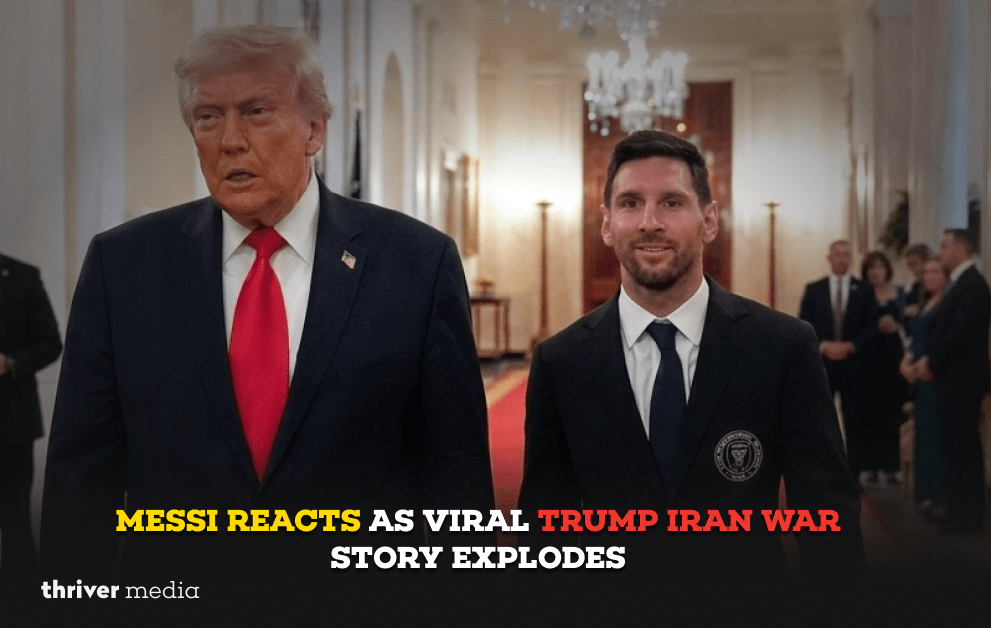
When Lionel Messi walked into the White House’s East Room on March 5, 2026, he walked into a sports ceremony. But social media quickly turned it into something far more combustible. Within hours of the Inter Miami celebration, viral posts began circulating that linked the football legend’s presence to Donald Trump’s ongoing military operation in Iran, a conflict that had already shaken global markets, killed a sitting head of state, and put the upcoming FIFA World Cup under serious threat. The story spread like wildfire. Millions shared it. Most of them had it wrong.
This is what actually happened, why it blew up, and what it tells us about the way sports, politics, and misinformation collide in the digital age.
Background: How Messi Got Tangled in a Geopolitical Firestorm

Messi did not comment on the Iran war. He was not invited to the White House to discuss military policy. Yet within a news cycle, his name was being searched alongside “Iran,” “Trump war,” and “World Cup crisis” at record volumes. Understanding why requires understanding how celebrity names are absorbed into online political narratives.
When major geopolitical events break out, wars, elections, crises, social media users instinctively look for familiar anchors. A celebrity in proximity to a newsmaker becomes story material, whether or not they said anything. In this case, Messi happened to appear alongside Trump at a high-profile ceremony just days after the United States and Israel launched a joint military operation against Iran. The juxtaposition was enough. Edited clips, out-of-context screenshots, and misleading captions spread rapidly across X (formerly Twitter), TikTok, and WhatsApp. Some posts framed Messi’s presence as an implicit endorsement of Trump’s foreign policy. Others went further, falsely suggesting he had commented on the strikes.
Ultimately, the information was not accurate.
What Actually Happened at the White House
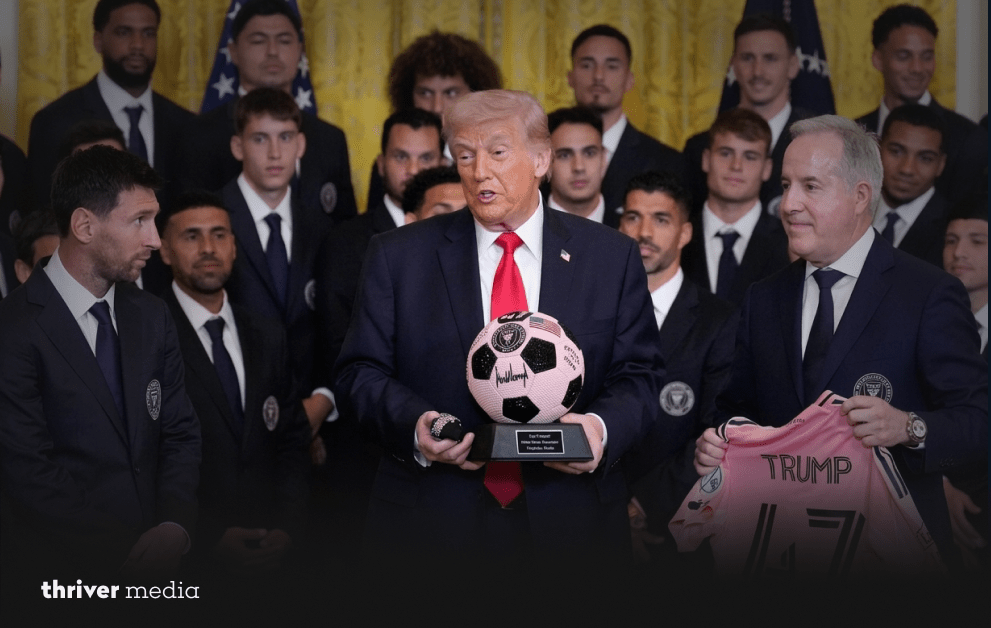
On March 5, 2026, Inter Miami visited the White House, following the tradition of honoring championship teams. During the East Room ceremony, Messi gave President Trump a bejeweled pink soccer ball. Messi entered with Trump and co-owner Jorge Mas, but did not speak.
Trump focused his remarks on sports, telling Messi, “Leo, you came in, and you won a very hard and unusual thing to do. There’s much more pressure on you than most realize, as you’re expected to win, yet almost nobody does.” He compared Messi to Pelé, praised his decision to join Miami, and added: “You could have gone anywhere and chosen any team, but you chose Miami.”
Trump opened the ceremony with brief remarks on the conflict with Iran, then shifted to focus entirely on the World Cup and Messi, without any direct connection between the topics. The first was a few seconds of geopolitical context at the top of the event; the second was a lengthy celebration of an MLS championship. However, on social media, these two distinct elements were compressed into a single, misleading narrative.
It was Messi’s first visit to the White House. He had been invited by the Biden administration to receive the Presidential Medal of Freedom, but was unable to attend due to scheduling conflicts.
The Iran Conflict: What Trump Actually Said
To understand why the story gained traction, some context about the Iranian situation is necessary. The U.S. and Israeli air attacks began on Saturday, March 1, 2026, and had already killed Iran’s Supreme Leader, Ayatollah Ali Khamenei, sunk at least ten Iranian warships, and struck more than 1,000 targets by the time Messi arrived at the White House.
Trump publicly defended the military operation, stating that the regime’s rapidly growing ballistic missile program posed a colossal threat to America. The Pentagon, labeling the effort Operation Epic Fury, set objectives: dismantle Iran’s missile capabilities, eliminate its naval forces, halt its nuclear ambitions, and stop funding for proxy groups across the region.
Iran is also among the 48 nations set to compete in the 2026 FIFA World Cup, scheduled to be hosted across the United States, Canada, and Mexico that summer. Iran’s top soccer official said his country could not look toward the tournament with “hope” following the military strikes. That a World Cup under the shadow of war gave the Messi at the White House story an extra layer of apparent significance, amplifying its viral spread.
Why the Story Went Viral
SSeveral forces combined to supercharge the spread of this story.
- Celebrity power sits at the top of the list. Messi is arguably the most famous athlete on the planet, an eight-time Ballon d’Or winner, a World Cup champion, and a man whose every move generates global attention. Attaching his name to a news story dramatically multiplies its reach.
- Political polarization is the second major factor. Trump-related content triggers intense reactions on both sides of the political spectrum. Any story linking Trump to a beloved global figure amplifies through both outrage and support, creating an engagement loop that rewards sharing over fact-checking.
- Social media algorithms push emotionally charged content. Misleading captions like ‘Messi endorsed Trump’s Iran policy’ get more clicks than accurate reports of a sports ceremony.
- Context collapse takes over. A 45-minute event becomes a 15-second clip. Remarks about Iran get stitched to footage of Trump and Messi. The original meaning vanishes, replaced by a false one.
Messi’s teammate, Inter Miami midfielder Telasco Segovia, addressed the political aspect before the visit: ‘I don’t get involved with politics, but I know it’s important.’ That nuance was largely ignored online.
Impact on Messi’s Image
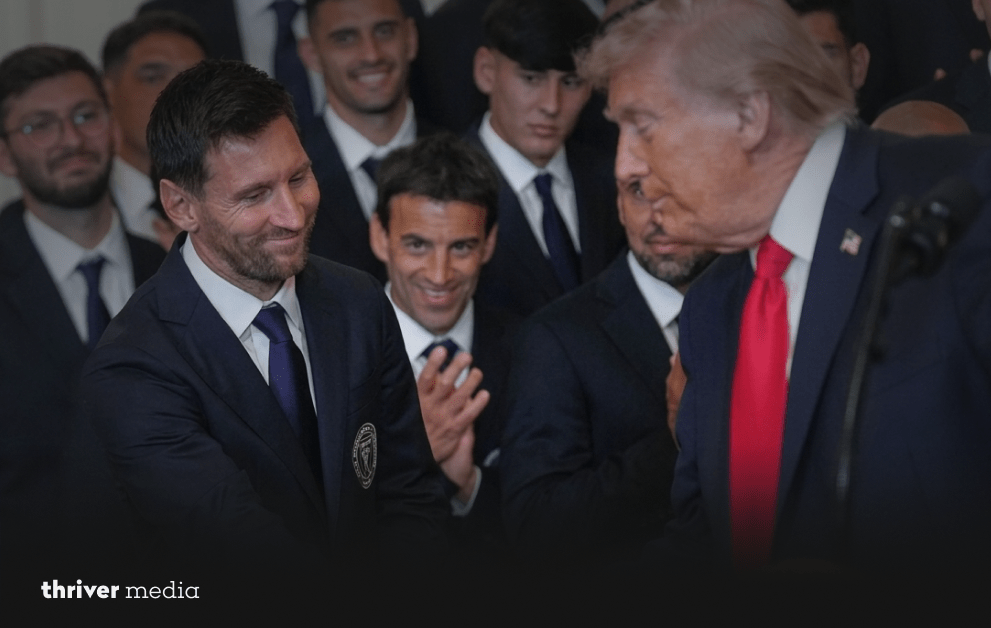
Throughout his career, Messi has carefully guarded a politically neutral public image. He rarely speaks on issues beyond football, and when he does, he speaks about the sport itself. Trump, addressing Messi, who famously avoids speaking out on politics, stuck mostly to sports topics during the ceremony.
When viral misinformation drags an athlete into a geopolitical debate they never entered, the reputational consequences are real even when the story is false. Messi’s global fanbase cuts across countries, religions, and political affiliations. Anything that frames him as aligned with a specific government’s military policy risks damaging the cross-cultural goodwill he has spent decades building.
In this instance, the absence of any statement from Messi about Iran worked in his favor as a defense, but it also left a vacuum that misinformation was quick to fill. His silence was interpreted by some as consent, by others as protest, and by still others as irrelevance, all projections, none of them grounded in fact.
FAQs
Did Lionel Messi support Trump’s Iran war?
No. Messi made no statement about the Iran military operation. He attended a White House sports ceremony to celebrate Inter Miami’s 2025 MLS Cup championship a customary event for champion American sports teams and did not speak publicly during or after the event about geopolitical matters.
Why did Messi meet Donald Trump?
The meeting took place as part of the long-standing American tradition of championship teams visiting the White House. Inter Miami defeated the Vancouver Whitecaps 3-1 in December 2025 to win the club’s first MLS Cup title. Messi, the league’s back to back MVP, attended along with teammates including Luis Suárez and Rodrigo De Paul.
Is the viral claim about Messi and the Iran war true?
No. The viral narrative misrepresented what occurred at the White House. Trump’s opening remarks about Iran were brief and unconnected to Messi or the Inter Miami celebration. No exchange about the war between Messi and Trump took place. Edited clips and misleading captions stripped the event of its actual context.
Why do celebrities often get dragged into political viral stories?
Celebrity names generate enormous search traffic and social engagement. When a famous figure appears in proximity to a political event even coincidentally algorithms amplify that connection because it drives clicks. The audience responds emotionally before the facts can catch up.
How can readers verify viral claims online?
Check multiple primary sources before sharing. Look for original video rather than clips. Search the claim on established fact-checking platforms. Ask whether the headline matches the content of the article. When a story seems designed to provoke a strong emotional reaction, slow down that is usually when misinformation is most effective.
Bottom Line
The viral story linking Messi to Trump’s Iran war comments was a product of timing, algorithm dynamics, and a global news event severe enough to color everything in its proximity. A routine sports ceremony became a controversy. A football player who said nothing about a war was framed as having said something. The actual event a celebratory visit by MLS champions was not the story the internet decided to tell.
Much of the narrative was built on decontextualized footage, misleading framing, and the simple fact that two very famous names appeared in the same room on the same day that a major military conflict was dominating global headlines.
Conclusion
The Messi Trump Iran story is a snapshot of how the digital age handles the intersection of sports and politics. Athletes no longer compete in a bubble sealed from the rest of the world. When wars are fought and political storms rage, any celebrity standing near the center of power becomes part of the story whether they chose to be or not.
That reality places greater responsibility on audiences than ever before. The speed at which false narratives travel has outpaced the speed at which corrections do. Sharing a story before verifying it does not just spread misinformation it actively shapes public perception in ways that are difficult to undo.
The next time a headline tells you that a beloved athlete has “reacted” to a military operation, take a moment. Read past the caption. Watch the full clip. The truth is usually quieter than the viral version but it matters far more.
This article is based on verified reporting from PBS NewsHour, ESPN, Fox News, NBC Miami, and other primary news sources covering the White House event on March 5, 2026.
Source Links
Disclaimer: The news and information presented on our platform, Thriver Media, are curated from verified and authentic sources, including major news agencies and official channels.
Want more? Subscribe to Thriver Media and never miss a beat.