

16th January 2026
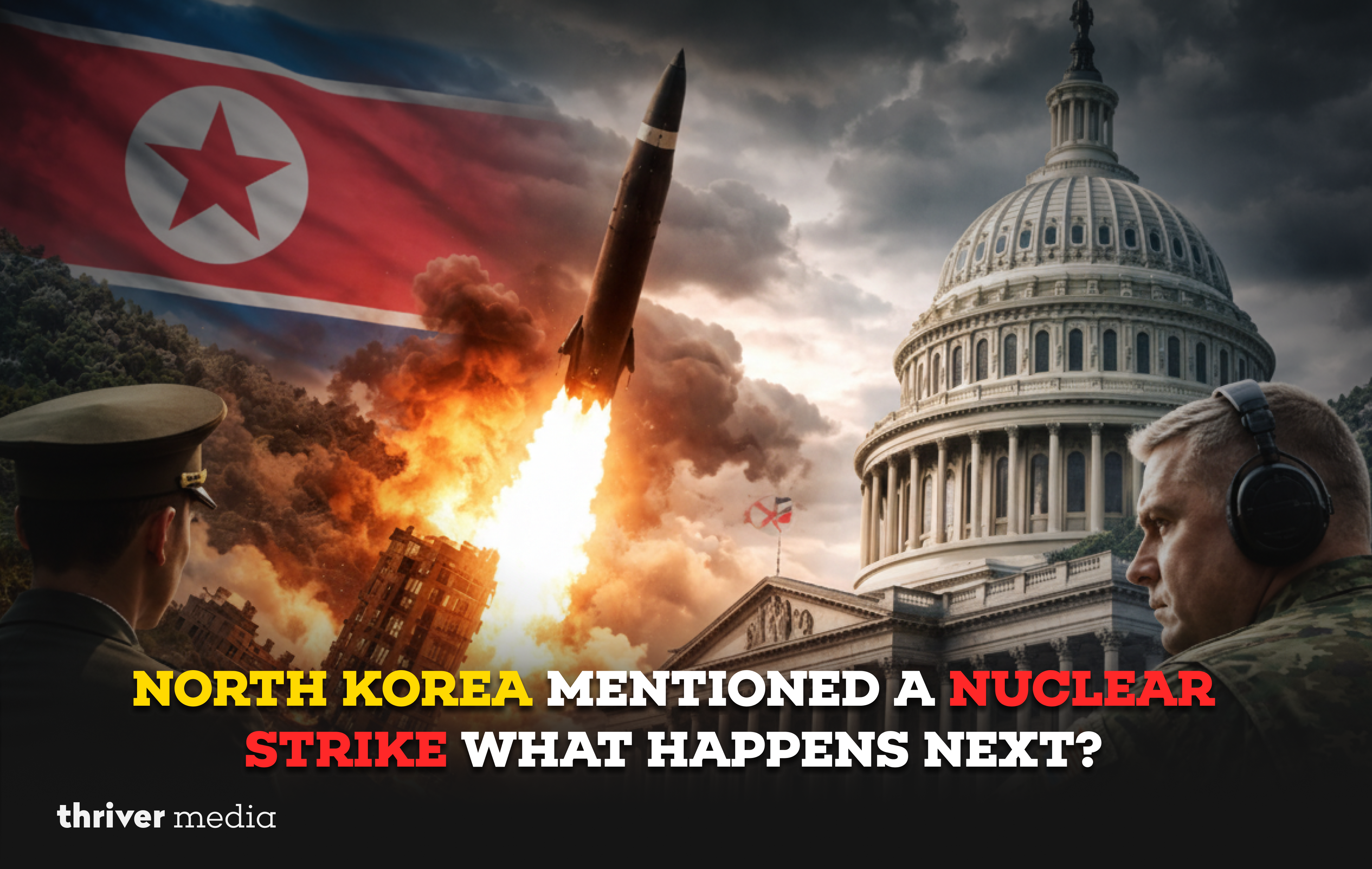
Let’s cut through the noise. You saw the headlines. Maybe it was a “simulated tactical nuclear strike” or a warning of “offensive action.” The phrase flashes in news tickers, and that cold, familiar knot tightens in your stomach. Again. I’ve been analyzing this theater for over twenty years, from the early days of the Agreed Framework to the “fire and fury” of the 2010s. The script feels familiar, but the stage has changed. So, what actually happens after Pyongyang rattles its nuclear saber?
This High-Stakes Drama
To understand the next move, you need to know the cast:
- The Supreme Leader, Kim Jong Un: The director, producer, and lead actor. His goals are regime survival, international recognition as a nuclear power, and extracting economic concessions. The nuclear threat is his ultimate leverage tool. He’s not a madman; he’s a calculated strategist playing a dangerously weak hand with the world’s strongest cards.
- The United States & South Korea (The Alliance): The opposing lead. Currently in a state of “deterrence and diplomacy.” Their playbook involves military drills, asset deployments, and tightening sanctions, all while publicly offering “dialogue without preconditions.” The internal debate is constant: Are we enabling him by talking, or risking miscalculation by not?
- China & Russia (The Enablers?): The critical stagehands. They provide economic lifelines, block stringent UN actions, and warn against “provoking” Pyongyang. Their primary interest is stability a North Korea that’s a buffer, not a collapsed state flooding refugees or unifying under a US ally.
- The Japanese Civilian: The front-row audience member in the splash zone. For them, the threat isn’t abstract. It’s about emergency alerts, missile overflights, and the visceral question of what happens if a tactical nuke were used in the region.
The Well-Worn Playbook: What “Next” Usually Looks Like
Here’s the cycle I’ve observed for two decades:
- The Provocation: A missile test, a satellite launch (which uses the same tech), or explicit nuclear rhetoric.
- The International Outcry: UN condemnations, emergency Security Council meetings (often stalled by China/Russia), and sharp warnings from Washington, Seoul, and Tokyo.
- The Escalation-for-Concessions Play: North Korea often raises the stakes testing a more advanced weapon, conducting multiple launches to increase the pain and the price for silence.
- The Off-Ramp (Sometimes): After demonstrating capability and “strength,” Pyongyang may signal openness to talks, often seeking aid or a freeze on joint military exercises. The cycle pauses, until the next round.
- The Critical Change: Ten years ago, the threat was largely about crude, long-range missiles. Today, North Korea has a burgeoning arsenal of tactical nuclear weapons designed for battlefield use. This lowers the psychological threshold and makes the game more dangerous.
The Evolution of North Korea’s Nuclear Strategy: A Three-Decade Snapshot
North Korea’s nuclear journey has not been static it has evolved in clear phases, each with distinct goals, threat levels, and international reactions. Understanding these eras helps explain why today’s tensions feel more dangerous and less predictable than before. The table below summarizes how Pyongyang’s strategy has progressed from bargaining for survival to building an operable war-fighting deterrent.
North Korea’s Nuclear Evolution Timeline
| Era | Primary Threat | Core Objective | International Response |
|---|---|---|---|
| 1990s–2000s | Plutonium program, early long-range missile development | Regime survival and leverage for negotiations | Agreed Framework, Six-Party Talks, diplomatic engagement |
| 2010s | Nuclear testing, ICBM advancement | Declaration of nuclear-state status | “Maximum pressure” strategy, severe economic sanctions |
| 2020s (Now) | Tactical nuclear weapons, solid-fuel missiles, submarine-launched ballistic missiles (SLBMs) | Creation of an operable arsenal and war-fighting deterrence | Military deterrence drills, strict sanctions enforcement, crisis diplomacy |
Why This Shift Matter
In earlier decades, North Korea used its nuclear program primarily as a bargaining tool. Today, it is transitioning toward a fully deployable and flexible nuclear force. This change reduces negotiation leverage and increases real-time crisis risk which is why Washington and its allies are now operating in constant high-alert readiness mode.
The Bottom Line: Should You Be Worried?
Immediate panic? No. Strategic concern at an all-time high? Yes.
The key is intent versus capability. They have the capability to cause catastrophic damage. But their intent has always been regime preservation. A first-strike nuclear attack is suicidal; the regime would be annihilated in response. It’s the ultimate deterrence tool, not an invasion tool.
The real danger is miscalculation. An accidental naval skirmish in the West Sea, a misread maneuver during a military drill, or a technical failure during a test that causes fallout these are the scenarios that keep analysts awake. The communication lines are virtually non-existent, making every action prone to dangerous misinterpretation.
Your FAQ: Cutting Through the Hype
Not due to a premeditated attack. The brink is always closer due to accident or escalation, which is why military hotlines are so desperately needed.
China fears a collapsed North Korea more than a nuclear one. A flood of refugees and a unified Korea hosting US troops on its border is Beijing’s nightmare.
It’s a grim menu: 1) Sustained, credible deterrence (military readiness), 2) Painful, enforced sanctions (often leaky), 3) Diplomatic engagement to manage crises and set bounds. There is no magic “denuclearize” button. The goal now is risk reduction and crisis management.
Stay informed from credible sources, understand the cyclical nature of this, and support leaders who pursue steady, strategic deterrence and open diplomatic channels for de-escalation. Panic helps no one.
The Conclusion: A Sober Reality
After 20+ years of this, I see a depressing but clear reality: North Korea is a de facto nuclear state. The goalposts have moved. The objective is no longer denuclearization (a distant dream) but containment and harm reduction.
The “what happens next” is more of the same tense cycles of provocation and stalemate. Our task is to manage these cycles without tipping into catastrophe, to strengthen the diplomatic muscles for crisis talk, and to relentlessly deter while being ready to seize any genuine opening.
It’s a long, grinding game of diplomatic judo. The next move is likely another test, another fiery statement. Our response must be firm, unified, and clear-eyed not with apocalyptic fear, but with the weary resolve of those who understand the game all too well.
Official Sources & Further Reading:
- UN Security Council Resolutions on North Korea
- International Atomic Energy Agency (IAEA) on DPRK
- U.S. State Department – North Korea
Disclaimer: The news and information presented on our platform, Thriver Media, are curated from verified and authentic sources, including major news agencies and official channels.
Want more? Subscribe to Thriver Media and never miss a beat.