

26th February 2026
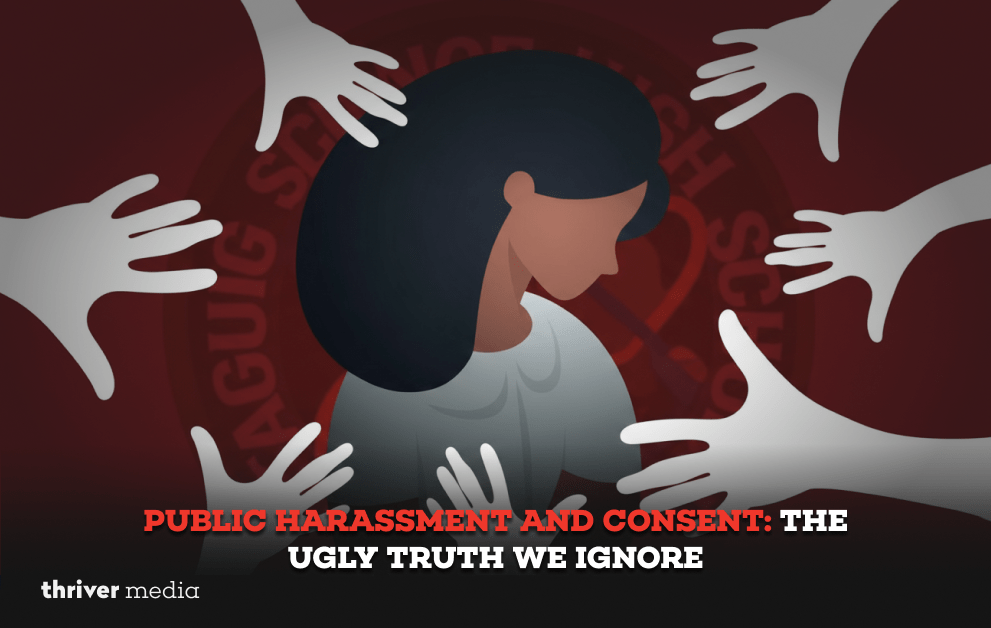
Public Harassment and Consent Introduction
Every day, millions of women and girls navigate public spaces with a calculation most men never have to make: Will I be harassed today? Will I be safe? This persistent threat is the direct result of a globally normalised system in which boundaries are violated with impunity, discomfort is dismissed as flattery, and silence is mistaken for consent.
Public harassment is not a regional problem or a cultural anomaly. It is a systemic pattern of boundary violations that spans continents, economic systems, and social structures. From street catcalls in Lagos to groping on crowded trains in Tokyo, from workplace staring in São Paulo to digital harassment through public social media in New York, the experience is shockingly consistent: women and girls are treated as public property, their bodies and attention available for taking without asking.
The core message of this article is simple but urgent: Repetition does not create permission. Normalisation does not create consent. Silence does not mean yes. What has become commonplace is not acceptable, no matter how long it has been tolerated.
What Consent Really Means
Consent is often discussed as though it exists in a grey area, as though it can be inferred from context or assumed through absence of objection. It cannot. Consent has a clear definition, and that definition is frequently violated in plain sight.
Consent is: Voluntary, enthusiastic, informed agreement to participate in an interaction, free from coercion, fear, pressure, or diminished capacity. It must be clear, can be withdrawn at any time, and should never be assumed.
Consent is not: – Silence or lack of verbal rejection – Freezing due to fear or shock – Compliance born from social pressure or power dynamics – A public setting where bystanders are present – Previous consent to different interactions – Inferred from clothing, location, or behaviour – The absence of “no”
Common Myths That Blur the Line
Myth 1: “She didn’t say anything, so she was okay with it.” Fear, shock, and survival instinct often cause people to freeze when harassed. This is a recognised neurological response, not consent. Absence of objection is not acceptance.
Myth 2: “It’s just a compliment.” Unsolicited sexual or appearance-based comments are not compliments; they are boundary violations. A true compliment does not require someone’s body or presence to be publicly evaluated without permission.
Myth 3: “Boys will be boys.” This phrase normalises predatory behaviour by treating it as inevitable and excusable. It is neither. Harassment is a choice, and choices can change through accountability and cultural shifts.
Myth 4: “She was asking for it by how she dressed.” Clothing is not consent. A person’s right to bodily autonomy and safe passage through public space is not forfeited by their appearance. This is perhaps the most dangerous myth because it shifts blame from the harasser to the harassed.
Myth 5: “In our culture, this is normal.” Cultural tradition does not justify boundary violation. Practices that harm women exist in every culture, and they persist not because they are right but because they are profitable, convenient, and unchallenged. Normalisation is not justification.
The Global Scope of Public Harassment
Public harassment manifests in different forms across regions, but its prevalence and impact are shockingly universal. Research from international organisations reveals the scale of this problem.
Street Harassment
According to the UN Women Global Estimates on Intimate Partner Violence and Sexual Harassment (2018), approximately 1 in 3 women worldwide have experienced physical or sexual harassment in their lifetime. Street harassment, such as catcalls, leering, unwanted touching, and blocking passage, is the most common form.
In surveys conducted across multiple countries: – United States: 81% of women reported experiencing some form of sexual harassment or assault in their lifetime (Washington Post-Kaiser Family Foundation study). – Latin America: A World Bank study found that 60% of women in major cities report avoiding public spaces due to fear of harassment. – India: UN Women surveys indicate that 80% of women feel unsafe using public transport due to harassment. – Europe: The European Union Agency for Fundamental Rights found that 50% of women in EU member states experience harassment in public spaces annually.
Workplace Harassment
Public harassment extends into professional environments. The World Health Organisation’s Violence Against Women Report notes that workplaces, particularly those in service industries and public-facing roles, are common sites of harassment. Women are interrupted more frequently, their expertise is questioned more often, and their bodies are commented upon without consent.
Public Transportation
Crowded buses, trains, and metro systems are known harassment hotspots globally. The confined space, anonymity of crowds, and difficulty of escape create perfect conditions for harassers. Sexual assault on public transport has been documented in major cities from Mexico City to Cairo to London.
Digital Harassment in Public Spaces
Social media and public forums extend harassment into digital public spaces. Women and girls face coordinated harassment campaigns, non-consensual sharing of images, and threats of violence based solely on their visibility online. This digital harassment often follows women into physical spaces and affects their sense of safety.
Why It’s Normalized
Harassment is not inevitable. It is deliberately or carelessly normalised through cultural narratives, institutional silence, and systemic incentives. Understanding these mechanisms is essential to changing them.
Cultural Narratives and Gender Norms
In many societies, male entitlement to female attention and bodies is encoded into cultural messaging. Women are taught that their appearance is for public consumption, that male interest is flattering even when unwanted, and that their role includes tolerating male attention gracefully. Simultaneously, men are taught that their desires naturally take priority, that persistence is admirable, and that women’s discomfort is irrelevant.
These narratives vary by region but share a common thread: the assumption that women exist, at least partly, for male benefit. In some contexts, this is religious; in others, it is economic (women’s bodies as commodities). In all contexts, it serves to benefit those who harass and burden those who are harassed.
Victim-Blaming and the Myth of Responsibility
When harassment occurs, society frequently responds by interrogating the victim. What was she wearing? Where was she? Why was she out? Why didn’t she fight back? Was she drinking? These questions shift accountability from the person who violated boundaries to the person whose boundaries were violated.
This victim-blaming serves a social function: it allows harassers and bystanders to maintain the illusion that harassment is preventable through better victim behaviour rather than through changed perpetrator behaviour. It is comforting to believe that if you follow the right rules, you will be safe, even though no amount of compliance prevents harassment.
Bystander Silence
Silence from witnesses is not neutral. It is a tacit endorsement. When bystanders say nothing, do nothing, and treat harassment as invisible, they signal to harassers that their behaviour carries no social cost. They also signal to victims that their experience is not worth acknowledgement.
In collectivist cultures, bystanders may remain silent for reasons such as a distinction between public and private space or prioritising group harmony over individual safety. In individualist cultures, bystanders may remain silent out of concern for their own privacy. Regardless of the cultural justification, the outcome is the same: harassers operate with impunity.
Weak Legal Frameworks and Enforcement Gaps
Many countries lack specific laws criminalising street harassment or sexual assault that does not involve penetration. Even where laws exist, enforcement is often inconsistent. Victims report harassment to police only to be dismissed, questioned about their own behaviour, or told the offence is “not serious enough.” This creates a chilling effect where victims learn not to report, and harassers learn they will face no consequences.
Economic and Power Dynamics
In many contexts, harassment is permitted or encouraged because it benefits those in power. In workplaces, harassment maintains hierarchies and discourages women from competing for advancement. In tourist-dependent economies, street harassment is sometimes tacitly permitted because disrupting it might upset tourists or their escorts. In societies where women’s economic dependence is advantageous to male family members or employers, limiting women’s public mobility through harassment serves an economic function.
Psychological and Social Impact
The consequences of normalised public harassment are not trivial or temporary. They are profound, persistent, and measurable.
Mental Health Effects
The cumulative effect of regular harassment creates persistent states of hypervigilance, anxiety, and fear. Women and girls report: – Chronic anxiety when preparing to leave home or use public spaces – Sleep disruption and nightmares – Depression and social withdrawal – Post-traumatic stress responses to public spaces – Reduced sense of bodily autonomy and safety
Research from the American Psychological Association shows that experiences of street harassment are associated with increased rates of clinical anxiety and depression comparable to other forms of interpersonal violence.
Behavioural Changes and Restriction of Movement
Women and girls actively modify their behaviour to avoid harassment: Changing routes to and from school, work, or public spaces – Avoiding certain areas entirely – Wearing clothes deemed less likely to attract attention, regardless of personal preference – Travelling only in groups – Limiting evening activities – Avoiding using public transportation – Not making eye contact or showing facial expression
These restrictions compound over a lifetime. A girl who begins avoiding public spaces at age 12 loses decades of freedom, independence, and access to opportunity. She learns that her safety is conditional on her invisibility.
Economic and Educational Impact
Restricted movement and school absenteeism due to harassment directly impact educational access. Girls in areas with high harassment rates show higher school dropout rates, particularly in secondary education. Women in the workforce may avoid promotions that require evening commutes, travel, or visibility in public-facing roles.
In developing economies, where public transportation is essential and harassment is endemic, women’s economic participation is directly constrained. A woman who cannot safely use public transport cannot reliably access employment far from her home.
Social Consequences and Isolation
Beyond the immediate effects, normalised harassment creates social consequences. Women who report harassment are often isolated, blamed, or retaliated against. They learn that speaking up carries a social cost. Over time, this silence becomes isolation. Women may avoid public spaces not only due to fear but also due to the shame and stigma attached to being harassed.
Additionally, the cognitive load of constant vigilance consumes mental resources that could otherwise be directed toward work, learning, relationships, and self-development. A woman calculating routes, assessing threats, and preparing defensive responses is a woman whose full attention and capacity is not available for other pursuits.
Legal Gaps Around the World
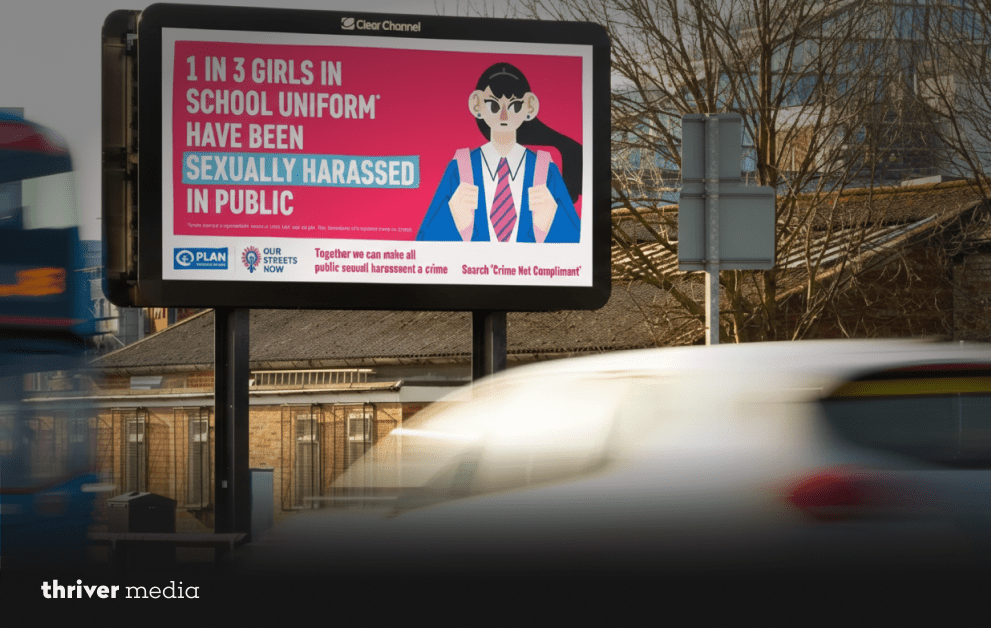
TThe legal landscape for public harassment is fragmented, with significant gaps in protection and enforcement.
Strong Legal Frameworks
A handful of countries have enacted comprehensive laws addressing street harassment and sexual assault in public spaces:
France has specific laws criminalising street harassment (introduced in 2018), with fines for catcalling and unwanted touching in public.
Belgium and the Netherlands include street harassment under sexual assault laws, with enforcement and public awareness campaigns.
Egypt passed specific anti-harassment legislation in 2014 after years of activism, though enforcement remains inconsistent.
India amended its criminal code in 2013 to specifically criminalise sexual harassment in public spaces, though implementation varies significantly by region.
Weak or Absent Legal Protections
Many countries lack specific legislation addressing street harassment or sexual assault in public spaces:
- In the United States, street harassment is not uniformly criminalised, though some cities have enacted local ordinances.
- In much of Sub-Saharan Africa, street harassment is not specifically addressed in law, though broader sexual assault statutes may apply.
- In many Middle Eastern and Central Asian countries, harassment laws are either absent or enforcement is limited.
- In parts of Southeast Asia, harassment in public spaces is not legally defined, and enforcement of existing laws is weak.
Enforcement Challenges
Even where laws exist, enforcement is inconsistent: – Police may not view street harassment as a priority or legitimate crime – Victim testimony alone may be insufficient without physical evidence – Corruption or bribery can undermine prosecution – Cultural attitudes within law enforcement may mirror societal victim-blaming – Victims may be re-traumatised through the reporting process.
FAQs: Public Harassment and Consent
What counts as public harassment?
Any unwanted behavior in public verbal, physical, or visual that intimidates, sexualizes, demeans, or invades someone’s space without consent.
Is staring considered harassment?
Yes, when it’s prolonged or intended to intimidate or sexualize rather than brief, neutral eye contact.
Why don’t victims always react or fight back?
Because fear triggers survival responses like freezing, and reacting can increase danger.
How can bystanders safely intervene in harassment situations?
By distracting, offering support, involving authorities, or documenting without putting themselves at risk.
Are there global laws against street harassment?
Some countries have specific laws, but many still lack clear or consistently enforced protections.
How does harassment affect mental health?
It causes chronic stress, anxiety, hypervigilance, and long-term emotional harm.
Conclusion
Public harassment persists because it is permitted. It is permitted because it is normalised. It is normalised because it is rarely named, rarely challenged, and rarely punished. The path to change requires simultaneously recognising the scale of the problem, rejecting cultural narratives that excuse it, and holding individuals and institutions accountable for perpetuating it.
Repetition does not create permission. The fact that harassment happens constantly, across cultures and contexts, does not make it acceptable. The fact that it happens to most women does not make it inevitable. The fact that it has always happened does not mean it must continue.
Change requires action at multiple levels: legal frameworks that specifically address harassment, enforcement mechanisms that take it seriously, cultural narratives that centre women’s safety and autonomy, institutional accountability, and bystander intervention. It also requires a fundamental shift in how we understand public space, not as a place where some people can claim others’ attention or bodies, but as a shared space where everyone deserves to move freely, without fear, without calculation, without violation.
This is not complicated. It requires only the recognition that other people’s boundaries matter more than your comfort, that consent is always necessary, and that silence in the face of violation makes us complicit.
Bottom Line
Public harassment isn’t harmless. It’s a global pattern of normalised boundary violations that continue because they are excused, minimised, or ignored. Repetition does not create permission. Silence does not mean yes. This ends when we collectively decide that women’s safety and autonomy matter more than the convenience of harassers.
Source Link:
World Health Organization. Violence Against Women: Prevalence Estimates, 2018 (2019). https://www.who.int/publications/i/item/violence-against-women-prevalence-estimates-2018
European Union Agency for Fundamental Rights. Violence Against Women: An EU-wide Survey (2014). https://fra.europa.eu/en/publication/2014/violence-against-women-eu-wide-survey-results-glance
Washington Post-Kaiser Family Foundation. National Survey on Sexual Harassment and Assault (2018). https://www.washingtonpost.com/graphics/2018/national/how-widespread-is-sexual-harassment-in-america/
American Psychological Association. Stress Effects on the Body (2024). https://www.apa.org/science/about/psa/stress-body
Disclaimer: The news and information presented on our platform, Thriver Media, are curated from verified and authentic sources, including major news agencies and official channels.
Want more? Subscribe to Thriver Media and never miss a beat.