


15th January 2026

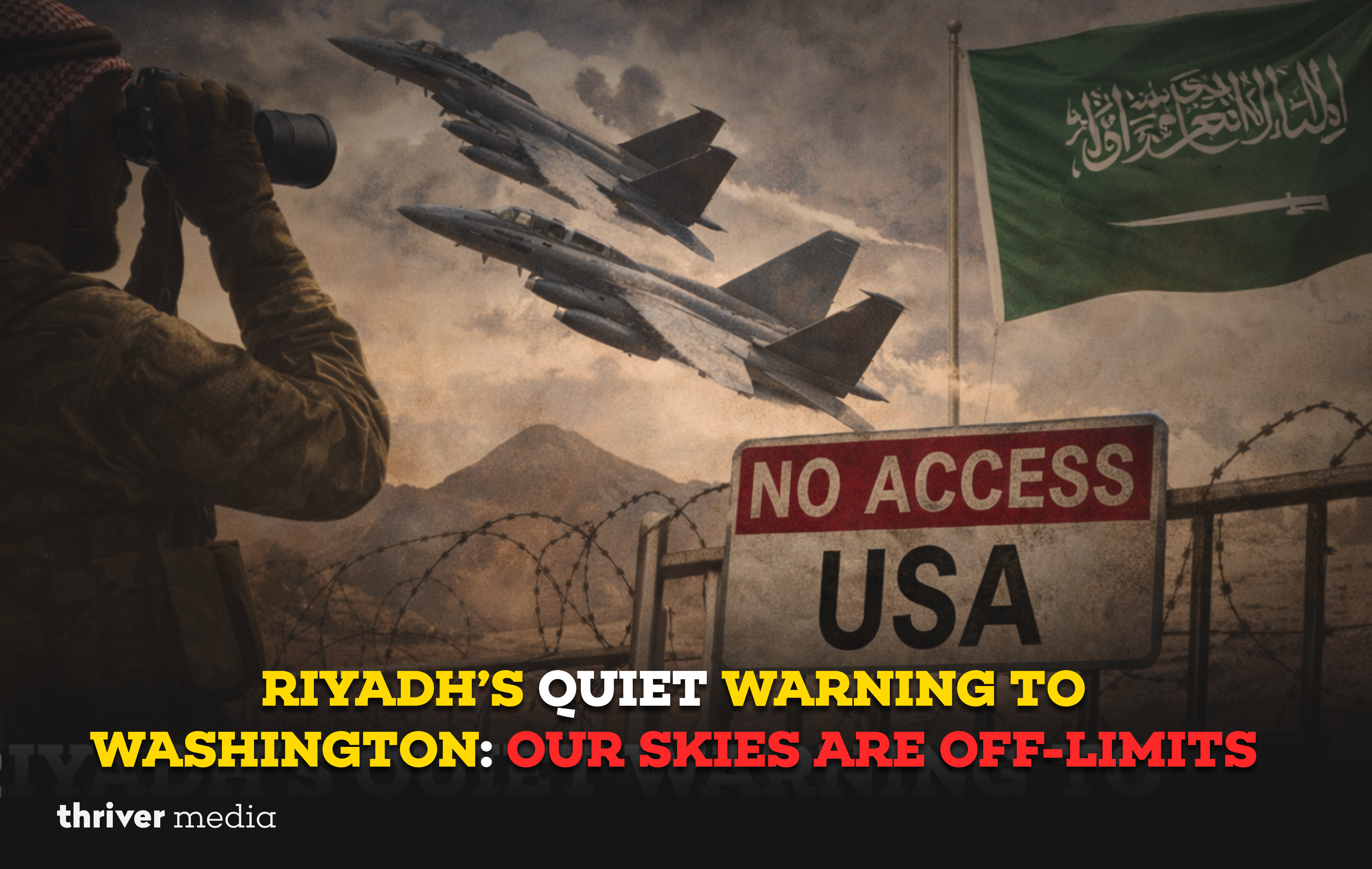
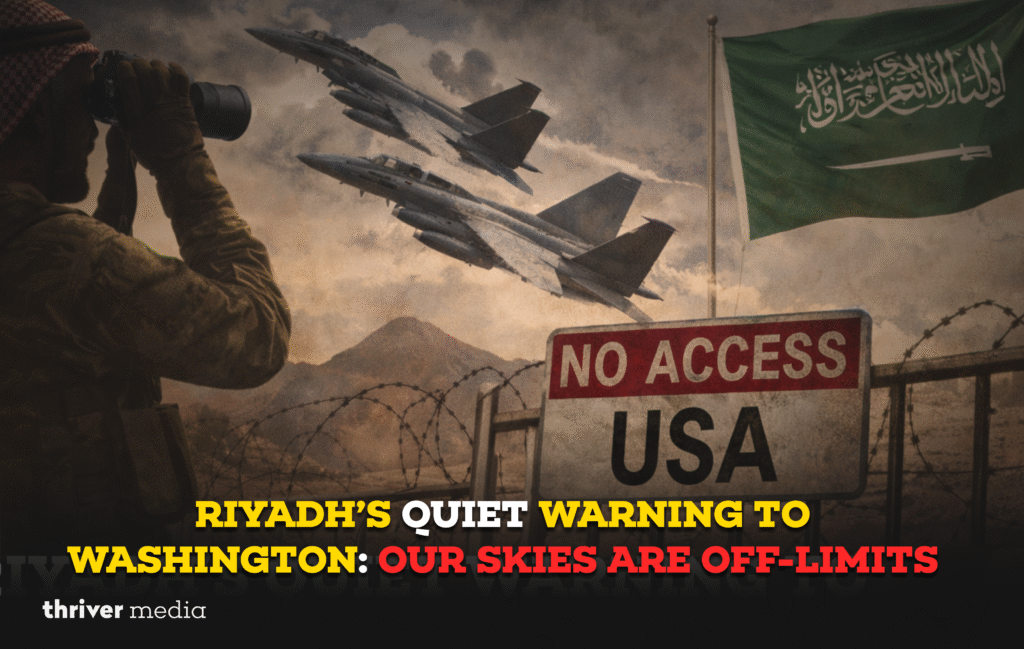
Beneath the thunderous threats and the shadow of potential war, a quiet signal has been sent. It didn’t come from the war rooms of Washington or the underground fortresses of Tehran. It came from the polished halls of Riyadh. The message, delivered not in a press conference but through backchannels and diplomatic whispers, is stark and simple: Our skies are closed.
While the world watches the brutal crackdown in Iran and braces for what the U.S. or Israel might do next, Saudi Arabia has drawn a red line in the sand. It will not be a launchpad, a corridor, or a co-conspirator in a military strike against its regional rival. This isn’t about friendship with Iran; it’s about cold, hard survival. And this single decision may have just pulled the region back from the brink.
The Kingdom’s Calculus: Survival Over Solidarity
Why would Saudi Arabia, a decades-long U.S. ally with deep animosity toward Iran’s revolutionary regime, refuse to help? The answer is written in the charred wreckage of Abqaiq.
In 2019, a swarm of Iranian drones and missiles slammed into the heart of Saudi Arabia’s oil industry at Abqaiq and Khurais. The attacks, claimed by Iran’s Houthi proxies in Yemen, were a masterclass in asymmetric warfare. They didn’t just damage infrastructure; they exposed a fundamental vulnerability. For the Saudi leadership, that day was a revelation: in a hot war with Iran, they are the front line.
Allowing U.S. or Israeli jets to fly from Saudi bases or through its airspace to bomb Iran would be an invitation for catastrophic retaliation. The targets are not hypothetical:
- Desalination Plants: The source of water for Riyadh and the coastal cities.
- Oil Infrastructure: The very foundation of the nation’s wealth and global relevance.
- Urban Centers: Like Dubai across the Gulf, glittering cities built of glass and ambition.
The Saudi calculation is brutally pragmatic. American security guarantees feel abstract when Iranian missiles are concrete and 15 minutes away. They will not trade their own stability for Washington’s geopolitical objectives.
The Military Reality Check: Closing the Shortest Path
This isn’t a diplomatic slight; it’s an operational earthquake. Take a look at a map. The most direct flight path from Israel to Iran’s major nuclear and military sites flies straight across Jordan and Saudi Arabia.
| Route Option | With Saudi Approval | Without Saudi Approval |
| Flight Path | Direct overflight via Jordan and Saudi Arabia | Extended detour via Turkey or southern Red Sea routes |
| Flight Time | ~3 hours (approx.) | 6+ hours, requiring mid-air refueling |
| Radar Exposure | Lower passage through cooperative airspace | High transit through monitored or potentially hostile zones |
| Operational Feasibility | High efficient and low-risk mission routing | Severely constrained elevated risk and logistical strain |
For the Pentagon, it complicates planning. For the Israeli Air Force, some experts argue it renders a large-scale, sustained aerial campaign nearly impossible. The mission shifts from difficult to suicidal. Saudi Arabia hasn’t just said “no”; it has potentially removed the military option from the table entirely.
The China Factor: A New Geopolitical Dawn
This decision didn’t happen in a vacuum. It follows the seismic, China-brokered détente between Saudi Arabia and Iran in 2023. That deal, negotiated without a single American in the room, was a wake-up call. It proved Riyadh could pursue its own security through diplomacy with its foe, not just through arms deals with its friend.
The message to Washington is now explicit: We have other partners. We have our own path. The U.S. is no longer the sole, indispensable power in the Gulf. By shutting its skies, Saudi Arabia is asserting a fiercely independent foreign policy. It is telling the U.S. that its forever-war posture against Iran is a threat to Saudi survival, and they will not be dragged into it.
The American and Israeli Dilemma: Isolated and Checked
This leaves Washington and Tel Aviv in a tight spot.
- For the U.S.: It exposes the fragility of its “regional coalition” against Iran. The partner with the deepest pockets, the most strategic location, and the biggest stake has just stepped back. It forces a humbling realization: for all its carriers and bases, it cannot wage this war without exposing its allies to annihilation. The military strategy is now held hostage by Saudi risk assessment.
- For Israel: The calculus is even starker. The “go-it-alone” option, long debated in security cabinets, looks far less viable. It is left with worse alternatives: perilous long-distance routes, or relying on the U.S. to do what it now may be unable to do efficiently. The Saudi veto empowers the doves and handcuffs the hawks in Jerusalem.
FAQ: Understanding the Saudi Stance
No. This is pure realpolitik, not romance. They are still rivals competing for influence from Yemen to Syria. This is about managing that rivalry to avoid a war that would destroy them both. It’s a ceasefire, not a friendship.
It’s a redefinition. Saudi Arabia is acting like a sovereign state, not a client. It is prioritizing its existential national interests over the strategic preferences of its ally something nations do every day. The alliance will continue, but on more transactional terms.
Only under one condition: if Iran directly attacks Saudi soil first. In that scenario, all bets are off, and the calculus changes. But for a pre-emptive U.S./Israeli strike? The answer is a firm no.
It is a stabilizing force in the short term. By lowering the immediate probability of war, it removes a major “risk premium” from oil markets. The Saudi motivation is to keep the oil flowing and the economy stable, not to trigger a global price shock.
The Bottom Line
Riyadh’s quiet warning is the most significant geopolitical development in the crisis that no one is talking about enough. It is the sound of a regional power saying “enough” to the endless drumbeat of conflict. By denying its airspace, Saudi Arabia isn’t protecting Iran; it’s protecting itself from the firestorm that would inevitably follow. In doing so, it has placed a massive, physical barrier to war. The hawks in Washington and Tel Aviv now face a simple, sobering truth: the road to Tehran goes through Riyadh, and that road is closed.
Conclusion: The New Guardians of Détente
A decade ago, the idea that Saudi Arabia would be the power blocking a military strike on Iran would have been unthinkable. Today, it is reality. This underscores a profound shift: the Middle East is no longer a chessboard where external powers move pieces at will. The pieces now have their own agency.
The greatest restraint on American and Israeli power right now is not a Russian S-400 system or an Iranian drone. It is the sovereign will of a Kingdom that has calculated the cost of war and found it unacceptable. In this high-stakes crisis, the most pragmatic actors may turn out to be the most powerful. The path to peace, however fragile, now runs through the desert, not over it.
Disclaimer: The news and information presented on our platform, Thriver Media, are curated from verified and authentic sources, including major news agencies and official channels.
Want more? Subscribe to Thriver Media and never miss a beat.