


9th February 2026

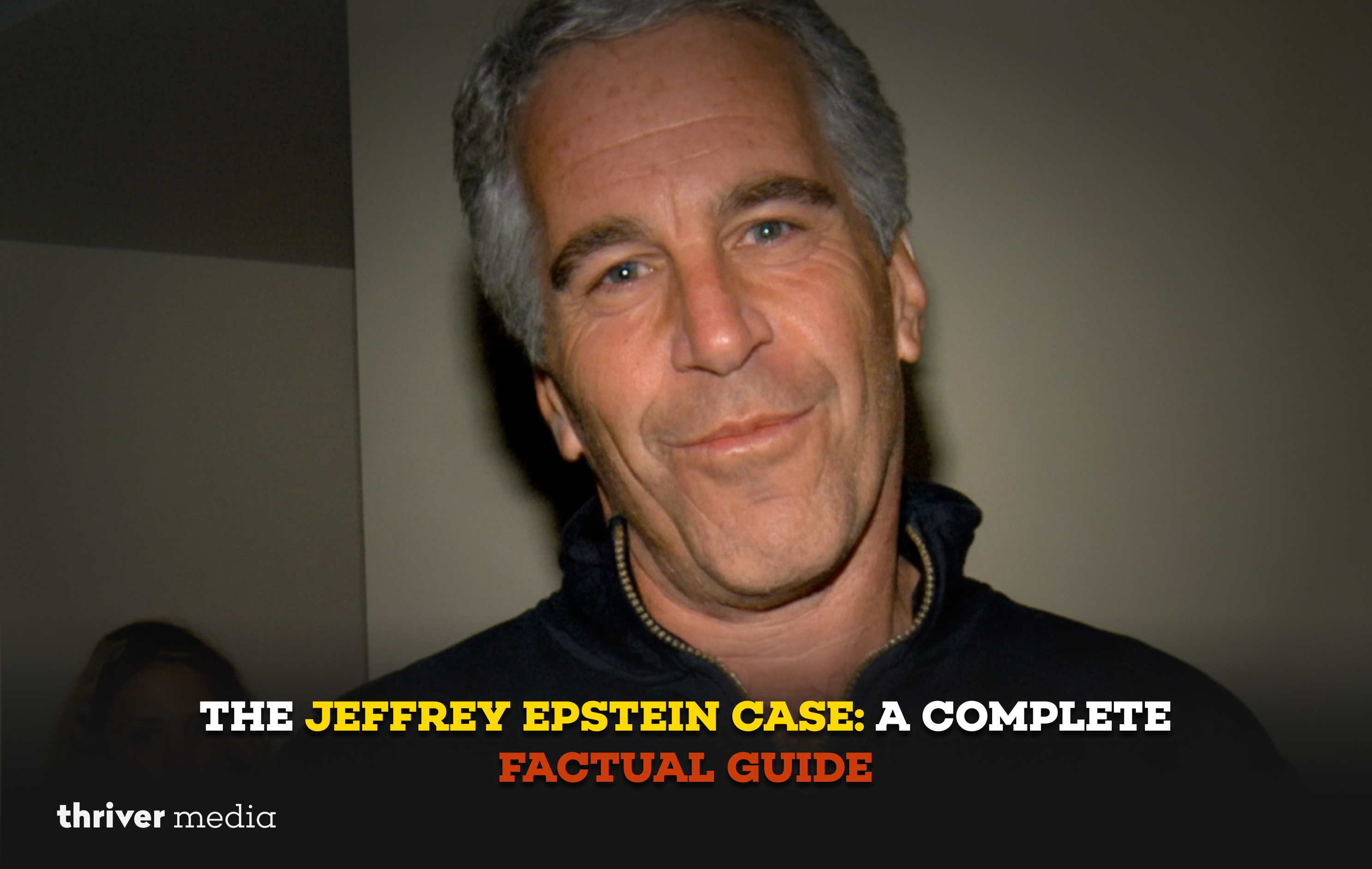
Key Points at a Glance
- Who: Jeffrey Epstein, a wealthy financier with elite connections, accused of running a sex trafficking ring involving underage girls.
- Core Crime: Sexual abuse and sex trafficking of minors, allegedly facilitated by his associate Ghislaine Maxwell.
- Legal Timeline: A controversial 2008 plea deal, a 2019 federal arrest, and Epstein’s death by suicide in jail.
- Accountability: Ghislaine Maxwell convicted and sentenced to 20 years (appeal pending). Epstein deceased.
- Systemic Focus: The case now scrutinizes the institutions and networks that enabled his crimes, resulting in historic financial settlements.
- Current Status (2024): Document releases provide transparency; focus has shifted to corporate accountability and the mechanics of impunity.
Introduction: A Case of Crime, Power, and Systemic Failure
The Jeffrey Epstein case is a complex and disturbing saga that transcends a single criminal. It intertwines allegations of horrific sexual abuse, immense wealth and privilege, a perplexing legal failure, and a mysterious death. This guide provides a clear, factual overview based on court records, official reports, and confirmed information. It helps readers understand who Epstein was, what prosecutors accused him of, the key legal events in the case, and why the story continues to captivate and disturb the public.
Part 1: Who Was Jeffrey Epstein?
Jeffrey Epstein (1953–2019) was a financier who cultivated an image of extreme wealth and influential connections. After working as a teacher, he entered finance and eventually founded J. Epstein & Co., managing money for ultra-wealthy clients. His lifestyle was conspicuously opulent, featuring private jets (the “Lolita Express”), a private Caribbean island (Little St. James), and luxurious homes in Manhattan, Palm Beach, and New Mexico. He strategically associated with prominent figures across politics, academia, science, and business, a network that later became a focal point of intense scrutiny.
Part 2: The Main Allegations
The publicly confirmed allegations, drawn from police reports, victim testimonies, and court filings, depict a systematic pattern of exploitation from the mid-1990s to mid-2000s.
- Victims: Dozens of girls, some as young as 14 years old.
- Method of Operation: Epstein and his associates allegedly recruited vulnerable minors, often from challenging socioeconomic backgrounds. Epstein and his associates typically approached them with offers of money for “massages” and then pressured them into sexual acts. In some cases, they offered additional incentives to recruit other girls.
- Primary Locations: Reports place the abuse at Epstein’s Palm Beach, Florida mansion, his Upper East Side townhouse in New York, and his private island in the U.S. Virgin Islands. Virgin Islands.
- Criminal Charges: These acts formed the basis for investigations and charges in Florida (2008) and later New York (2019), specifically for sex trafficking of minors and conspiracy.
Part 3: Key Legal Events & Timeline
| Year | Event & Publicly Confirmed Outcome |
| 2005 | Palm Beach Police open an investigation after a parent reports Jeffrey Epstein. |
| 2006 | A Florida grand jury indicts Epstein on one count of solicitation of prostitution. The FBI begins a federal investigation. |
| 2007 | Federal prosecutors, led by then–U.S. Attorney Alexander Acosta, negotiate a Non-Prosecution Agreement (NPA). The deal shields Epstein from federal sex-trafficking charges and protects potential co-conspirators. Victims are not informed. |
| 2008 | Epstein pleads guilty to two state felony prostitution charges. He serves 13 months in a Palm Beach County jail with extensive work-release privileges. The agreement is later widely condemned. |
| 2018 | An investigative series by Miami Herald, Perversion of Justice, exposes the NPA, reigniting public and judicial scrutiny. |
| July 2019 | Epstein is arrested and indicted by the Southern District of New York on federal charges of sex trafficking of minors and conspiracy. He pleads not guilty. |
| August 2019 | Epstein is found dead in his Manhattan jail cell. The NYC Medical Examiner rules the death a suicide by hanging. Later DOJ reviews cite negligence and multiple failures by correctional staff. |
Part 4: Why It Gained Widespread Attention
Severity of the Crimes: The core allegations involved the sex trafficking of children.
- The “Sweetheart Deal”: The 2008 NPA and plea deal were perceived as a grotesque miscarriage of justice, where wealth and connections appeared to buy impunity for serious federal crimes.
- High-Profile Network: Epstein’s social and professional circles included presidents, princes, billionaires, and Nobel laureates, raising urgent questions about who knew what and whether any participated.
- Mysterious Death: His suicide while in high-security federal custody fueled endless conspiracy theories and exposed profound failures within the U.S. Bureau of Prisons.
Part 5: Current Updates & The Shift to Systemic Accountability (Strong Points)
The case has evolved from focusing solely on individual perpetrators to a broader examination of enabling systems.
Strong Point 1: Historic Financial Settlements Corporate Accountability
JPMorgan Chase settled with victims for $290 million and with the U.S. Virgin Islands for $75 million.
Deutsche Bank settled for $75 million.
Why This Matters: These are not merely fines; they are legal admissions that financial institutions bear civil liability for ignoring blatant red flags and facilitating a predator’s operations. It sets a powerful precedent for holding “enablers” accountable.
Strong Point 2: Document Releases Forcing Transparency
In January 2024, nearly 900 pages of court documents from the Giuffre v. Maxwell civil case were unsealed, naming over 170 individuals connected to Epstein’s world.
- Critical Clarification: These are legal filings, not an indictment list. Names include victims, employees, witnesses, and associates. Presence does not imply wrongdoing but provides a factual map of Epstein’s network.
- Why This Matters: It replaces speculation with documented evidence, allowing for informed public scrutiny and historical record-keeping of how such an operation functioned within elite circles.
Strong Point 3: Ghislaine Maxwell’s Appeal the Final Criminal Chapter
Maxwell’s attorneys argued her appeal before the Second Circuit Court of Appeals in March 2024, claiming she was a “scapegoat” for Epstein. A ruling is pending.
Why This Matters: This appeal represents the last major direct criminal proceeding. Its outcome will be the final judicial word on the government’s core conspiracy case against Epstein’s chief accomplice.
Strong Point 4: The Open Investigation & Lasting Repercussions
The FBI investigation into other potential co-conspirators remains formally open, maintaining pressure.
The case has spurred legislative reviews of victim-notification laws and prison oversight.
Why This Matters: It signals that the pursuit of justice is not complete and underscores the case’s role as a catalyst for systemic reform regarding how powerful predators are investigated and prosecuted.
FAQs
It was a Non-Prosecution Agreement (NPA) that stopped a federal sex-trafficking case against Jeffrey Epstein. He pleaded guilty only to state charges, served limited jail time, and avoided federal prison. A judge later ruled the deal violated victims’ rights.
No. There is no confirmed or official list of Epstein’s clients. Names in unsealed documents include accusers, witnesses, employees, and third parties not a proven list of guilty individuals.
Epstein’s estate was liquidated to pay settlements. His private islands and New York mansion were sold, and over $150 million was distributed to victims through a compensation program that closed in 2023.
Possibly, but nothing is public. The U.S. Department of Justice says investigations remain open, though no new indictments have been announced.
The Bottom Line
The Jeffrey Epstein case began as a story about a prolific sexual predator. It became a scandal about how the justice system failed to stop him. Today, it stands as a watershed case about systemic enabling how wealth, social capital, and institutional complicity can shield criminality. While Epstein will never face a jury, the case has achieved a form of accountability through Maxwell’s conviction, historic settlements with powerful banks, and an unprecedented flood of documents that permanently alter the public understanding of his crimes and his world.
Conclusion
Understanding the Epstein case requires viewing it in three dimensions: the crimes themselves, the initial failure of the legal system, and the ongoing reckoning with the networks of power that allowed it to persist. It is a grim lesson in how privilege can distort justice and a testament to the perseverance of victims and journalists who refused to let the story die. The full historical accounting continues, but the case has already indelibly highlighted the imperative of transparency, institutional accountability, and a justice system that operates without fear or favor.
Verified Source Links
- U.S. DOJ – Ghislaine Maxwell Sentencing: justice.gov
- U.S. Courts – Unsealed Documents Docket: nysd.uscourts.gov
- DOJ Office of Inspector General – Report on Epstein’s Death: oig.justice.gov
- Epstein Victims’ Compensation Program (Archived): epsteinvcp.com
- Second Circuit Court of Appeals – Maxwell Appeal Docket: CourtListener
Disclaimer: The news and information presented on our platform, Thriver Media, are curated from verified and authentic sources, including major news agencies and official channels.
Want more? Subscribe to Thriver Media and never miss a beat.