
4th February 2026
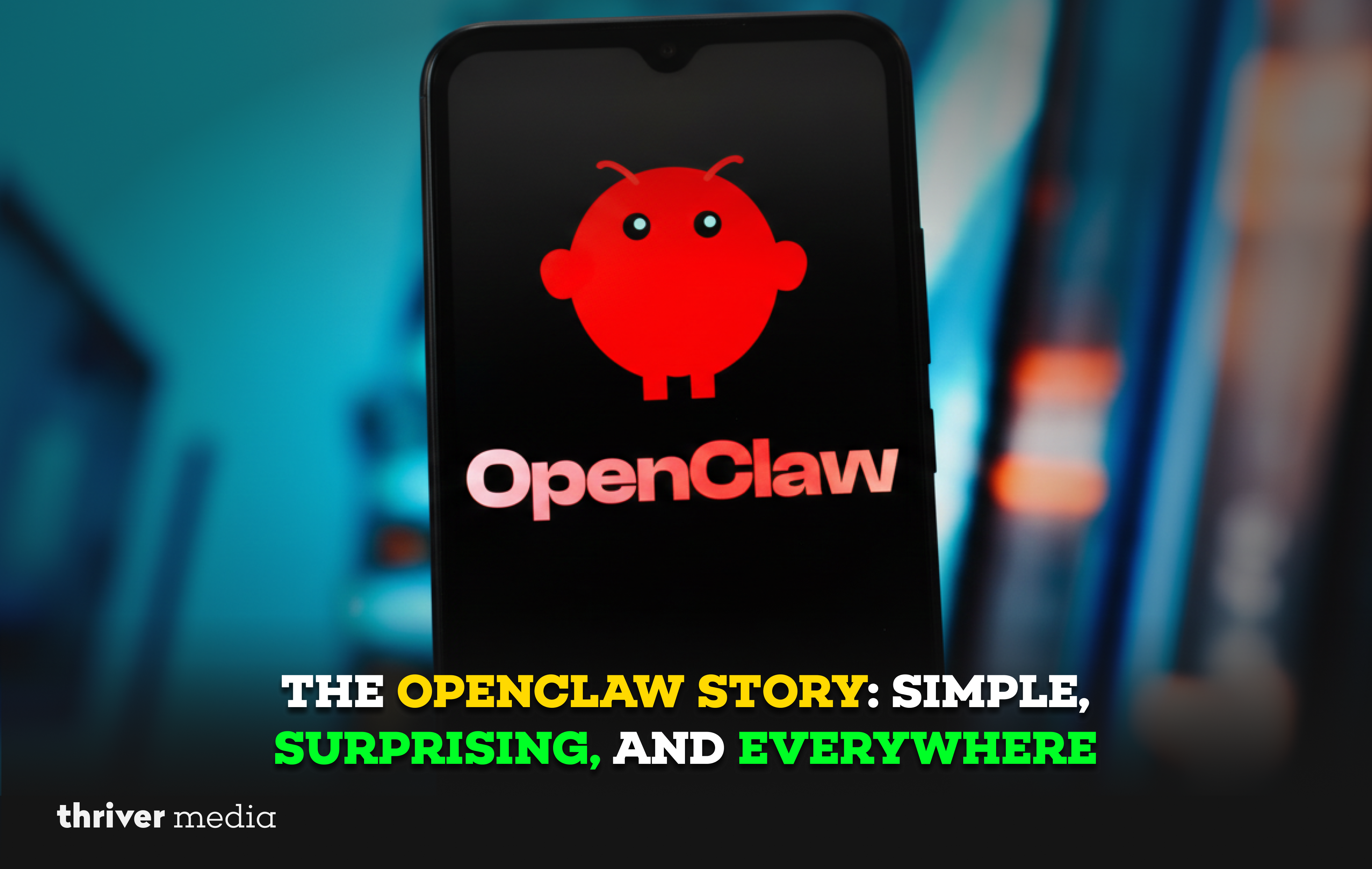
Introduction: Why OpenClaw is More Than a Tech Trend
OpenClaw isn’t just another AI demo. It’s a case study in how autonomous AI agents evolve from experimental bots into economic forces that reshape markets, operations, and investment theses. For founders, operators, and investors, OpenClaw signals a shift: AI is moving from assistant to operator, with tangible impacts on cost structures, business models, and competitive edges.
The Evolution: A Lesson in AI Acceleration
The path from Clawdbot → Moltbot → OpenClaw mirrors how rapid iteration in AI attracts capital and creates market signals.
- Clawdbot (Proof of Concept): Showed that AI could execute simple, predefined tasks.
- Moltbot (Iteration): Added adaptability, handling more complex, multi-step processes.
- OpenClaw (Agent Evolution): Introduced autonomy making decisions, navigating systems, and completing workflows with minimal human intervention.
Why it matters: Each iteration reduced the need for human-in-the-loop oversight, catching the eye of investors betting on automation at scale. The pace of development signaled that agentic AI was nearing commercial viability.
The Business Model Shift: From Tools to Agents
Most AI tools today are chatbots reactive, constrained, and task-specific. OpenClaw represents agent behavior: proactive, autonomous, and capable of chain-of-thought decision-making.
Key differentiators:
- Automation of multi-step workflows (e.g., research → synthesis → report generation).
- Ability to interact across platforms (APIs, browsers, internal software).
- Dynamic problem-solving without explicit step-by-step instructions.
- For businesses, this means moving from using AI for answers to deploying AI for operations.
Financial Implications: Where the Money Flows
The rise of AI agents creates new financial ecosystems:
- Startups & Venture Capital: Investor interest is shifting from “AI features” to “agent-first” companies. Funding is flowing into platforms that enable agent deployment, orchestration, and security.
- SaaS & API Economies: As agents integrate across tools, demand surges for unified APIs, authentication layers, and compliance guardrails.
- New Revenue Models: Usage-based pricing for agent calls, outcome-based licensing, and “agents-as-a-service” subscriptions are emerging.
Operational Use Cases: Applying Agents Today
Businesses are piloting agentic AI for:
- Customer Support: Handling complex, non-routine queries end-to-end.
- Research & Data Synthesis: Rapid gathering, analysis, and reporting from multiple sources.
- Workflow Automation: Coordinating tasks across marketing, sales, and operations.
- Knowledge Work: Drafting documents, updating CRMs, and managing project timelines.
Risk & Regulation: Why Caution is Part of the Story
Autonomy introduces new layers of risk:
- Compliance & Governance: How do you audit an agent’s decisions?
- Misuse & Security: Agents acting on flawed data or malicious prompts.
- Brand & Trust: One autonomous error can escalate publicly.
- Legal Uncertainty: Who is liable for an agent’s actions?
Businesses must balance speed with safeguards embedding oversight mechanisms and ethical guidelines from day one.
Business Impact Snapshot
| Area | What OpenClaw Changes | Business Opportunity | Business Risk |
|---|---|---|---|
| Operations | Automates multi-step tasks | Lower overhead, faster workflows | Over-reliance on automation |
| Customer Support | Handles complex queries | 24/7 service at scale | Incorrect autonomous responses |
| Research & Data | Rapid data gathering and synthesis | Faster decision-making | Data accuracy & compliance |
| SaaS Ecosystem | Demand for integrations | New tools, plugins, APIs | Market saturation |
| Workforce | Reduces repetitive tasks | Upskilling into higher-value roles | Job displacement concerns |
| Regulation | Raises governance questions | Compliance-tech growth | Legal uncertainty |
FAQs
It’s a proof-of-concept demonstrating agent capabilities but it points toward future platforms that businesses will license or build upon.
Chatbots respond to prompts; agents execute multi-step tasks, make decisions, and operate across systems autonomously.
Financial services, healthcare, legal, customer support, and logistics anywhere process-driven knowledge work is prevalent.
Yes, but tactically. Start by automating narrow workflows, not deploying full autonomy. Watch for affordable agentic SaaS tools.
Data privacy, regulatory compliance, over-automation without oversight, and integration vulnerabilities.
Expect more outcome- or task-based pricing e.g., “$ per completed workflow” rather than “$ per user per month.”
Bottom Line
OpenClaw represents a shift from AI as a helper to AI as an operator. Businesses that understand this shift early can reduce costs, create new services, and stay competitive. The question isn’t whether agentic AI will matter it’s how quickly you adapt.
Conclusion
OpenClaw is a signal: AI in business is becoming autonomous, integrated, and economically disruptive. Founders should start building with autonomy in mind. Operators will need to rethink and redesign their processes. Investors should look toward the infrastructure powering agentic AI. The time to think about adaptation is now because the agents are already evolving.
Disclaimer: The news and information presented on our platform, Thriver Media, are curated from verified and authentic sources, including major news agencies and official channels.
Want more? Subscribe to Thriver Media and never miss a beat.