
13th February 2026
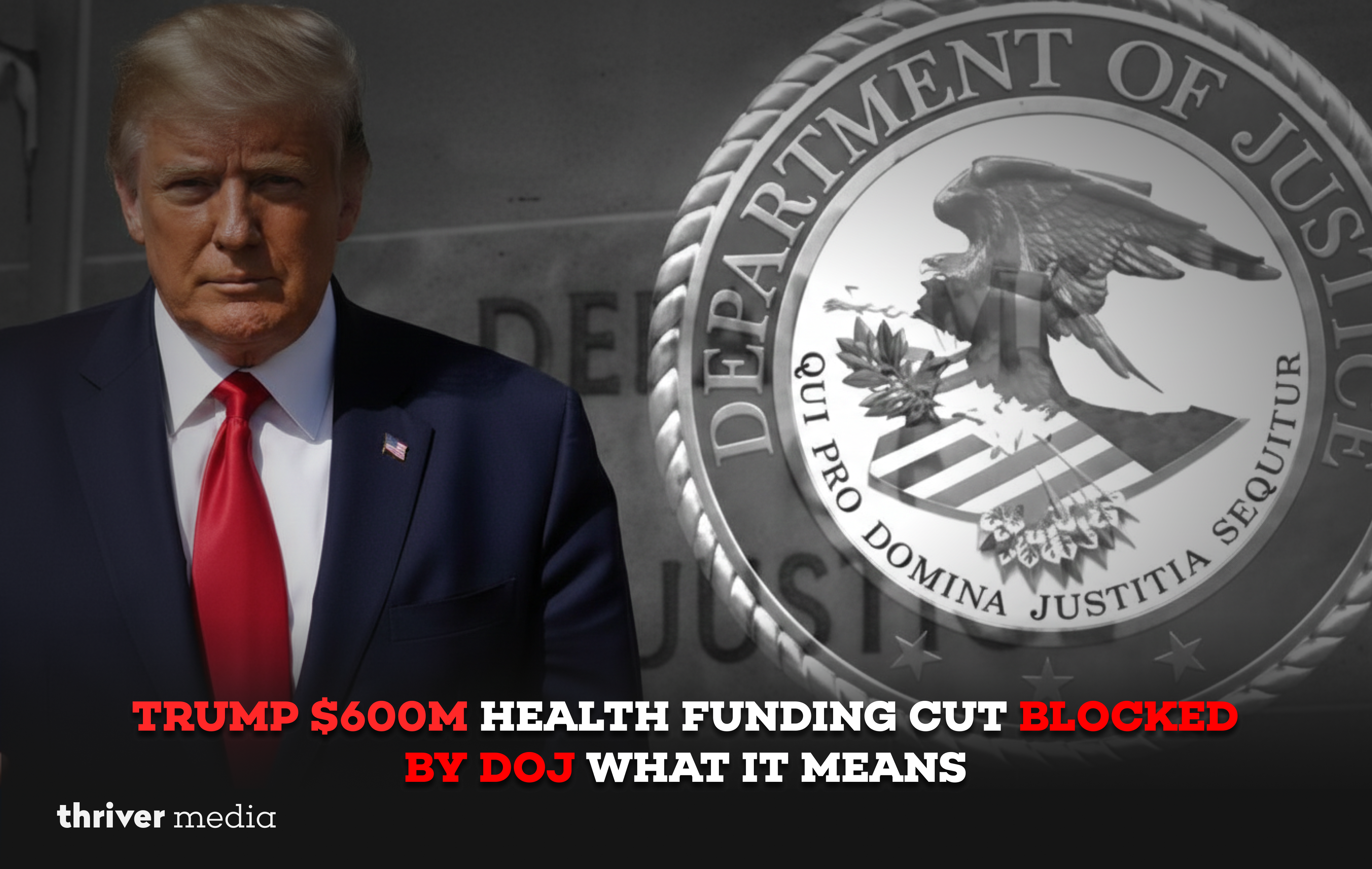
Hold onto your lab coats, America just witnessed a legal smackdown that saved $600 million in public health cash, and it happened in the blink of a gavel.
On Thursday, right as the Trump administration was warming up to snatch back grants from California, Colorado, Illinois, and Minnesota, U.S. District Judge Manish Shah stepped in and yelled “not so fast.” This wasn’t a quiet memo. This was a 14-day emergency restraining order that kept HIV tracking, lead poisoning prevention, and LGBTQ+ health studies alive by the skin of their teeth
Officials aimed to show that illegal financial trails can be uncovered. Was it about budget hawks saving pennies or was it a political battering ram aimed at sanctuary states?
The Opening Shot: Why This Judge Ruled “Arbitrary and Capricious”
Specifically, programs focused on tracking HIV among gay men and studying health outcomes in communities of color were affected.
He stated clearly that the states are “likely to succeed” in proving the cuts were based on “arbitrary, capricious, or unconstitutional” reasons . Essentially, the court said: You can’t just wake up one morning and decide Congress-approved money is “woke” and cancel it.
Key Points
- The “Blue State Hit List” isn’t a conspiracy theory anymore.
Let’s be real these four states (CA, CO, IL, MN) have been in Trump’s crosshairs for months over immigration. They sue him over sanctuary policies; he withholds their cash. The Attorney Generals called it exactly what it looks like: retaliation . - This wasn’t “waste.” It was “lifeline.”
We aren’t talking about funding for bureaucracy. We are talking about $5.2 million for Lurie Children’s Hospital to prevent HIV in teens. We are talking about $7.2 million for the American Medical Association supporting gender-affirming care. This was money that stops outbreaks . - 100 pink slips have been paused.
Illinois alone was looking at firing nearly 100 public health employees. Local lead poisoning prevention grants in 25 health departments were already printed for termination. - The 14-Day Clock.
Right now, the funding flows. The judge bought 14 days to figure out if this is just a political hit job or actual policy .
How a $600M Health Funding Cut Became a Constitutional Crisis
What Actually Happened?
In early 2025, the Trump administration announced it would rescind roughly $600 million in health funding that Congress had already approved through the HRSA (Health Resources and Services Administration) . This wasn’t proposed. This wasn’t “we’ll phase it out.” This was: “We’re taking the money back.”
- Community Health Centers: The places millions of uninsured and underinsured Americans go when they can’t afford a private doctor.
- HIV/AIDS Programs: Including Ryan White funding that helps patients afford life-saving medication.
- Cancer Screenings: Particularly for low-income women through the CDC’s National Breast and Cervical Cancer Early Detection Program.
- Public Health Preparedness: Yes, the stuff that helps states respond to outbreaks before they become pandemics.
Almost immediately, 23 states and several public health organizations sued. Their argument wasn’t just “please don’t take our money.” It was: “The president doesn’t get to override Congress.”
The DOJ’s Stunning Move
The Department of Justice, which is supposed to defend the administration’s actions in court, surprisingly, basically threw in the towel. When the states requested a preliminary injunction to block the cuts, the DOJ did not, in fact, seriously oppose it.
U.S. District Judge Mary S. McElroy didn’t mince words in her ruling. She said the administration likely violated the Impoundment Control Act of 1974 a post-Watergate law that stops presidents from simply refusing to spend money Congress appropriated.
She also noted that if the cuts went through, states and health providers would suffer “irreparable harm.” Not “maybe.” Not “potentially.” Irreparable.
The Impoundment Control Act: The 1974 Law Trump Just Ran Into
What Is Impoundment, and Why Should You Care About a 50-Year-Old Law?
Imagine you’re hosting a dinner party. Your friends all pitch in for groceries. You go to the store, buy the food, and then decide, “Actually, I’m keeping the leftover cash for myself.”
That’s impoundment. And Congress made it illegal in 1974.
President Nixon tried to withhold billions in federal spending on programs he didn’t like. Congress responded with the Congressional Budget and Impoundment Control Act, which says:
- The president cannot cancel or delay spending just because he disagrees with it.
- If he wants to rescind funding, he must ask Congress. And Congress has to agree within 45 days.
Trump didn’t ask. He just acted.
Why This Case Is Different From Past Budget Battles
We’ve seen presidents withhold funding before. Obama did it with some defense programs. Biden did it with certain foreign aid. But those were temporary pauses, not outright cancellations.
This was different. The administration didn’t just slow-walk the money. They attempted to claw it back permanently without legislative approval.
Legal experts are calling this one of the most aggressive uses (or abuses) of executive power in decades. And the DOJ’s refusal to fight the injunction suggests they knew it.
Who Was Supposed to Get What (And What Almost Got Cut)
| Context | Detail |
|---|---|
| Community Health Centers Funding Risk | About $350M was at risk, threatening care for 30 million mostly low-income and rural patients, potentially causing clinic closures, layoffs, and longer wait times. |
| HIV/AIDS Ryan White Program Impact | Around $150M in danger, affecting 500,000+ Americans, with possible medication interruptions and loss of essential case management support. |
| Cancer Screening Programs | Nearly $60M tied to screening programs supported by the Centers for Disease Control and Prevention, risking delayed diagnoses and preventable deaths among low-income women. |
| Infectious Disease Preparedness | About $40M threatened for state and local health departments, which could weaken outbreak response speed and public health infrastructure readiness. |
| Teaching Health Centers | Roughly $20M at risk, potentially reducing training opportunities for medical residents and leading to fewer doctors serving underserved communities. |
FAQs
Not exactly. The injunction is temporary. The case is still moving through the courts. For now, money continues flowing. But if the administration appeals or the case reaches the Supreme Court, all bets are off.
Yes. And many legal watchers believe that’s the real story here. If the courts ultimately allow this, future presidents of any party could gut programs Congress funded simply by refusing to spend.
It says the president must spend money Congress appropriates unless he requests a rescission and both chambers approve within 45 days. If they don’t, he has to release the funds. No loopholes.
That’s the million-dollar question. Some speculate they knew the law was against them. Others wonder if internal disagreements within the administration influenced the decision. Officially, they’ve said little.
Bottom Line: What This Really Means
This isn’t a win. It’s a reprieve.
The administration lost this round, but the broader fight over executive power is just getting started. If the courts ultimately side with Trump’s interpretation, Congress’s power of the purse becomes optional. And if Congress can’t protect its own spending decisions, every public health program becomes vulnerable to the whims of whoever sits in the Oval Office.
For now, community health centers can keep their doors open. HIV patients can keep their medications. Cancer screenings can continue. But the constitutional guardrails that made those things possible just got tested badly.
Final Thought: This Is About More Than $600 Million
Money comes and goes in Washington. What doesn’t come back as easily is trust.
You can rely on Congress to allocate funds for sick kids, cancer patients, and rural clinics, and know that the money will actually arrive. You can expect the executive branch to play by the same rules as everyone else. Public health should never be treated as a political bargaining chip.
That’s what this case is really about. And why, even with the funding restored for now, the anxiety isn’t going away
Official Source:
U.S. District Court of Rhode Island – Preliminary Injunction Order
Disclaimer: The news and information presented on our platform, Thriver Media, are curated from verified and authentic sources, including major news agencies and official channels.
Want more? Subscribe to Thriver Media and never miss a beat.