

16th February 2026
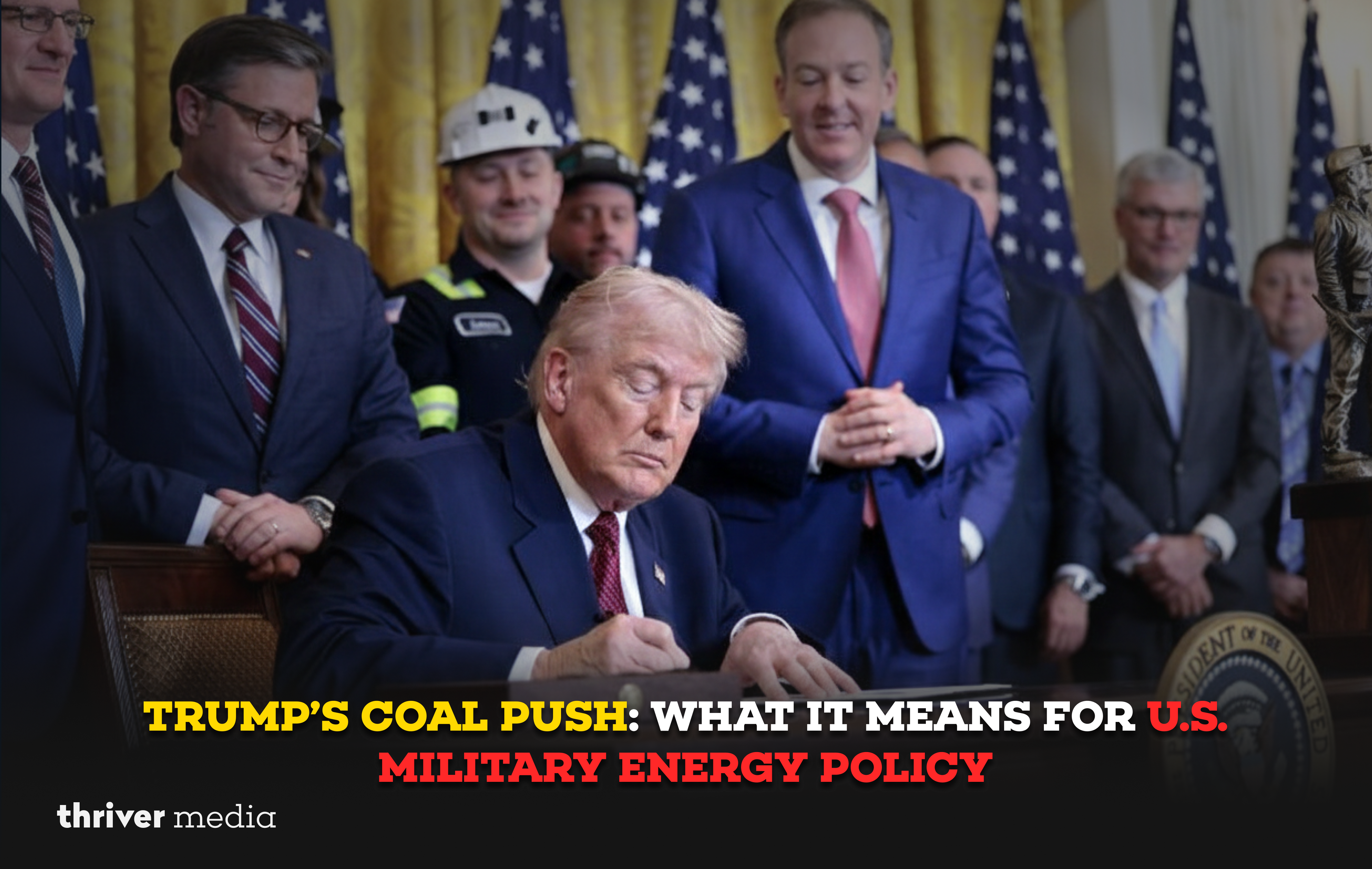
The intersection of national security and environmental policy has always been a complex geopolitical dance. But a new directive from former President Donald Trump, ordering the Pentagon to prioritize coal-fired electricity for U.S. military bases, has thrown that relationship into sharp relief. By framing a 19th-century fuel source as the bedrock of 21st-century national security, the move challenges decades of energy modernization and sets up a stark political battle. This isn’t just about keeping the lights on at a base in Kentucky; it’s a potential turning point in how the U.S. military defines energy security and its role in a rapidly warming world.
Key Points: Unpacking the Pentagon’s Coal Directive
What exactly was ordered?
The directive, emerging in the context of the 2026 political landscape, instructs the Department of Defense (DoD) to enter into long-term procurement contracts for electricity generated by coal-fired power plants. It prioritizes “baseload” power from domestic coal sources for critical installations, arguing that on-site or grid-supplied coal power is less vulnerable to cyber-attacks and supply chain disruptions than other forms of energy.
Why coal-fired electricity specifically?
The core argument is energy security and resilience. Proponents claim that coal, stored in large piles on-site, represents a strategic fuel reserve. Unlike natural gas pipelines, which can be hacked or shut down, or solar and wind farms, which are intermittent, a coal plant with a 90-day fuel stockpile is seen as a fortress against grid failure. This frames coal not as an energy source, but as a strategic asset for mission assurance.
How this impacts military energy security
This order fundamentally redefines “resilience.” Under previous administrations, resilience meant distributed generation, microgrids, and renewable energy to ensure bases could operate independently of a vulnerable national grid. The new approach doubles down on centralized, heavy-carbon infrastructure, potentially locking the DoD into a single fuel source for decades.
The political motivation behind the move
This is a direct appeal to the coal-producing states of West Virginia, Wyoming, and Pennsylvania. In the 2026 midterm political climate, it solidifies Trump’s base by delivering on a long-standing promise to “bring back coal.” It also serves as a rebuke to the Biden administration’s climate-focused defense policies, positioning the issue as a choice between “reliable American energy” and “unreliable green experiments.”
Reactions from environmental groups, defense analysts, and lawmakers
- Environmental Groups: Condemn it as a climate catastrophe, arguing the DoD should not be subsidizing a dying industry.
- Defense Analysts: Are divided. Some praise the focus on hardened, baseload power. Others warn it makes bases dependent on a single fuel source and ignores the logistical nightmare of delivering coal to bases without rail access.
- Lawmakers: Republicans from coal states are celebrating. Democrats are vowing to block funding, calling it a backward move that increases the military’s carbon footprint and ignores the lower costs of renewables.
Comparison with previous administrations’ military energy strategies
- Obama/Biden: Viewed climate change as a “threat multiplier.” Pushed for biofuels, solar, and energy efficiency to reduce the logistical tail (the need to protect fuel convoys) and cut emissions.
- Trump: Views energy independence as the ultimate goal. Focuses on domestic fossil fuel production as a strategic national asset, prioritizing supply certainty over emissions reduction.
Economic implications (costs, infrastructure, subsidies)
Keeping old coal plants online or building new ones is capital-intensive. With the declining cost of renewables (solar and wind are now often the cheapest form of new electricity generation), coal power usually requires subsidies or long-term fixed-rate contracts above market value to remain viable. This could divert billions from the defense budget away from weapons systems and readiness toward energy infrastructure.
Problems & Challenges
The coal directive faces a mountain of practical and political hurdles:
- Environmental Concerns: The U.S. military is one of the largest institutional energy consumers in the world. Tethering it to coal will massively increase the DoD’s greenhouse gas emissions, undermining federal climate commitments and inviting lawsuits under environmental regulations.
- Conflict with Clean Energy Transition Goals: This creates a clear conflict. While the rest of the federal government (under the Inflation Reduction Act) is incentivizing clean energy, the DoD would be mandated to move in the opposite direction.
- Budget Allocation: The cost per megawatt-hour for coal is often higher than natural gas or wind. Locking in high-priced coal power strains the defense budget, potentially forcing trade-offs in other areas.
- Grid Reliability: Ironically, as the national grid integrates more renewables, coal plants are becoming less flexible. Relying on a handful of aging coal plants for critical infrastructure could create single points of failure.
- Legal or Regulatory Pushback: The order may conflict with the National Environmental Policy Act (NEPA), requiring lengthy environmental impact statements that could delay implementation for years.
- International Image: The U.S. military operates globally and relies on allies for basing rights. Pushing coal sends a signal that the U.S. is retreating from climate leadership, straining diplomatic ties with European and Pacific allies most vulnerable to climate change.
Context Table: Comparing Energy Sources for Military Bases
To understand the trade-offs, it’s useful to compare coal against the primary alternatives
| Factor | Coal-Fired Power | Renewable Energy (Solar/Wind) | Natural Gas |
| Cost Stability | Low (subject to mining and rail transport costs) | High (zero fuel cost, predictable long-term PPAs) | Medium (subject to volatile global gas markets) |
| Carbon Emissions | Very High (highest per MWh of any source) | Zero (operational emissions are negligible) | Medium (about half the emissions of coal) |
| Grid Reliability | High (as baseload) but inflexible | Variable (requires storage or backup systems) | High (flexible and dispatchable) |
| Political Support | Partisan (largely Republican support) | Historically bipartisan, increasingly partisan | Bipartisan (often viewed as a “bridge fuel”) |
| Long-Term Sustainability | Low (industry in decline, stranded asset risk) | High (technology improving, costs falling) | Medium (facing pressure under net-zero transition goals) |
As the table illustrates, the choice is not clear-cut. While coal offers the physical stockpile that appeals to traditional national security mindsets, it fails on nearly every other metric economic, environmental, and long-term strategic viability. Renewables offer cost stability and zero emissions but require investment in storage (batteries) to match coal’s 24/7 reliability. Natural gas sits in the middle, offering reliability with fewer emissions, but its infrastructure is vulnerable to disruption.
Broader Political Context
This policy is a signature move in Trump’s broader “Energy Dominance” agenda. It sends a clear signal to the fossil fuel industry that the federal government, including the military, will be a customer of last resort.
In the 2026 political climate, this serves multiple purposes:
- Mobilizing the Base: It energizes voters in deindustrialized regions who feel left behind by the green economy.
- Defining the Opposition: It forces Democrats into a corner where they must choose between voting for military funding and voting against coal, a difficult position in coal-producing states.
- Lobbying Influence: Defense contractors who specialize in traditional energy infrastructure stand to gain, while those in the microgrid and renewable sector face headwinds. The coal lobby, having lost the commercial power market, has successfully reframed its product as a matter of “national security” to secure a new, guaranteed customer.
FAQs Section
To prioritize on-site fuel stockpiling as a hedge against pipeline disruptions or cyber threats.
Not directly, but it could redirect funding away from solar, storage, and microgrid expansion.
In most cases, no current EIA data shows new renewables are generally more cost-competitive.
It complicates them by increasing emissions from one of the federal government’s largest energy users.
Yes lawmakers could restrict or prohibit funding through the defense appropriations process.
Opinions are divided, with some favoring hardened coal supply and others advocating diversified, decentralized clean energy systems.
Bottom Line
- Policy Reversal: The order marks a definitive end to the military’s decade-long pivot toward treating climate change as a core national security priority.
- Economic Gamble: It risks locking the DoD into high-cost, long-term contracts for a fuel source that is commercially and environmentally obsolete.
- Political Weapon: The policy is as much about winning the 2026 political narrative as it is about energy policy, creating a clear dividing line between parties.
- Resilience Paradox: By relying on a single fuel source (coal), the military may actually decrease its energy resilience compared to a diverse portfolio of renewables and storage.
- Legal Hurdles: Expect years of litigation and legislative battles before a single new lump of coal is burned specifically for this policy.
Conclusion
The push to power U.S. military bases with coal is more than a nostalgia play; it is a high-stakes bet that the old rules of energy security still apply in a new world. It forces a fundamental debate: Is the military’s job to fight the last war (securing fuel supplies) or prepare for the next one (operating in a carbon-constrained world with agile, independent energy systems)? The answer will determine not only the fate of military installations but also the broader trajectory of American energy policy at a time when the two can no longer be separated. The final outcome rests in the tension between the allure of energy independence and the reality of climate diplomacy.
Sources
- [U.S. Department of Defense (Defense.gov)]
- [U.S. Energy Information Administration (EIA.gov)]
Disclaimer: The news and information presented on our platform, Thriver Media, are curated from verified and authentic sources, including major news agencies and official channels.
Want more? Subscribe to Thriver Media and never miss a beat.