
3rd March 2026
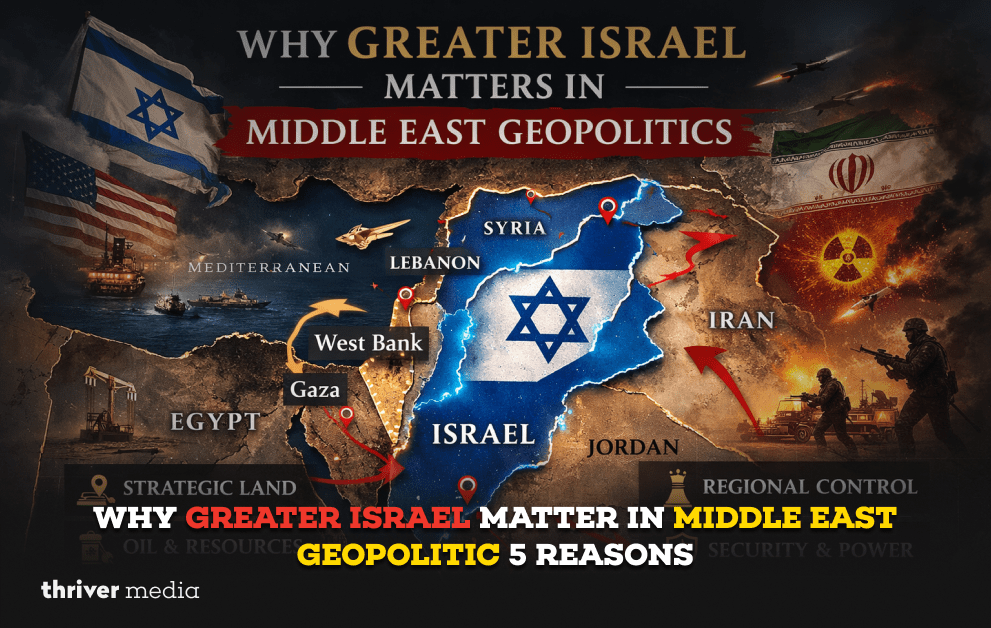
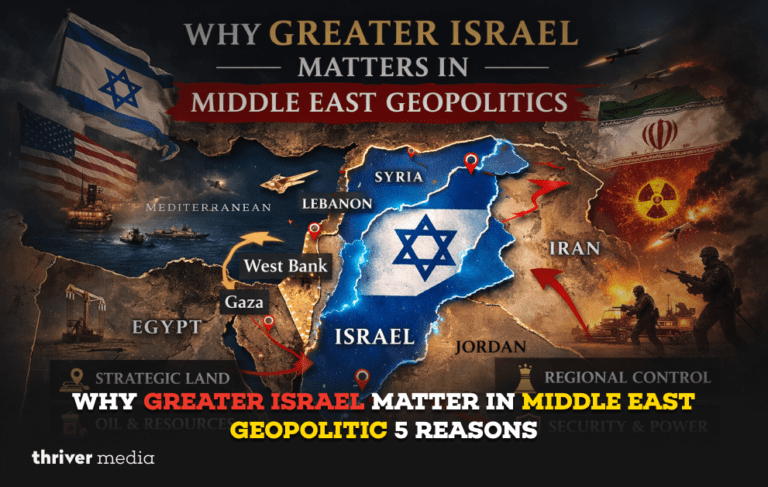
Imagine a map where the borders of Israel don’t stop at the Jordan River or the Golan Heights. Imagine them stretching west to the Nile Delta in Egypt, east to the banks of the Euphrates in Iraq, and south deep into Saudi Arabia all the way to Medina. This isn’t a historical artifact from ancient empires. This is the concept of “Greater Israel” and according to recent statements from Israeli Prime Minister Benjamin Netanyahu and the actions of his government, it’s no longer just a fringe ideology whispered in extremist circles.
On August 12, 2025, Netanyahu sat for an interview with the i24 network. During that broadcast, he accepted a “Promised Land” talisman and spoke openly about his “spiritual and historical mission” tied to the ideal of Greater Israel. He described it as a vision that includes generations of Jews who dreamed of coming to this land and generations who will come after. The reaction was immediate and fierce. Foreign ministers from 31 Arab and Islamic countries condemned the statements as a “direct threat to Arab national security“. The Arab Parliament called it a “blatant provocation” and a “flagrant violation of international legitimacy resolutions“.
The Timeline: How an Idea Became a Threat
| Period | Development | Significance |
|---|---|---|
| Biblical Era | Genesis 15:18 describes land “from the river of Egypt to the Great River, the river Euphrates” promised to Abraham’s descendants. | Provides the religious foundation for territorial claims. |
| Late 19th Century | Early Zionist leaders like Theodor Herzl discuss Jewish settlement in “Palestine and Syria,” with visions extending to the Euphrates. | Territorial ambitions present from the movement’s origins. |
| 1920s-1930s | Revisionist Zionism under Ze’ev Jabotinsky advocates Jewish sovereignty over all of Mandatory Palestine and Transjordan. | Establishes the “Iron Wall” doctrine and maximalist territorial ideology. |
| 1937 | David Ben-Gurion writes to his son that a Jewish state on only part of the land “is not the end but the beginning“. | Foundational figure confirms expansion as a gradual process. |
| 1967 | Israel captures West Bank, Gaza, Sinai, and Golan Heights in Six-Day War. “Movement for Greater Israel” forms within a month. | Transforms ideology into tangible territorial control. |
| 1977 | Likud under Menachem Begin comes to power, making Greater Israel a guiding principle of state leadership. | Mainstreams the concept from fringe to government policy. |
| 2018 | Nation-State Law constitutionally enshrines self-determination rights as “unique to the Jewish people“. | Legal framework for exclusive Jewish sovereignty established. |
| 2023 | Netanyahu transfers civilian authority in West Bank from military to settlement administration under Bezalel Smotrich. | De jure annexation through administrative restructuring. |
| 2024 | International Court of Justice rules Israel’s occupation “unlawful” and declares settlements a violation of international law. | Global legal consensus solidifies against expansion. |
| August 2025 | Netanyahu publicly declares commitment to “Greater Israel” vision in i24 interview. | Open acknowledgment of expansionist ideology by sitting Prime Minister. |
| February 2026 | Israel approves registration of large West Bank areas as “state property” de facto annexation. | Concrete implementation of Greater Israel on the ground. |
The 5 Reasons Why Greater Israel Matters
This isn’t academic theory. These are the real-world implications of a project that threatens to destabilize an entire region.
1. The Ideological Engine: From Religious Dream to Government Policy
The first reason Greater Israel matters is simple: it’s no longer a fringe belief. It is now official policy pursued by the Israeli government.
The Mainstreaming of Extremism
For decades, analysts tried to associate the Greater Israel idea with extremist right-wing currents, portraying them as distinct from the mainstream political establishment. That distinction has collapsed. Hossein Ajorlou, an expert in international affairs, explains that the idea has evolved into a “meta-ideology” governing Zionism’s strategy and directing the actions of the regime’s political and military mainstream.
What Leaders Actually Say
The evidence is overwhelming:
- Benjamin Netanyahu: In August 2025, he explicitly described Greater Israel as his “historical and spiritual mission“. In January 2024, he stated: “In any future arrangement, Israel needs security control over all territory west of the Jordan. This clashes with the idea of sovereignty“.
- Bezalel Smotrich: The Finance Minister has openly supported expanding borders to Damascus and declared: “We are continuing the settlement revolution to control all our lands” . His “Decisive Plan” offers Palestinians three choices: stateless subjects, ethnic cleansing with a “departure bribe,” or total destruction.
- David Ben-Gurion: Even the founder wrote in 1937 that partial statehood was just “the beginning,” with every increase in strength helping “the possession of the land as a whole“.
- Mike Huckabee: The U.S. Ambassador to Israel suggested in 2025 it would be “fine” if Israel expanded between the Nile and Euphrates, revealing American alignment with expansionist rhetoric.
The bottom line: When the Prime Minister, Finance Minister, and multiple cabinet members openly endorse a concept, it’s not rhetoric. It’s policy.
2. The Settlement Enterprise: Changing Facts on the Ground
Greater Israel matters because settlements aren’t just housing projects. They are strategic tools for annexation.
The Numbers Don’t Lie
The settler population has grown to more than 700,000 in the West Bank and East Jerusalem . This isn’t accidental. It’s the result of deliberate government policy:
- The Allon Plan (1967): Proposed annexing the Jordan Valley and areas with sparse Arab populations, merging ideology with security aims.
- The Drobles Plan (1978): Escalated settlement to “prevent the establishment of a Palestinian state” by encircling Palestinian towns.
- February 2026: Israel approved registering large West Bank areas as “state property” for the first time since 1967 de facto annexation.
What This Actually Means
Political analyst Xavier Abu Eid told Al Jazeera: “People should understand this is not just a step towards annexation. We are experiencing annexation as we speak today“.
The strategy works. By siting settlements to obstruct Palestinian territorial continuity and building bypass roads, Israel has made a two-state solution materially and politically difficult, if not impossible. The International Court of Justice ruled in 2024 that Israel’s 57-year presence is “unlawful” and that the occupation has transitioned from temporary military necessity into permanent illegal annexation.
The bottom line: Settlements aren’t about housing. They’re about erasing borders.
3. The Death of International Law: When Power Trumps Rules
Greater Israel matters because its pursuit systematically destroys the post-World War II international order.
The Legal Reality
Under international law, occupation is legally required to be temporary . The Fourth Geneva Convention explicitly prohibits an occupying power from transferring its civilian population into occupied territory. UN Security Council Resolution 2334 (2016) affirmed that settlements possess “no legal validity” and constitute a “flagrant violation” of international law.
Israel’s Response
Israel disputes these rulings, claiming the territories are “disputed” and citing security needs. The ICJ rejected these claims in 2024, explicitly finding Israel’s policies in clear breach of the International Convention on the Elimination of All Forms of Racial Discrimination.
The Global Consensus
More than 31 Arab and Islamic states condemned Netanyahu’s statements as a “grave and flagrant violation of international law“. Over 20 European states denounced specific settlement plans as illegal . The International Commission of Jurists has condemned actions as violations of the UN Charter [citation:1 from previous article].
But condemnation changes nothing on the ground. Jeremy Bowen of the BBC notes that this pattern “challenges the principle, central to the post–World War II international order, that borders cannot be redrawn by force“. The distance between international law and reality grows ever wider.
The bottom line: When powerful nations ignore international law, the only thing protecting small nations is the goodwill of the powerful. Greater Israel proves that goodwill is worthless.
4. Regional Destabilization: The Domino Effect
Greater Israel matters because it doesn’t just threaten Palestinians. It threatens every neighboring country.
The Target List
The biblical definition of “Greater Israel” includes territory from multiple sovereign states :
The Consequences of Implementation
If the Greater Israel project proceeds, experts warn of catastrophic consequences :
- Destruction of Regional Order: Current borders and national sovereignty would be overturned, plunging the region into perpetual insecurity.
- Humanitarian Catastrophe: Ethnic cleansing and forced displacement on a scale far greater than Gaza, creating an unprecedented refugee crisis.
- Intensified Instability: Power vacuums leading to internal conflicts and ethnic wars.
- Destruction of Cultural Heritage: Erasing the historical identity of nations, as seen in deliberate manipulations of Jerusalem .
The bottom line: Greater Israel isn’t just about Palestine. It’s about redrawing the entire Middle East.
5. The Resistance Dynamic: Fueling the Fire
Greater Israel matters because the pursuit of expansion strengthens the very forces Israel claims to fight.
Legitimizing Resistance
Barsam Mohammadi, a regional affairs expert, explains: “This idea naturally helps legitimize and strengthen the discourse and axis of resistance. As the Zionist regime moves towards realizing ‘Greater Israel,’ resistance groups from Palestine to Yemen will see this discourse as renewed, concrete, and dangerous evidence of the expansionist nature of the Israeli regime and the necessity of armed confrontation with it“.
The October 7 Context
The Al-Aqsa Flood operation demonstrated that resistance has expanded beyond traditional actors. Today, resistance includes legal, political, civil, media, and cultural dimensions globally. The overt actions of Israel against regional countries prove that there is no solution other than resistance against expansionist policies.
Arab Public Opinion
In Arab countries, Greater Israel “intensely arouses anti-Zionist sentiments and public anger. Public opinion pressures lead to the adoption of aggressive policies against the criminal regime“. Even Arab governments that have normalized relations face mounting pressure. The Abraham Accords normalization process “could be completely halted or even reversed“.
The Economic Burden
The pursuit of Greater Israel imposes heavy costs on both societies:
- Palestinians: UNCTAD reports cumulative GDP losses of $50 billion between 2000 and 2020 from occupation restrictions.
- Israelis: Annual cost of Gaza occupation estimated at 30 billion shekels; recent conflicts exceed 250 billion shekels.
The bottom line: Greater Israel creates a self-fulfilling prophecy. Expansion breeds resistance, which justifies more expansion.
FAQs
What exactly is “Greater Israel”?
“Greater Israel” (Eretz Yisrael HaShlema) is a concept referring to the biblical “Promised Land” described in Genesis 15:18, stretching “from the river of Egypt to the Great River, the river Euphrates”. As a political ideology, it advocates for Jewish sovereignty over territories far beyond Israel’s current borders, including parts of Egypt, Syria, Lebanon, Jordan, Iraq, and Saudi Arabia.
Is Greater Israel official Israeli government policy?
While not formally adopted as official state borders, the ideology drives government actions. Prime Minister Netanyahu explicitly endorsed it in August 2025 as his “historical and spiritual mission”. Settlement expansion, annexation of West Bank land, and rejection of Palestinian statehood all advance the project.
What do Arab countries say about Greater Israel?
Arab nations unanimously condemn it. The Arab Parliament called Netanyahu’s statements a “blatant provocation” and “flagrant violation of international legitimacy”. Foreign ministers of 31 Arab and Islamic states described it as a “direct threat to Arab national security”.
Is Greater Israel mentioned in the Bible?
Yes. Genesis 15:18 describes God’s covenant with Abraham: “To your descendants I give this land from the river of Egypt to the Great River, the river Euphrates”. However, Jewish tradition has long viewed this as non-operational, with more constrained borders in Numbers 34 and Ezekiel 47 providing the detailed delineation.
Bottom Line & Conclusion
Let’s be absolutely clear about what “Greater Israel” means for Middle East geopolitics.
It is not a fringe conspiracy theory. It is not ancient history. It is a living, breathing ideology that currently guides the policies of the Israeli government.
Reason 1: It has moved from religious dream to official policy, endorsed by the Prime Minister and implemented by cabinet ministers .
Reason 2: It drives the settlement enterprise, which has placed 700,000 Israelis in occupied territory and made a Palestinian state nearly impossible .
Reason 3: It systematically destroys international law, challenging the fundamental principle that borders cannot be redrawn by force .
Reason 4: It threatens every neighboring country Egypt, Jordan, Syria, Lebanon, Saudi Arabia, Iraq with territorial claims and destabilization .
Reason 5: It fuels the resistance it claims to fight, creating a cycle of violence that benefits no one but the extremists on both sides .
The international community has spoken. The ICJ has ruled. The UN has passed resolutions. Thirty-one Arab and Islamic states have condemned. But condemnation changes nothing on the ground.
As Nabil Fahmy, former Egyptian Foreign Minister, wrote: “The project’s domestic political successes are inversely correlated with Israel’s international legal and diplomatic standing: the more settlement influence permeates government and formal expansionist policy, the deeper Israel’s isolation and condemnation. Pursuing ‘Greater Israel,’ even as it achieves territorial aims, erodes Israel’s global legitimacy and is leading to a mounting strategic failure”.
The question is not whether Greater Israel matters. The question is whether the world will act before the map is redrawn with blood.
Official Source Links:
Disclaimer: The news and information presented on our platform, Thriver Media, are curated from verified and authentic sources, including major news agencies and official channels.
Want more? Subscribe to Thriver Media and never miss a beat.