
A News-Driven Analysis | 2nd March 2026
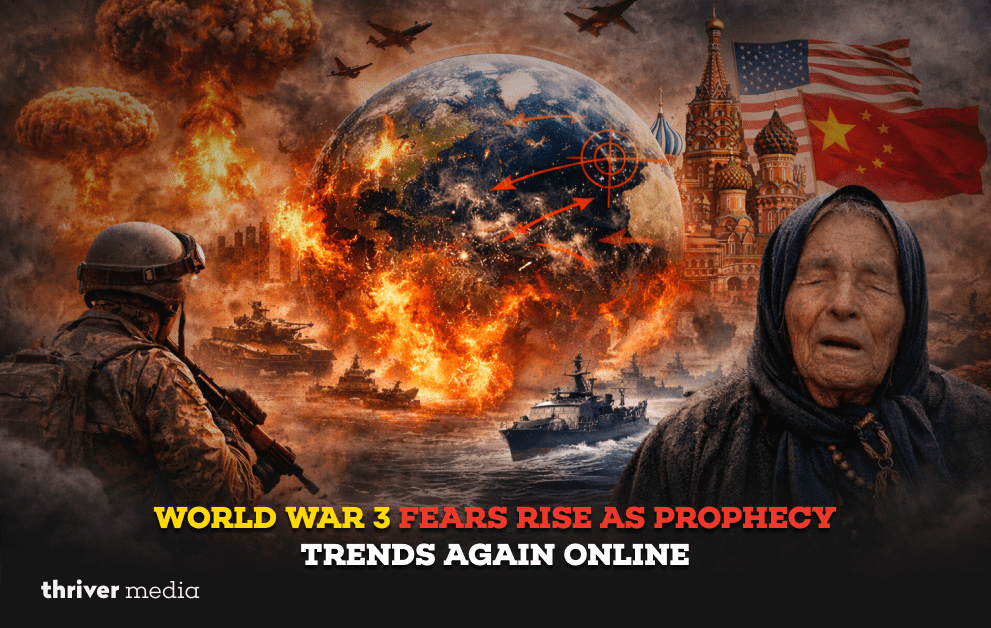
The World Is Watching And Worrying
In 2026, the global mood has clearly changed. It is not just the headlines; there is a real sense of unease. Across Eastern Europe, the South China Sea, the Middle East, and among nuclear powers, the world feels more tense than it has in years. People under 40 are experiencing a level of anxiety they have never felt before. Governments are warning about war, military budgets are growing, and there is less diplomacy.
During this uncertain time, an old prophecy has resurfaced in public discussion.
Not long after, videos about a centuries-old prediction of global war began appearing on TikTok, X (formerly Twitter), and YouTube. Hashtags about the prophecy quickly gained millions of views. Comment sections are filled with fear, confusion, and anger. Many people who had never followed world events started to wonder if this was really happening.
The combination of real instability and viral fear has created a risky situation. Panic is spreading faster than reliable news, feeding on uncertainty and leaving many people feeling powerless. This article will explore what is true, what is speculation, and why this moment feels so fragile.
Why the Prophecy Is Trending Again
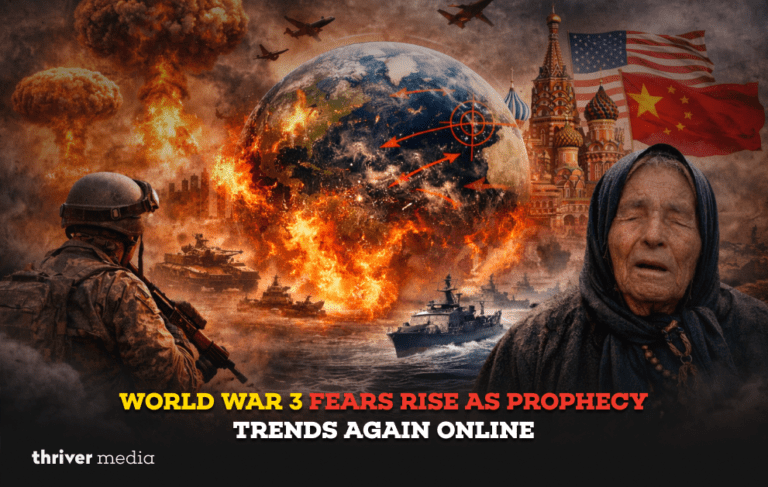
The prophecy that drew the most attention in early 2026 is often associated with Baba Vanga, a Bulgarian mystic who died in 1996. She became famous for predictions that some people believe foresaw events like 9/11, the 2004 tsunami, and the rise of ISIS. Critics, however, say her predictions are so vague that they can be linked to almost any big event after the fact.
The predictions tied to her this time warn about a major conflict between powerful countries, a war that could change the world order. Whether these quotes are real, misattributed, or invented is still being debated. Even so, that has not stopped them from spreading.
On TikTok, creators mix these predictions with videos of missile strikes, military drills, and tense diplomatic scenes. On X, threads with thousands of retweets connect current events to the prophecy, step by step. YouTube channels have attracted millions of views with titles like ‘She Predicted This Exact War.’
Social media algorithms reward posts that get attention, and fear makes people pay attention. This creates a cycle where scary content is shared much more than it should be, causing real anxiety.
Current Global Flashpoints
The fear is not appearing in a vacuum. Actual global tensions are at their most serious point in decades. Here is a clear breakdown of the key pressure points:
| Region / Issue | Current Situation | Why It Raises WW3 Fears |
| Middle East Conflict | Ongoing strikes and retaliation across Gaza, Lebanon, Yemen, and Syria | Risk of wider regional war drawing in global powers |
| Russia-Ukraine War | Continued heavy fighting; NATO supplying weapons and intelligence | Superpower involvement raises escalation risks |
| US-China Tensions | Military drills near Taiwan; trade war and tech restrictions escalating | Potential global escalation if Taiwan conflict erupts |
| Nuclear Threats | Public warnings from Russian and North Korean leaders | Fear of catastrophic, irreversible outcome |
Each of these flashpoints carries the potential to pull in allies, trigger counter-responses, and spiral into something larger. The Middle East in particular has seen multiple escalations in the past two years, with airstrikes, naval confrontations, and proxy battles drawing in forces from several nations. In Eastern Europe, the Russia-Ukraine war has outlasted predictions and continues to grind forward with no clear end. Meanwhile, US-China tensions over Taiwan have moved from political rhetoric to active military posturing, with both sides conducting significant military exercises in disputed waters.
Nuclear language, once considered taboo in modern diplomacy, has re-entered public discourse. That shift alone signals how fragile the current international order has become.
How Fear Spreads Faster Than Facts
Humans are wired for threat detection. In uncertain times, we seek patterns, warnings, and explanations. Prophecy fills that psychological need. It offers a framework, however unreliable, for understanding chaos. When the world feels out of control, the idea that someone predicted all of this can be both strangely comforting and terrifying.
Doom content exploits this instinct. A viral clip about WW3 takes two minutes to watch and leaves a lasting emotional impact. A balanced geopolitical analysis from a credentialed expert takes twenty minutes and requires focused attention. On social media, the two compete on the same feed, and fear always wins the click.
This is not just a social media problem. It is a design problem. Platforms built for engagement have created environments where the most alarming content is also the most widely distributed. Viral prophecy videos are not reaching millions because millions sought them out; they are reaching millions because the algorithm sent them there.
The result is a population that is anxious, poorly informed, and increasingly unable to distinguish between verified threats and manufactured panic.
Are We Really on the Brink?
The answer is: it is complicated, and that complexity matters.
There is no simple answer, and that complexity matters.
Global tensions really are higher than usual. This is not just hype or fear-mongering. Experts in conflict, international relations, and nuclear security say this is a particularly risky time. There are more active conflicts around the world, trust between major powers is at a record low, and the tools used to prevent escalation, such as diplomacy, treaties, and communication, have become much weaker.
A world at risk of war is not the same as a world standing on the edge of World War 3.
Yes, tensions are real. Military posturing is visible. The language from leaders is sharper than it has been in years. But diplomacy has not disappeared.
The UN Security Council still meets. Governments continue formal talks. Behind the headlines, back-channel negotiations are active in most major conflicts. These quiet conversations rarely trend online, but they matter.
There is also the reality of nuclear deterrence. Countries with nuclear weapons understand the cost of full-scale war. Mutual destruction is not a theory. It is a calculation that shapes decisions at the highest levels.
What is missing right now is not just restraint. It is trust. It is openness. It is the political will to lower tensions before they spiral further.
Prophecies cannot measure any of that. They cannot account for negotiations, strategic patience, or last-minute diplomatic breakthroughs. They do not predict human judgment.
The future depends on choices. On leadership. On calculation.
There are real risks in the world. There are real conflicts. But viral fear content often creates a false sense of certainty. It makes catastrophe feel inevitable.
It is not.
Stay informed. Pay attention to verified developments. But do not let trending panic convince you that the outcome is already decided. Because it isn’t.
FAQs
Did the prophecy specifically predict World War 3?
No confirmed, documented text from Baba Vanga or any widely shared prophetic source specifically names World War 3 with verifiable detail. Most viral claims are paraphrased, reinterpreted, or unverified. Treat them as cultural artefacts, not intelligence.
Why are people connecting current conflicts to it?
Because current tensions are real and frightening, and the human mind looks for patterns. Online creators have connected the prophecy to real events because it generates engagement. That connection is emotional, not factual.
Are global powers preparing for a world war?
All major powers maintain and continually upgrade their militaries. Increased military spending or exercises do not confirm war preparation. They are, however, signals of increased tension that deserve serious attention from policymakers and citizens alike.
What regions are considered the biggest risks right now?
The Middle East, Eastern Europe (Russia-Ukraine), and the Taiwan Strait are considered the highest-risk zones for potential escalation. Any one of them could draw in external powers, though the likelihood of direct superpower conflict remains debated among analysts.
How should readers respond to viral war predictions?
Pause before sharing. Verify the source. Check whether credible news outlets, academic institutions, or government bodies are making the same claim. Fear-based content is designed to bypass critical thinking. Slow down before you amplify it.
Is there official confirmation of an imminent global conflict?
No government or credible international institution has confirmed that a world war is imminent. Tensions are high, and officials have issued various warnings about regional conflicts. But ‘imminent global war’ remains in the realm of speculation, not verified intelligence.
Conclusion
The world is not at peace. The danger zones are real, and the risks are serious. Unfortunately, leaders who should be calming things down are sometimes making them worse with reckless words and actions. The world is also not inevitably at war. The gap between ‘serious global tension’ and ‘World War 3’ is vast, and it is a gap that viral prophecy content collapses without justification.
When online panic mixes with real-world instability, people become scared, exhausted, and less trusting of the very institutions that could help prevent disaster. This creates a new kind of risk.
The best thing you can do now is get your information from reliable sources, support diplomacy, and avoid treating trending hashtags as facts. Fear has never stopped a war, but critical thinking might.
Bottom Line
Global tensions are rising, and online prophecy trends are fueling fear. But fear alone does not mean war is inevitable. Stay alert. Stay informed. Avoid panic.
Disclaimer: The news and information presented on our platform, Thriver Media, are curated from verified and authentic sources, including major news agencies and official channels.
Want more? Subscribe to Thriver Media and never miss a beat.