

Published: 1st March 2026 | Category: Geopolitics, Middle East, Political History
A Geopolitical Analysis of Power, Ideology, and the Architecture of the Islamic Republic
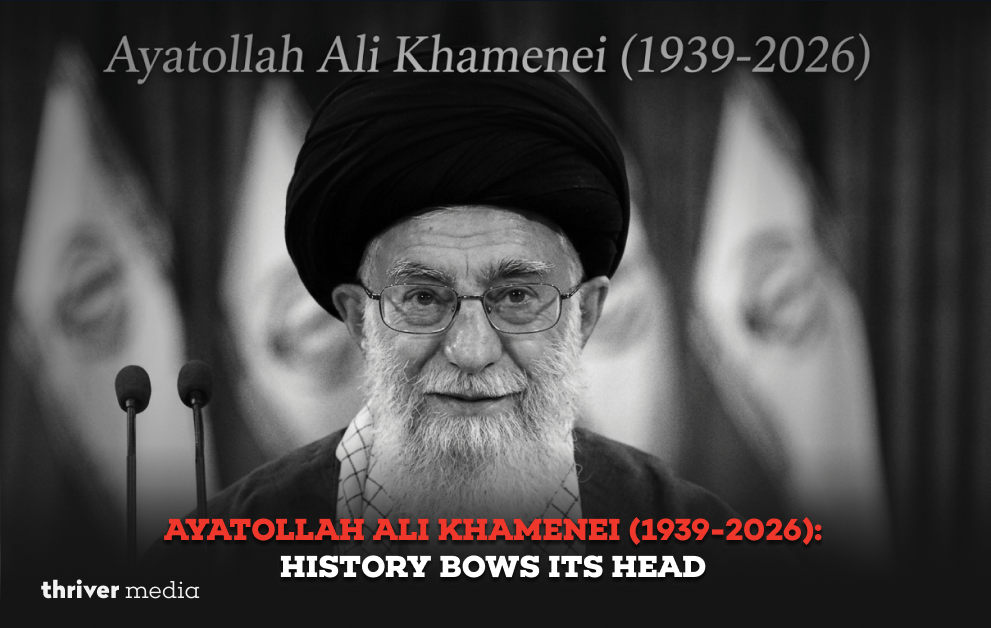
When Power Leaves, What Remains?
Power rarely leaves quietly. It lingers in institutions, in habits, in fear, in belief. When Ayatollah Ali Khamenei died in 2026, the reaction across Iran and far beyond its borders was not simply about a man. It was about a system he spent nearly four decades shaping, defending, and hardening into something that transcended any single personality.
To understand modern Iran is to understand Khamenei. His leadership was not decorative. It was decisive, disciplined, and at times deeply controversial. Love him or condemn him, one truth is difficult to dispute: his influence on the trajectory of the Islamic Republic was undeniable and, in many ways, irreversible.
This analysis is not an obituary. It is an examination of power how it is built, how it is maintained, and what it leaves behind. Khamenei’s life and tenure serve as a lens through which to view the enduring tensions of a revolutionary state confronting modernity, sovereignty, and its own contradictions.
His death in 2026 marks not a conclusion, but a transition point. The real story begins where his rule ends.
Early Life and Revolutionary Roots
Ali Hosseini Khamenei was born on April 19, 1939, in Mashhad, one of Shia Islam’s holiest cities. Raised in a modest religious household, he was shaped early by theological study and the political unrest of mid-20th-century Iran. He trained under senior clerics, most notably Ayatollah Ruhollah Khomeini, absorbing a worldview that fused religion with governance and resistance.
As opposition to Shah Mohammad Reza Pahlavi grew, Khamenei joined the religious movement against the monarchy. He was arrested multiple times by SAVAK, imprisoned, and exiled experiences that hardened his revolutionary resolve.
After the 1979 Islamic Revolution, he emerged as a trusted insider in the new system, serving in key roles and later as president from 1981 to 1989 during the Iran-Iraq War. That devastating conflict shaped his long-term strategic outlook: deep distrust of the West, emphasis on self-reliance, and a strong commitment to military strength as the backbone of national survival.
Rise to Supreme Leadership
When Ayatollah Ruhollah Khomeini died in June 1989, Iran faced a defining test. The Assembly of Experts selected Ali Khamenei as the new Supreme Leader, despite controversy over his clerical rank, which some argued fell short of traditional expectations.
But in a revolutionary system, loyalty and political credibility often outweigh formal titles. Khamenei had both. A trusted insider with deep revolutionary roots, he quickly proved he was no placeholder. Instead, he consolidated power, strengthening the authority of the Supreme Leader and embedding his influence across Iran’s judiciary, military, and state institutions.
Consolidating Authority and Institutional Control
One of the most defining aspects of Khamenei’s rule was how carefully he consolidated power. It wasn’t sudden or theatrical. It was gradual, strategic, and institutional.
At the center of this effort was the Islamic Revolutionary Guard Corps (IRGC), which evolved into a powerful force spanning military, economic, and political spheres. Khamenei strengthened ties with the IRGC, aligning its interests with his leadership and making it a cornerstone of regime stability.
He also shaped the judiciary and empowered bodies like the Guardian Council to filter political candidates, limiting reformist influence. State media, education, and religious platforms reinforced his ideological message, blending faith with governance.
Critics called it authoritarian consolidation. Supporters called it necessary stability. What’s clear is this: by the mid-2000s, Khamenei had transformed the Supreme Leader’s role into a deeply entrenched center of institutional power.
The Nuclear Era and Global Confrontations
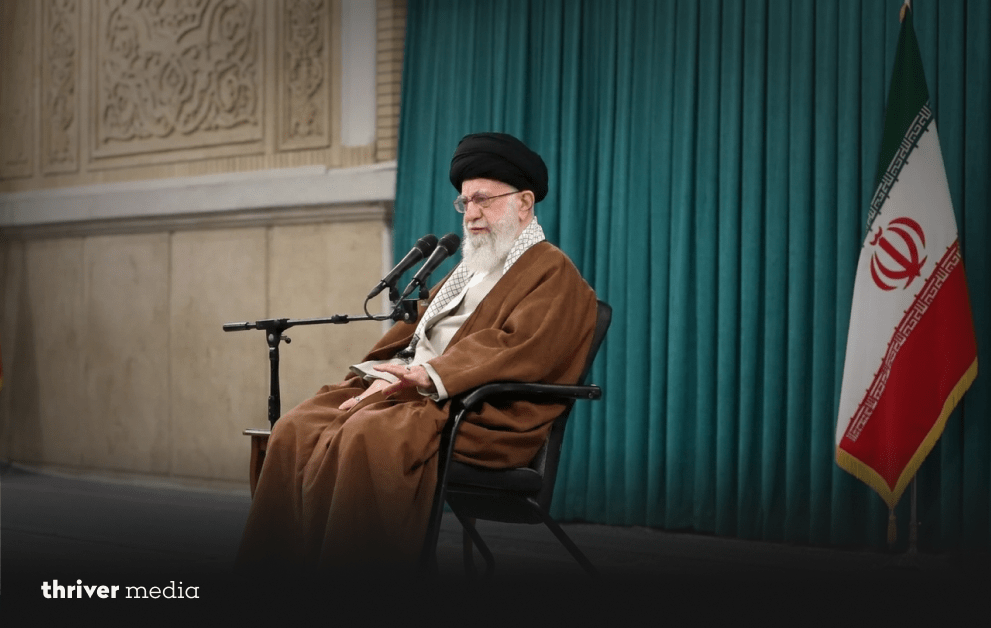
The defining global chapter of Khamenei’s leadership was Iran’s nuclear program. Under his watch, Iran expanded its nuclear capabilities while insisting they were for peaceful purposes, even as Western powers suspected weapons ambitions. The result was years of sanctions, covert sabotage, cyberattacks, and tense diplomacy.
The 2015 nuclear deal (JCPOA) marked a breakthrough. Iran accepted limits and inspections in exchange for sanctions relief. Khamenei allowed the agreement but remained openly skeptical of U.S. intentions, viewing it as tactical rather than transformative. When the U.S. withdrew in 2018 and reimposed sanctions, his distrust appeared justified to many at home.
Beyond the nuclear issue, Khamenei backed a network of regional allies and proxy groups across Lebanon, Iraq, Yemen, and Palestine what Iran called an “axis of resistance.” Supporters saw this as strategic defense and deterrence; critics viewed it as destabilizing expansion. Both interpretations became central to how his foreign policy legacy is judged.
Domestic Pressures and Public Dissent
While Khamenei projected strength abroad, pressures at home steadily intensified. Iran’s young, post-revolution generation shaped more by economic strain, social limits, and digital exposure than by revolutionary memory grew increasingly restless.
Major protest waves marked his later years: the 2009 Green Movement, the 2019 fuel price unrest, and the 2022 “Woman, Life, Freedom” demonstrations after Mahsa Amini’s death. Each was met with crackdowns, arrests, and internet shutdowns. The state framed dissent as foreign interference; many citizens saw it as a demand for dignity and reform.
The widening gap between ideological authority and lived reality became one of the defining tensions of Khamenei’s era a conflict that did not end with his death, but passed directly to those who follow.
Faith, Ideology, and Governance
To understand Khamenei, you have to see him as more than a political strategist. He was driven by deep religious conviction, believing Islamic governance was a divine duty, not just a system of rule. The principle of Velayat-e Faqih guardianship of the Islamic jurist was, for him, theological at its core. Political authority and religious obligation were inseparable.
This belief shaped Iran’s laws, education, foreign policy, and public messaging. His speeches framed national struggles as moral and spiritual missions, inspiring loyalty among many traditional and religious supporters who saw him as a guardian of revolutionary values.
But ideology carries limits. A system rooted in divine legitimacy struggles to accommodate reform without seeming to undermine its own foundation. As younger, digitally connected generations pushed for change, the gap between official doctrine and social reality widened.
Supporters call his firmness a defense of sovereignty. Critics call it rigidity. Either way, the ideological structure he reinforced will endure and its tensions will shape Iran’s future long after him.
The Succession Question
In his final years, one question overshadowed Iranian politics: what comes after Khamenei?
The Supreme Leader’s role is powerful but not hereditary. The Assembly of Experts is constitutionally responsible for choosing his successor. On paper, the process is clear. In reality, it is deeply political. After nearly four decades in power, Khamenei had shaped the very institutions that would now decide the future, embedding loyalties and networks that complicate any transition.
Potential successors ranged from senior clerics promising continuity to figures aligned with the IRGC, and even pragmatic voices seeking recalibration. Each path represents a different vision for the Islamic Republic.
Leadership transitions in revolutionary systems are fragile moments. They can confirm stability or expose fault lines. Iran’s shift comes amid sanctions, economic strain, demographic pressure, and unresolved nuclear tensions. The next chapter will not start from scratch it will inherit a system both entrenched and contested.
How History May Judge Him
Judging Khamenei is complicated because his rule meant very different things to different people.
One view highlights resilience. He steered Iran through crushing sanctions, military threats, and regional turmoil without surrendering sovereignty. Under his leadership, Iran expanded its regional reach and sustained its nuclear program despite intense pressure. To supporters, that endurance was a strategic achievement.
Another view focuses on the cost. Political freedoms narrowed, dissent was suppressed, and elections were tightly controlled. Economic hardship, worsened by sanctions and policy choices, weighed heavily on ordinary citizens. Critics see rigidity where supporters see resolve.
The most balanced reading holds both truths at once. Khamenei was a committed revolutionary who strengthened the system he believed in and whose decisions carried lasting consequences for millions. How history ultimately judges him will depend largely on what Iran becomes after him.
Iran After Khamenei: The Chapter Being Written
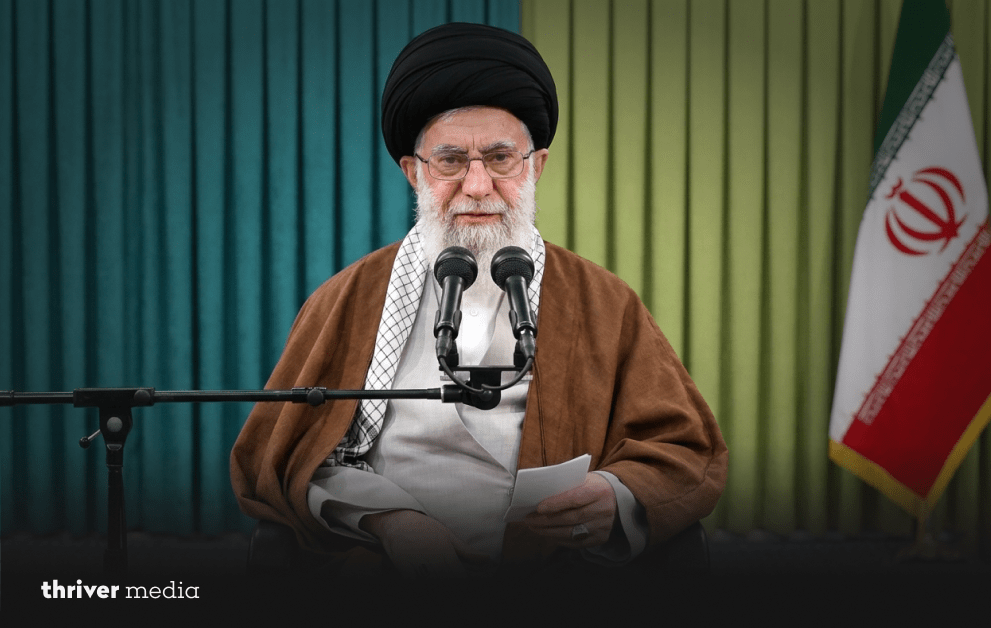
Ayatollah Ali Khamenei’s life traces the arc of the Islamic Republic itself: revolutionary, embattled, resilient, contested, and ultimately defined by the tension between its founding ideals and the practical demands of governing a complex society in a dangerous world. His leadership left a powerful imprint on Iran’s political identity, its regional posture, and its relationship with the international order.
The system he shaped institutionally entrenched, ideologically comprehensive, and designed to sustain itself beyond any single leader now faces its first test without its longest-serving architect. This is the moment that such systems either prove their durability or begin revealing their fragilities.
Iran’s incoming leadership inherits a formidable but contradictory inheritance: an expanded regional presence but an economy under sustained strain; institutional coherence but mounting popular restlessness; ideological clarity but a widening gap between official narratives and social reality; a nuclear program that represents both strategic leverage and diplomatic isolation.
The generation that will determine Iran’s next chapter was born after the revolution. Its members have no personal memory of the founding moment that gave the Islamic Republic its moral and historical authority. Their political consciousness was shaped by digital access, economic frustration, and the daily experience of navigating between the system’s demands and their own aspirations.
Whether the next leadership chooses to accommodate these realities through measured reform, or to double down on the hardened framework Khamenei bequeathed whether the fortress holds or transforms will determine whether the Khamenei era is ultimately remembered as a foundation or as a crossroads.
Power rarely leaves quietly. What it leaves behind is a test: of institutions, of ideas, of the resilience or brittleness of the systems it built. History bowed its head when Khamenei died. Now, with clear eyes, it watches what comes next.
Frequently Asked Questions
Who was Ayatollah Ali Khamenei?
He was Iran’s Supreme Leader from 1989 to 2026, holding ultimate religious and political authority in the Islamic Republic.
How did Khamenei become Supreme Leader?
He was selected by Iran’s Assembly of Experts in 1989 after Khomeini’s death, backed by his revolutionary record and political alliances.
What defined Khamenei’s leadership style?
His rule combined strategic patience, deep distrust of the West, tight institutional control, and firm defense of revolutionary ideology.
What was Khamenei’s role in the nuclear negotiations?
He approved the 2015 nuclear deal but remained skeptical of the U.S., later guiding Iran’s response after Washington withdrew.
What happens to Iran’s leadership after his death?
The Assembly of Experts appoints a successor, though internal political factions heavily influence the outcome.
Why is Khamenei’s legacy contested?
He is credited with preserving sovereignty and regional power, yet criticized for repression, limited freedoms, and economic hardship.
Bottom Line
Ayatollah Ali Khamenei was not simply a leader he was the central pillar of Iran’s modern political system for nearly four decades. His influence extended beyond policy into the architecture of institutions, the formation of ideology, and the definition of Iran’s national posture in the world. He shaped not just what Iran did, but what it understood itself to be.
Whether viewed as guardian or gatekeeper as a defender of sovereignty or an architect of repression his departure marks a structural shift of the first order. The system he reinforced must now operate without its longest-serving architect. The institutions he built, the alliances he cultivated, the ideological framework he enforced, and the unresolved tensions he bequeathed all continue but without the single figure who, for so long, held them in a specific configuration.
If Khamenei shaped the fortress, the next chapter of Iranian history will determine whether its walls hold, transform, or against the expectations of a hardened system begin to open.
Key Sources & Further Reading
For readers wishing to deepen their understanding of the topics covered in this analysis, the following categories of sources are recommended:
On Iran’s Political System and the Supreme Leader’s Role:
Academic and journalistic works on Velayat-e Faqih (guardianship of the Islamic jurist) and the constitutional structure of the Islamic Republic provide essential background. The International Crisis Group and the Middle East Institute publish ongoing analytical reports on Iran’s internal politics.
On the Nuclear Program and JCPOA:
The Arms Control Association, the International Atomic Energy Agency (IAEA) reports, and reporting by Reuters, The New York Times, and Al-Monitor on Iran’s nuclear program provide detailed and reliable documentation of the diplomatic history.
On Iran’s Regional Strategy:
The Brookings Institution, RAND Corporation, and Carnegie Endowment for International Peace have produced substantial research on Iran’s regional influence networks, the IRGC’s role, and the dynamics of the ‘axis of resistance.’
On Domestic Dissent and Iranian Society:
Human Rights Watch and Amnesty International document the treatment of dissent and civil liberties within Iran. Journalists including those at Iran International, BBC Persian, and Radio Farda provide reporting on domestic Iranian social and political developments.
Disclaimer: The news and information presented on our platform, Thriver Media, are curated from verified and authentic sources, including major news agencies and official channels.
Want more? Subscribe to Thriver Media and never miss a beat.
History bowed its head. Now it watches.
– End of Analysis –