
22nd April 2026
The Definitive Story of Two Legends Who Defined an Era
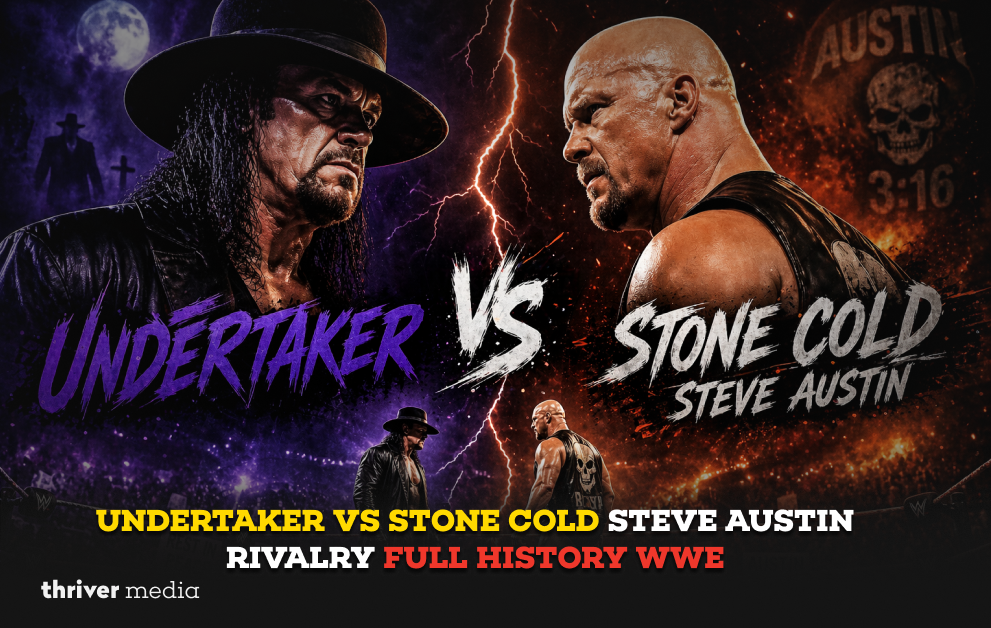
Introduction: Two Titans, One Ring, Endless War
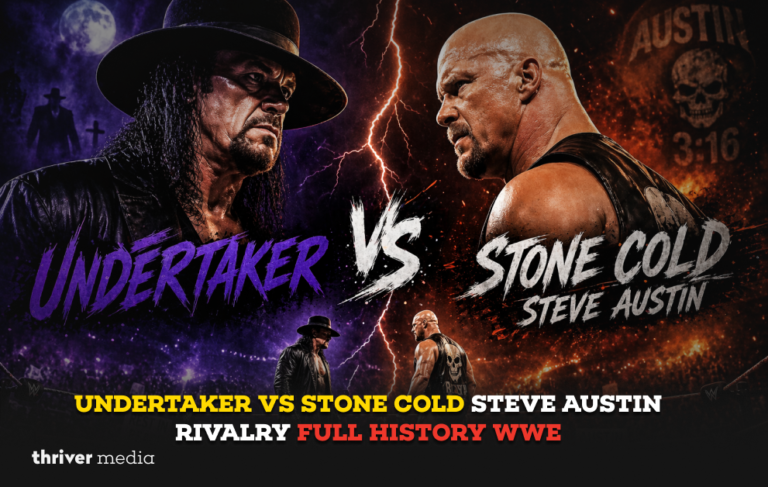
Some rivalries in professional wrestling are remembered because of a single match. Others survive on nostalgia alone. But the Undertaker vs Stone Cold Steve Austin rivalry is remembered because it changed the entire game.
This wasn’t just a feud. It was a collision between two completely different philosophies of what a WWE superstar should be. On one side, the Undertaker a supernatural force who commanded fear, silence, and respect. On the other, Stone Cold Steve Austin a beer-drinking, middle-finger-raising rebel who didn’t respect anyone, including the boss who signed his paychecks.
Their rivalry stretched across the Attitude Era, the most explosive period in WWE history. It drew millions of viewers, packed arenas around the world, and produced moments that fans still talk about decades later. When these two stood across the ring from each other, you didn’t change the channel. You couldn’t.
This is the full history of that rivalry. Every match that mattered. Every turning point. Every reason it still resonates with wrestling fans today.
Backstory & Origins of the Rivalry
Two Characters Built for Conflict
The beauty of this rivalry starts with how fundamentally different these two characters were. The Undertaker arrived in WWE in 1990 as a dark, otherworldly figure. He didn’t cut flashy promos. He didn’t chase cheap pops. He walked slowly to the ring, rolled his eyes back, and made grown men uncomfortable. His entire persona was built on mystique and dread.
Stone Cold Steve Austin was the opposite in every way. He showed up in WWE in 1996 after being fired from WCW, and he was angry about it. Not in a scripted way Austin carried real frustration into his character. He didn’t follow rules. He didn’t respect authority. He said what he wanted, did what he wanted, and stunned anyone who got in his way. The crowd loved him for it because he was saying and doing everything they wished they could.
Put these two together and the tension was inevitable. The Undertaker represented old-school respect for the business, the locker room hierarchy, the unwritten codes. Austin represented the new wave a guy who didn’t care about your legacy or your yard. That’s a recipe for a war, not just a feud.
Early Encounters and Brewing Tension
Their paths started crossing meaningfully in 1997. Both men were ascending toward the main event scene. Austin had just shocked the world with his iconic performance at WrestleMania 13, where he passed out in Bret Hart’s Sharpshooter but never tapped cementing himself as the toughest man in the company. The Undertaker was already established as a perennial main eventer, the man who owned WrestleMania.
When they found themselves competing for the WWE Championship, the temperature changed immediately. This wasn’t a rivalry manufactured by writers sitting in a room. It felt organic. Two alphas who both believed they deserved to be on top, and neither was willing to step aside.
Key Matches & Turning Points
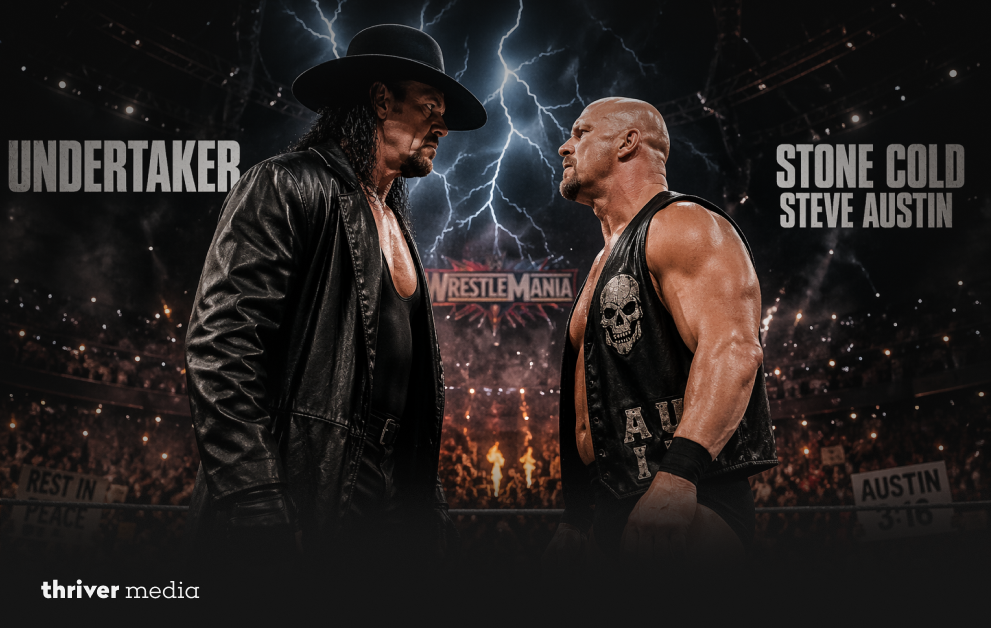
SummerSlam 1998: Highway to Hell
This was the match that defined the rivalry at its peak. SummerSlam 1998 featured the Undertaker challenging Steve Austin for the WWE Championship in a match that perfectly captured the Attitude Era’s raw intensity.
The stipulation was straightforward: no disqualification. But the chaos surrounding it was anything but simple. Kane was lurking in the background. Vince McMahon’s interference was always a threat. And the Undertaker’s dark ministry character was reaching its most menacing phase.
Austin retained the title, but the match did something more important than determine a champion. It proved these two could carry a main event that felt genuinely dangerous. The crowd didn’t just cheer they were on the edge of their seats. That’s the difference between a good match and a legendary one.
Backlash & Fully Loaded 1999
By 1999, the rivalry had evolved. The Undertaker had shifted into his Ministry of Darkness phase, leading a cult-like faction that added layers of psychological warfare to the feud. This wasn’t just about championships anymore. It was about control, power, and dominance.
Their matches at Backlash and Fully Loaded in 1999 were brutal, physical encounters that tested both men’s limits. The storytelling was layered McMahon’s corporate manipulation, the Undertaker’s dark agenda, and Austin’s refusal to bow to anyone created a three-dimensional conflict that kept fans invested week after week.
Buried Alive Match – Rock Bottom 1998
If you want one match that perfectly encapsulates the darkness of this rivalry, it’s the Buried Alive match. The concept itself was terrifying: the loser gets buried in dirt. It sounds absurd on paper, but the Undertaker made it feel real. Austin made it feel personal.
Kane’s involvement added another unpredictable element, and the visual of a superstar being buried under a pile of earth became one of the Attitude Era’s most memorable images. This match proved that the Undertaker vs Stone Cold Steve Austin rivalry could exist beyond normal wrestling stipulations. It lived in a different world—darker, higher stakes, more emotionally charged.
Cold Day in Hell 1998
Their In Your House: Cold Day in Hell encounter in May 1998 was significant because it was one of their earlier high-profile singles matches. Austin was champion. The Undertaker wanted what Austin had. The match was physical, hard-hitting, and built the foundation for everything that followed over the next two years.
What made this match important wasn’t just the action in the ring. It was the statement it made. These two could deliver a main event that felt different from anything else on the card. When Undertaker and Austin were in the ring together, the atmosphere shifted. The stakes felt higher. The hits felt harder. The crowd felt louder.
Peak Rivalry Era: How They Shaped the Attitude Era
Storytelling That Felt Real
The Attitude Era gets remembered for the obvious things edgy content, the Monday Night Wars, breakout stars. But what really made it work was storytelling that felt real. And this feud is one of the clearest examples.
Undertaker wasn’t just a villain. He felt like something beyond human an unstoppable presence walking into the arena. Austin wasn’t a traditional hero either. He was defiance in its purest form. He didn’t back down, didn’t play by the rules, and didn’t care who stood in front of him. When those two forces collided, it felt bigger than a match. It felt like a clash of ideologies.
The promos kept that same energy. Undertaker spoke in slow, controlled threats dark, deliberate, and unsettling. Austin answered in his own way direct, aggressive, and usually ending the conversation with a Stunner. No overproduction. No fluff. Just two personalities pushing against each other until something broke.
That contrast is what made it work. And it still holds up.
Crowd Reactions That Defined an Era
Watch any footage of these two in the ring together during 1998–1999 and listen to the crowd. It’s not polite applause. It’s a wall of noise. The Undertaker’s entrance alone sent shivers through arenas. Austin’s glass-shattering theme made those same arenas erupt.
When they faced off, the crowd was split in the best possible way. Undertaker had his loyalists—fans who respected the darkness and the legacy. Austin had the majority people who saw themselves in his rebellion. But nobody in that building was sitting on their hands. Everybody cared.
Business Impact
From a business standpoint, this rivalry was money. Pay-per-view buyrates spiked when these two headlined cards. Television ratings for Raw climbed when their segments were promoted. Merchandise for both men sold at incredible rates.
WWE was locked in a war with WCW during this period, and main events featuring Undertaker vs Austin were key weapons in that battle. These two weren’t just entertaining fans they were helping WWE survive and eventually win the most important competitive war in wrestling history.
Later Encounters & Legacy
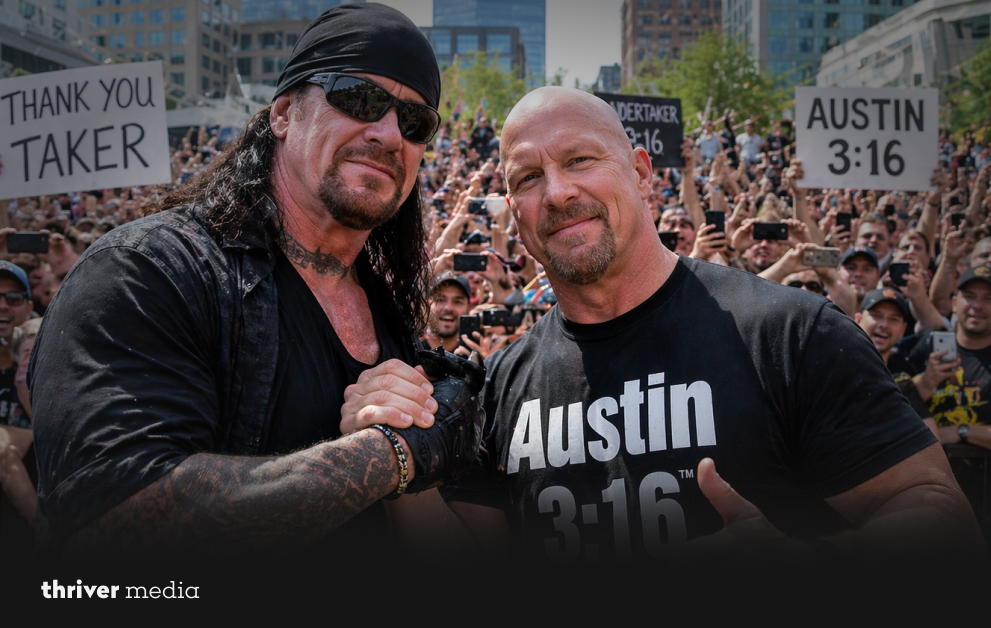
The Rivalry Cools but Never Dies
By the early 2000s, both men were dealing with the physical toll of their careers. Austin’s neck injuries limited his schedule. The Undertaker reinvented himself as the American Badass, then eventually returned to his Deadman persona. Their paths still crossed occasionally, but the intensity of 1998–1999 was hard to replicate.
Their later encounters carried a different energy. Less urgency, more mutual respect. When they stood in the ring together in the 2000s, the crowd recognized they were watching two legends who had already cemented their places in history. It was nostalgia mixed with appreciation.
WrestleMania and Beyond
Interestingly, Undertaker and Austin never had a dedicated WrestleMania singles match, which is one of the great “what ifs” in WWE history. Their rivalry played out primarily on pay-per-views and Raw, but a WrestleMania showdown would have been a generational event.
Austin retired from in-ring competition in 2003, though he’s made sporadic appearances since. The Undertaker’s final farewell came at Survivor Series 2020, where WWE celebrated his 30-year career. Both men have spoken respectfully about each other in interviews, acknowledging the magic they created together.
Modern References
WWE still references their rivalry in video packages, documentaries, and social media content. When current superstars talk about the greatest feuds in WWE history, Undertaker vs Stone Cold Steve Austin is always in the conversation. It’s become a benchmark the standard other rivalries are measured against.
Fan Reactions & Cultural Impact
Then: Arena Energy Like Nothing Else
If you were in the arena during a late-90s main event between these two icons, you felt something that’s hard to put into words. The energy wasn’t just loud it was raw. People stood the entire time. Voices gave out. The crowd didn’t just react; it took over the building.
This feud hit at the perfect moment. Pro wrestling was breaking into the mainstream, and both men were at the center of it. One was the rebellious anti-hero redefining what a top star looked like. The other was the dark, larger-than-life presence who felt untouchable. Together, they created moments that pulled in everyone—hardcore fans, casual viewers, even people who didn’t usually watch wrestling.
Their clashes weren’t just matches. They were events people planned their nights around.
Now: Social Media and Retrospective Love
Decades later, the rivalry has found new life online. Compilation videos of their matches rack up millions of views on YouTube. Wrestling forums and Reddit threads regularly debate where this feud ranks among the all-time greats. Twitter polls asking “who had the better rivalry with Undertaker” consistently see Austin near the top.
What’s remarkable is how well the rivalry holds up. Watch their 1998 matches today and they still feel intense, still feel real, still pull you in. That’s not true of every Attitude Era feud. Some haven’t aged well. This one has.
Cultural Crossover
Beyond wrestling, this rivalry contributed to making WWE a cultural phenomenon. Austin’s 3:16 shirts became one of the best-selling merchandise items in sports entertainment history. The Undertaker’s mystique made him a figure that transcended wrestling he was referenced in music, movies, and popular culture worldwide. Together, they represented the best of what WWE could produce: spectacle, drama, athleticism, and emotion.
Why This Rivalry Still Matters Today
Modern WWE feels different. The production is sharper. The stories are more layered. But the fundamentals that made that late-90s feud work haven’t changed.
First, contrast drives interest. The strongest rivalries don’t come from two similar personalities fighting over a title. They come from opposites colliding. One represented chaos and rebellion. The other carried an aura of dominance and inevitability. That tension made every encounter feel unavoidable and that same dynamic is why clashes like Roman Reigns vs Cody Rhodes connect today.
Second, commitment sells. Back then, both men treated every segment like it mattered. No shortcuts, no self-aware jokes to undercut the moment. They showed up like the other guy was a real threat. When performers fully buy in, the audience follows.
Third, stakes have to feel real. Their matches weren’t just about winning belts they were about pride, control, and identity. That’s what kept people invested from segment to segment. When the outcome feels personal, the crowd leans in.
You still see this influence today. Wrestlers study those matches for timing, psychology, and how to control a crowd. Producers point back to that feud when explaining how to build something that lasts.
It’s not just part of wrestling history it’s a blueprint that still works.
Frequently Asked Questions
Who won more matches between Undertaker and Stone Cold?
Their record is closely contested, but the Undertaker holds a slight edge in overall victories across singles and tag encounters.
What was their most famous match?
Their SummerSlam 1998 WWE Championship match is widely regarded as their most iconic encounter.
Were Undertaker and Stone Cold ever allies?
Yes they teamed up on several occasions when facing common enemies, though the alliance was always uneasy.
When did their rivalry peak?
The rivalry reached its peak intensity between mid-1998 and mid-1999, during the heart of the Attitude Era.
Why is this rivalry so iconic?
The perfect contrast between their characters, combined with Attitude Era intensity and stakes, made it unforgettable.
The Bottom Line
The Undertaker vs Stone Cold Steve Austin rivalry wasn’t built on gimmicks or manufactured drama. It was built on two men who represented completely different visions of professional wrestling and refused to back down from each other.
Their feud delivered some of the most intense, physically demanding, and emotionally charged matches in WWE history. It helped define the Attitude Era, drove record-breaking business, and set the standard for what a main event rivalry should look like.
When fans talk about the greatest feuds in WWE, this one earns its place at the top not because of nostalgia, but because the work speaks for itself, even decades later.
Conclusion: Legends Don’t Fade
Professional wrestling has given us hundreds of rivalries over the decades. Most are forgotten within a year. Some are remembered for a signature moment or a single great match. But only a handful transcend the product itself and become part of the cultural fabric of sports entertainment.
The Undertaker vs Stone Cold Steve Austin is one of those rivalries.
It worked because both men were at the peak of their abilities, operating in an era that rewarded risk-taking and authenticity. It worked because the characters were so perfectly opposed that every encounter felt like a war between two different philosophies. And it worked because, underneath the personas and the pyrotechnics, both men respected each other enough to bring their absolute best every single time they stepped into the ring together.
If you’ve never gone back and watched their Attitude Era matches, do yourself a favor and start. If you’ve seen them before, watch them again. This is professional wrestling at its finest raw, real, and unforgettable.
Disclaimer: The news and information presented on our platform, Thriver Media, are curated from verified and authentic sources, including major news agencies and official channels.
Want more? Subscribe to Thriver Media and never miss a beat.