

25th March 2026
Deep Dive Into the Root Causes of Juvenile Delinquency
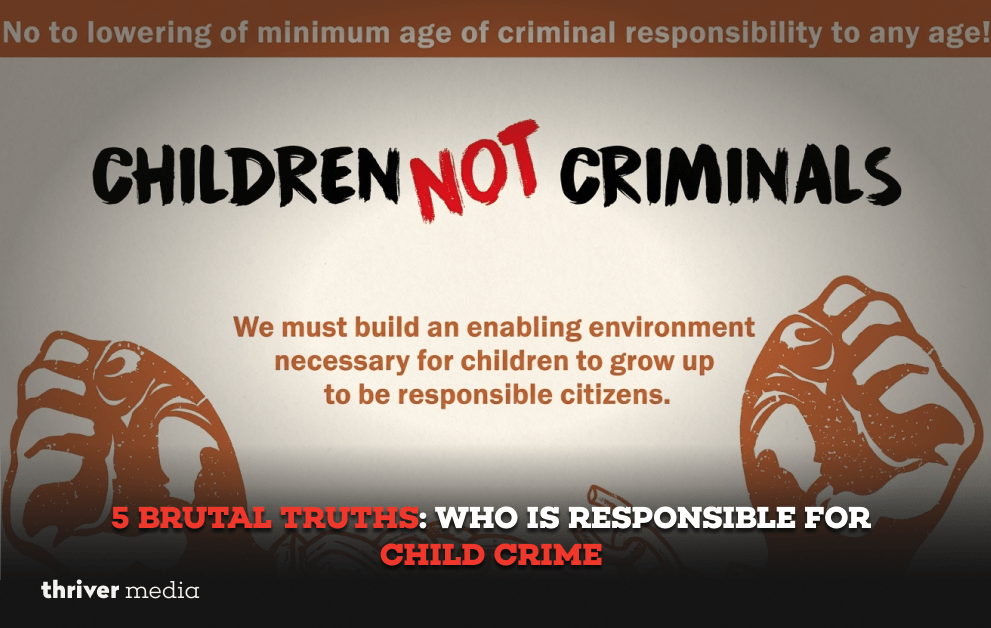
Child Crime Introduction
When a child commits a crime, the first question society asks is: who is responsible for child crime? Is it the child alone? The parents? The school? The government? Or is it all of us, collectively turning a blind eye until the damage is done?
Child crime often referred to as juvenile delinquency is a growing concern worldwide. According to global research, millions of minors are involved in criminal activities every year, ranging from petty theft and vandalism to far more serious offenses. But behind every young offender, there is a story of neglect, broken systems, and missed opportunities.
In this blog, we will uncover 5 brutal truths about who is truly responsible for child crime, why it happens, and what can be done to prevent it. This is not about placing blame on one party it is about understanding the web of responsibility that allows juvenile crime to flourish.
Truth 1: Parents Are the First Line of Defense And Often the First Point of Failure
Let us start with the most uncomfortable truth. In the vast majority of child crime cases, parenting or the lack of it plays a central role. Children learn their earliest behaviors, moral frameworks, and coping mechanisms at home. When that environment is toxic, absent, or neglectful, the consequences can be devastating.
Key Insight: Studies consistently show that children from homes with domestic violence, substance abuse, or chronic parental absence are significantly more likely to engage in criminal behavior.
Common parental failures that contribute to child crime include:
- Lack of supervision and monitoring of children’s activities and peer groups
- Emotional neglect or absence of positive reinforcement and guidance
- Exposure to domestic violence, substance abuse, or criminal behavior at home
- Over-permissiveness or, conversely, excessively harsh and inconsistent discipline
- Failure to recognize early warning signs such as aggression, truancy, or withdrawal
This does not mean every struggling parent raises a criminal. But it does mean that parental accountability is the foundation of child crime prevention. Parents who are engaged, aware, and emotionally present can drastically reduce the risk of their child turning to crime.
Truth 2: The Education System Is Failing At-Risk Children
Schools are supposed to be safe spaces where children learn, grow, and develop social skills. But for millions of at-risk children, the education system is another institution that has let them down.
How schools contribute to the problem:
- Zero-tolerance discipline policies that push troubled students out of school instead of helping them
- Lack of trained counselors and mental health professionals in under-resourced schools
- Bullying that goes unaddressed, driving victims toward anger, isolation, or retaliation
- Overcrowded classrooms where individual behavioral issues go unnoticed
- A curriculum that fails to teach life skills, emotional intelligence, or conflict resolution
The school-to-prison pipeline is a well-documented phenomenon. When schools suspend, expel, or criminalize student behavior rather than addressing the root causes, they push vulnerable children directly toward the juvenile justice system. A child who is expelled at age 12 with no support system is far more likely to end up on the streets than in a college classroom.
Truth 3: Society’s Silence Is Complicity
We live in communities. We see the warning signs the child who is always alone, the teenager hanging out with the wrong crowd, the young person who drops out of school. And yet, most of the time, we say nothing. We do nothing.
Society’s collective responsibility in child crime is enormous, and our silence is a form of complicity.
Ways society enables child crime:
- Stigmatizing troubled youth instead of offering help and community support
- Normalizing violence through unregulated media consumption by minors
- Lack of community programs, mentorship initiatives, and safe recreational spaces for youth
- Social inequality that traps children in poverty-stricken environments with limited opportunities
- Ignoring early behavioral warning signs in neighbors’ or community members’ children
When a community turns its back on its children, it should not be surprised when those children turn to crime. Prevention is a collective effort, and every adult in a child’s ecosystem bears some measure of responsibility.
Truth 4: Government Policies Are Reactive, Not Preventive
Perhaps one of the most brutal truths is that most governments invest far more in punishing child offenders than in preventing child crime in the first place. The juvenile justice system in many countries is designed to react after the damage is done, rather than addressing the conditions that create young criminals.
Policy failures that fuel juvenile crime:
- Underfunded child welfare and social services programs
- Juvenile detention systems that prioritize punishment over rehabilitation
- Lack of accessible mental health services for children and adolescents
- Inadequate support for low-income families including housing, nutrition, and childcare
- Laws that try children as adults, damaging their futures instead of reforming their behavior
A government that truly wants to reduce child crime must shift its approach from punishment to prevention. Investing in early childhood education, family support services, mental health infrastructure, and community development programs has been proven to reduce juvenile offending rates dramatically.
Truth 5: The Child Is Also Accountable But Accountability Is Not the Same as Blame
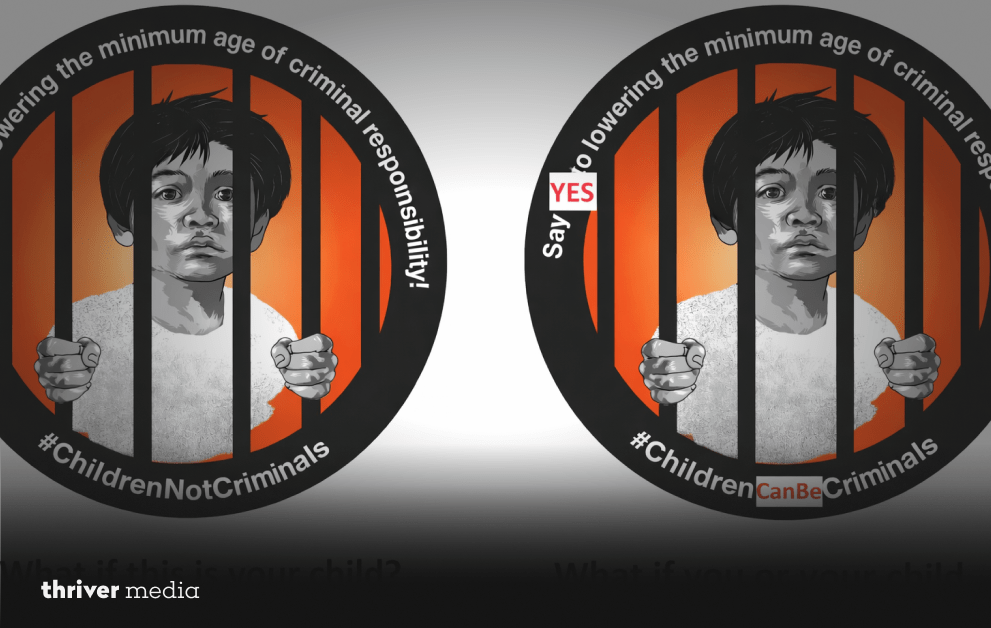
This is a nuanced but critical truth. While children are shaped by their environment, they also make choices. Older adolescents, in particular, have some level of awareness about right and wrong. Accountability matters but it must be age-appropriate, rehabilitative, and compassionate.
A balanced approach to child accountability includes:
- Teaching children the consequences of their actions through restorative justice rather than punishment
- Providing rehabilitation programs that address the root causes of their behavior
- Offering mental health support, counseling, and skill-building opportunities
- Keeping juvenile records sealed to give reformed youth a genuine second chance
- Holding children accountable while simultaneously holding the adults and systems around them accountable
Blaming a 10-year-old for a crime while ignoring the adult failures that led to that moment is not justice it is cruelty. True accountability means the entire system parents, schools, communities, and government takes responsibility together.
Frequently Asked Questions (FAQs)
Who is primarily responsible for child crime?
Responsibility is shared, but parents and guardians carry the greatest influence.
What are the main causes of juvenile delinquency?
It stems from neglect, poverty, poor education, bad influences, and lack of support.
Can child crime be prevented?
Yes, through early support, strong parenting, education, and community intervention.
Should parents be legally punished for their child’s crimes?
Sometimes, but support and education work better than punishment alone.
At what age can a child be held criminally responsible?
It varies by country, usually between ages 7 and 14.
What role does poverty play in child crime?
Poverty increases risk by limiting opportunities and pushing survival-driven choices.
The Bottom Line
Child crime is not the failure of one person, one institution, or one policy. It is the collective failure of an entire ecosystem that is supposed to protect, nurture, and guide its youngest members.
The 5 brutal truths laid out in this blog make one thing painfully clear: the responsibility for child crime is shared. Parents must be present and engaged. Schools must support, not push out, troubled students. Communities must stop looking the other way. Governments must invest in prevention, not just punishment. And children must be held accountable in ways that are compassionate, rehabilitative, and focused on their future.
If we continue to ask “who is responsible for child crime?” and point fingers at a single cause, we will never solve the problem. The answer is uncomfortable but honest: we are all responsible. And the solution requires all of us to act.
The children who commit crimes today are not born criminals. They are products of the environments we create, the systems we design, and the care we choose to give or withhold. The real crime is not what these children do. The real crime is what we fail to do for them.
real supporting sources like:
- UNICEF – juvenile justice & child protection
- World Health Organization – youth violence reports
- UNODC – crime statistics
- Save the Children – child welfare data
Disclaimer: The news and information presented on our platform, Thriver Media, are curated from verified and authentic sources, including major news agencies and official channels.
Want more? Subscribe to Thriver Media and never miss a beat.