
4th March 2026
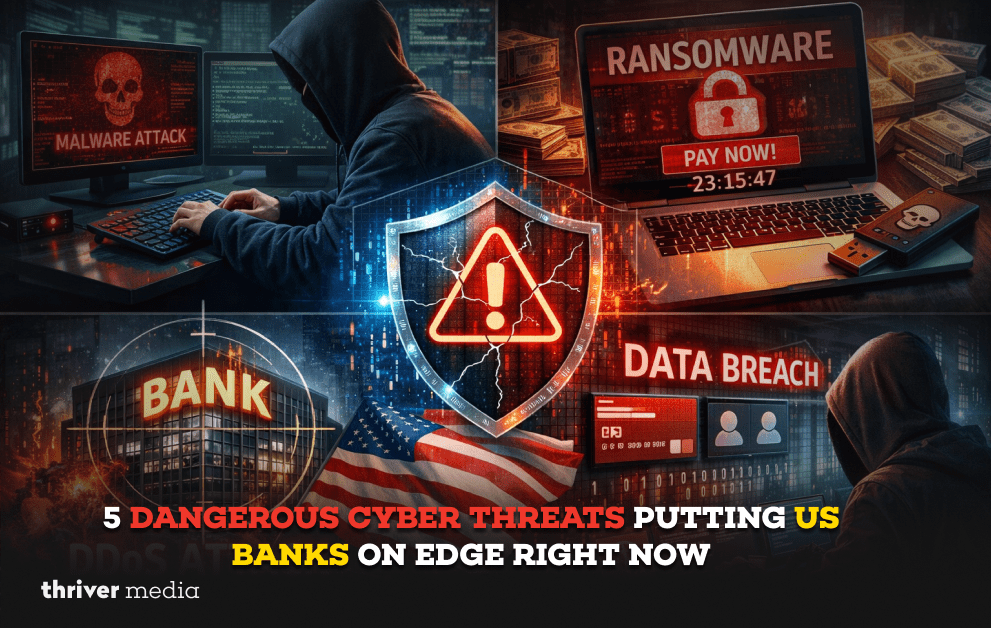
US financial institutions are now on high alert, bracing for retaliatory strikes not with missiles, but with malware. Industry group SIFMA, which runs annual exercises simulating major cyber emergencies, confirmed that its members are “vigilant and ready to respond,” with one top banking official admitting lenders see cyberattacks as not just possible, but likely. The warning from intelligence agencies is clear: Iran-aligned “hacktivists” could unleash waves of attacks designed to cripple the systems that underpin the American economy.
But the Iranian threat, as real as it is, is just the headline act. Beneath the surface, a sea of other, equally terrifying dangers is rising. From AI-generated fraud that is now “nearly impossible to spot” to a looming “Q-Day” that could vaporize trillions of dollars in an instant, the US banking system is facing a perfect storm of cyber threats.
Here are the 5 dangerous cyber threats putting US banks on edge right now.
The Threat Landscape: A Timeline of Rising Tension
To understand the current state of alert, it helps to see how we got here. The following timeline illustrates the convergence of geopolitical conflict and escalating cyber capabilities that have led to this moment.
The Core Problem: The Unseen War on Your Money
Before we dive into the specific threats, we must understand the fundamental problem facing US banks. It’s not just about better firewalls or stronger passwords. The entire architecture of trust that the financial system is built upon is under assault from multiple directions simultaneously.
The Problem of Convergence
The threat is no longer a single hacker in a hoodie. It is a convergence of:
- Geopolitical Conflict: War with Iran brings state-backed “hacktivists” into play.
- Advanced Technology: Generative AI creates deepfakes and synthetic identities that fool traditional verification.
- Criminal Enterprises: Organized gangs treat banks like ATMs, using malware and phishing at an industrial scale.
- Structural Vulnerability: Banks rely on a complex web of third-party vendors, software, and open-source code each a potential entry point for a “supply chain” attack.
The Problem of the “Blast Radius”
As Group-IB’s 2026 High-Tech Crime Trends Report warns, cybercrime is now defined by “cascading failures of trust” . A single compromise at a trusted vendor like Marquis Software Solutions can ripple out to 80 banks and 800,000 customers. An attack on the Fedwire payment system via a quantum computer could trigger a cascading failure costing the US economy up to $3.3 trillion .
The Problem of Invisible Intrusion
The most dangerous attacks are the ones you never see. The French FICOBA breach wasn’t a dramatic exploit; it was someone logging in with a stolen password . The average time to identify a supply chain compromise is a staggering 276 days . Attackers can live in the system for nearly three quarters of a year, mapping networks, stealing data, and waiting for the perfect moment to strike.
The Solution: A New Framework for Trust
The solution is not a single magic bullet. It requires a multi-layered, constantly evolving defense strategy that includes:
- Zero Trust Architecture: Never trust, always verify. Assume every login, every request, every vendor connection could be compromised.
- AI-Powered Defense: Fight AI with AI. Banks must deploy machine learning to detect behavioral anomalies that humans and static rules would miss.
- Continuous Credential Monitoring: Screening passwords against known breach data at creation and continuously thereafter. As the Enzoic blog notes, “Policy compliance does not equal credential integrity”.
- Supply Chain Rigor: Financial institutions must apply the same security standards to their vendors as they do to themselves, with continuous monitoring and rigorous third-party risk governance.
- Quantum-Ready Cryptography: The time to prepare for Q-Day is now. Post-quantum cryptography (PQC) is deployable today.
The 5 Dangerous Cyber Threats Putting US Banks on Edge Right Now
With the problem defined, let’s look at the five specific threats keeping bank CEOs and security chiefs awake at night.
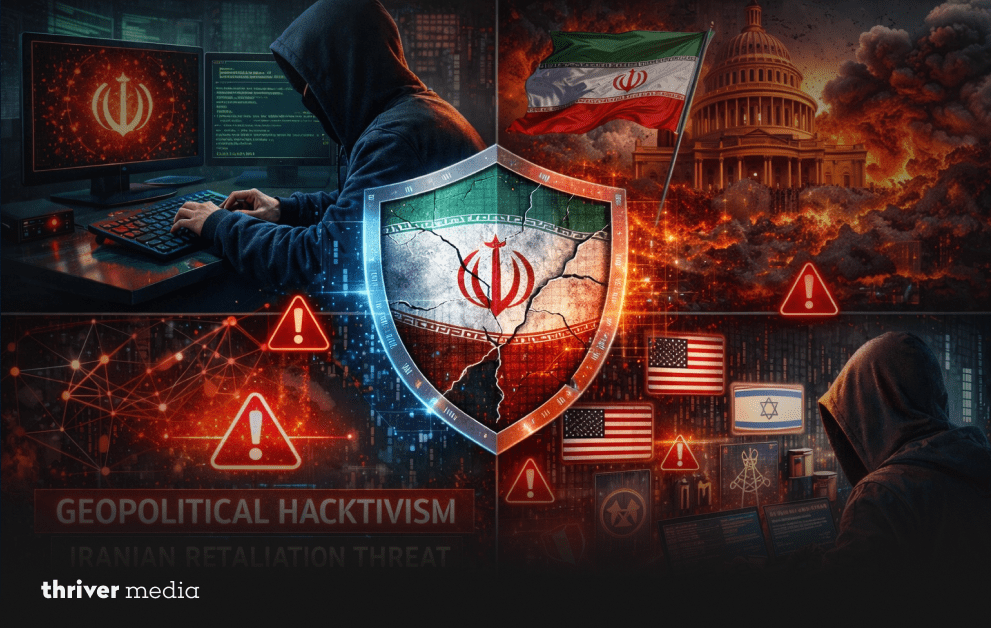
1. Geopolitical Hacktivism: The Iranian Retaliation Threat
The most immediate and headline-grabbing threat stems directly from the US-Israel attack on Iran. This isn’t a hypothetical future risk; the warning lights are flashing red right now.
What’s Happening
US intelligence has assessed that Iran-aligned “hacktivists” could conduct low-level cyberattacks against US networks. These are not necessarily sophisticated nation-state operations aimed at stealing billions. They are designed to disrupt, to sow chaos, and to send a message.
The Weapons of Choice
- Distributed Denial-of-Service (DDoS) Attacks: Overwhelming a bank’s public-facing websites and applications with a flood of traffic, effectively locking customers out and disrupting operations. The financial sector was the top global target for DDoS attacks in 2024, a trend fueled by previous conflicts.
- Ransomware: Malicious software that encrypts a bank’s critical data, with attackers demanding a massive ransom to unlock it. The 2023 attack on ICBC’s US unit disrupted Treasury trades, proving that even the biggest players are vulnerable.
The Expert Warning
Credit rating agency Morningstar DBRS warned on March 3, 2026: “Iran could increase its cyberattacks against Western entities, including banks”. Investment bank Lazard’s geopolitical team also flagged cyber risks, noting Iran’s “demonstrated willingness to deploy cyber capabilities against commercial targets, including financial systems”.
The Bottom Line
This threat is live, it’s now, and it has the explicit backing of a state actor seeking revenge.
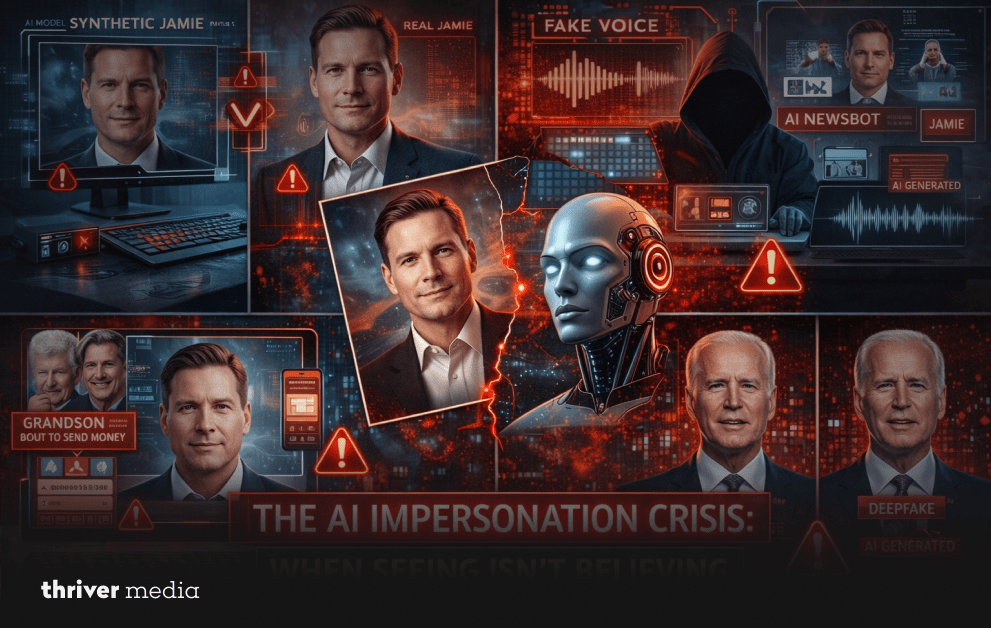
2. The AI Impersonation Crisis: When Seeing Isn’t Believing
For decades, banks have relied on “know your customer” (KYC) protocols checking IDs, verifying documents, and confirming identities. Generative AI has rendered many of those protocols obsolete.
What’s Happening
Scammers are now using AI to fabricate everything from utility bills to complex corporate financial records . These documents are so convincing that Sepideh Rowland, a partner at Klaros Group, told American Banker they are “nearly impossible to spot”. A Queen Mary University of London study found that AI-generated voices fooled listeners 58% of the time, with some AI voices rated as more trustworthy than real human voices.
The Deepfake Explosion
Cybersecurity firm DeepStrike estimates that online deepfakes have exploded from roughly 500,000 in 2023 to about 8 million in 2025.
The New Attack Vectors
- Synthetic Identities: Profiles that blend real and fake data to create a persona that is “virtually indistinguishable from real people”.
- AI-Powered Social Engineering: As a Yahoo Finance column explains, AI agents can now analyze a target’s role, their company’s internal processes, and even their stress levels to deliver a perfectly timed, perfectly worded phishing email or phone call that feels utterly legitimate. Credential phishing attempts aided by AI have surged by 853%.
- The “PromptSpy” Era: ESET researchers uncovered the first Android malware, “PromptSpy,” that abuses generative AI (Google’s Gemini) to manipulate user interfaces in real-time, reading screens and automatically interacting with banking apps to steal funds.
The Bottom Line
The fundamental assumption of identity verification that a document or voice can be trusted is collapsing. As Gartner predicts, by the end of 2026, 30% of enterprises will be forced to abandon traditional identity verification as a single source of truth.
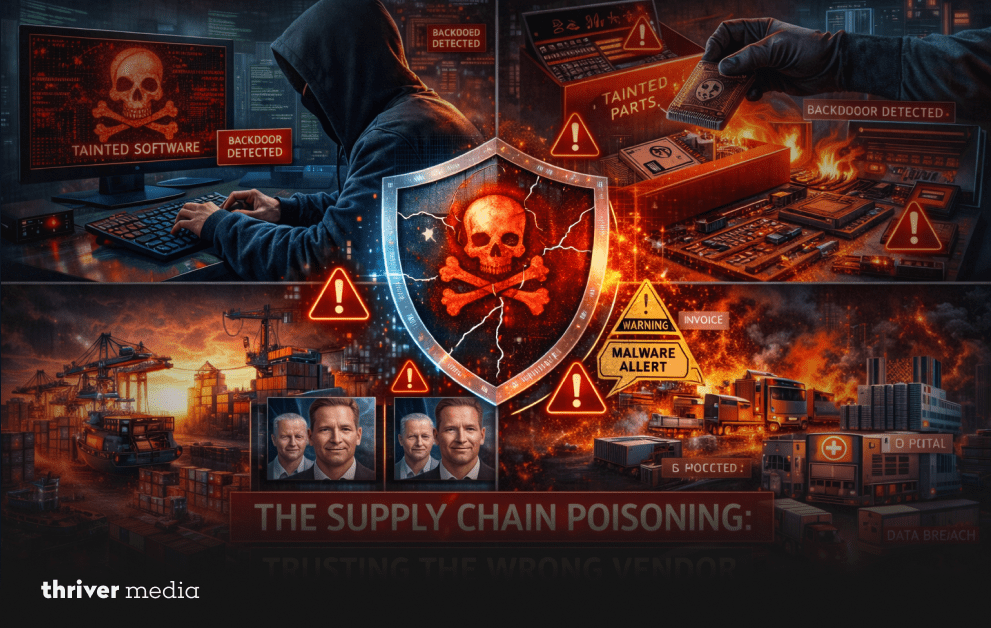
3. The Supply Chain Poisoning: Trusting the Wrong Vendor
Banks are not islands. They are interconnected with hundreds of software providers, cloud services, data processors, and IT vendors. Each connection is a potential highway for attackers.
What’s Happening
The 2026 High-Tech Crime Trends Report by Group-IB declares that supply chain attacks have overtaken traditional cyber intrusions as the most significant global cyber threat. Attackers are no longer bothering to break down the bank’s front door. Instead, they find a vendor with a key.
The Marquis Example
In January 2026, ransomware attackers hit Marquis Software Solutions, a firm that enables hundreds of banks and credit unions to visualize customer data. The result? At least 80 financial institutions and 824,000 consumers had their data including personal information, financial data, and Social Security numbers stolen. The attackers gained access not by hacking Marquis directly, but by using credentials stolen from a breach at SonicWall, a different cybersecurity company. This is the cascading failure in action.
The Scale of the Problem
Group-IB found that in the GCC alone, five organizations (mainly in IT services) were victims of supply chain attacks. Because these companies serve broad partner networks, a single compromise can disrupt multiple dependent entities simultaneously. The “blast radius” is expanding.
The Bottom Line
A bank’s security is only as strong as its weakest vendor. And as attacks become more sophisticated, that weakest link is increasingly outside the bank’s direct control.
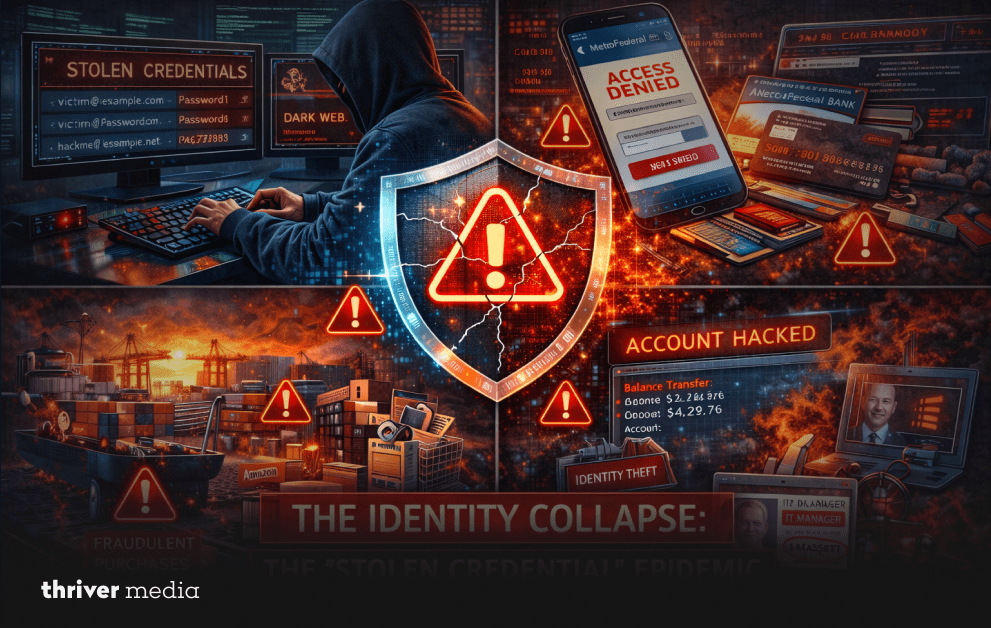
4. The Identity Collapse: The “Stolen Credential” Epidemic
Forget the zero-day exploits and the sophisticated malware. The most common way attackers get into bank systems is by simply logging in.
What’s Happening
The February 2026 breach of France’s FICOBA registry a database of nearly 300 million bank accounts was not a technical hack. Attackers used stolen credentials belonging to a government official. As the Enzoic blog notes, “The attacker didn’t bypass security controls. They satisfied them. The system trusted the login”.
The Persistent Threat
Stolen credentials don’t expire. They are bought, sold, and traded on underground forums for years. The Verizon Data Breach Investigations Report consistently shows that stolen credentials are involved in the majority of web application breaches. Initial Access Brokers (IABs) now form a key part of the cybercriminal supply chain, selling corporate access to the highest bidder.
The Invisible Risk
A password can be 14 characters long, complex, rotated monthly, and protected by MFA and still be compromised. As the French registry incident shows, MFA can sometimes be bypassed or is simply not enough when the attacker is using a legitimate, stolen session token.
The Bottom Line
Banks are spending billions defending a perimeter that attackers are simply walking through with a stolen key. Continuous monitoring of credential exposure, not just password complexity, is now a survival requirement.
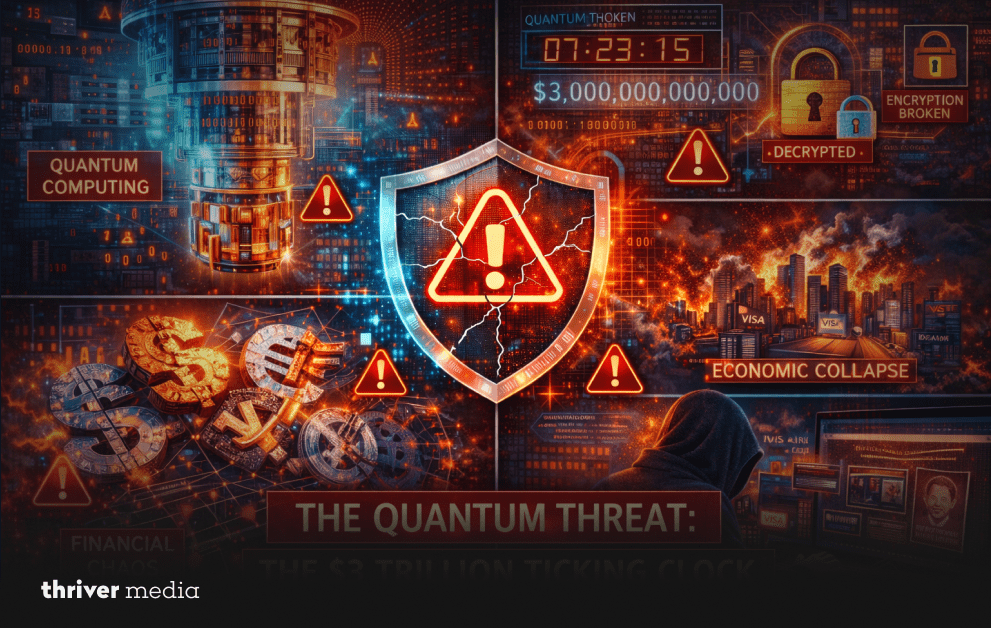
5. The Quantum Threat: The $3 Trillion Ticking Clock
This is the doomsday scenario. The one that keeps C-suite executives up at night, not because it’s happening today, but because when it does, it will be catastrophic.
What’s Happening
A new Citi GPS report, “Quantum Threat – The Trillion-Dollar Security Race Is On,” warns that the window to protect the financial system is closing. “Q-Day” the day when a sufficiently powerful quantum computer exists to break current public-key cryptography is no longer a distant future event. From a risk perspective, it is already here, because “data stolen today can be decrypted later”.
The Nightmare Scenario
Citi’s analysts modeled the impact of a quantum-enabled cyberattack on any of the top five US financial institutions, targeting its access to the Fedwire Funds Service payment system. The result: a cascading failure that could cost the US economy between $2 trillion and $3.3 trillion in indirect impacts a decline in real GDP of 10 to 17 percent.
The Crypto Risk
The report also notes that 25% of Bitcoin supply (roughly 4.5 million to 6.7 million bitcoins, worth an estimated $500 billion) is potentially quantum-exposed because the associated public keys have already been revealed on-chain.
The Solution is Now
HorizonX CEO Steve Suarez states: “Quantum computing will trigger the largest upgrade of cryptography in human history, far bigger than the Y2K transition”. The good news is that post-quantum cryptography (PQC) is deployable today. The bad news is that the transition will be complex, expensive, and time-consuming and the clock is ticking.
The Bottom Line
Quantum computing is the ultimate “existential threat” to modern banking cryptography. The time to prepare is not after Q-Day, but right now.
Comparison Table: The 5 Threats at a Glance
FAQs
Are US banks currently under active cyberattack from Iran?
As of now, US intelligence has warned of potential low-level attacks (like DDoS) from Iran-aligned groups. The financial sector is on high alert and actively monitoring for threats, but no major, confirmed Iranian-linked attack has yet been publicly disclosed.
What is a DDoS attack and why should I care?
A Distributed Denial-of-Service (DDoS) attack floods a bank’s website or app with so much fake traffic that it crashes, preventing real customers from accessing their accounts, making payments, or trading stocks. It’s a weapon of disruption.
How can AI-generated voices fool bank security?
AI voice cloning can now mimic a specific person’s voice with frightening accuracy. A scammer could clone a CEO’s voice and call the treasury department to authorize a fraudulent wire transfer, bypassing many standard verbal verification protocols.
What is a “supply chain attack” in banking?
It’s when hackers attack a smaller, less-secure company that provides software or services to a big bank. Once inside the vendor’s system, they use that access to jump into the bank’s network, often going undetected for months.
Bottom Line & Conclusion
Let’s be brutally honest about what’s facing the US financial system right now.
The death of Ayatollah Khamenei has lit a fuse. Iran-aligned hackers are preparing to strike, and US banks are in the crosshairs. But to focus only on that immediate threat would be to miss the bigger, more terrifying picture.
The US banking sector is under siege from five directions at once:
- Geopolitical enemies seeking revenge through disruption.
- AI-powered criminals who can perfectly mimic your voice, your face, and your documents.
- Supply chain poisoners who slip through the back door by exploiting trusted vendors.
- Identity thieves who don’t hack in they log in with keys stolen from someone else.
- A future quantum threat that could, in a single moment, unravel the cryptographic fabric of the entire global economy.
The core problem is that the very concept of “trust” in the digital age is under systematic, technological assault. We can no longer trust a voice on the phone. We can no longer trust a document uploaded to a website. We can no longer trust that a login from a known vendor is legitimate.
The solution is not a single product or a one-time fix. It is a fundamental shift in mindset. It is the adoption of “Zero Trust” principles at every level. It is the continuous, AI-driven monitoring of every identity, every transaction, and every vendor connection. It is preparing for a post-quantum world today, not tomorrow. It is, as Todd Klessman of SIFMA put it, a relentless focus on “operational resilience, which is foundational to the integrity and stability of the U.S. capital markets”.
Official Source Links:
- Reuters via The News International: US banks on high alert for cyberattacks as political tension escalates
Disclaimer: The news and information presented on our platform, Thriver Media, are curated from verified and authentic sources, including major news agencies and official channels.
Want more? Subscribe to Thriver Media and never miss a beat.