

10th March 2026
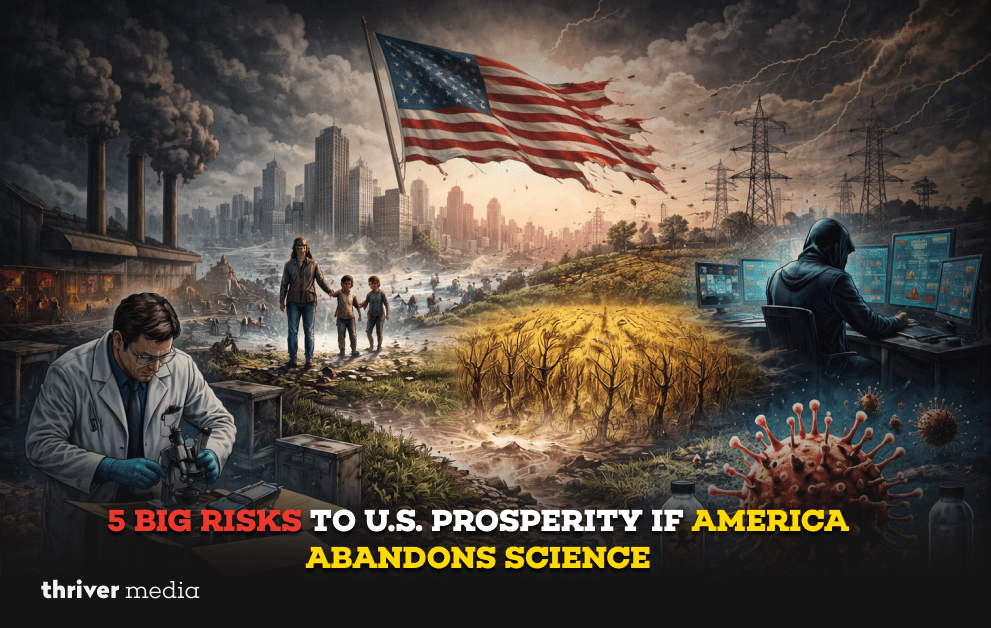
Imagine waking up in a world where your smartphone is a brick, your doctor prescribes treatments from the 1990s, and the phrase “Made in America” no longer stands for innovation, but for obsolescence. It sounds like the plot of a dystopian novel, but according to budget battles currently raging in Washington, this might be our reality if we pull the plug on federal science funding.
We often take it for granted that the U.S. is the world’s innovation engine. But that engine runs on fuel provided by agencies like the National Science Foundation (NSF), NASA, and the National Institutes of Health (NIH). Recently, the Trump administration proposed budgetary cuts so deep some up to 57% for the NSF that they threatened to paralyze the nation’s scientific ecosystem. While Congress ultimately stepped in to stabilize funding in early 2026, the “whiff of catastrophe” was real. The conversation in the Senate wasn’t just about dollars and cents; it was about whether America wants to remain the world leader or cede the throne.
If we ever decide to turn our backs on science, here are the five biggest risks that could fundamentally alter U.S. prosperity.
Key Point: Your Wallet Will Shrink
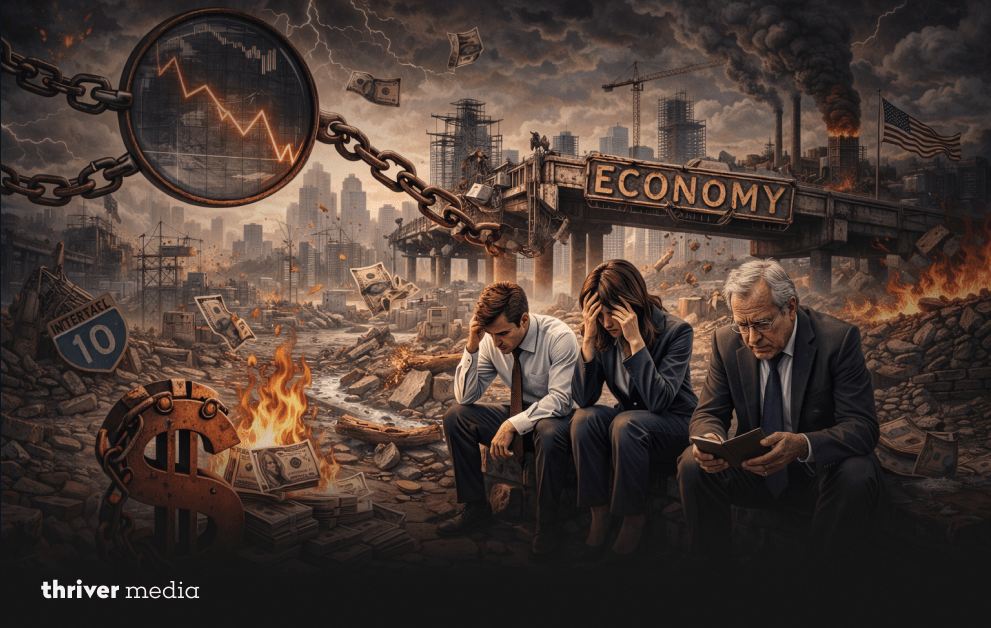
Let’s be real: if science funding dries up, it’s not just about lab coats and telescopes it’s about your paycheck. When the government cuts research, it creates a domino effect. For every $1 the government invests in basic research, the private sector kicks in an extra $8.38 later on. Slash the public funding, and you choke the pipeline. Fewer new industries mean fewer high-paying jobs. In fact, cutting non-defense R&D by 21% (as was proposed) would strip billions from the economy over the next three decades, directly impacting the standard of living for everyday families.
The Shocking Truth About Your Tax Dollars
Before you say, “I don’t want the government spending my money on scientists,” consider this: the Congressional Budget Office (CBO) crunched the numbers and found that every single dollar invested in non-defense R&D returns about $11.50 to the economy over 30 years. That’s a better return than the stock market. It pays for itself.
A Quick Reality Check: Funding vs. Cuts
To understand what almost happened (and what could still happen if we aren’t vigilant), look at the funding battle for FY2026. The table below shows the stark difference between the proposed cuts and what was actually passed:
1. Economic Paralysis: The End of the “Miracle Multiplier”
When politicians talk about “cutting waste,” science funding is an easy target because it doesn’t put food on the table today. But federal R&D is the ultimate seed corn. The Center on Budget and Policy Priorities highlights a stunning fact: public R&D doesn’t just help the economy; it transforms it. It crowds in private investment. This means your government check to a university isn’t just paying for a professor’s salary; it’s buying the blueprint for the next Google or the next life-saving drug.

Without it, we aren’t just saving money; we are actively destroying future revenue. The economic “multiplier” effect vanishes, and we become a nation that consumes technology rather than creates it.
2. The Innovation Exodus: Goodbye GPS, Internet, and Touchscreens
Here is a pop quiz: Where did Google come from? It wasn’t a garage. It was an NSF grant for $4.5 million given to two Stanford graduate students, Larry Page and Sergey Brin. The touchscreen on your phone? Also funded by the NSF. The Internet, MRIs, LED lights, GPS all products of federal investment.
If we abandon science, we don’t just lose future cures; we lose the ecosystem that allows garage tinkerers to become tech titans. Without foundational research, we are essentially telling the next Steve Jobs or Elon Musk to go pitch their ideas to Beijing.
3. National Security Fails: Losing the Space Race to China
Senator Cantwell didn’t mince words during the FY26 budget debates. She released a report titled “The Destruction of NASA’s Mission,” warning that gutting the agency would doom America in the international space race. This isn’t just about planting flags; space is now a domain for warfare, communications, and surveillance.
If the U.S. retreats, China advances. They are already on pace to surpass U.S. R&D investments. Slashing NASA and defense tech funding doesn’t just hurt scientists; it hands a strategic advantage to geopolitical rivals. The House Science Committee is currently scrambling to address quantum computing threats and AI governance precisely because the security landscape is shifting so fast.
4. The Talent Crisis: Brain Drain
Currently, nearly a quarter of the American workforce participates in STEM fields over 36 million workers. But maintaining that workforce requires a “farm system.” The NSF supports graduate students through programs like the Graduate Research Fellowship Program. Under the proposed cuts, the number of researchers supported would have dropped from 330,000 to just 90,000.
Imagine telling 240,000 of the brightest minds in the country, “Sorry, go be an investment banker because we don’t need researchers.” They won’t just switch careers; they will move to Canada, Europe, or China. Once that brain drain happens, it takes decades to reverse.
5. Healthcare Stagnation: The End of Medical Miracles
The NIH is the silent partner in every major medical breakthrough. The biomedical industry contributes over $69 billion to the U.S. GDP and supports over 7 million jobs . The Human Genome Project, which now supports over 850,000 jobs, was fueled by NIH support. It yields a return of $4.75 for every $1 spent.
Cutting NIH funding means fewer clinical trials, fewer treatments for rare diseases, and a massive slowdown in the war on cancer. It means the next pandemic (and there will be a next one) catches us unprepared.
FAQs
Isn’t most scientific research funded by private companies like Pfizer or Google? Why do we need the government?
Great question! Private companies are great at developing products (the “D” in R&D). But they are terrible at funding basic research (the “R”). Basic research is too risky and takes too long. Why would a company spend 15 years figuring out the theory of mRNA when they could spend 3 years making a weight-loss drug? The government funds the risky stuff, and companies cash in on the discoveries later.
The budget is tight. Why should we borrow money for science when we have potholes to fix?
Because science funding pays for the potholes. The CBO found that increased R&D generates so much economic growth that it actually increases federal revenue, reducing the deficit over 30 years. It’s one of the few government expenditures that pays for itself.
What actually happened in the 2026 budget? Did we cut science or not?
In January 2026, Congress rejected the most extreme cuts. They passed a bill keeping NASA and NSF funding mostly stable. However, the fight isn’t over the fact that these cuts were proposed at all signals a shift in priorities, and the battle for FY2027 has already begun.
How does this affect my local community?
NSF and NIH funding goes to all 50 states. It pays for researchers at your local university, supports small businesses trying to commercialize tech, and funds startups. In San Diego, for example, innovation industry jobs support two additional jobs elsewhere in the economy.
Bottom Line
The U.S. is at an inflection point. We can either double down on the strategy that gave us the Internet, the Human Genome, and a man on the moon, or we can retreat into austerity. The proposed cuts to science weren’t just numbers on a spreadsheet; they were an existential threat to the American way of life . While science survived this round, the message is clear: we have to fight for it.
Conclusion: Don’t Let the Future Become Foreign
The fact that the Senate had to fight to keep NASA and NSF funded at current levels while China surges ahead is alarming. Prosperity doesn’t happen by accident. It happens because 50 years ago, we decided to invest in things we couldn’t yet imagine. If we abandon science now, the risks are clear: a poorer nation, a sicker population, and a weaker military.
We need to make sure our leaders know that science isn’t an expense it’s an investment in the only future we’ve got.
For official documentation, please refer to Congress.gov and the National Institutes of Health.
Disclaimer: The news and information presented on our platform, Thriver Media, are curated from verified and authentic sources, including major news agencies and official channels.
Want more? Subscribe to Thriver Media and never miss a beat.