
Beijing Issues Stark Diplomatic Warning as US-Israeli Pressure Mounts on Tehran By the Global Affairs Desk | March 9, 2026
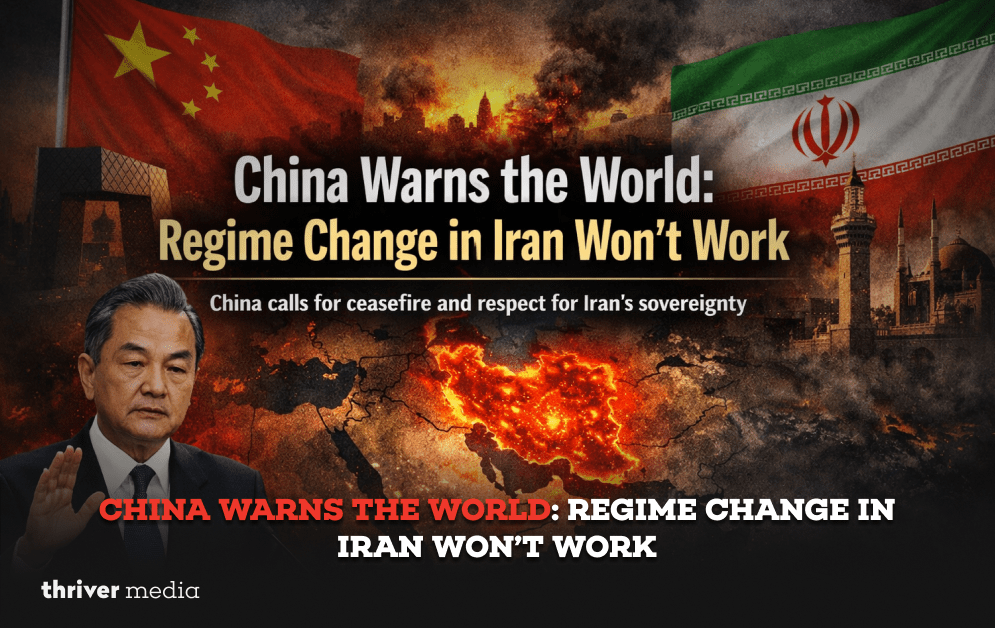
China Steps In: Beijing’s Strong Warning Against Regime Change in Iran
In a sweeping diplomatic intervention that reverberated across global capitals, China has issued one of its most forceful warnings to date against attempts to topple the Iranian government. With the United States and Israel intensifying military and economic pressure on Tehran, Beijing has stepped firmly into the geopolitical breach, demanding an immediate halt to military operations in the Middle East and insisting that Iran’s sovereignty must be respected.
The intervention, led by Foreign Minister Wang Yi, comes at a moment of acute tension. Iran, already battered by years of crippling sanctions, faces the prospect of direct military confrontation with Israeli and potentially American forces. Against that backdrop, China’s warning carries profound strategic weight: Beijing is not merely observing events from a distance it is actively positioning itself as a counterweight to what it characterizes as destabilizing Western interventionism.
This article examines China’s posture in detail, the intelligence assessments complicating Washington’s calculus, the controversy surrounding the death of Iran’s Supreme Leader, and what Beijing’s diplomatic offensive means for the broader trajectory of the Middle East crisis.
China Calls for Sovereignty and Immediate Ceasefire
Beijing’s Core Demand: Stop the Fighting Now
At the heart of China’s position is an unambiguous demand for de-escalation. Speaking in formal diplomatic communications and at international forums, Foreign Minister Wang Yi made clear that Beijing regards the ongoing military operations in the Middle East as a threat not only to regional stability but to the international rules-based order itself though one Beijing defines differently from Washington.
Wang Yi called explicitly for “an immediate stop to military operations” across the broader Middle East theater, encompassing both the Gaza conflict and the expanding pressure on Iran. Chinese officials framed this demand not as partisanship toward Tehran but as a principled stand against what they describe as the dangerous militarization of geopolitics.
“No country has the right to impose its political will on another through the barrel of a gun. The sovereignty and territorial integrity of all nations must be inviolable this is not a preference but a cornerstone of international law.”
Beijing’s call for a ceasefire fits within a broader pattern of Chinese diplomacy that consistently prioritizes state sovereignty and non-interference as paramount norms. Critics argue this posture conveniently shields authoritarian partners from external accountability; China’s defenders contend it represents a principled bulwark against imperial overreach.
Respecting Iran’s Sovereignty: A Red Line for Beijing
China has been unequivocal: any attempt to use military force to change Iran’s government constitutes a fundamental violation of sovereignty. Wang Yi reiterated China’s recognition of Iran as a major regional power with the right to determine its own political destiny, free from foreign coercion.
This position is not merely rhetorical. China has significant economic interests in Iran, anchored by a 25-year comprehensive cooperation agreement signed in 2021 that encompasses energy, infrastructure, and security cooperation. Beijing imports Iranian oil often circumventing Western sanctions and views Iran as a critical node in its Belt and Road Initiative and broader vision for a multipolar order in which US dominance is constrained.
By throwing its diplomatic weight behind Iranian sovereignty, China is simultaneously defending a strategic partner, articulating an alternative vision of international order, and sending a pointed message to Washington: great-power competition has consequences, and Beijing is prepared to push back.
Key Fact:
China-Iran Ties China and Iran signed a 25-year comprehensive strategic cooperation agreement in March 2021, covering energy, infrastructure, and security. China remains Iran’s largest trading partner and one of the few major economies to maintain substantial economic engagement with Tehran despite US-led sanctions.
Wang Yi’s Warning: No ‘Colour Revolution’ in Iran
Plotting Regime Change Will Find No Popular Support
Perhaps the most striking element of China’s diplomatic messaging came directly from Wang Yi himself: any attempt to engineer a “colour revolution” in Iran a reference to the wave of popular uprisings in former Soviet states that Western governments supported in the 2000s and 2010s would find no popular support and would ultimately fail.
The term “colour revolution” carries enormous ideological weight in Beijing. Chinese officials have long viewed such movements with deep suspicion, seeing in them the hand of Western intelligence agencies orchestrating regime change under the guise of democratic aspiration. By invoking this language in the context of Iran, Wang Yi was explicitly framing US and Israeli pressure as part of the same playbook China has resisted domestically for decades.
“Those who dream of plotting a colour revolution in Iran or forcing regime change through military pressure are indulging in a fantasy. The Iranian people will not accept a government imposed on them from outside, and the international community will not lend legitimacy to such an enterprise.”
This framing is politically significant on multiple levels. It signals Chinese solidarity with Iran at a moment of maximum vulnerability. It also reflects Beijing’s deeply held belief reinforced by the fates of Libya, Iraq, and Afghanistan that Western-backed regime change invariably produces chaos rather than democracy.
Force Cannot Solve Political Problems
Wang Yi’s remarks ranged beyond Iran to articulate a broader philosophical argument about the limits of military power. Drawing on both ancient Chinese strategic thought and the contemporary record of military interventionism, he argued that force is fundamentally incapable of resolving the underlying political grievances and structural tensions that drive conflict.
“History has shown time and again that military force can destroy a government, but it cannot build a stable society,” Wang Yi told diplomats. “The ruins of Iraq and Libya stand as monuments to the folly of believing that bombs can deliver democracy.”
This argument resonates beyond China’s immediate strategic interests. A growing chorus of international voices including within the Global South has grown deeply skeptical of the transformative promise of military intervention after two decades of inconclusive or counterproductive Western military campaigns.
Middle Eastern Nations Must Determine Their Own Affairs
Complementing his critique of military force, Wang Yi returned repeatedly to the theme of regional self-determination. Middle Eastern countries, he argued, must be empowered to resolve their disputes through intra-regional dialogue rather than having solutions imposed on them by distant great powers with their own strategic agendas.
This is a message that plays well across much of the region, where memories of colonial-era borders drawn by European powers and Cold War proxy conflicts remain raw. China has actively cultivated an image as a partner that offers investment and cooperation without demanding political conformity a contrast it draws explicitly with US alliance structures and the conditions attached to Western financial assistance.
Beijing’s brokering of the Saudi-Iranian rapprochement in 2023 stands as a tangible example of this approach, and Chinese diplomats have continued to cite it as evidence that dialogue, not force, is the path to regional stability.
The Intelligence Assessment That Complicates Washington’s Calculus
The Classified US National Intelligence Council Report
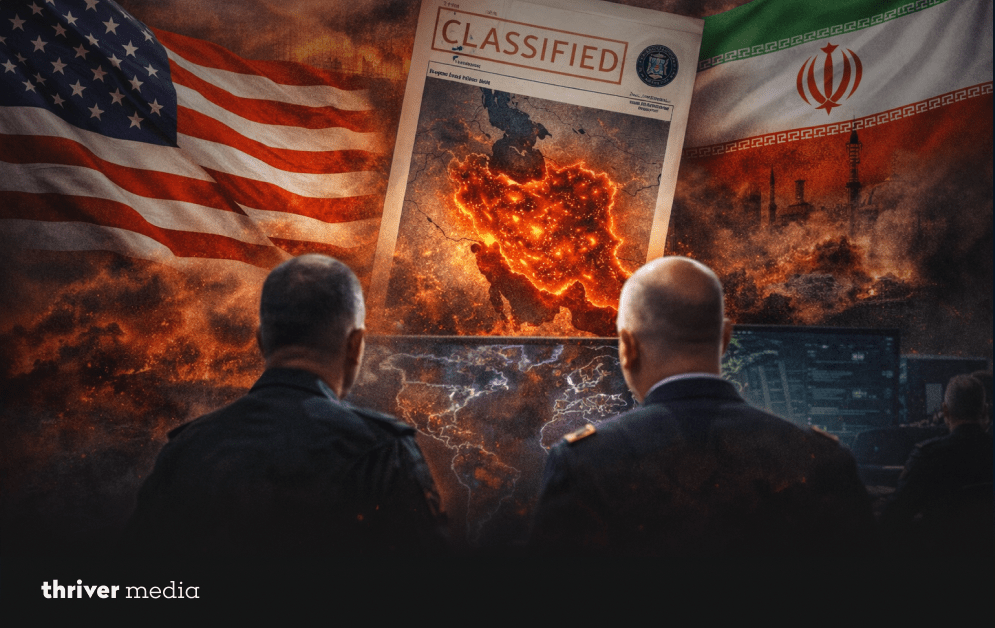
Adding a significant layer of complexity to the debate over military action against Iran, The Washington Post reported on a classified assessment produced by the US National Intelligence Council that reached sobering conclusions about the prospects for regime change in Tehran.
According to the report, even a large-scale US military offensive would be unlikely to succeed in overthrowing Iran’s entrenched military and clerical leadership. The assessment, described by sources familiar with its contents, pointed to the deep institutional roots of the Islamic Revolutionary Guard Corps, the network of hardline clerics, and the experience the Iranian state has accumulated in surviving sanctions, internal dissent, and external pressure over more than four decades.
The intelligence conclusion challenges a strain of thinking in Washington associated particularly with hawkish voices and former President Donald Trump that military pressure alone could crack the Iranian regime and produce either collapse or capitulation.
Challenging Trump’s Claims on Removing Iran’s Leadership
Former President Donald Trump made the prospect of removing Iran’s clerical leadership a centerpiece of his rhetorical approach to the Islamic Republic, repeatedly suggesting that a combination of maximum pressure sanctions and the credible threat of military force would be sufficient to bring about the end of the current government.
The National Intelligence Council’s classified assessment directly challenges this view. Intelligence analysts concluded that while military strikes could degrade Iran’s nuclear and military capabilities, they could not and would not topple the regime and might, paradoxically, strengthen it by triggering a nationalist backlash and providing the government with an external enemy around which to mobilize domestic support.
This assessment aligns with a broad consensus among regional specialists and former US intelligence officials, who have long argued that the Islamic Republic’s durability derives not from popular enthusiasm but from institutional depth: an interlocking set of security services, economic enterprises controlled by the IRGC, and clerical networks that would require not just military defeat but a complete restructuring of Iranian society to dismantle.
Intelligence Assessment:
Key Findings (as reported) The Washington Post’s reporting on the classified US National Intelligence Council assessment indicates analysts concluded that: (1) Even large-scale military operations would be unlikely to achieve regime change in Tehran; (2) Iran’s clerical and military leadership has deep institutional roots built over four decades; (3) Military strikes could trigger nationalist backlash, potentially strengthening the regime; (4) Sustainable political change in Iran would require comprehensive societal restructuring beyond military capability.
Dialogue Over Conflict: China’s Call to the Negotiating Table
Return to Negotiations: Beijing’s Prescription
Consistent with its broader diplomatic philosophy, China has called on all parties to the Middle East crisis to return to the negotiating table. Wang Yi argued that the tools of diplomacy dialogue, negotiation, confidence-building measures remain not only preferable to military force but genuinely more effective in producing durable solutions to complex political disputes.
Beijing’s call for negotiations encompasses the full spectrum of Middle Eastern tensions: the Gaza conflict, the broader Israeli-Palestinian question, the Iran nuclear issue, and the systemic competition for regional influence. Chinese diplomats have argued that each of these threads is connected, and that progress on one front can catalyze movement on others.
China’s position on the Iran nuclear file has been consistent: it supports a return to the Joint Comprehensive Plan of Action framework or a comparable multilateral agreement that addresses Western concerns about Iran’s nuclear program while lifting the sanctions regime that Beijing regards as economically coercive and legally dubious.
Beijing’s Willingness to Restore Stability
Beyond issuing calls for dialogue, China has signaled its willingness to play an active role in stabilizing the Middle East. Chinese officials have pointed to their 2023 mediation of the Saudi-Iranian normalization as evidence of Beijing’s capacity to act as an honest broker and have offered to build on that precedent.
This represents a significant evolution in Chinese Middle East policy, which historically was characterized by a preference for non-involvement. Beijing’s growing activism reflects both its expanding economic stake in regional stability and its broader ambition to be recognized as a responsible great power capable of making positive contributions to international security.
Wang Yi indicated that China was prepared to work with regional nations including Gulf states, Iran, and other stakeholders to develop a framework for de-escalation and eventual political settlement. The proposal was notable for its scope: rather than addressing individual conflicts in isolation, Beijing appears to be reaching for a comprehensive regional security architecture that would reduce great-power competition on Middle Eastern soil.
The Killing of Ayatollah Khamenei: Condemnation and Controversy
Beijing Condemns the Supreme Leader’s Death
China formally condemned the killing of Iran’s Supreme Leader Ayatollah Ali Khamenei, the figurehead of the Islamic Republic since 1989 and the central authority over Iranian foreign and security policy. Beijing’s condemnation was swift and unambiguous, characterizing the killing as a grave violation of international law and a deeply destabilizing act that threatened to plunge an already volatile region into further chaos.
Chinese officials framed the killing not only as an affront to Iranian sovereignty but as an attack on the principles of international order that protect all states from extra-judicial violence against their leadership. The condemnation placed Beijing firmly alongside a number of governments predominantly in the Global South and among Iran’s neighbors that expressed alarm at the precedent set by the assassination of a sitting head of state.
The killing of Khamenei represents a watershed moment in the Middle East crisis, transforming what had been an escalating but still somewhat bounded conflict into a confrontation with potentially civilizational dimensions for Iran’s political identity. The Islamic Republic has, in Khamenei, lost the leader who defined its revolutionary ideology for nearly four decades.
The Succession Question and Regional Instability
Khamenei’s death raises profound questions about the future direction of the Islamic Republic that no foreign power including China can answer with confidence. The succession process within Iran’s clerical establishment is opaque, contested, and potentially destabilizing, with competing factions already maneuvering to shape the post-Khamenei order.
From Beijing’s perspective, this uncertainty underscores the folly of the strategy being pursued by Washington and Jerusalem. Rather than producing a more pliable Iranian government, the killing of Khamenei has injected massive uncertainty into Tehran’s political system the worst possible condition for the diplomatic engagement China advocates.
Chinese analysts have privately warned that the hardline factions within the IRGC and the conservative clerical establishment are likely to emerge strengthened from the succession struggle, driven by nationalist fury and the imperative of demonstrating resolve in the face of foreign aggression. If so, the killing of Khamenei may have achieved the opposite of its apparent strategic intent.
Wang Yi on China-Russia Relations: “Steadfast and Unshakeable”
Defying Western Pressure Over Ukraine
In remarks that signaled the breadth of Beijing’s diplomatic positioning, Wang Yi used the occasion of his Middle East statements to reaffirm the strength of the China-Russia relationship, describing it as “steadfast and unshakeable” despite sustained Western criticism over Beijing’s refusal to condemn Moscow’s invasion of Ukraine.
The statement was deliberate and pointed. Western governments led by the United States and the European Union have repeatedly urged China to use its influence with Russia to press for an end to the conflict in Ukraine, and have threatened secondary sanctions on Chinese entities providing material support to the Russian war effort.
Wang Yi’s defiance of this pressure reflects China’s consistent position that its relationship with Russia represents an independent strategic choice, not subject to Western veto. Beijing maintains that it has not provided lethal military assistance to Russia, a claim Western intelligence agencies contest with varying degrees of specificity.
The Strategic Logic of the China-Russia Partnership
The durability of the China-Russia alignment which both governments describe as a partnership without limits, a phrase that has proven more aspirational than operational reflects a shared interest in constraining US unilateral power and reshaping the rules of international engagement.
For Beijing, maintaining this partnership while simultaneously positioning itself as a neutral mediator in regional conflicts requires considerable diplomatic finesse. Critics argue that China cannot credibly claim the mantle of honest broker while sustaining close ties with a state conducting an aggressive war in Europe; Beijing responds that its relationships with both Russia and Iran are evidence of its capacity to engage with all sides of global disputes.
Wang Yi’s remarks about the unshakeable China-Russia relationship came as a direct signal to Western capitals: attempts to use the Ukraine war as leverage over Chinese behavior in the Middle East will not succeed. Beijing is playing its own game, on its own terms.
Frequently Asked Questions
What is China’s official position on the US-Israeli offensive in the Middle East?
China demands an immediate stop to military operations and urges dialogue while warning against any attempt to overthrow Iran’s government.
Why is China so opposed to regime change in Iran?
Beijing opposes it to defend sovereignty principles and protect its economic and strategic interests tied to Iran.
What did Foreign Minister Wang Yi say about regime change and colour revolutions?
Wang Yi said attempts to trigger a colour revolution or force regime change in Iran would fail and lack public support.
What did the US National Intelligence Council report conclude about military action against Iran?
The United States National Intelligence Council assessment suggests even a major military offensive would likely fail to overthrow Iran’s leadership.
How does China’s position challenge Donald Trump’s claims about Iran?
The intelligence assessment contradicts Donald Trump’s claim that military pressure could easily remove Iran’s leadership.
What has China said about the killing of Ayatollah Khamenei?
China condemned the killing of Ayatollah Ali Khamenei, calling it a dangerous and destabilizing violation of international norms.
What does Wang Yi mean by China’s relationship with Russia being “steadfast and unshakeable”?
It signals that China’s strategic partnership with Russia will remain strong despite Western criticism over the Russia–Ukraine War.
Bottom Line
China’s intervention in the Middle East crisis represents far more than diplomatic boilerplate. Beijing is sending a clear, multi-layered message to Washington and Jerusalem: the attempt to use military force to reshape Iran’s government will fail, the international community will not legitimize it, and China is prepared to use its considerable diplomatic, economic, and strategic weight to resist it.
Wang Yi’s warnings about colour revolutions and the limits of military force reflect a deeply held Chinese worldview about how international order should be organized one that prioritizes state sovereignty over democratic accountability, stability over transformation, and multipolarity over American primacy.
The US intelligence community’s own classified assessment, as reported by The Washington Post, suggests that at least some within the American national security establishment share Beijing’s skepticism about the efficacy of military regime change. The gap between official rhetoric particularly the maximalist claims of Trump-era Iran policy and the sober conclusions of career intelligence analysts is politically significant and strategically consequential.
China is not simply defending Iran. It is defending a vision of international order in which great powers do not have the right to topple governments they dislike. Whether one regards that vision as principled or self-serving, it commands significant support across the Global South and Beijing is prepared to act on it.
Conclusion: Diplomacy as the Only Exit Ramp
The Middle East stands at one of its most dangerous inflection points in decades. The killing of Ayatollah Khamenei, the escalating US-Israeli military pressure on Iran, and the specter of a broader regional war involving nuclear-armed and near-nuclear states have combined to produce a moment of extraordinary geopolitical peril.
China’s intervention is significant precisely because Beijing is one of the few actors with the credibility and leverage to be heard in both Tehran and, to some extent, in the capitals of states that depend on Chinese trade and investment. Its call for an immediate halt to military operations, its rejection of regime change as a legitimate policy objective, and its offer to help build a regional stability framework represent the most substantial diplomatic initiative currently on the table.
Whether that initiative can gain traction is a question that depends on decisions being made in Washington, Jerusalem, and Tehran, not Beijing. If the US and Israel conclude that military pressure offers a genuine pathway to Iranian capitulation, China’s warnings will be ignored. If, however, the classified intelligence assessment reflects a deeper recognition within the US national security community that regime change is a fantasy, there may be space for the diplomatic off-ramp that Beijing is offering.
The stakes could hardly be higher. A military conflict that draws in Iran, escalates to involve Hezbollah and other Iranian proxies, and potentially entangles the great powers could reshape the Middle East far more profoundly and destructively than any of the conflicts that have preceded it. The lesson of the past two decades of Middle Eastern warfare a lesson that China is drawing on explicitly is that military force can destroy but cannot build, that it can remove leaders but cannot install stable governments, and that wars that begin with confident predictions of swift victory have a habit of grinding on for years or decades.
Diplomacy is not a guarantee of success. But in the Middle East in 2026, it is the only realistic alternative to catastrophe. Beijing, for its own complex mixture of strategic and principled reasons, is making that argument loudly. The world would do well to listen.
Source Link: https://www.aljazeera.com/news/2026/3/8/no-popular-support-china-warns-against-government-change-in-iran
Disclaimer: The news and information presented on our platform, Thriver Media, are curated from verified and authentic sources, including major news agencies and official channels.
Want more? Subscribe to Thriver Media and never miss a beat.